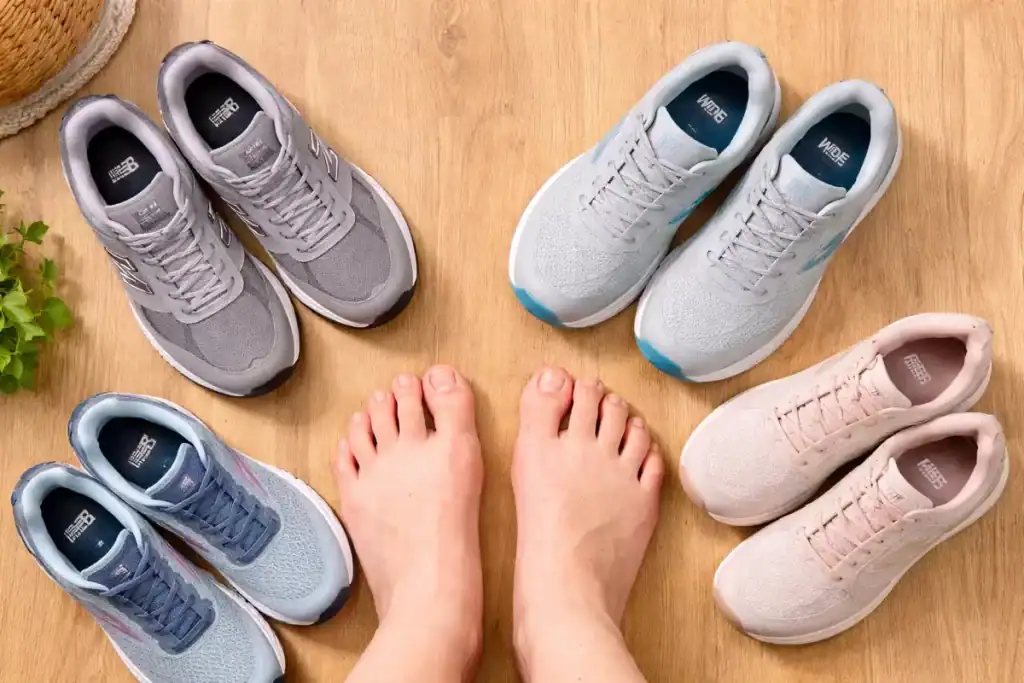
If your shoes feel uncomfortable even when they’re technically the right length, width may be the real issue. Many people wear shoes that are too narrow without realizing it, leading to foot pain, pressure points, and long-term problems that don’t improve no matter how “broken in” the shoes become.
Shoe width is just as important as shoe length, but it’s often overlooked. Standard shoes are designed around an average foot shape, yet a significant portion of adults have feet that are wider than average—or feet that widen with age, weight changes, or prolonged standing and walking.
Understanding the signs that you may need wide shoes can help you avoid unnecessary discomfort and protect your foot health over time.
Common Signs You May Need Wide Shoes
There are several clear indicators that your shoes may be too narrow. If you notice more than one of these issues, switching to wide or extra-wide footwear is often an easy fix. Before looking at specific symptoms, it helps to know that width problems usually show up along the sides of the foot rather than at the toes or heel.
- You feel pressure, pinching, or squeezing across the ball of your foot
- The sides of your feet bulge over the edges of the shoe
- You frequently develop blisters, calluses, or corns on the pinky toe or forefoot
- Your toes feel cramped even though there is enough length
- Your shoes feel comfortable when you first put them on but become painful after walking or standing
These symptoms are especially common for people who walk a lot, work on their feet, or wear structured shoes such as running shoes, dress shoes, or safety footwear.
Foot Conditions That Often Require Wide Shoes
Certain foot conditions make wide shoes more than a comfort preference—they become a necessity. Narrow footwear can aggravate these issues and slow recovery.
Some of the most common conditions associated with wider footwear include:
- Bunions, where pressure on the big toe joint worsens inflammation
- Hammertoes or claw toes, which need extra space to avoid friction
- Plantar fasciitis, where forefoot pressure can affect gait and heel pain
- Swelling from pregnancy, aging, diabetes, or circulation issues
If you have been diagnosed with any of these conditions, wearing shoes with additional width can reduce pressure and help prevent symptoms from worsening.
How Shoe Width Is Measured
Shoe width is measured separately from shoe length, but many shoppers never see the measurement taken. Most brands use a letter system to indicate width. In general terms:
- D is standard width for men
- B is standard width for women
- Wide options typically appear as 2E (men) or D (women)
- Extra-wide shoes may be labeled 4E or wider
It’s important to note that width standards are not perfectly consistent across brands. One brand’s wide shoe may fit like another brand’s standard, which is why trying on shoes—or checking return policies—is so important.
Why Your Feet May Be Wider Than You Think
Many people assume they don’t have wide feet simply because they’ve always worn standard shoes. In reality, feet change over time.
Common reasons feet become wider include:
- Aging, as ligaments loosen and arches flatten
- Weight gain, which increases pressure on the foot structure
- Pregnancy, due to hormonal changes and added load
- Years of walking or standing on hard surfaces
This is why someone who never needed wide shoes in their twenties may suddenly find them essential later in life.
How to Check at Home if You Need Wide Shoes
You can get a decent sense of your foot width at home using a simple method. Stand on a piece of paper with full weight on your foot, trace the outline, and measure the widest part of the forefoot. Compare that measurement to a shoe size chart that includes width guidelines. If your forefoot measurement consistently exceeds standard width ranges for your shoe size, wide shoes are likely a better fit. This method isn’t perfect, but it often confirms what your feet are already telling you.
Recommended Wide Shoes for Men
Shoe Model (linked to Amazon for more info) | Best For | Available Widths | Why It Works Well for Wide Feet |
|---|---|---|---|
Walking, everyday wear | D, 2E, 4E | Deep toe box, stable platform, consistent wide fit | |
Walking, running | D, 2E, 4E | Smooth ride, flexible forefoot, minimal side pressure | |
Long walks, standing | D, 2E | Max cushioning with roomier forefoot | |
Foot pain, all-day wear | Wide, Extra Wide | Designed for bunions, plantar fasciitis, swelling | |
Natural toe splay | FootShape toe box | Naturally wide toe box without upsizing |
Recommended Wide Shoes for Women
Shoe Model (linked to Amazon for more info) | Best For | Available Widths | Why It Works Well for Wide Feet |
|---|---|---|---|
Walking, daily use | B, D, 2E | Predictable fit, good arch support | |
Walking, stability | B, D | Supportive without squeezing the forefoot | |
Walking, light running | B, D | Lightweight cushioning with added width | |
Foot conditions, standing | Wide, Extra Wide | Extra depth and pressure relief | |
Casual walking, errands | FootShape toe box | Encourages natural toe alignment |
Here are more posts that will help:
- Best Wide Shoes for Women: Top Running, Work and Casual Footwear for Ladies With Wide Feet
- Shoes for Wide Feet
How to Tell If You Have Wide Feet and What That Means for Your Shoes - Best Basketball Shoes for Wide Feet
Best Soccer Cleats for Wide Feet
Best Running Shoes for Wide Feet for Men and Women
Why Ignoring Shoe Width Can Cause Long-Term Problems
Wearing shoes that are too narrow doesn’t just cause short-term discomfort. Over time, it can change how you walk and distribute pressure across your feet.
Chronic issues linked to narrow shoes include worsening bunions, nerve irritation, joint pain, and altered gait patterns that affect the knees, hips, and lower back. Simply switching to the correct width can relieve pain without needing orthotics or medical intervention.
What the Research Says About Shoe Width and Adult Feet
Podiatrists have long noted that a substantial share of adults wear shoes that are too narrow for their feet. Clinical observations and footwear studies routinely estimate that roughly 30–40 percent of adults are wearing shoes that do not properly accommodate their foot width, even when the shoe length appears correct. This mismatch is commonly cited in podiatric literature and professional guidance as a contributing factor to forefoot pain, bunions, corns, and chronic pressure-related issues. The American Podiatric Medical Association has repeatedly emphasized that improper shoe fit—particularly inadequate width—is one of the most common causes of preventable foot discomfort and deformity. See also: American Podiatric Medical Association guidance on shoe fit and foot health
Research and clinical practice also show that foot width tends to increase with age, with noticeable changes often beginning after age 40. As ligaments naturally lose elasticity and arches gradually flatten, the foot spreads under weight-bearing conditions. This process can permanently increase forefoot width even in people who have not gained weight. Studies referenced by podiatry colleges and orthopedic footwear researchers consistently note age-related widening as a normal anatomical change rather than an abnormal condition. Learn more at College of Podiatry (UK) overview on age-related foot changes.
Together, these findings help explain why many adults develop foot pain later in life despite wearing the same shoe size they have always worn—and why switching to wide or extra-wide shoes often provides immediate relief without additional intervention.