Last Updated on September 27, 2026
| Quick Answer: Best Running Shoes for Wide Feet for Men and Women in 2026. The Brooks Glycerin 23 is our best overall running shoe for wide feet in 2026, combining plush cushioning with wide and extra-wide sizes for both men and women. The New Balance 1080v15 is another excellent choice if width options are a priority, while the Brooks Ghost 18 provides a more traditional daily-training feel. Choose the Asics Gel-Kayano 33 if you need added stability, the Saucony Echelon 10 for a broad, orthotic-friendly platform, the Hoka Clifton 11 for lighter everyday running or the Altra Torin 9 if you want a roomy toe box with zero drop. See our side-by side recommendations. |
Finding running shoes for wide feet is easier than it used to be, but there is an important catch: a shoe that looks wide is not necessarily sold in a true wide width.
The best options give your forefoot enough room without allowing your heel to slide or your foot to move around inside the shoe. Several major running brands now make their leading daily trainers in wide and extra-wide versions, including Brooks, New Balance, Asics, Hoka and Saucony.
We focused on current running shoes with clearly identified width choices rather than assuming that a stretchy upper or roomy-looking toe box makes a shoe suitable for wide feet. Current independent testing also places several of these models, including the Brooks Glycerin 23, Asics Gel-Kayano 33, Hoka Clifton 11, Saucony Echelon 10 and Altra Torin 9, among leading wide-foot options.
Best Running Shoes for Wide Feet at a Glance
Widths can vary by color and size, so always confirm the width on the specific shoe you are ordering.
Shoe(Click link to see full review) | Best for | Wide sizes | Drop | Launch price |
|---|---|---|---|---|
Best overall | Women: wide, extra wide; Men: wide, extra wide | 8 mm | $175 | Check latest price | |
Wide size range | Women: wide D, extra wide 2E; Men: wide 2E, extra wide 4E | 6 mm | $170 | Check latest price | |
Daily training | Women: wide, extra wide; Men: wide, extra wide | 10 mm | $150 | Check latest price | |
Stability | Women: wide; Men: wide, extra wide | 8 mm | $170 | Check latest price | |
Saucony Echelon 10 | Broad feet and orthotics | Women: wide; Men: wide, extra wide | 8 mm | $155 | Check latest price |
Lightweight daily trainer | Regular, wide and extra-wide options | 8 mm | $155 | Check latest price | |
Roomy toe box and zero drop | Roomy standard fit; wide version available | 0 mm | $160 | Check latest price |
Not Sure Which Running Shoe Fits Your Feet?
Our free Shoe Finder considers width, toe-box preference, gait, cushioning and how you plan to use your shoes. Use it to find the perfect shoe.
How We Chose the Best Wide Running Shoes
We gave priority to current running shoes sold in clearly identified wide sizes. That matters because simply describing a shoe as “roomy” does not tell you whether the entire shoe is wider through the forefoot, midfoot and heel.
We also considered cushioning, stability, heel security, width range and the type of running each shoe is designed to handle. The goal is not simply to find the widest possible shoe. A good wide running shoe should provide enough room while still holding your foot securely.
How to Choose Running Shoes for Wide Feet
Finding the right width is just as important as finding the correct shoe length. A shoe can be the right numerical size and still be too narrow. Here is what to check before buying.
Wide Width vs. Wide Toe Box
These are not the same thing.
A wide-width shoe generally increases room across more of the shoe, including the forefoot and sometimes the midfoot and heel.
A wide toe box primarily provides extra space around your toes. The rest of the shoe may still fit relatively close.
This distinction matters. If your toes feel squeezed but your heel and midfoot fit comfortably, you may need a more anatomical toe-box shape rather than an entirely wider shoe.
The Altra Torin 9 is a good example. Even the standard model uses Altra’s FootShape design to provide extra toe room, while a separate wide version is available for runners who need more space across the entire foot.
If toe space is your main concern, see our guide to the best wide toe box shoes.
Understand Width Labels
U.S. running shoe widths are usually identified by letters, although brands do not always use exactly the same terminology.
A useful starting point is:
General width | Women | Men |
|---|---|---|
Narrow | 2A | B |
Standard | B | D |
Wide | D | 2E |
Extra wide | 2E | 4E |
New Balance makes this especially easy to see. Its women’s 1080v15 is available from narrow 2A through extra-wide 2E, while the men’s model extends through 4E.
Treat those labels as a starting point rather than a universal measurement. A 2E from one manufacturer may not fit exactly like a 2E from another.
Do Not Size Up Just to Get More Width
Buying a longer shoe is not the best way to solve a width problem.
Going up a full size may give you additional room, but it can also leave too much space ahead of your toes and move the shoe’s flex point away from the natural bend of your foot.
Start with the correct length and then try the wide version.
Check More Than the Toe Box
Where does your current shoe actually feel tight?
If the pressure is only around your toes, consider a shoe with a more anatomical forefoot.
If the shoe squeezes the ball of your foot or sides of your midfoot, a true wide width is more likely to help.
Your heel should remain reasonably secure. A shoe that solves forefoot pressure but allows your heel to lift repeatedly is probably too wide in the wrong places.
Match the Shoe to Your Support Needs
Wide feet do not automatically mean you need a stability shoe.
Most runners can begin with a neutral shoe such as the Brooks Glycerin 23, New Balance 1080v15, Brooks Ghost 18 or Hoka Clifton 11.
If you prefer additional guidance or your foot rolls excessively inward while running, called overpronation, the Asics Gel-Kayano 33 is a better option. It uses Asics’ FLUIDSUPPORT system and is available in wide versions for women and wide and extra-wide versions for men.
Not sure what that means? Read our guide to stability shoes.
Decide How Much Cushioning You Want
Wide shoes now cover almost every level of cushioning.
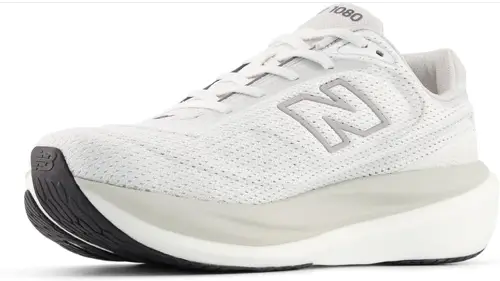
The Brooks Glycerin 23 provides a plush ride with DNA Tuned cushioning. The New Balance 1080v15 uses the newer Infinion foam rather than the Fresh Foam X used in the 1080v14. New Balance describes the 1080v15 as an extra-soft neutral shoe for everyday and long-distance running.

The Ghost 18 is less plush and feels more like a traditional everyday running shoe.
The Hoka Clifton 11 sits between lightweight daily training and high cushioning, while the Echelon 10 provides a broader, more planted platform.
There is no reason to choose maximum cushioning simply because your feet are wide. Fit comes first.
Consider the Saucony Echelon 10 if You Use Orthotics
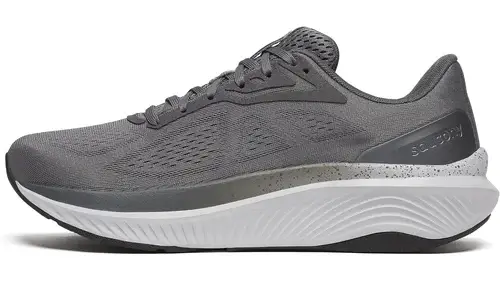
The Echelon 10 deserves special attention for runners who use an orthotic or simply need more internal room.
Saucony gives the shoe a broad, stable base and straight shape. It is available in regular, wide and extra-wide versions, including wide and extra-wide women’s options.
That makes it one of the better choices when a standard-shaped daily trainer still feels restrictive.
Be Careful When Switching to Zero Drop
The Altra Torin 9 is the most unusual shoe in this group because its heel and forefoot sit at the same height. That is what zero drop means. (More on shoe drop here.)
Its shape and wide option make it attractive to runners with broad feet, but zero drop can feel very different if you normally run in shoes with an 8 mm or 10 mm drop.
If you switch, introduce the Torin gradually rather than immediately replacing all of your normal mileage with it.
Try Shoes Later in the Day
Feet can become somewhat larger during prolonged standing, walking and running. A shoe that feels perfect first thing in the morning may feel tighter later. When possible, try running shoes later in the day and wear the same type of socks you normally use for running. You should be able to move your toes without your forefoot sliding from side to side.
Check Width Availability Before Choosing a Color
One annoying reality of wide running shoes is that not every color comes in every width. A shoe may technically be available in extra wide while your preferred color is offered only in standard width. Always choose the width first and the color second.
Which Wide Running Shoe Should You Choose?
For most wide-footed runners, start with the Brooks Glycerin 23 (check price) if you want premium cushioning or the Brooks Ghost 18 (check price) if you prefer a more traditional daily trainer.
The New Balance 1080v15 (check price) is especially worth considering if width selection is your priority. Women can choose wide D or extra-wide 2E, while men can move up to 4E.
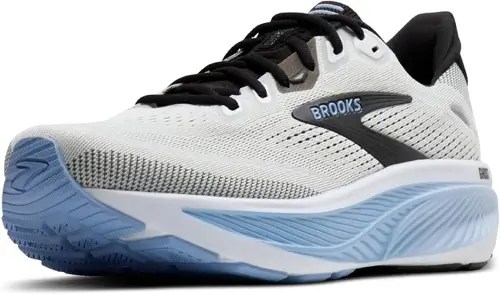
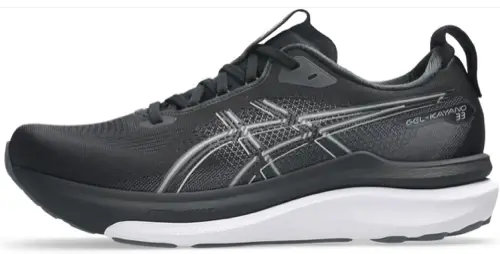
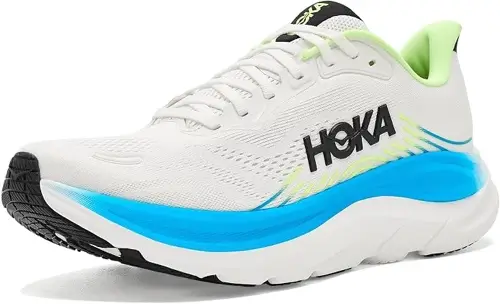
Choose the Asics Gel-Kayano 33 (check price) if you want stability, the Saucony Echelon 10 (check price) if you need a particularly broad platform or use orthotics, and the Hoka Clifton 11 (check price) if you want a lighter cushioned daily trainer.
The Altra Torin 9 (check price) is the specialist choice. Its foot-shaped forefoot gives toes more room, and a true wide version is also available, but its zero-drop geometry makes it significantly different from the other shoes here.
More Wide-Foot Shoe Resources
If width is one of your main footwear concerns, these guides can help narrow the choices further.