Last Updated on September 25, 2026
Quick answer: Do you need wide shoes or just more toe room? If your shoe feels tight across the ball of your foot and along both sides, start with a true wide size. If your heel and midfoot feel fine but your toes are crowded, look for a roomier toe box instead. If the shoe feels tight over the top of your foot, you may need more depth rather than more width. Do not automatically buy a longer shoe to fix a width problem. See the fit check below.
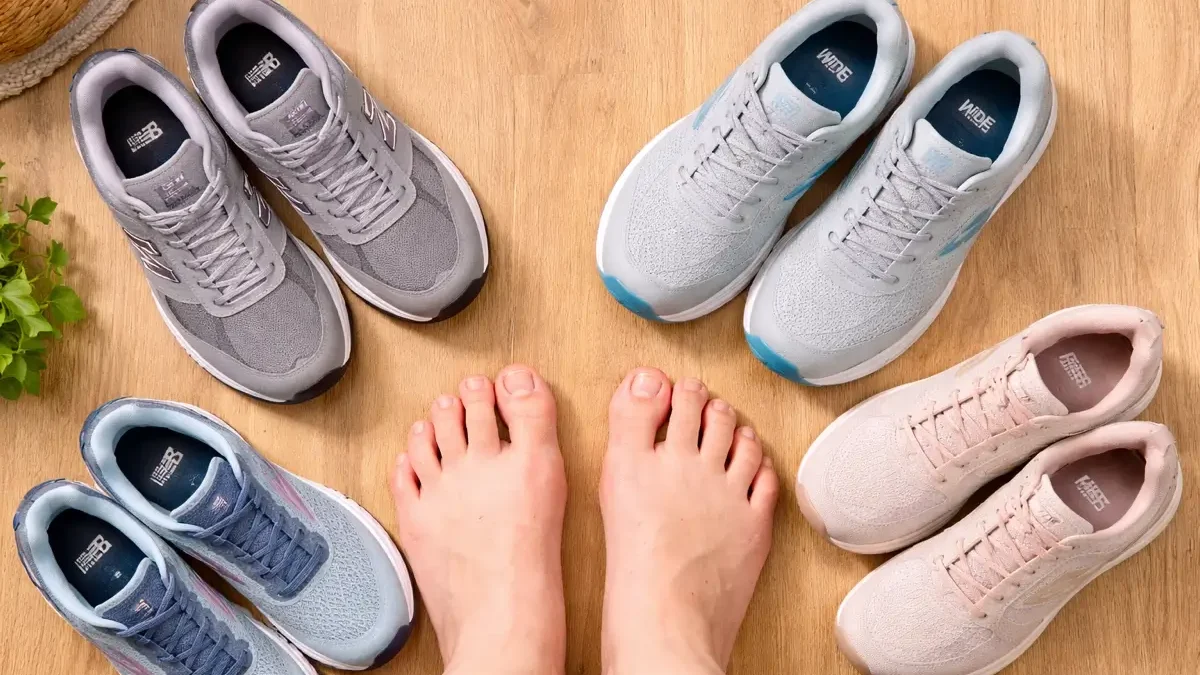
“I need wider shoes” can mean three different things. You may need more width across the whole forefoot, more room just around the toes, or more space over the top of your foot.
Those problems can feel similar, but the best fix is different. A shoe that is too wide everywhere can make your heel slide. A shoe that is long enough but too narrow can still pinch. And a shoe can be wide enough on paper but still feel tight if it is too shallow.
Wide Shoe or Wide Toe Box? Start Here
| Where the shoe feels wrong | What to try first |
|---|---|
| Tight across the ball of the foot and both sides | A labelled Wide or Extra Wide size |
| Heel and midfoot fit, but toes feel crowded | A roomier or foot-shaped toe box |
| Pressure over the top of the foot or instep | A higher-volume or extra-depth shoe |
| Bunion rubs against the side, but heel feels secure | A softer, roomier toe box before making the whole shoe wider |
| Forefoot hangs over the edge of the sole | A true wider width |
| Everything feels tight | Measure length, width and volume before changing size |
| Toes are cramped but heel already slips | More toe room, not necessarily a wider shoe |
What Is the Difference Between a Wide Shoe and a Wide Toe Box?
A wide shoe is a wider version of the whole model. Depending on the brand, it may add space through the forefoot, midfoot and sometimes the heel.
A wide toe box describes the shape at the front of the shoe. It gives the toes more room to spread without necessarily making the heel or midfoot wider.
That difference is important. A 2E or 4E shoe can still taper sharply at the toes. Another shoe may have a broad, foot-shaped front while keeping a fairly normal heel.
The Topo Atmos 2 is a good example of the second approach. It has a naturally roomy toe box but a more secure heel and midfoot. That can work well for people whose toes feel crowded even when the rest of the shoe fits properly.
Signs You Probably Need a True Wide Shoe
A wider size is more likely to help when the pressure is spread across the sides of your forefoot rather than being limited to your toes.
- Your foot bulges over the side of the sole.
- You get red marks along both sides of the forefoot.
- The ball of your foot feels squeezed even though the shoe is long enough.
- Your little toe and big-toe joint both press against the sides.
- Your feet feel numb or pinched across the forefoot.
- You regularly loosen the laces just to make enough room.
If those signs sound familiar, measure your foot instead of simply moving up a half-size. Our How to Tell if You Have Wide Feet guide shows you how to measure width and compare it with common men’s and women’s width labels.
Signs You May Only Need More Toe Room
A roomier toe box is often the better fix when the heel and middle of the shoe already feel secure but the front feels cramped.
- Your toes rub together even though the rest of the shoe feels fine.
- Your pinky toe presses against the outside of the shoe.
- You get nail irritation or black toenails from crowding.
- You have a bunion that rubs against the side of the upper.
- Your heel already slips when you try a wider size.
- You like your current shoe except for its tapered front.
For current shoes designed around more toe space, see our best wide toe-box shoes. If bunion pressure is the main problem, our best sneakers for bunions guide focuses on toe shape, soft uppers and width choices.
When You Need More Depth, Not More Width
Some feet are not especially wide when viewed from above but still feel squeezed because the shoe is too shallow.
This often happens with a high instep, swelling, thick socks or orthotics. You may feel pressure across the top of the foot even though the sides are not especially tight.
In that case, moving from D to 2E may not solve the problem. Look for words such as extra depth, high volume, a removable insole or an upper that can open wider.
If you wear orthotics, test the shoe with the insert in place. A shoe can fit well with its factory insole and become too shallow as soon as an orthotic is added.
Should You Just Buy a Bigger Shoe?
Usually not. Going up in length can make a narrow shoe feel a little less tight, but it creates a new problem: the shoe may now be too long.
That can cause heel slip, extra movement inside the shoe and a poor flex point. Your foot may bend in one place while the shoe is designed to bend somewhere else.
If the length feels right but the shoe is tight side to side, try the same length in a wider version first. If the heel fits but the toes are cramped, try a model with a broader toe box.
If you are unsure about length too, start with our shoe size calculators and fit tools. The hub includes our sizing calculator, country converters and brand-to-brand shoe-size tool.
What Shoe Width Letters Mean
Width labels are useful, but they are not perfectly consistent from brand to brand.
Typical men’s label | Typical women’s label | General meaning |
|---|---|---|
D | B | Standard |
2E | D | Wide |
4E | 2E | Extra Wide |
6E | 4E | Very wide / extra-extra wide in brands that offer it |
Some brands also use E, 3E or 5E, or simply label shoes Narrow, Wide, X-Wide or XX-Wide. That is why the number or letter on the box should be treated as a starting point, not a guarantee.
If ordinary 2E or 4E shoes are still too tight, see our best shoes for very wide feet, which focuses specifically on verified 4E, 5E and 6E options.
What If You Have a Bunion?
A bunion does not automatically mean you need a wider shoe everywhere. Often the problem is pressure at the big-toe joint while the heel and midfoot already fit well.
In that situation, a soft upper and a broader toe shape may work better than simply buying the widest version available. The goal is to give the bunion room without creating heel slip.
Our bunion shoe guide compares current shoes built around that idea. The Topo Atmos 2 review is also worth reading if you want an example of a roomy toe box with a more secure heel.
Where to Shop Next
Once you know which fit problem you have, use the guide that matches it:
- Best wide toe-box shoes — when your toes are crowded but the rest of the shoe fits.
- Best wide shoes for walking — for everyday walking and fitness use.
- Best running shoes for wide feet — for road running and athletic use.
- Best wide work shoes — for long shifts, hard floors and workplace needs.
- Best 4E, 5E and 6E shoes — when ordinary wide sizes are still too tight.
- Best sneakers for bunions — when pressure around the big-toe joint is the main problem.
If you still are not sure where to start, use our free Shoe Finder to narrow your options by activity, fit and support needs.
Frequently Asked Questions About Wide Shoes and Toe Boxes
You probably need a wider shoe if the length feels right but your forefoot is squeezed across both sides, your foot bulges over the sole or you get red marks along the sides of your foot.
A roomier toe box may be enough if your heel and midfoot fit well but your toes feel crowded, your pinky toe rubs or a bunion presses against the side of the shoe.
No. A wide shoe adds width across more of the shoe. A wide toe box mainly changes the shape and space at the front, so the heel and midfoot can stay more secure.
Usually not. If the length already feels right, try the same size in a wider width or a shoe with a roomier toe box. Going longer can cause heel slip and poor fit.
For men’s shoes, 2E is commonly Wide and 4E Extra Wide, while 6E is an even wider option offered by some brands. Women’s labels are usually different, with D often used for Wide and 2E for Extra Wide.
Yes. The shoe may be too shallow over the top of your foot, or the toe box may taper too sharply. Width, toe-box shape and shoe depth are separate parts of fit.
Not always. If the heel and midfoot fit well and only the bunion area feels tight, a softer shoe with a roomier toe box may work better than making the entire shoe wider.