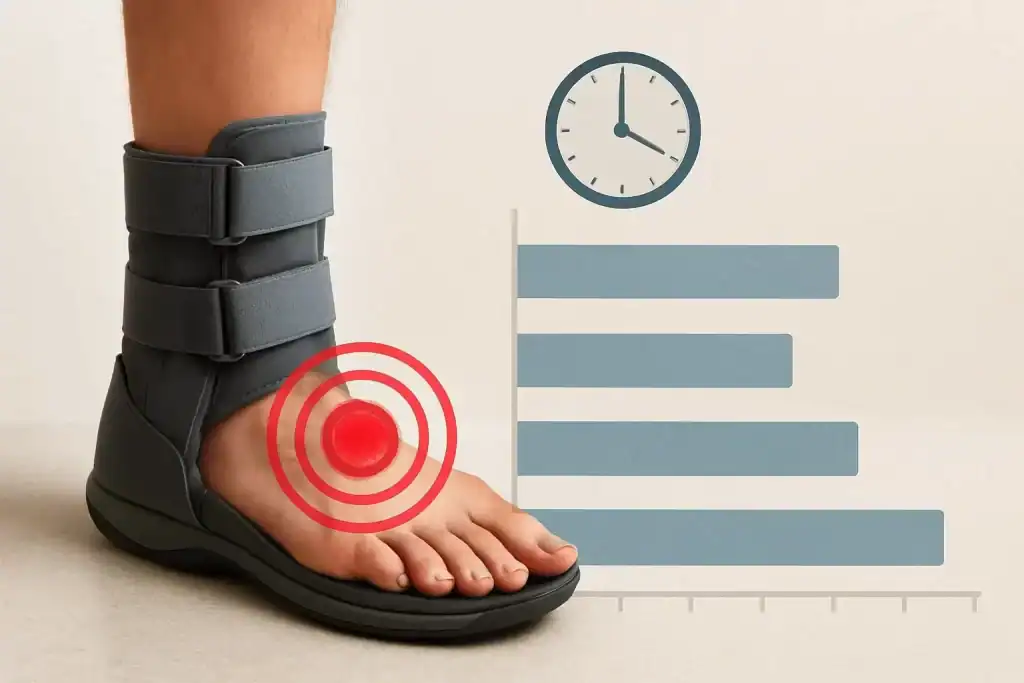
Foot injuries tend to creep into every part of daily life. Walking becomes deliberate. Standing too long starts to hurt. Even routine errands feel heavier than they should. When foot pain shows up, one question usually comes first: How long is this going to take to heal?
The answer depends on more than the injury itself. Recovery time varies based on what tissue is injured, how early it was treated, how much stress the foot is under during healing, and whether everyday footwear is helping or quietly making things worse.
This guide explains typical recovery timelines, why some foot injuries take longer than expected, and how the right shoes can reduce pain and support healing.
How Long Do Common Foot Injuries Take to Heal?
Orthopedic and sports medicine research offers fairly consistent recovery ranges for common foot injuries, assuming appropriate rest and activity modification. Note that medical literature consistently shows that bone injuries require a minimum of six to eight weeks for structural healing, while soft-tissue injuries often take longer to fully settle because they are easier to reinjure during daily walking.¹²
Type of foot injury (Click links to see detailed posts) | Typical recovery time | What to know |
|---|---|---|
6 weeks to 12 months | More than 90 percent of cases improve without surgery | |
6 to 10 weeks | Early or excessive weight-bearing can delay healing | |
4 to 6 weeks | Swelling may persist even after the bone has healed | |
6 to 8 weeks | Often requires immobilization in a walking boot | |
8 weeks to 6 months | Surgery extends recovery time | |
6 weeks to 9 months | Tendons heal slowly due to limited blood supply | |
8 weeks to 6+ months | Frequently missed or misdiagnosed in early stages | |
2 to 6 weeks | Cushioning and shock absorption are critical | |
6 weeks to 4 months | Ankle stability strongly affects outcomes |
What This Feels Like in Real Life
Most people don’t experience foot injury recovery as a straight line. Pain often improves just enough to feel hopeful, then flares again after a longer walk, a busy day on your feet, or a return to normal shoes too soon. That uneven pattern is common and doesn’t mean healing has failed, it usually means the foot is being asked to do more than it’s ready for. Understanding that recovery often comes in waves helps reduce frustration and prevents the “push through it” cycle that delays healing.
Why Foot Injuries Heal Slower Than Expected
When recovery stalls, the cause is often mechanical rather than medical. Returning to full weight-bearing too early places repeated stress on healing tissue. Flexible or worn-out shoes allow excess motion where the foot needs stability. Higher body weight increases load with every step. Age-related changes slow circulation and tissue repair. Conditions like diabetes further impair healing. Most commonly, people continue walking through pain, assuming discomfort is normal. A review published in Sports Health identified ongoing mechanical overload during recovery as one of the strongest predictors of delayed healing and reinjury in foot and ankle injuries.³
How Shoes Influence Foot Injury Recovery
Shoes don’t heal injuries, but they strongly influence whether healing can happen. Plantar pressure studies show that footwear with adequate cushioning, structural support, and controlled motion reduces stress on injured tissue during walking. Shoes with stiffer soles or rocker designs shift pressure away from painful areas and lower peak loading forces.⁴ In contrast, thin soles, excessive flexibility, or worn midsoles allow repeated microstrain that keeps inflammation active.
Walking Shoes vs Running Shoes vs Max-Cushion Shoes During Recovery
Choosing the right category of shoe matters just as much as choosing the right size. Walking shoes are often best for recovery because they prioritize stability, controlled motion, and durability at slower speeds. They tend to have firmer heel counters and less aggressive toe spring, which helps protect healing tissue.
Running shoes can work during recovery if they offer structure and cushioning, but highly flexible or lightweight models are often a poor choice. Stability or motion-control running shoes are usually more appropriate than neutral trainers.
Max-cushion shoes are particularly helpful during recovery from fractures, heel injuries, and forefoot pain. Their thicker midsoles absorb impact and reduce stress with each step, making daily walking more tolerable during healing.
Minimalist shoes and flexible casual footwear generally work against recovery and are best avoided until pain has fully resolved.
Shoe Recommendations by Injury Type
Plantar Fasciitis and Heel Pain
Supportive walking shoes or stability running shoes reduce strain on the plantar fascia and cushion heel impact, especially during long periods on your feet. Learn more about plantar fasciitis recovery here: Plantar Fasciitis Recovery Time: How Long Healing Takes and What Actually Helps.
See best shoes for this condition.
Here are Top Recommendations for Plantar Fasciitis and Heel Pain
Shoe Model | Features | Price |
Nike Zoom Pegasus 41 | Surprisingly supportive and versatile for both daily mileage and casual wear. | |
Asics Gel Kayano 32 | Built for maximum cushioning, stability, and support, | |
Brooks Glycerin 22 | Plush cushioning with soft heel support that eases plantar fascia strain. | |
Vionic Tide Sandal | Firm orthotic footbed with strong arch support for all-day heel relief. | |
Birkenstock Arizona | Contoured cork-latex footbed supports arches and reduces heel pressure. | |
Asics Gel Nimbus 27 | Soft FF Blast+ cushioning and rearfoot gel absorb impact for heel comfort. | |
Brooks Ghost 17 | Balanced cushioning with smooth transitions and firm heel structure for support. | |
Adidas Supernova 2 | Dual-density midsole offers arch stability and moderate heel softness. | |
Dansko Women’s Professional Patent Clog | Firm rocker sole and arch support reduce heel stress and foot fatigue. |
Foot Stress Fractures and Broken Bones
After a walking boot, transition gradually into max-cushion shoes with stiff soles. Flexible footwear increases bone stress and frequently causes setbacks.
Check out our guide featuring reviews to the top 8 shoes recommended for stress fractures and forefoot pain: Best Shoes for Stress Fractures and Broken Bones in Legs and Feet.
Top Recommended Running Shoes for Stress Fractures:
Shoe model | Best for | Topic features | Price |
|---|---|---|---|
HOKA Bondi 9 | Maximum cushioning | Rocker sole, thick midsole, wide base | |
ASICS GEL-NIMBUS 27 | Shock absorption | Plush foam, smooth transitions | |
Brooks Ghost Max 2 | Rocker support | GlideRoll rocker, stable platform | |
Saucony Triumph 23 | Plush comfort | Premium cushioning, supportive upper | |
Nike Vomero 18 | Balanced cushioning | Cushioned yet stable ride | |
HOKA Clifton 10 | Lightweight recovery | Soft cushion, smooth stride | |
Altra VIA Olympus 2 | Wide toe comfort | Foot-shaped design, rocker sole | |
New Balance Fresh Foam X 1080v14 | All-day wear | Soft foam, stable fit |
Plantar Plate Tears and Forefoot Pain
Rocker-sole shoes reduce toe bending and shift pressure away from the ball of the foot, which is associated with reduced pain during walking.⁵ Learn more about plantar plate tear injuries and recovery here: Plantar Plate Tear Recovery Timeline: From Injury to Walking Comfortably Again.
Top Recommended Running Shoes for Plantar Plate Tears:
Shoe Name | Best For | Key Features | Price Range |
|---|---|---|---|
Hoka Bondi 9 | Maximum cushioning for daily wear | Meta-Rocker, EVA midsole, stable platform | |
ASICS Gel-Nimbus 28 | Neutral stride, running/walking | FF Blast+ Eco, GEL cushioning, roomy fit | |
New Balance 880v15 | Balanced daily trainer | Fresh Foam X, durable, breathable upper | |
Brooks Glycerin GTS 23 | Plush comfort with stability | Nitrogen-infused foam, secure heel | |
Saucony Triumph 23 | Long-distance cushioned comfort | PWRRUN PB midsole, wide platform, soft upper |
Our full guide featuring reviews to the top 5 shoes for Plantar Plate Tears and Forefoot Pain:
https://bestwalkingfeet.com/best-shoes-for-plantar-plate-tear/
Broken Toe
When buying running shoes for a broken toe, prioritize a stiff or rockered sole to reduce toe flexion. Look for generous toe box space to accommodate swelling and avoid compression. Max cushioning helps absorb impact, while a stable platform limits unwanted foot motion that can aggravate healing bones.
Broken toes often tolerate walking shoes before true running shoes. Many clinicians recommend delaying running until pain-free push-off is possible, even if swelling has decreased. Rockered, max-cushion shoes can help bridge that transition but do not replace proper healing time.
See our full guide about recovering from a broken toe here.
Recommended Running and Walking Shoes for a Broken Toe:
Shoe (latest model) | Shoe type | Why it works for a broken toe | Price |
|---|---|---|---|
HOKA Bondi SR | Walking shoe | Rockered sole limits forefoot bending while the cushioned, stable platform absorbs impact during daily walking. | |
Brooks Addiction Walker 2 | Walking shoe | Stiff forefoot and motion-control design help reduce painful toe-off and improve stability. | |
New Balance 928v3 | Walking shoe | Wide and extra-wide sizing with a stable base minimizes pressure on swollen or taped toes. | |
HOKA Bondi 8 | Running shoe | Max cushioning and an aggressive rocker reduce forefoot motion and toe stress. | |
Brooks Ghost Max | Running shoe | High stack height, wide toe box, and stable platform reduce impact and toe compression. | |
ASICS Gel Nimbus 26 | Running shoe | Plush cushioning and a forgiving forefoot fit support a gradual return to running. |
Achilles Tendinitis and Posterior Heel Pain
Shoes with moderate heel-to-toe drop reduce Achilles tendon strain. Sudden transitions to flat shoes commonly trigger flare-ups. Learn more about Achilles Tendinitis injury and recovery here: Achilles Tendinitis Recovery Time: From First Pain to Full Healing.
Also see our full guide featuring reviews to the top shoes for Achilles Tendinitis.
Top Recommended Running Shoes for Achilles Tendinitis
Shoe Name | Best For | Features for Achilles Tendonitis | Price |
|---|---|---|---|
Hoka Mach 7 | Overall performance | Lightweight, high heel drop, PROFLY+ responsive cushioning | |
Brooks Glycerin GTS 23 | Maximum cushioning | DNA LOFT v3 cushioning, GuideRails to reduce heel strain | |
Brooks Beast GTS 26 | Stability | Diagonal Rollbar, wide base, substantial heel-to-toe drop | |
ASICS GT-2000 14 | Durability | FF BLAST™ PLUS, PureGEL™, improved stability and cushioning | |
Brooks Launch GTS 11 | Lightweight support | BioMoGo DNA midsole, light stability, updated for 2025 |
Midfoot (Lisfranc) sprain
Shoes with a stable midfoot platform and moderate heel-to-toe drop help reduce strain across the Lisfranc joint during walking. Footwear that bends or twists too easily through the midfoot can increase stress and delay recovery, especially in the early stages of healing. Sudden transitions to highly flexible or minimalist shoes are a common cause of symptom flare-ups. Also see our full guide featuring reviews of the top six shoes for plantar plate tears and forefoot pain.
Top 3 Recommended Running Shoes for Midfoot or Lisfranc Sprain
Shoe Name | Best for | Features | Price |
|---|---|---|---|
Brooks Adrenaline GTS 25 (Stability Shoe) | Walking and light daily use when midfoot stability is critical | GuideRails support system helps limit excessive midfoot motion, while balanced cushioning reduces stress across the Lisfranc joint during push-off. Structured heel and midfoot add confidence for injured feet. | |
Brooks Ghost 17 (Neutral Cushioning Shoe) | Longer walks once pain has stabilized and swelling is controlled | Plush, evenly distributed cushioning absorbs impact without over-flexing the midfoot. Smooth heel-to-toe transition helps reduce torque through the Lisfranc area during gait. | |
New Balance 515 V3 (Comfort-Focused Sneaker) | Everyday wear, errands, and short walks during recovery | Lightweight build with a relatively firm midsole limits excessive midfoot bending. Arch-friendly cushioning and a stable base make it suitable for casual use while healing. |
See our full guide about recovering from a midfoot or Listfranc sprain here.
Metatarsal fracture
Metatarsal fractures place stress on the forefoot during push-off, making sole stiffness and controlled toe bend critical during recovery. Shoes with a firm midsole, reduced forefoot flex, and adequate cushioning help limit motion across the fracture site while still allowing comfortable walking. Flexible shoes, thin soles, and aggressive toe spring commonly increase pain and can delay bone healing, particularly in the early and mid stages of recovery.
Learn more about recovering from metatarsal fracture here: Metatarsal Fracture Healing Timeline: From Injury to Full Recovery.
Top 3 Recommended Shoes for a Metatarsal Fracture
Shoe model | Best for | Features | Price |
|---|---|---|---|
Brooks Adrenaline GTS 25 (Stability Shoe) | Walking when forefoot stability and controlled motion are needed | GuideRails system helps limit excess foot motion, while a firm midsole reduces forefoot bending during toe-off. Structured platform supports more even weight distribution across the forefoot. | |
Brooks Ghost 17 (Neutral Cushioning Shoe) | Daily walking once swelling and acute pain have improved | Cushioned yet relatively stiff platform absorbs impact while limiting excessive toe flexion. Smooth heel-to-toe transition reduces abrupt loading through the metatarsals. | |
New Balance Fresh Foam 880 v14 | Longer walks and standing during later recovery stages | Broad, stable base with consistent midsole density helps prevent point loading under the forefoot. Fresh Foam cushioning provides comfort without excessive flexibility. |
Heel contusion
Heel contusions are caused by repeated impact to the fat pad beneath the heel, making shock absorption and underfoot cushioning the top footwear priorities. Shoes with soft yet resilient midsoles help disperse impact forces during heel strike, while a slightly elevated heel can reduce direct pressure on the injured area. Thin soles, worn-out cushioning, and abrupt transitions to minimalist footwear commonly prolong pain and delay recovery.
Check out our guide on recovering from heel contusion here: Heel Contusion Recovery Explained: Healing Time, Symptoms, and Support.
Top 3 Recommended Shoes for Heel Contusion
Shoe model | Best for | Features | Price |
|---|---|---|---|
Brooks Ghost 17 (Neutral Cushioning Shoe) | Walking and everyday use when heel pain is most noticeable | Plush midsole cushioning absorbs repetitive heel-strike impact, while a smooth heel-to-toe transition reduces localized pressure on the heel fat pad. Neutral platform suits most gait types. | |
Brooks Adrenaline GTS 25 (Stability Shoe) | Heel contusion with mild overpronation or alignment concerns | Balanced cushioning paired with GuideRails support helps control excess motion that can amplify heel impact. Structured heel counter improves rearfoot stability during walking. | |
New Balance Fresh Foam 880 v14 | Longer walks and standing when heel sensitivity persists | Fresh Foam midsole provides soft, evenly distributed cushioning under the heel without feeling unstable. Wide, stable base helps reduce point loading on the injured heel area. |
Peroneal tendon injury
Peroneal tendon injuries are often aggravated by lateral instability and excessive side-to-side foot motion, particularly during walking on uneven surfaces. Shoes with a stable heel counter, supportive midsole, and controlled rearfoot motion help reduce strain on the peroneal tendons as they pass behind the outer ankle. Soft, unstructured footwear and worn-down lateral edges can increase ankle roll and commonly lead to symptom flare-ups during recovery.
Learn more about Peroneal tendon injury and recovery here: Recovering From a Peroneal Tendon Injury: Timelines, Setbacks, and Progress.
Top 3 Recommended Shoes for Peroneal Tendon Injury
Shoe model | Best for | Features | Price |
|---|---|---|---|
Brooks Adrenaline GTS 25 (Stability Shoe) | Walking and daily activity when lateral ankle support is needed | GuideRails support helps limit excessive side-to-side motion, while a firm heel counter improves rearfoot stability. Balanced cushioning reduces impact without increasing ankle wobble. | |
Brooks Ghost 17 (Neutral Cushioning Shoe) | Neutral gait patterns needing cushioning without instability | Wide, stable platform with smooth transitions reduces abrupt lateral loading. Plush midsole absorbs impact while maintaining predictable foot placement during walking. | |
New Balance 880 v14 (Fresh Foam) | Longer walks and standing during tendon recovery | Broad base and evenly distributed cushioning help control lateral movement. Structured heel and consistent midsole density reduce strain on the peroneal tendons during heel strike and push-off. |
Is It Okay to Walk Through Foot Pain?
Orthopedic guidance favors symptom-based recovery rather than time-based milestones. Mild stiffness that improves as you warm up may be acceptable. Sharp pain, worsening pain, or pain that increases after activity usually indicates that healing is being disrupted. A study in the Clinical Journal of Sport Medicine found that returning to activity based on time alone, rather than symptom resolution, significantly increases reinjury risk.⁶
When Foot Pain Lingers
Persistent pain beyond expected timelines is often linked to returning to unsupportive shoes too soon, resuming impact activity prematurely, untreated biomechanical issues, or incomplete diagnosis. Lisfranc injuries are a well-known example. These midfoot issues are frequently missed early and are associated with chronic pain when not treated appropriately, according to Foot & Ankle Clinics.⁷
Small Choices That Support Healing
Recovery often improves with consistent, practical adjustments. Rotating supportive shoes reduces repetitive stress. Avoiding barefoot walking on hard floors limits impact. Compression socks help control swelling. Replacing worn shoes matters more than most people realize, since cushioning breaks down long before shoes look worn. Gradual increases in walking distance are safer than sudden jumps. Long-term outcome studies show that most non-surgical foot injuries improve with consistent conservative care, even when progress feels uneven or slow.¹³
Medical References
- Thomas JL et al. Diagnosis and Treatment of Heel Pain. Journal of Foot & Ankle Surgery.
https://pubmed.ncbi.nlm.nih.gov/25979277/ - Torg JS et al. Stress Fractures of the Foot. Foot & Ankle International.
https://pubmed.ncbi.nlm.nih.gov/12398135/ - McPoil TG et al. Overuse Injuries of the Foot and Ankle. Sports Health.
https://pubmed.ncbi.nlm.nih.gov/29541146/ - Rao S et al. Plantar Pressure Reduction with Rocker Sole Footwear. Gait & Posture.
https://pubmed.ncbi.nlm.nih.gov/21177160/ - Hossain M et al. Forefoot Offloading Strategies and Plantar Pressure. Journal of Foot and Ankle Research.
https://pubmed.ncbi.nlm.nih.gov/21496396/ - Clarsen B et al. Return-to-Sport Decisions and Reinjury Risk. Clinical Journal of Sport Medicine.
https://pubmed.ncbi.nlm.nih.gov/28644342/ - Myerson MS. Diagnosis and Treatment of Lisfranc Injuries. Foot & Ankle Clinics.
https://pubmed.ncbi.nlm.nih.gov/15362043/