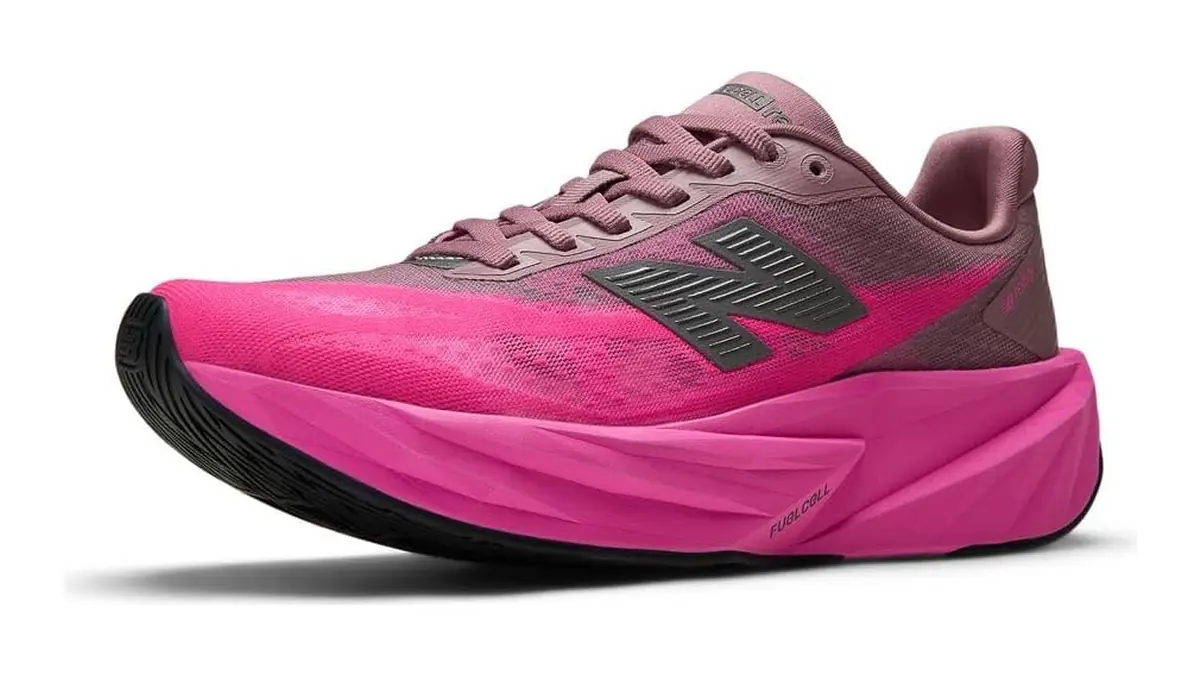
Quick Answer: New Balance FuelCell Rebel v5. The Rebel v5 is a very light, soft running shoe that feels lively without being complicated. It is a good match for casual runners who want one shoe that can handle an easy jog one day and a quicker run the next. Because it is so light and flexible, it feels less bulky than most cushioned shoes. The tradeoff is that it is not the shoe I would choose for all-day walking, heavy mileage or someone who wants a lot of structure underfoot. See what the Rebel v5 feels like in everyday use.
The Rebel v5 is fun in a way many sensible running shoes are not. It is soft, very light and flexible enough that your foot can move naturally. For someone who runs a few times a week and does not want a heavy shoe, that combination can make ordinary runs feel easier and more enjoyable.
The important thing is not the foam chemistry or the exact weight. It is that the shoe gives you cushioning without feeling bulky. You still feel connected to the ground, and when you pick up the pace the shoe responds quickly. That makes it versatile, but it also means it gives up some of the durability and all-day support you get from a heavier trainer.
What the New Balance FuelCell Rebel v5 feels like in real life
| Best for | Everyday running, shorter faster efforts and people who dislike heavy shoes. |
| Overall feel | Soft, light and flexible. It has more give than a firm trainer without feeling like a giant pillow under your foot. |
| Cushioning | The FuelCell foam is soft and springy. The useful takeaway is that easy runs feel comfortable, but the shoe still responds when you speed up. |
| Heel-to-toe drop | 6 mm. Your heel sits a little higher than your toes, so the shoe feels more level than a traditional 10–12 mm running shoe without feeling flat. |
| Fit | Roomier in the toe area than many lightweight trainers, with Standard and Wide versions currently listed by New Balance in the U.S. |
| Weight | 7.9 oz. men’s / 6.2 oz. women’s. That low weight is one of the biggest reasons the Rebel feels so easy to move in. |
| Support | Minimal built-in guidance. Best for people who are already comfortable in neutral shoes. |
| Launch price | $140 | Check latest price |
What you may like
- One of the lightest true everyday trainers you can buy, so your legs feel fresher late in a run
- Soft foam that cushions each landing nicely, even though the shoe is not especially tall
- Gives back a lively, energetic feel when you speed up, which is unusual at this price
- Very flexible, so it bends with your foot and keeps that feel-the-road quality plush shoes lose
- Roomier toes than the last version, so it fits more feet comfortably
What to keep in mind
- The thin upper is the weak link, and how long it lasts is the most common complaint about the Rebel line
- Runs warm on hot days, despite the light, airy build
- Grip is only okay: fine on wet pavement, poor on wet paint, dirt or loose ground
- Heel bounce dipped slightly from the last version, so heavy heel-strikers get a touch less back
- Soft foam plus a modest amount of it means heavier runners can bottom it out on long runs
What is new versus the FuelCell Rebel v4
New Balance worked through the old complaints one by one. The v4 had a strangely thin front end, because the foam was piled under the middle of the shoe instead. Version 5 fills that in and lifts the heel a little, so the shoe now makes sense for longer runs rather than just short ones.
The upper changed where it counted. The short tongue and the heel collar that rubbed people are both gone, replaced by a padded tongue and a well-cushioned heel. The fit is roomier across the toes, and the heel is more comfortable on landing.
The shape of the sole was softened too. Version 4 had a sharply curved heel that many runners disliked; version 5 flattens it out and eases you forward more gently, which suits a wider range of running styles. The shoe gained a touch of weight to pay for the extra foam, a fair trade, and the price held at $140.
Pros
- Soft FuelCell ride works for both easy days and faster running
- Lightweight and flexible underfoot
- Improved heel, tongue and toe room compared with the v4
- Strong versatility for the price
Cons
- Thin upper and exposed foam reduce durability
- Less suitable for wet or unpaved running
- Not ideal for heavier runners who want more protection
- Runs warmer than some highly ventilated trainers
Who this shoe is likely to suit: New Balance FuelCell Rebel v5
Buy it if you want one shoe that covers both easy days and faster runs without owning two pairs. It feels lively when you push the pace, and the very soft foam keeps gentle recovery runs comfortable. That kind of range is unusual at $140.
Runners who land on the middle or front of the foot get the strongest case for it. The low, level feel, the newly filled-in front end and the springy forefoot all point the same way, and the flexibility means the shoe bends with your foot rather than forcing a particular motion. Anyone who dislikes tall, max-cushion shoes and likes to feel the ground will enjoy it.
It is also the obvious shoe to retry if the v4 bothered your heel or its tongue drove you mad. Both problems are genuinely fixed, and the toes are roomier besides.
You may want something else if…
Skip it if you want one tough pair to soak up all your miles. The thin upper and the bare-foam middle of the sole save weight, and both mean the shoe wears out sooner than a normal trainer. It is also the wrong pick if you run on wet or unpaved ground, if you are a heavier runner who needs more foam underfoot, or if you run hot and want a cool, airy shoe in summer. If you want a sturdier, more cushioned everyday shoe, here are three that hold up far better day in, day out:
- Brooks Ghost 18: a durable, do-everything daily shoe with soft, stable cushioning and a proper rubber sole (check price | read review).
- Hoka Bondi 9: deep, plush maximum cushioning that keeps protecting heavier runners on long days and long miles (check price | read review).
- Asics Gel-Nimbus 28: a plush, hard-wearing daily shoe with a substantial upper and a full rubber outsole (check price | read review).
Gender-specific buy links: Men’s version | Women’s version
Not sure which shoe fits your needs? Find the ideal shoe for you with our free Shoe Finder.
How the Rebel v5 feels on your foot
Fit is one of this shoe’s quiet strengths, and a big improvement over the last version. It runs true to size, holds the middle of the foot securely and has more room across the toes than most light shoes bother to give you. Here is how it feels on the foot.
How the fit feels
Order your normal size. There is a lot of owner feedback on this shoe, and it points clearly to true to size, which is reassuring given how many people buy it.
The middle of the shoe holds your foot securely without pinching, and the toe box is the real upgrade: it is roomier than average in both width and height, which is generous for such a light shoe. New Balance currently lists Standard and Wide versions in the U.S.
Comfort when you first put it on
The thin mesh upper feels better made than the price suggests and wraps the foot without any hot spots. The heel is now well padded, a direct fix for a v4 complaint, while padding elsewhere is kept light to protect that low weight. It is comfortable from the first step, with nothing to break in.
Two things follow from how thin it is. It does not breathe as well as you would expect from such a light shoe, so hot days can feel warm. And thin mesh is exactly what it sounds like: how long it lasts is the recurring worry with this shoe, and the reason we would not pick it as your only training shoe for high weekly mileage.
How the Rebel v5 feels when you run
This shoe is a genuine pleasure to run in, and understanding why comes down to how it balances soft foam against a light, flexible build. It has real range for the money, with just a couple of clear limits. Here is how it holds up.
What the cushioning feels like
The foam is one of the softest on the market, so your foot sinks in nicely on each step. What stops that from feeling mushy or disconnected is the modest amount of it: because the shoe is not tall, you never lose the feel of the ground. Landings are well cushioned at the heel, and the front of the shoe gives back a noticeable spring, which is what makes it feel quick when you run on the front of your foot.
The ride is playful, which is not a word you can use about many trainers. It is very flexible, so it bends with your foot instead of levering you forward, and it is so light it never feels like a chore to swing along. That combination gives it real range: easy runs feel comfortable, faster efforts feel lively, and even a shorter race is realistic. What it will not do is protect you on a very long, slow grind the way a taller shoe does, because that soft foam compresses through under sustained pounding.
Will it feel steady?
This is a no-support shoe with a few quiet touches to keep it steady: a wide base, a sole that flares out at the edges and raised sidewalls that gently cup your foot. Those exist to offset how soft the foam is, not to change the way you move, and the shoe makes no claim to correct anything.
In practice it feels steadier than such soft foam has any right to, mostly because sitting low to the ground keeps your foot planted. Runners with a mild inward roll usually get on fine. Anyone who needs real support should look at a dedicated support shoe, because nothing here is built to hold that motion in check.
Grip and everyday wear
The sole is a weight-saving exercise. There are small rubber lugs across the front, a rubber pattern at the heel, and bare foam left across the whole middle of the shoe. Grip is fine on dry and wet pavement but slips on wet paint, packed dirt or leaves, and there simply is not much rubber touching the ground.
Durability is the shoe’s clearest limitation, from both the exposed foam underneath and the thin upper. The limited rubber coverage and exposed foam are the areas to watch as mileage builds, especially if you use the Rebel as an everyday shoe.
Is the New Balance FuelCell Rebel v5 good for walking?
It is great for shorter walks and less suited to all-day wear. The strengths carry over: there is almost nothing to lift, the shoe bends naturally at walking pace instead of fighting you, and the soft foam is comfortable from the first step.
The limits show up over a long day. Walking loads the heel harder and for longer than running does, and this soft, moderate foam compresses further than a firmer or taller shoe would, so the protection fades over hours on concrete. The sparse sole also wears faster when it is your everyday shoe, and the warm upper is less forgiving over eight hours than over eight miles. For a commute or an hour on your feet it is excellent. For standing all day, a heavier, more durable shoe is the better buy.
For walking-first recommendations, see our Best Walking Shoes guide.
FuelCell Rebel v5 vs. FuelCell Rebel v4
Here is how the two versions compare on the points that changed:
Feature | Rebel v5 | Rebel v4 |
Front-of-shoe foam | Filled in and usable for long runs | Oddly thin |
Heel comfort on landing | Improved | Firmer |
Heel bounce | Slightly less | Slightly more |
Tongue and heel collar | Padded and reshaped | Short tongue, irritating collar |
Sole shape | Flatter heel, gentle forward roll | Sharply curved heel |
Price | $140 | Check latest price |
Buy the new model unless you have a specific reason not to. It fixes the fit problems, adds usable cushioning up front and costs the same. Choose the older model only if you find it heavily discounted, never had a problem with its heel, and specifically want the slightly bouncier heel and marginally lower weight.
New Balance FuelCell Rebel v5 alternatives
Shoe (links go to full reviews) | Choose it instead when… | Check price |
|---|---|---|
You want a firmer, more rockered lightweight trainer for faster running. | ||
You want a more durable, traditional daily trainer from New Balance. | ||
You want more cushioning and bounce for longer daily runs. |
Is it good value?
The Rebel v5 launched at $140. For that you get a genuinely lively, racing-derived foam, a very low weight and a springy feel that beats shoes costing far more. The catch is that New Balance saved that weight by using less rubber and thinner mesh, so it does not last as long as a normal $140 trainer. As the fun, fast-day shoe in a rotation, it is excellent value. As a single pair meant to absorb every mile you run, the cost per mile climbs quickly.
Our take for everyday walkers and runners
Best for: runners who land mid-foot or forefoot and want one light shoe for easy runs and faster efforts, plus anyone who likes soft foam without a tall stack.
Avoid if: you want one pair to soak up high mileage, you run on wet or unpaved ground, you are a heavier runner, or you need a cool shoe in summer.
Fit: true to size, secure midfoot with a roomier-than-average toe box; Standard and Wide.
Verdict: the Rebel v5 fixes everything runners disliked about version 4 without raising the price, and the mix of very soft foam, real flexibility and a feathery weight is genuinely hard to find elsewhere. Buy it for its light, lively ride rather than because you want the most rugged daily trainer.
Frequently Asked Questions About the New Balance FuelCell Rebel v5
It can cover both. New Balance positions it for everyday and quick runs, and the low weight plus FuelCell cushioning give it more pace range than a typical daily trainer.
New Balance lists a 6 mm heel-to-toe drop.
New Balance lists 7.9 ounces for men and 6.2 ounces for women.
Yes. New Balance currently lists Standard and Wide widths in the U.S.
It works well for shorter walks because it is light and flexible, but it is less suitable than a walking-first shoe for long hours of standing or walking.
New Balance uses a FuelCell blend of PEBA and EVA foams for a soft, responsive ride.
The U.S. launch price was $140. Current pricing may be higher or lower depending on size, color and retailer. Check latest price and available colors.