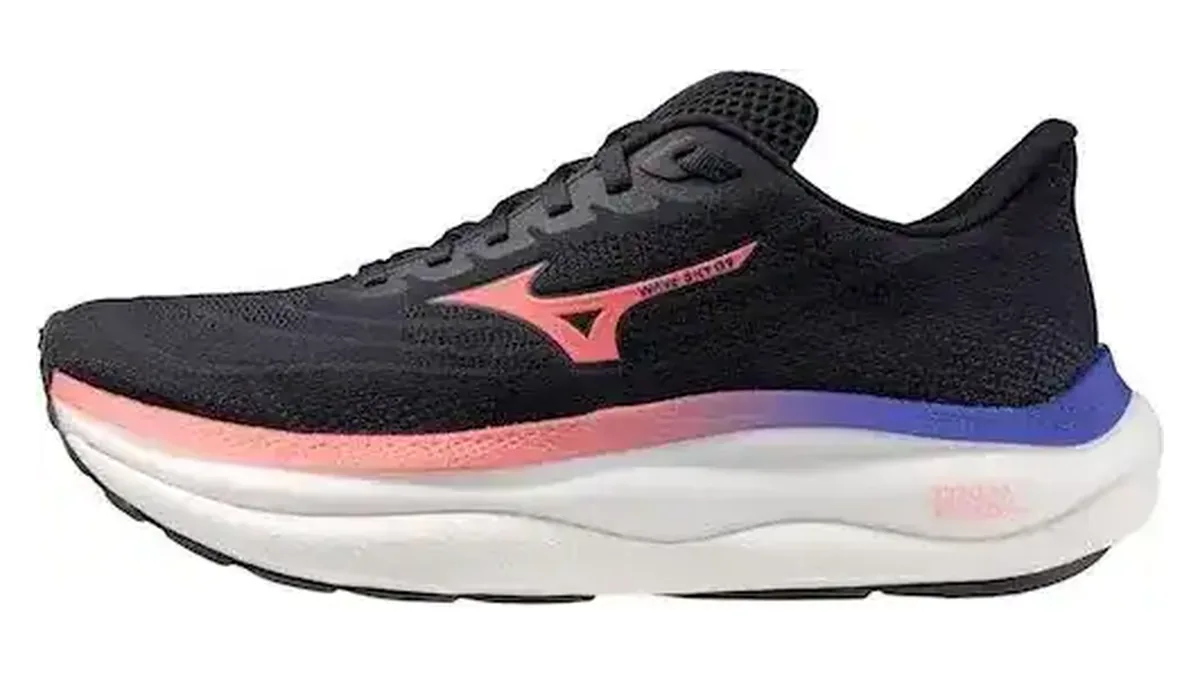
Quick Answer: Mizuno Wave Sky 9. The Wave Sky 9 is for walkers and runners who want a soft, protective shoe that takes some of the sting out of hard pavement. It feels broad and steady underfoot, which is helpful if very soft shoes sometimes feel wobbly. The tradeoff is weight and fit: it is not a fast shoe, and the standard toe box can feel snug. If comfort, long walks and easy runs matter more than speed, it is one of Mizuno’s easier shoes to recommend. See what the Wave Sky 9 feels like in everyday use.
The Mizuno Wave Sky 9 is the current version of Mizuno’s max-cushion road running shoe, the plushest model in a lineup that also includes the firmer, lower-to-the-ground Wave Rider. Where the Wave Rider is an everyday trainer built to handle a mix of paces, the Wave Sky exists to soak up impact on long runs, easy days and time on your feet outside of running. It sits alongside shoes like the Hoka Bondi and Brooks Glycerin in the category buyers search for as “max cushion” trainers.
Mizuno positions the Wave Sky 9 for runners who want a soft landing without losing structure underfoot, and for walkers who want serious cushioning for standing shifts, travel days or long walks on pavement. It is not built for tempo runs or race day. If comfort over many miles or hours on your feet is the priority, it is one of Mizuno’s strongest options.
What the Mizuno Wave Sky 9 feels like in real life
| Best for | Long walks, easy runs, standing on hard floors and people who want a softer landing. |
| Overall feel | Soft and protective, but with a broad enough base that it does not feel overly wobbly. |
| Cushioning | Deep cushioning helps take the edge off concrete and asphalt. This is the main reason to choose the shoe. |
| Heel-to-toe drop | 6 mm. Your heel sits a little higher than your toes, so the shoe feels more level than a traditional running shoe without feeling flat. |
| Height underfoot | About 44 mm at the heel and 38 mm at the forefoot. In plain English, there is a lot of foam between you and the ground. |
| Fit | Secure through the middle, but the standard forefoot can feel snug. The wide version is the better choice for broader feet. |
| Weight | About 10.3 oz. men’s / 8.6 oz. women’s. It is not light, but the extra material is part of what makes it comfortable and steady. |
| Launch price | $175 | Check latest price |
Pros
- A tall, dual-density Enerzy foam stack cushions landings on long runs and back-to-back walking days without feeling mushy.
- A wider platform than the Wave Sky 8 adds a steadier, more planted feel, which helps on tired legs late in a run or a long day of standing.
- The X10 carbon-rubber outsole covers nearly the whole sole, so it holds up to regular road and treadmill miles and grips wet pavement.
- The stretch-woven upper and gusseted tongue wrap the midfoot securely while still breathing reasonably well in warm weather.
- A true 2E wide option is sold alongside the standard width, a built-in fix for the fit issue below.
Cons
- The standard-width forefoot and toe box run narrow, and several independent reviewers found their toes crowded even in a true size.
- At roughly 10.3 to 10.4 oz for men’s, it is heavier than most daily trainers, so it feels sluggish at faster paces.
- Independent reviewers note the two midsole foams feel like one cohesive unit only after some break-in miles, not straight out of the box.
- Lab testing cited by independent reviewers found a modest drop in energy return compared with the Wave Sky 8, despite the taller stack.
- At $175, it costs more than most daily trainers, a real consideration if you only need occasional extra cushioning.
What Is New vs. the Wave Sky 8?
The Wave Sky 9 is a bigger change from the Wave Sky 8 than the name suggests. Independent measurements show the platform got wider, roughly 5 mm at the forefoot and 6 mm at the heel, the main reason it feels steadier underfoot. The stack grew taller too, and drop dropped from 10 mm to 6 mm: Mizuno added most of the extra cushioning under the front of the foot rather than the heel, which levels out the ride. The midsole was reworked into a dual-density Enerzy NXT and Enerzy build in place of the single-layer foam, and the outsole grip and upper ventilation were both improved after complaints about the last version. The trade-offs: a narrower toe box, a small drop in energy return, a half-ounce weight gain and a small price increase over the Wave Sky 8’s $170 launch price.
Who this shoe is likely to suit: Mizuno Wave Sky 9
The Wave Sky 9 suits runners who want a genuinely soft landing for easy runs, long runs and recovery days, especially if you are also on your feet for work or errands. It is a strong fit for midfoot and heel strikers who want a wide, stable platform rather than a narrow, tippy ride, and for anyone who has liked past Wave Sky models but wants more foam without switching brands. Because it comes in a genuine 2E wide option alongside the standard width, it also works for wider-footed buyers who normally struggle to find room in a max-cushion trainer, provided they buy the width that matches their foot.
You may want something else if…
Skip the Wave Sky 9 if you have a wide or high-volume forefoot and are not planning to buy the 2E wide version. Multiple independent reviewers describe the standard fit as noticeably narrow, and sizing up a half size only adds length, not width. It is also not the shoe for runners chasing a lighter, livelier ride: at over 10 oz for men’s, with a firm, slower-to-break-in feel and a measured drop in energy return, it will feel heavy and flat to anyone used to a peppier daily trainer. Budget shoppers may want to look elsewhere too, since $175 buys plenty of cushioning shoe outside Mizuno’s lineup. If that describes you, these alternatives are worth a look:
- Hoka Bondi 9: a roomier, plusher max-cushion shoe with a wider toe box out of the box, for runners who want soft cushioning without sizing into a special width (check price).
- Brooks Glycerin 21: a max-cushion trainer with a more forgiving standard-width toe box and a plush feel from the first run, for buyers who found the Wave Sky’s fit too snug (check price).
- Saucony Procyon Max: a wide, deeply cushioned trainer built with walkers as much as runners in mind, for anyone who wants maximum room and a forgiving ride over a livelier one (check price | read review).
Not sure which shoe fits your needs? Find the ideal shoe for you with our free Shoe Finder.
How the Wave Sky 9 feels on your foot
The Wave Sky 9 runs true to length for most buyers, but the fit through the midfoot and toe box is snugger than many max-cushion competitors. Anyone with an average or narrow foot should find the standard width comfortable once broken in; anyone with a wider or higher-volume foot should go straight to the 2E wide option rather than hoping the standard fit relaxes over time.
How the fit works
Buy your normal running shoe size. The heel and midfoot lock down securely thanks to the gusseted tongue, the stretchy lining that hugs the tongue to the foot so it cannot shift side to side. Where the fit gets tight is the forefoot and toe box, which independent reviewers consistently describe as narrow, in some cases by several millimeters compared with the Wave Sky 8. Wide-footed runners and anyone who wants extra room for the toes at the end of a long run should choose the 2E wide version instead of sizing up.
Comfort when you first put it on
The stretch-woven upper is a knit-style material engineered to stretch in some directions and hold firm in others, which is how Mizuno keeps the shoe secure during a running stride without feeling stiff. Step-in comfort is good: the material is soft from the first wear, the gusseted tongue prevents the pressure and slipping a looser tongue can cause, and ventilation is reasonable for warmer weather, an area Mizuno specifically improved over the Wave Sky 8.
Gender-specific buy links: Men’s version | Women’s version
How the Wave Sky 9 feels when you walk and run
On the run, the Wave Sky 9 feels like a shoe built for comfort rather than speed. The soft, deep foam stack absorbs impact well and smooths out the transition from heel to toe, but the added weight and firmer feel before it breaks in mean it is happiest at easy, conversational paces rather than workouts.
What the cushioning feels like
The dual-density midsole pairs a softer Enerzy NXT foam on top with a firmer Enerzy foam underneath, Mizuno’s way of giving a plush landing without the shoe feeling unstable or collapsing under load. Independent reviewers describe the ride as moderately cushioned and leaning firm rather than pillowy-soft in the first several runs, noting the two foam layers feel like a single unit once the shoe has some miles on it.
What it feels like once you get moving
This is a shoe for easy miles, long runs and recovery days, not tempo work. Independent reviewers report a smooth, protected ride at conversational paces, with some noting midfoot strikers get better energy return from the foam than heel strikers do. The added weight and dense midsole make it feel bulky if you try to pick up the pace, so treat it as a comfort-first daily trainer rather than an all-purpose shoe.
Will it feel steady?
The Wave Sky 9 is a neutral shoe: it has no dedicated motion-control features and is not designed to correct or limit how your foot rolls as you land. Instead of a hard plastic stability plate, Mizuno shapes the midsole into a wave-contoured structure it calls Foam Wave, blending the soft top foam and firmer base foam into a stepped pattern that spreads pressure across a wider area. Combined with the wider platform than the Wave Sky 8, that gives it a steadier, more grounded feel than a typical neutral trainer. Runners who need a true stability shoe for a diagnosed gait issue should still choose a dedicated support shoe.
Grip and everyday wear
The X10 carbon-rubber outsole covers nearly the entire bottom of the shoe, using Mizuno’s harder-wearing rubber compound in high-contact zones. Independent reviewers report strong traction on wet pavement and call the outsole durable, a specific improvement over the Wave Sky 8’s grip complaints. As with any running shoe, expect the outsole and midsole cushioning to gradually wear down. A broad industry guideline is 300 to 500 miles before cushioning noticeably breaks down, though actual mileage depends on your weight, stride and running surfaces, so treat that as a rough guide, not a guarantee.
Is the Mizuno Wave Sky 9 Good for Walking?
Yes, and this is one of the shoe’s strongest use cases. Max-cushion running shoes like the Wave Sky 9 tend to make excellent walking shoes, because the same deep, dual-density foam that softens running impact also absorbs the repetitive pounding of standing on concrete or hard floors for hours. The wider platform than the Wave Sky 8 adds steadiness at slower walking speeds, when each step gives a shoe more time to feel unstable if it is going to. Mizuno lists walking as an intended use alongside jogging, and reviewers who wore it for all-day, non-running use generally called it comfortable and protective. The main thing to weigh is the narrow standard-width toe box, since feet swell over a long day, so buyers who mostly plan to walk in it may prefer the 2E wide version.
For more walking-first options, see our Best Walking Shoes guide.
Mizuno Wave Sky 9 vs. Wave Sky 8
Spec | Wave Sky 9 | Wave Sky 8 |
Stack height | About 44 mm heel / 38 mm forefoot | About 40.7 mm heel / 30.7 mm forefoot |
Drop | 6 mm | 10 mm |
Men’s weight | About 10.3 to 10.4 oz | About 9.6 to 9.8 oz |
Midsole | Dual-density Enerzy NXT over Enerzy, Foam Wave geometry | Single-layer Enerzy NXT foam |
Platform width | Wider (independently measured wider at heel and forefoot) | Narrower |
Launch price | $175 (July 2025) | About $170 (September 2024) |
Buy the new model when: you want more platform stability and a smoother heel-to-toe transition, you are comfortable buying the 2E wide version if needed, and you do not mind a small increase in weight and price for a taller, more protective stack.
Buy the previous model when: you already own and like the Wave Sky 8’s fit, prefer a slightly lighter shoe and a higher 10 mm drop, or can find it discounted and do not need the wider platform or upper improvements. Check latest price on the Wave Sky 8 while stock lasts.
Mizuno Wave Sky 9 alternatives
Shoe (links go to full reviews) | Choose it instead when… | Check price |
|---|---|---|
You want an even softer, roomier max-cushion feel for walking and easy running. | ||
You want premium cushioning with a more traditional everyday-running feel. | ||
You want a softer neutral shoe with a smoother, more familiar road feel. |
Is it good value?
The Mizuno Wave Sky 9 launched at $175 in July 2025, at the upper end of daily trainers but in line with other max-cushion shoes from Hoka, Brooks and Saucony. For that price you get a durable, full-coverage rubber outsole, a genuine 2E wide option and enough midsole foam to outlast a lighter, more minimal trainer. Buyers who only walk in it may find similar cushioning for less in a dedicated walking shoe, but for runners who also want a shoe that performs on the road, the price reflects real materials, not a premium label alone.
Best for: runners and walkers who want a deeply cushioned, steady ride for easy miles, long runs and long days on hard surfaces, and who are willing to buy the 2E wide version if they have a wider foot.
Avoid if: you have a wide or high-volume standard foot and will not consider the wide version, you want a light, fast-feeling daily trainer, or you need a true stability or motion-control shoe for a diagnosed gait issue.
Fit: true to length, secure through the heel and midfoot, narrow through the standard-width toe box. Size normally, and choose the 2E wide option if you have wider feet rather than sizing up.
Verdict: The Mizuno Wave Sky 9 is one of Mizuno’s most cushioned, most capable shoes for comfort-first miles and all-day wear, held back mainly by a toe box that will not suit every foot in the standard width. If your foot shape matches what it offers, it is an easy shoe to recommend. Check the latest price.
Frequently Asked Questions About the Mizuno Wave Sky 9
No. It is a neutral shoe with no dedicated motion-control features. Its wider platform and wave-shaped Foam Wave midsole give it a steadier feel than a typical neutral trainer, but it is not designed to correct or control how your foot rolls, and it is not a substitute for a dedicated stability shoe.
Length runs true to size for most buyers. Width is the bigger consideration: the standard fit is narrow through the forefoot, so wide-footed buyers are generally better off choosing the 2E wide version than sizing up a half size, which adds length, not width.
Yes. Its tall, dual-density foam stack and wider platform make it a comfortable option for standing shifts, travel days and long walks on hard surfaces. Buyers who mainly plan to walk in it should still consider the 2E wide version if they have a wider foot.
The Wave Sky 9 has a taller stack, a lower 6 mm drop instead of 10 mm, a wider platform, a reworked dual-density foam and an improved outsole and upper. It is about half an ounce heavier and $10 more at launch, and some reviewers note a narrower toe box and a slight drop in energy return.
You can, but it is not built for it. The extra weight and dense midsole are designed around comfort at easy and moderate paces, not responsiveness. For tempo runs or races, a lighter daily trainer or a dedicated speed shoe will feel noticeably better.
Yes. Mizuno sells it in both a standard (D) width and a true wide (2E) width, worth choosing if past Mizuno models or other max-cushion shoes have felt tight through the forefoot.
Mizuno does not publish a mileage guarantee, and none should be assumed. The X10 outsole is durable and independent reviewers report solid wear resistance, but as a general industry guideline, most running shoe cushioning breaks down somewhere between 300 and 500 miles depending on weight, stride and surfaces.