Last Updated on October 10, 2026
| Quick Answer: Nike Structure Plus Review: The Nike Structure Plus is a highly cushioned stability running shoe made for daily miles, long runs, walking, and standing. It combines soft ZoomX foam with firmer ReactX foam, giving runners more comfort than the standard Structure 26 while still guiding the foot through each step. The ride feels smooth and protective rather than fast or highly springy. It fits true to size for most people, with regular and wider fit options available. Its biggest drawbacks are its weight and premium price. Prices and availability vary by size and color on Amazon. Check for latest price. |
Nike Structure Plus Review: Overview and Specifications
The Nike Structure Plus is a high-cushion stability shoe built for runners who want extra guidance without giving up softness. Stability shoes are designed to help keep the foot moving on a steadier path, particularly for runners who tend to roll inward more than they would like.
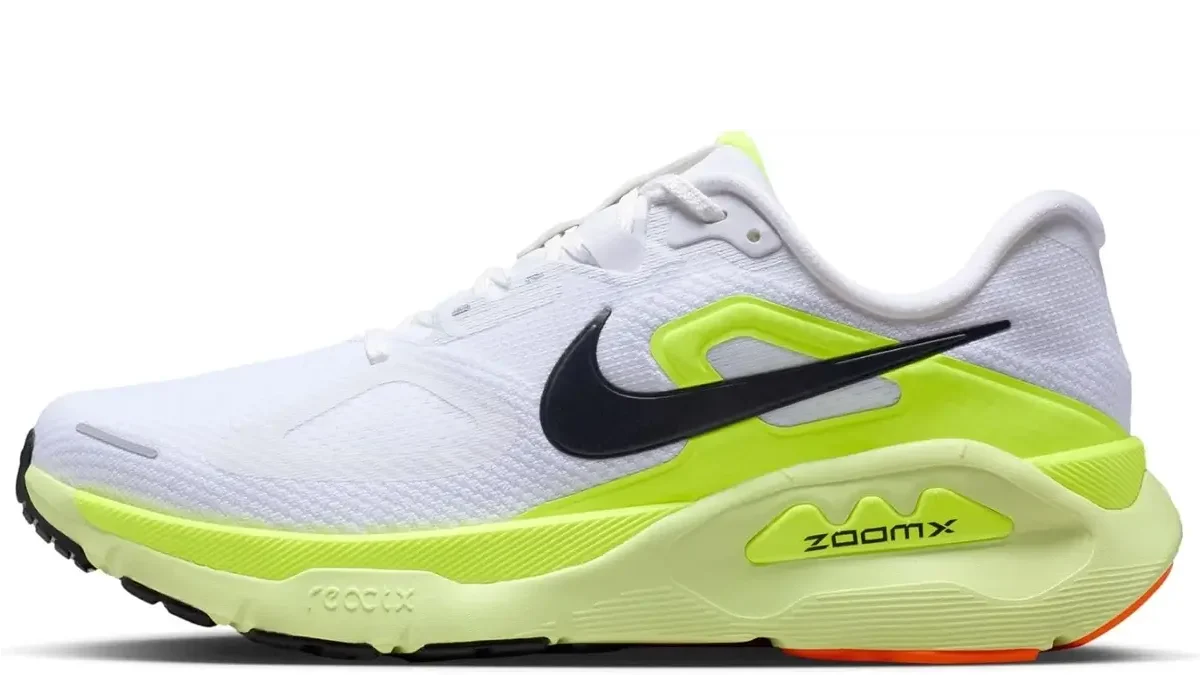
Nike positions the Structure Plus above the regular Structure 26. Instead of using one main cushioning material, it combines two foams. A soft layer of ZoomX sits above firmer ReactX foam. ZoomX is Nike’s lighter, more energetic foam, while ReactX provides a steadier base. The goal is to create a cushioned shoe that still feels controlled.
This is not a fast stability shoe. At about 10.9 ounces for a men’s size 10, it is heavier than many daily trainers. Its strengths are comfort, protection, and support during easy runs, steady training, long runs, walking, and all-day wear.

Specs
| Specification | Nike Structure Plus |
|---|---|
| Category | High-cushion stability daily trainer |
| Men’s weight | Approx. 10.9 oz / 309 g, men’s US 10 |
| Women’s weight | Approx. 8.7 oz / 248 g, women’s US 8 |
| Stack height | Approx. 42 mm heel / 32 mm forefoot |
| Heel-to-toe drop | 10 mm |
| Support type | Stability |
| Midsole | ZoomX foam over ReactX foam |
| Support system | Midfoot support system around the arch and heel |
| Upper | Engineered mesh with secure midfoot band |
| Outsole | Softer forefoot rubber and durable heel rubber |
| Fit | True to size for most runners |
| Available widths | Regular plus wider fit options |
| Best for | Daily running, long runs, walking, standing, and recovery days |
| Release date | January 8, 2026, at specialty running stores; wider release February 5, 2026 |
| Price | Approx. $170 USD based on Nike’s list price at publication. Amazon prices are lower: Check latest price. |
Stack height tells you how much shoe sits between your foot and the ground. At about 42 mm in the heel, the Structure Plus has a substantial amount of cushioning. Its 10 mm drop means the heel sits about 10 mm higher than the front of the foot, which gives it a more traditional running-shoe feel than lower-drop models.
Best For
The Structure Plus is best for runners and walkers who want a soft but controlled shoe. It is particularly useful for easy running, longer distances, walking on hard surfaces, and days when tired legs benefit from additional cushioning and support.
Pros
The Structure Plus combines comfort and stability in a way that should appeal to a broad range of runners and walkers.
- Soft ZoomX cushioning without an unstable feeling
- Support system guides the foot without using a hard medial post
- Comfortable for easy miles and long runs
- Good option for walking and standing on hard surfaces
- Secure upper and padded step-in feel
- Wider fit options are available
- Durable rubber in high-wear areas
Cons
The extra cushioning and support also create some limitations.
- Heavy compared with many modern daily trainers
- Not especially lively despite using ZoomX foam
- Too bulky for fast intervals or racing
- Premium price point, at about $170 USD at release in January 2026 | Lower prices on Amazon: Check latest price.
- High stack may feel excessive for runners who prefer more ground feel
- Support may be unnecessary for neutral runners who prefer minimal guidance
What’s New About the Nike Structure Plus?
The Structure Plus is not simply a Structure 26 with more foam. Nike created it as a more cushioned option within the Structure family for runners who want stability but prefer a softer ride.
The most important change is the combination of ZoomX and ReactX foam. The regular Structure 26 relies mainly on ReactX, which feels firmer and more traditional. The Structure Plus adds a softer ZoomX layer above it. For the runner, that means landings feel more cushioned while the firmer foam underneath helps prevent the shoe from feeling unstable.
Nike also carries over the midfoot support concept introduced in the Structure 26. Instead of placing a hard block of foam under the arch, the shoe shapes its support around the heel and arch. This helps guide the foot without creating the obvious corrective feeling found in older stability shoes.
The result is a more comfort-focused member of the Structure family. The regular Structure remains the lighter and firmer choice. The Structure Plus is better suited to runners who want more cushioning for daily mileage, longer runs, recovery days, walking, or extended periods on their feet.
Fit, Sizing, and Upper Comfort
The Nike Structure Plus fits true to size for most runners. Starting with your normal Nike running-shoe size is the safest approach unless you already know that Nike shoes tend to fit you differently.
The toe box has reasonable height, but the standard version is not especially broad across the front. The toe box is the area surrounding the toes. People with average-width feet should find enough room for normal running and walking, while buyers with broader feet should consider one of the wider fit options rather than simply choosing a longer size.
The middle of the shoe feels secure because Nike builds a supportive band into the engineered mesh upper. That band helps hold the foot over the platform and works with the support system underneath. The heel is also well padded, which contributes to the comfortable step-in feel.
Nike uses engineered mesh, which means different parts of the fabric are designed to provide different amounts of structure and airflow. The upper feels substantial enough for daily training but remains breathable enough for most conditions.
There should be little need for a long break-in period. The upper padding and soft top layer of foam make the shoe comfortable from the first few outings.
The Structure Plus is not waterproof. It can handle normal road spray or a brief shower, but the mesh upper will eventually allow water through.
Runners using orthotics may also appreciate the removable insole and roomy interior, although any replacement insert should be tested carefully to make sure it does not make the shoe too tight.
Cushioning, Ride, and Running Performance
The Structure Plus stands out because Nike combines two cushioning materials that perform different jobs.
ZoomX is the softer layer directly beneath the foot. It is the same foam family Nike uses in several faster and more expensive running shoes, although the Structure Plus uses it differently. Instead of trying to create a racing sensation, Nike uses ZoomX to make a stability shoe feel softer and more comfortable.
ReactX sits beneath the ZoomX. It is firmer and provides the stable foundation that keeps the shoe from feeling too loose or wobbly.
That combination gives the Structure Plus a soft landing followed by a controlled transition. It is noticeably more comfortable than many old-fashioned stability shoes, which often felt hard underneath the arch.
The shoe is also highly cushioned. Its approximately 42 mm heel stack puts a large amount of material between the foot and pavement, which helps reduce the harsh feeling of repeated road impact.
The trade-off is weight. At about 10.9 ounces for a men’s size 10, the Structure Plus does not disappear beneath the foot. You feel that mass more as the pace increases.
Despite the ZoomX foam, the ride is not especially explosive. Energy return describes how strongly a shoe seems to spring back after the cushioning compresses. The Structure Plus provides some rebound, but most of its appeal comes from comfort and smoothness rather than a powerful bounce.
The support system also influences the ride. It wraps around the arch and heel to help keep the foot moving through a controlled heel-to-toe path. The guidance is noticeable without feeling like a hard block pressing under the arch.
| Use | How the Structure Plus Performs |
|---|---|
| Easy runs | Excellent for cushioned, controlled mileage |
| Daily training | Very good at relaxed and steady speeds |
| Long runs | Very good, especially for runners who want support |
| Recovery runs | Excellent for tired legs |
| Tempo runs | Usable but heavier than ideal |
| Intervals | Below average for faster repetitions |
| Racing | Not designed as a performance racing shoe |
| Treadmill running | Very good for easy and moderate sessions |
The Structure Plus makes the most sense at easy and moderate speeds. It can pick up the pace when necessary, but runners doing regular speed work will probably want a lighter second shoe.
Amazon availability can vary by fit, size, and color. Check size and color availability.
Walking, Standing, Stability, Grip, and Durability
The Structure Plus may be even more interesting to some walkers than to runners. Its combination of cushioning, support, and a broad platform addresses many of the features people look for when spending hours on their feet.
Walking and Standing
For walking, the Structure Plus provides a soft landing without allowing the foot to move excessively from side to side. That balance can be useful on sidewalks, concrete floors, shopping centers, airports, and other hard surfaces.
The 10 mm drop also makes it relatively easy to adapt to for people coming from traditional athletic shoes. Unlike very low-drop shoes, it does not suddenly place much more demand on the calves or Achilles tendon.
For standing all day, the cushioning and broad base are strong advantages. The ZoomX layer reduces the harsh feeling of hard floors while the ReactX base keeps the platform steady.
The main drawback is weight. Someone who prefers a lightweight walking shoe may notice the bulk after several hours. The Structure Plus is also visually larger than a simple walking sneaker.
Stability and Support
This is a true stability shoe. Nike’s midfoot support system wraps around the arch and heel to help control movement through the stride.
Older stability shoes often used a medial post, which was a noticeably firmer piece of foam placed on the inner side of the shoe. The Structure Plus takes a more modern approach by shaping the platform and support around the foot.
That makes it suitable for runners who overpronate, meaning their feet roll inward more than desired. It may also appeal to neutral runners who simply enjoy a more guided and steady ride.
Grip and Durability
Nike uses two types of outsole rubber. The softer forefoot rubber allows more flexibility, while firmer rubber beneath the heel is designed to resist wear.
Grip is well suited to pavement, sidewalks, treadmills, and damp roads. It can handle short sections of packed gravel, but it is not designed for technical trails, mud, or loose terrain.
The amount of rubber underneath should help it hold up well for daily mileage. Actual lifespan will depend on body weight, walking or running form, surfaces, and frequency of use.
Who Should Buy the Nike Structure Plus?
The Structure Plus is a particularly strong choice for runners who need stability but no longer want the firm, corrective feeling associated with older support shoes. The combination of ZoomX cushioning and Nike’s midfoot guidance system creates a much softer experience without removing the control that stability runners need.
It is also worth considering if most of your running takes place at easy or moderate speeds. Long runs, recovery runs, treadmill sessions, and everyday mileage suit the shoe better than intervals or racing.
Walkers should consider it if they spend significant time on pavement or hard indoor floors. The cushioning helps reduce repeated impact while the structured platform remains steady during slower movement.
People who work on their feet may also appreciate the support, especially if soft neutral shoes tend to feel unstable.
The Structure Plus could also suit heavier runners who prefer more material underneath the foot and a broad, controlled base. Body weight alone does not determine shoe choice, but some runners may find that the substantial platform feels more secure.
Who Should Avoid It?
Skip the Structure Plus if you want a lightweight trainer, racing shoe, or highly flexible walking shoe.
Neutral runners who dislike noticeable guidance may prefer the Nike Vomero Plus or another neutral cushioned model. Runners who prefer more ground feel may also find the 42 mm heel stack unnecessarily tall.
The $170 USD launch price is another consideration. Buyers who need stability but do not require this much cushioning can save money by choosing the standard Structure 26.
Nike Structure Plus Comparisons
The Structure Plus makes the most sense when compared with Nike’s standard Structure 26 and another modern high-cushion stability shoe.
Nike Structure Plus vs. Structure 26
The Structure 26 is the more traditional stability trainer. It uses ReactX cushioning without the extra ZoomX layer, which gives it a firmer and more direct feeling.
The Structure Plus adds more cushioning and softness. It is better for long runs, recovery days, and walkers who spend a lot of time on hard surfaces. The trade-off is additional weight and a higher price.
The standard Structure 26 launched at about $145 USD, while the Structure Plus arrived at about $170 USD.
Choose the Structure Plus if cushioning and comfort are the priorities. Choose the Structure 26 if you want a lighter, firmer stability trainer and would rather save about $25 at regular pricing.
Nike Structure Plus vs. Hoka Arahi 8
The Hoka Arahi 8 also provides stability without relying on an old-style hard medial post. Both shoes aim to guide the foot without making the support feel overly corrective.
The Structure Plus feels softer and more heavily cushioned, while the Arahi is generally lighter and has a lower heel-to-toe drop. The Nike’s 10 mm drop will feel more familiar to runners coming from traditional shoes, while the Hoka may suit people who prefer a flatter platform.
The Structure Plus is the stronger choice for maximum cushioning, walking, recovery runs, and standing on hard surfaces.
Choose the Structure Plus if softness and high cushioning matter most. Choose the Arahi 8 if you want a lighter stability shoe with less bulk underneath the foot.
Price, Value, and Final Verdict
The Nike Structure Plus launched at $170 USD in January 2026 before becoming widely available in February. That puts it above the standard Structure 26 and into the premium daily-trainer category.
Whether it is worth paying more depends heavily on why you are buying it.
The value is strong for runners who genuinely need stability and also want maximum cushioning. There are fewer shoes that combine these qualities without feeling extremely firm. The Structure Plus can also fill several roles, including daily trainer, recovery shoe, long-run shoe, walking shoe, and all-day footwear.
Its value is weaker for runners interested mainly in speed. Paying for ZoomX does not turn the Structure Plus into a performance trainer, and lighter alternatives make more sense for tempo workouts and racing.
Walkers and people who stand for long periods may actually get some of the best value from it because the cushioning, wide platform, and support are useful even at slower speeds.
Amazon pricing can vary by size, fit, seller, and color. Check latest price.

Final Verdict
Best for: Runners and walkers who want substantial cushioning with genuine stability and support.
Avoid if: You want a lightweight speed shoe, minimal guidance, or a lower-priced everyday trainer.
Fit: True to size for most people, with regular and wider fit options available.
Verdict: The Nike Structure Plus is one of Nike’s most comfortable stability shoes, combining soft ZoomX cushioning with the steadier feel of ReactX foam. It is heavy and not particularly fast, but that matters less during easy runs, long runs, walking, and all-day use. For buyers who want cushioning and stability in the same shoe, the Structure Plus makes a strong case for its $170 USD launch price.
Frequently Asked Questions
Yes. The Structure Plus is designed specifically as a stability running shoe. Its support system wraps around the arch and heel to help guide the foot through the stride without using the hard medial post found in many older stability shoes.
The Structure Plus fits true to size for most runners. Start with your normal Nike running-shoe size. People with wider feet should consider one of the wider fit options rather than sizing up in length, which can create unnecessary movement around the heel.
Yes. Walking is one of its strongest secondary uses. The thick cushioning protects the foot from hard pavement and floors, while the stability system helps keep the platform controlled. Its main disadvantage for walking is weight, particularly for people who prefer very light shoes.
Yes, particularly for people who prefer a cushioned and supportive shoe. The ZoomX layer provides softness while the ReactX base prevents the shoe from feeling excessively unstable. The high stack can be useful on concrete and other hard surfaces.
It is designed for runners who want additional control and guidance, including many people who overpronate. Overpronation means the foot rolls inward more than desired during the stride. The Structure Plus guides this movement without using a traditional hard support post.
The Structure Plus adds ZoomX foam above the ReactX base, making it softer and more cushioned than the Structure 26. The regular Structure is firmer, lighter, and less expensive. Choose the Plus for comfort and longer mileage, or the Structure 26 for a simpler and more traditional stability ride.
Yes. Long runs are one of the better uses for the Structure Plus because the high cushioning protects the legs while the support system keeps the ride controlled. It is especially suitable for runners who become less stable as they tire.
Yes. A neutral runner can wear the Structure Plus if they enjoy a stable, guided ride. The support system is less intrusive than traditional stability designs. However, neutral runners who prefer unrestricted movement may be happier in a shoe such as the Nike Vomero Plus.