Two layers of cushioning with a beautifully built upper
Quick Answer: On Cloudstratus 3 Review: The Cloudstratus 3 is On’s double-cushioned daily trainer, and it is the one to pick if you want the brand’s distinctive ride with more protection underfoot than a standard Cloud shoe. Two stacked rows of hollow pods and a firm plate in the sole give it a stable, controlled feel that suits steady miles, long walks and days on your feet. It is not soft and squishy, and it costs more than most rivals with the same job, which is the main reason to think twice. Check latest price.
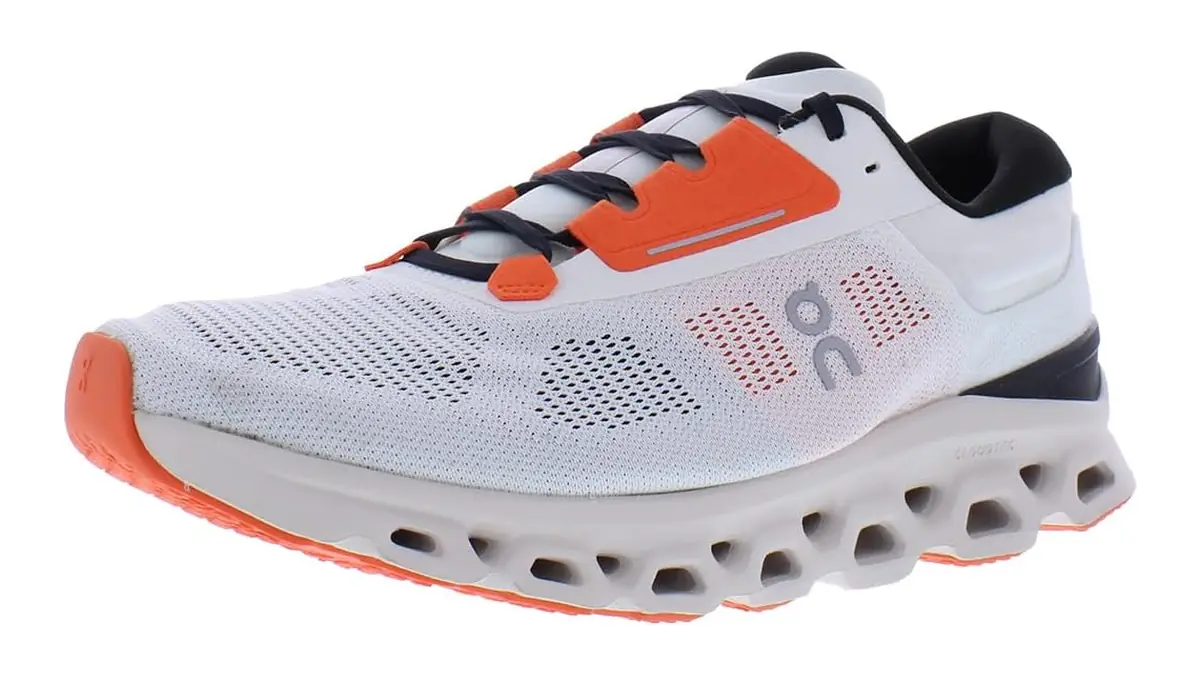
The On Cloudstratus 3 is the third version of On’s double-layer cushioned trainer, and it sits near the top of the brand’s road range. Where most On shoes have one row of hollow rubber pods under the foot, the Cloudstratus has two, stacked one above the other. On calls those pods CloudTec, and the idea is simple enough: the pods squash on landing to absorb the shock, then flatten out to give you a firm surface to push off from.
In the range, this is the long-run and long-day shoe. The Cloudsurfer is lighter and quicker, the Cloudmonster is bouncier and more dramatic, and the Cloudrunner is the gently supportive one. The Cloudstratus sits in the middle of all of that: protective, even-tempered and built for people who cover ground steadily rather than quickly.
It is aimed at a runner or walker who wants substance underfoot and a shoe that feels expensive on the foot, and who is happy to pay for it. If you are shopping mainly on price, or you want the softest possible landing, this is not where the money goes furthest.
Specs
Here are the specifications for the On Cloudstratus 3:
| Type | Road running shoe, everyday and long-distance training |
| Gait type | Neutral, with a steady feel from the plate and wide forefoot |
| Midsole | Helion foam with two stacked layers of CloudTec pods |
| Plate | Speedboard, a stiff nylon plate running through the midsole |
| Weight | About 10.5 oz men’s and 8.9 oz women’s |
| Heel-to-toe drop | 6 mm as listed by On; independent lab measurements have come out higher |
| Stack height | 32 mm heel, 26 mm forefoot |
| Upper | Engineered mesh, largely recycled polyester, with a padded heel |
| Outsole | Rubber on the underside of the lower pods |
| Widths | Standard only |
| Price | $180 at launch in mid 2023. Check latest price |
Pros
- The double layer of pods gives more protection than the numbers on paper suggest, so long runs and long days feel easier than the modest stack height implies
- A wide forefoot platform makes it feel planted rather than tippy, which matters when your legs are tired
- The upper is one of the nicest on any daily trainer: soft, well shaped and secure without squeezing
- The padded heel holds your ankle without pressing on the Achilles, so it rarely rubs
- Predictable and unexciting in the best way, which is what you want from a shoe you wear most days
Cons
- At $180 it costs more than most trainers doing the same job
- The ride is firm and controlled rather than soft, so it will disappoint anyone shopping for pillowy cushioning
- It is heavy for a neutral trainer, and you feel that on anything quicker than an easy pace
- No wide sizes, which rules it out for a lot of feet
- Grit and small stones can lodge in the gaps between the pods
What is new versus the On Cloudstratus 2.0
The third version keeps the character of the Cloudstratus 2.0 but sands off its rough edges. The springy, plate-driven feel is the same, and if you liked the old one you will know it straight away. What On changed was weight and comfort: the Cloudstratus 3 is lighter than the shoe it replaced while adding cushioning, which is an unusual combination and the main reason to upgrade.
The upper is the other change worth paying for. It uses a high proportion of recycled polyester, roughly double the recycled content of the previous shoe overall, and it is noticeably softer against the foot. The lacing runs in a star pattern across the top, which pulls the shoe snug over the middle of your foot without creating a hot spot at any one point.
Underneath, the recipe is unchanged. Helion foam, two rows of CloudTec pods and the Speedboard plate all carry over. That means the things people disliked about the 2.0, chiefly the firmness and the weight, are softened rather than solved.
Who should buy the On Cloudstratus 3
Buy it if you already know you like how On shoes feel and you want the most protective version for long runs. The double stack of pods takes the edge off pavement without turning the shoe mushy, and the stiff plate keeps everything in order underfoot as you tire. Runners who plod happily for an hour or more are the natural audience.
It also suits people who want one shoe for running and for being on their feet. The wide forefoot, the firm plate and the deep heel padding add up to a shoe that copes well with a full day of walking, and it looks smart enough with jeans that you will not feel odd wearing it out.
Finally, buy it if a secure, sock-like upper matters to you. This is the part of the shoe that most justifies the money. If you have narrow heels, or if you have struggled with slipping and rubbing in other trainers, the way this one wraps the foot is a genuine advantage.
Who should probably skip it
Skip it if soft cushioning is your priority. The Cloudstratus 3 protects by spreading impact across two layers of pods rather than by sinking, so the sensation is firm and controlled. People coming from a plush max-cushion shoe often describe the first run in an On as harder underfoot than they expected, and that is exactly what is happening here.
Skip it too if you have wide feet, because it comes in one width only, or if your feet roll inward enough that you have been advised to use a support shoe. The plate and the broad base keep the shoe steady, but there is no built-in guidance to hold your foot upright. And if $180 is a stretch, the honest answer is that there are cheaper shoes that will do most of this.
These suit those readers better:
- Saucony Triumph 24: a genuinely soft max-cushion trainer, which is the sensation the Cloudstratus deliberately avoids (check price | read review)
- Hoka Gaviota 6: the pick if you need your foot actively held steady rather than simply given a wide base to land on (check price | read review)
- Hoka Transport 2: cheaper, tougher underfoot and made for walking and commuting rather than running, if that is really what you want the shoe for (check price | read review)
How does the On Cloudstratus 3 fit?
The Cloudstratus 3 fits like a well-made running shoe should: snug where it needs to hold you, roomy where your toes need to spread. It runs true to size for most people. The one thing to know before you order is that it comes in a standard width only, so wide feet will need to look elsewhere.
Fit and sizing
Order your usual size. The midsole is wide across the ball of the foot, which gives your foot a broad surface to sit on and makes the shoe more accommodating than many On models. That is a different thing from the upper being wide, though. The mesh holds the foot fairly closely, so if you normally buy 2E or wider, this is not the shoe for you. If your feet are narrow to average, the fit is excellent.
Upper and step-in comfort
This is where the money shows. The mesh is soft and pliable, the tongue sits flat, and the laces pull across the foot in a star shape that spreads the pressure instead of concentrating it on one strip. The heel is deeply padded but not bulky, and it cups the ankle in a way that avoids pressing on the Achilles tendon at the back. Step in and the shoe feels firm underfoot and plush around the foot, which is an unusual and quite pleasant combination.
How does the On Cloudstratus 3 perform?
This shoe rewards consistency. It is at its best at a steady, comfortable pace over a long distance, where the firm platform stays supportive mile after mile. It is less convincing when you want to speed up, and it never feels light. If your running is mostly easy and mostly long, that suits you well.
Cushioning and ride
Helion is On’s own foam, and on its own it is moderately soft. What changes the feel is the CloudTec pods: hollow chambers that collapse on impact and then bottom out against each other. Because there are two layers here rather than one, there is more travel before that happens, so landings are cushioned but end on a firm note rather than sinking. The measured stack of 32 mm at the heel and 26 mm at the forefoot looks modest next to today’s tall trainers, yet the shoe protects better than that number suggests, because the pods do work that solid foam would need more height to do.
Ride and running performance
Running in it feels smooth and businesslike. The Speedboard, a stiff nylon plate buried in the sole, stops the shoe folding as you roll onto your toes, so each step ends with a definite push rather than a squish. On easy runs that is efficient and pleasant. On faster efforts the weight tells: at about 10.5 ounces in a men’s shoe it takes real effort to move quickly, and the firm plate does not give much back in return. Treat it as a long-run and easy-day shoe and you will get along with it.
Stability and support
We would classify the Cloudstratus 3 as stable-neutral. It has no wedges, frames or raised walls, so it is not a support shoe, but two things make it feel steadier than most neutral trainers. Lab measurement puts the forefoot platform at over 115 mm across, which gives you more to balance on. And the plate stops the sole twisting under load, so your foot cannot roll around inside the shoe as easily. That combination suits people who want reassurance without formal support. It does not replace a stability shoe, and no shoe corrects the way you move.
Outsole, grip and durability
Rubber covers the underside of the lower pods, which is where the wear happens, and grip on dry and wet pavement is dependable. The weakness of any pod-based sole is debris: gravel and small stones can wedge into the gaps and rattle until you dig them out, and that gets more likely if your route includes loose paths. As a rough guide most running shoes give you 300 to 500 miles, and the substantial build and full rubber coverage here should put the Cloudstratus at the healthier end of that range.
Is the On Cloudstratus 3 good for walking?
It is a good walking shoe for a specific kind of walker. If you are on hard floors all day, or you walk long distances on pavement, the firm platform and the stiff plate stop your feet feeling battered by the end, and the plate reduces how much the shoe folds and flexes with every step, which is one of the things that tires feet out. The deep heel padding and secure upper mean it stays comfortable for hours without rubbing. Two things count against it for pure walking use. The pod gaps pick up grit on paths and gravel, and the standard-only width leaves out a lot of people who want a walking shoe precisely because their feet need room. The insole lifts out if you wear orthotics.
On Cloudstratus 3 vs On Cloudstratus 2.0
Cloudstratus 3 | Cloudstratus 2.0 | |
|---|---|---|
Cushioning | More cushioning than the 2.0 | Firmer, less forgiving |
Weight | Lighter than the 2.0 | Heavier |
Ride | Same springy, plate-driven character | Same springy, plate-driven character |
Upper | Softer mesh, higher recycled content | Less recycled material overall |
Buy the new model when you want the same ride with less weight to carry and a kinder upper, which is most people. There is no meaningful reason to seek out the older shoe at full price.
Buy the previous model when you find your size heavily discounted and you already know the 2.0 fits you. The core feel is close enough that the saving is worth having.
On Cloudstratus 3 Alternatives
The Cloudstratus 3 asks you to accept firmness, weight and a high price in exchange for protection, steadiness and a lovely upper. Each of these swaps one of those terms.
On Cloudmonster 3: the same brand and a similar shape, but with a much livelier, bouncier feel that makes easy runs more fun and long walks less monotonous (check price | read review).
Asics Gel-Nimbus 28 answers the firmness complaint directly. It costs about the same and delivers the deep, soft, sinking cushioning that the Cloudstratus never offers, which makes it the better shoe if pavement leaves your legs sore (check price | read review).
For wide feet there is really only one answer on this list. The Brooks Ghost Max 3 comes in wide sizes, sits on an even broader base than the Cloudstratus and has a roomier toe box, so it delivers the same planted feeling to people the On simply will not fit (check price | read review).
A fourth option, if the appeal of this shoe is the protection rather than the brand, is the New Balance Fresh Foam X More v6. It piles on far more foam than the Cloudstratus and comes in wide fittings, so it takes the same idea of long-distance protection and pushes it much further (check price | read review).
Price and value
The Cloudstratus 3 launched at $180, which puts it above most daily trainers and level with premium max-cushion shoes. What you get for the money is genuine: a build quality and an upper that few rivals match, a wide and stable platform, and a sole that should last well. What you do not get is modern soft foam or a light shoe, and both are available for less elsewhere. If the way On shoes feel is what you are buying, the price makes sense. If you are shopping on cushioning per dollar, it does not.
Final verdict
Best for: steady long runs, all-day walking and anyone who already likes the firm, controlled On feel and wants the most protective version of it.
Avoid if: you want soft cushioning, you need wide sizes, you need support for feet that roll inward, or you want to run fast.
Fit: true to size, snug and beautifully finished, standard width only.
Verdict: the On Cloudstratus 3 is a well-made, dependable trainer that protects your feet through long, steady efforts. It is firm where a lot of buyers now expect soft, and it is expensive, so it makes most sense to people who want this ride in particular rather than to anyone shopping the category cold.
Frequently Asked Questions for On Cloudstratus 3
No. On sells it in a standard width only. The midsole is wide across the ball of the foot, but the upper is not, so wide feet will feel squeezed.
The Cloudstratus has two stacked layers of pods and a stiff plate, which makes it heavier and more protective. The Cloudsurfer has one layer and no plate, so it is lighter and more flexible and suits shorter, quicker runs.
They can. The gaps between the pods will catch gravel and small stones, particularly on loose paths. They pop out easily with a key or a stick, but it is a known annoyance with this style of sole.
Yes, if you are running for comfort rather than a time goal. It has the protection for the distance. The weight makes it a poor choice if you are chasing a personal best.
The insole lifts out, so custom or over-the-counter orthotics will go in. Because the upper fits closely, try the shoe with your insole in place before committing, as a thicker orthotic will make it feel tighter over the top of the foot.
The standard version is not. It is breathable mesh, which drains and dries quickly but lets water in. On has offered a waterproof version of some Cloud models, so check the specific listing if you want one.
For the current On lineup and newer model families, see our On shoes guide.