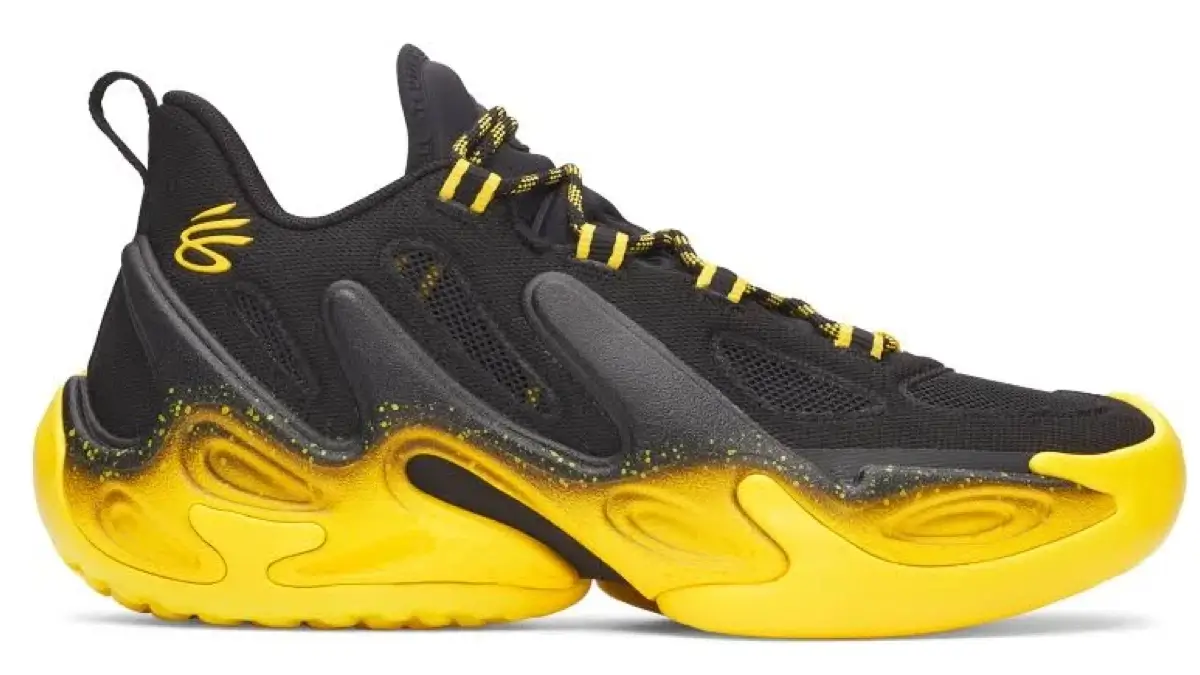
Quick Answer: Under Armour Curry 13 Review: The Curry 13 is a light, low-to-the-court basketball shoe for guards and quick wings who value grip, fast cuts and a snug fit. Under Armour uses a full-length HOVR+ midsole over a de-coupled Flow outsole, so it should feel softer than earlier Curry models without losing the close court feel the line is known for. It works best indoors and on narrow-to-average feet. Players who need a roomy fit, deeper landing protection or an outdoor-first outsole should look elsewhere. Check latest price.
The Under Armour Curry 13 is built around a simple idea: help quick players stop, cut and change direction without making the shoe feel bulky. It is also a notable model in the Curry line. Under Armour introduced it Feb. 13, 2026, as the final signature sneaker in the Curry Brand lineup.
That history is interesting, but it should not be the reason you buy the shoe. The better question is whether its fit and ride match how you play. The Curry 13 is aimed at guards and perimeter players who want a close connection to the floor, secure lateral support and strong indoor traction. It is less convincing for wide feet, outdoor courts or players who want a thick layer of cushioning under hard landings.
Curry 13 at a glance
The Curry 13 is easier to understand when you ignore the marketing names and focus on what they mean on court. HOVR+ is the cushioning layer under your foot. Flow is the traction layer touching the floor. A molded frame wraps the shoe to help keep your foot centered when you cut. Together, those parts make this a quick, controlled basketball shoe rather than a soft, bulky one.
| What matters | What to expect |
|---|---|
| Best for | Guards and quick wings playing mostly indoors |
| Fit | Regular width with a snug, performance-oriented hold |
| Ride | Low, responsive and more forgiving than older all-Flow Curry models |
| Traction | Designed for quick stops and cuts on indoor courts |
| Support | Molded chassis and cage help hold the foot over the platform |
| Outdoor use | Possible, but not our first choice for frequent concrete play |
| Listed weight | 12.4 ounces, according to Under Armour |

How the Curry 13 feels on court
The Curry 13 is made for players who do not want to fight their shoes. Its listed 12.4-ounce weight is light for a performance basketball shoe, but the bigger advantage is how the whole platform is designed to stay low and controlled. That matters when your game involves repeated cuts, hard stops, defensive slides and quick pull-ups.
The biggest change from the Curry 12 is underfoot. The Curry 12 used dual-density Flow for cushioning as well as its outsole. The Curry 13 moves to full-length HOVR+ cushioning and keeps Flow as a separate traction layer. In plain English, Under Armour is trying to give you a little more softness without turning the shoe into a tall, marshmallow-like setup. Players who liked the direct feel of older Curry models should still recognize the formula, but the 13 is the more forgiving design.
This is still not a max-cushion basketball shoe. If your first priority is absorbing repeated hard landings, especially as a bigger player, there are better choices. The Curry 13 makes the most sense when speed, floor feel and fast direction changes matter more than a thick cushion stack.
Fit and sizing
Under Armour lists the Curry 13 as a regular-width shoe. The upper uses lightweight textile material with molded openings, while the support structure wraps around the foot. That combination is designed to keep the shoe breathable without letting your foot slide around when you move laterally.
For narrow-to-average feet, your normal basketball shoe size is the sensible starting point. The fit is meant to feel secure, not roomy. If you have a broad forefoot, a high-volume foot or you normally buy wide athletic shoes, this is not a model we would buy blindly online. A half-size increase can add length, but it does not turn a regular-width platform into a true wide shoe.
If width is already a problem for you, start with our guide to the best basketball shoes for wide feet. That is a better way to compare shoes that give the forefoot more room instead of trying to force the Curry 13 to fit a foot shape it was not built around.
Traction and court feel
Traction is one of the main reasons to consider a Curry shoe. Under Armour uses a de-coupled Flow outsole on the Curry 13, separating the grip layer from the HOVR+ cushioning above it. Flow is a rubberless system designed to keep the shoe light while giving players strong contact with the court.
For a guard, that design makes sense. You want the shoe to hold when you plant for a jumper, slide on defense or change direction off the dribble. A low platform also helps the shoe feel more stable because your foot is not sitting far above the floor. The trade-off is that this kind of setup gives you less protective cushioning than a taller, softer basketball shoe.
Keep the playing surface in mind. Flow is at its best on indoor courts. Dust can still affect any basketball outsole, but the Curry 13 is clearly designed around hardwood movement rather than rough outdoor use. If you split time between the gym and outdoor concrete, a shoe with a more traditional, durable rubber outsole is the safer long-term choice.
Cushioning and impact protection
The Curry 13 uses full-length HOVR+ cushioning. Under Armour describes it as a lighter, softer foam with energy return, and that change is important because older Curry shoes were often defined by their direct, close-to-the-floor feel. The 13 keeps that low profile but adds more give underfoot.
That should suit guards who want some protection without losing the fast feel of the shoe. Think of it as a middle ground: more forgiving than a very firm court shoe, but not the thick, plush setup you get in models built around bigger players and harder landings. If you are a lighter or average-size player who spends most of the game on the perimeter, that balance is likely to make sense.
Heavier players should pay more attention to the second half of that trade-off. A shoe can feel quick because it keeps you close to the floor, but that also means less material between your body and the court. If impact protection is more important to you than court feel, the Nike LeBron 23 is built around a very different, more cushioned approach.
Support and stability
The Curry 13 does not rely on a tall collar to create support. Instead, Under Armour uses a lightweight EVA cage around the foot and a 3D-molded TPU chassis around the platform. Those pieces are there to help keep your foot centered when you cut, stop or push off sideways.
That is the kind of support most basketball players should care about. Ankle height alone does not tell you whether a shoe will feel stable. A secure fit, a controlled platform and side-to-side containment are often more useful during real movement. The Curry 13 checks those boxes for the narrow-to-average-foot player it is designed around.
The limitation is fit. A support frame can only work well if your foot sits comfortably inside it. If the shoe pinches your forefoot or you have to size up so far that your heel starts moving, you lose the benefit of that structure. Players with flat feet who also need more room or a different support feel can compare our basketball shoes for flat feet before deciding.
Durability and outdoor use
Under Armour calls the Curry 13’s Flow outsole high-abrasion, so durability has clearly been part of the design. Even so, we would still treat this primarily as an indoor basketball shoe. The Curry line gets much of its appeal from the light, rubberless Flow system, and rough concrete is harder on that kind of outsole than a clean hardwood court.
If you play outside once in a while, the Curry 13 can handle it. If outdoor basketball is your main use, it is harder to justify wearing down the part of the shoe that makes it special. Look for thicker rubber, deeper traction and a more outdoor-focused build instead. The same logic applies if you plan to use the Curry 13 as an everyday street shoe. It is comfortable enough for short periods off court, but every sidewalk mile is wear you are putting on a performance outsole.
For buyers who rotate shoes, the practical approach is simple: keep the Curry 13 for indoor games and practices, and use a different pair for outdoor courts, commuting or long walks.
Pros
- Strong indoor traction for stops, cuts and defensive slides
- Low, controlled platform suits guards and quick wings
- HOVR+ adds more softness than earlier Curry models without making the shoe bulky
- Secure lateral containment for narrow-to-average feet
Cons
- Snug regular-width fit is not a good match for wide feet
- Less impact protection than deeper-cushioned basketball shoes
- Flow outsole is better suited to indoor courts than frequent outdoor concrete play
Who should buy the Under Armour Curry 13
The Curry 13 makes the most sense for guards and quick wings with narrow-to-average feet. If your game depends on pull-up jumpers, quick changes of direction, defensive slides and getting into space without feeling a heavy shoe under you, the design matches that job well.
It is also a logical upgrade for someone who liked the Curry 12 but wanted a little more softness underfoot. The HOVR+ midsole changes the cushioning system without moving the shoe away from the low, controlled feel that defines the line. The final-signature-model story is a nice extra for Curry fans, but the performance case is stronger than the collector angle.
Buy it for indoor basketball, quick movement and a close fit. Do not buy it simply because it is the last numbered Curry signature shoe. A basketball shoe still has to match your feet and the way you play.
Who should probably skip it
Wide-footed players are the clearest group who should be careful. The Curry 13 is sold in a regular width, and its support frame is built to hold the foot closely. If you usually need 2E or more room across the forefoot, start with a wider model instead of hoping the upper will stretch enough.
Players who want deep cushioning should also look elsewhere. The Curry 13 is softer than some earlier Curry models, but it remains a low-to-the-court shoe. Bigger players, frequent rebounders and anyone who lands hard may be happier in a more protective setup. Outdoor players have a similar reason to skip it: you would be paying for a Flow outsole designed around indoor traction, then wearing it down on rough concrete.
If the Curry 13 misses your needs, these are better places to look:
- Adidas AE 2: another perimeter-focused option with a firmer, more planted feel. Check latest price.
- Nike LeBron 23: better suited to players who want more cushioning and a more substantial build. Check latest price.
- Nike G.T. Hustle 3: a more cushioned choice for players who put impact protection ahead of the Curry 13’s low court feel. Check latest price.
Find the ideal shoe for you. Free Shoe Finder.
Under Armour Curry 13 vs. Curry 12
The Curry 12 and Curry 13 share the same basic goal: keep the shoe light, grippy and quick. The big difference is how they divide cushioning and traction. The Curry 12 uses dual-density UA Flow in the midsole and a Flow outsole. The Curry 13 switches the cushioning layer to full-length HOVR+ and keeps Flow as a separate outsole.
For the buyer, that means the Curry 12 is the more traditional modern Curry setup, while the Curry 13 is the softer evolution of it. The 12 also uses Pebax plates through the midfoot and forefoot, while the 13 uses a molded chassis and cage system to provide structure around the platform. Both are regular-width, quick-playing shoes, so neither is the obvious answer for a genuinely wide foot.
If you already own the Curry 12 and love its direct feel, there is no urgent reason to replace it. Choose the Curry 13 when you want a little more cushioning while staying close to the floor. Choose the Curry 12 when you prefer the all-Flow feel and can still find it in your size. Check Curry 12 availability.
Is the Under Armour Curry 13 good for walking?
The Curry 13 is comfortable enough for short walks, gym use and everyday errands, but we would not buy it as a dedicated walking shoe. The low weight and HOVR+ cushioning help, and the breathable upper is useful when you are moving around. The problems are the snug fit and the outsole. A performance basketball shoe is built around sharp court movement, not hours of steady forward walking on pavement.
If you walk for fitness, commute on foot or spend all day standing, a walking or running shoe will usually give you a better combination of cushioning, room and outsole life. You also avoid wearing down the Curry 13’s Flow traction before you take it back onto the court.
If walking comfort is the actual goal, start with our best walking shoes guide rather than trying to make a basketball shoe do two jobs.
Our verdict on the Under Armour Curry 13
The Curry 13 is a strong match for the player it was built around: a guard or quick wing who wants low weight, indoor grip, a secure fit and close court feel. The move to HOVR+ makes the cushioning more forgiving without changing the basic Curry formula. The reasons to skip it are just as clear. It is not a wide shoe, it is not our first choice for outdoor basketball, and it is not the model for players who want deep impact protection.
That makes the buying decision fairly simple. If your feet are narrow to average, you play mostly indoors and you value fast cuts over plush cushioning, the Curry 13 belongs on your shortlist. If any of those conditions do not fit you, one of the alternatives above will probably make more sense.
Frequently asked questions about the Under Armour Curry 13
Yes, for the right player. It is best suited to guards and quick wings who want a light, low-to-the-court shoe with strong indoor traction. Players who need a wide fit, deep cushioning or an outdoor-first outsole should consider other options.
For narrow-to-average feet, your normal basketball shoe size is the best starting point. The Curry 13 is designed to fit securely, so wide-footed players should try it on before buying rather than sizing up and hoping for extra width.
It is not our first choice for wide feet. Under Armour lists it as a regular-width shoe, and the molded support structure is designed to hold the foot closely. Players who normally need a wide size should compare wider basketball shoes first.
You can, but the Curry 13 makes more sense as an indoor shoe. Its Flow outsole is designed around light weight, court feel and traction. Frequent play on rough concrete will put more wear on the outsole than indoor hardwood.
The Curry 12 uses dual-density Flow cushioning with a Flow outsole. The Curry 13 switches to a full-length HOVR+ midsole and keeps Flow as a separate traction layer. The practical goal is a softer ride while keeping the low court feel Curry shoes are known for.
It is fine for short walks and casual wear, but it is not a dedicated walking shoe. The snug fit and performance outsole make more sense on a basketball court. Regular walkers will usually get more comfort and outsole life from a walking or running shoe.
Yes. Under Armour introduced the Curry 13 in February 2026 as the final signature sneaker in the Curry Brand lineup.