Dependable everyday comfort at a fair price, with little excitement
Quick Answer: The Supernova Rise 3 is Adidas’ mainstream neutral trainer, and it has updated cushioning and fit options. There is more of the soft Dreamstrike+ foam underfoot, the fiddly plastic support rods are gone and the shoe is lighter than before. That makes it a comfortable, steady choice for easy runs, daily miles and walking. Buy it if you want dependable cushioning without spending a lot. Skip it if you want a shoe that feels quick, because the ride is calm rather than lively..
The Adidas Supernova Rise 3 is the shoe Adidas points most runners toward first. It is the everyday trainer in the range, sitting below the racing Adizero shoes and alongside the plusher Supernova Prima, and it is meant to handle the unglamorous majority of your miles. The first two versions were decent without ever being the shoe anyone recommended, largely because a set of plastic rods in the midsole made the ride feel awkward.
Version 3 deletes those rods, adds a noticeable amount of foam and reworks the foam itself so it is softer and bouncier. The result is much closer to what a daily trainer should be. We see this as a shoe for the weekend runner who wants one pair for three or four runs a week plus dog walks and errands, and who would rather spend $140 than $170.
Specs
Here are the specifications for the Adidas Supernova Rise 3:
| Type | Neutral road daily trainer |
| Gait type | Neutral, so no built-in correction for feet that roll inward |
| Midsole | Dreamstrike+ foam, reformulated to be softer and bouncier, with more of it than the previous model. The plastic Support Rods have been removed |
| Stack height | About 37 mm at the heel and 29 mm at the forefoot as listed by Adidas. Independent measurements come out slightly lower, closer to 36 mm and 28 mm |
| Heel-to-toe drop | 8 mm, meaning your heel sits a little higher than your toes. It was 10 mm on the Rise 2 |
| Weight | About 9.6 oz in the reference men’s size (varies by size) |
| Upper | Engineered mesh with a padded heel collar |
| Outsole | Lighttraxion outsole rubber |
| Widths | Regular and Wide in select styles |
| Surface | Road, sidewalk, treadmill and packed paths |
| Price | Launched at $140 in December 2025. Check latest price |
Pros
- Removing the plastic support rods makes the ride smoother and more predictable than either earlier version.
- More foam and a softer formula mean landings are gentler on hard pavement.
- It is lighter than the Rise 2, which is unusual for a shoe that gained cushioning.
- Lighttraxion outsole is built for road traction; wet grip varies by surface.
- At $140 it undercuts most of the trainers it competes with.
Cons
- The ride is comfortable but flat. There is no snap when you try to speed up.
- Adidas offers Wide versions, but not every size or color is available.
- Nothing here stands out against the class leaders except the price.
- The upper is warm for a summer-weight trainer.
What is new versus the Supernova Rise 2
Three changes matter. First, the plastic Support Rods are gone. Those were thin ribs set into the midsole that were meant to guide the foot, and in practice they made the shoe feel stiff and slightly disjointed under the arch. Without them the platform behaves like one piece and transitions from heel to toe feel natural.
Second, there is meaningfully more foam. Adidas added about 3 mm under the heel and 5 mm under the forefoot, taking the shoe from roughly 34 mm and 24 mm to roughly 37 mm and 29 mm. That extra forefoot cushioning is the part you notice, because it is where a thin trainer feels harsh late in a run. Adidas says the updated Dreamstrike+ is about 20% softer than before, which is a manufacturer figure rather than an independent measurement, but the direction of travel matches how the shoe feels.
Third, the heel-to-toe drop comes down from 10 mm to 8 mm. Lowering the heel puts slightly more load through the calf and Achilles and makes the shoe feel a touch less like it is tipping you forward. Alongside all that, the shoe came out lighter and the platform is wider, so it feels steadier underfoot despite being taller.
Who should buy the Supernova Rise 3
Buy it if you want a straightforward cushioned trainer and do not want to think hard about it. It is a good match for someone running two to five times a week at easy or steady pace, someone coming back to running after time off, and anyone who wants one shoe that covers runs, gym cardio and walking. The wide base and the even cushioning make it forgiving of a tired, sloppy stride at the end of a long run.
It is also a sensible buy for people who found other Adidas trainers too firm. The brand’s reputation was built on Boost, which is bouncy but dense, and on racing shoes that punish easy running. Dreamstrike+ is softer and friendlier than either. Add the Lighttraxion outsole and the $140 price and you have a shoe that makes sense as a rotation workhorse alongside something faster.
Who should probably skip it
Skip it if your feet roll inward enough that a running store has put you in support shoes. The Rise 3 no longer has even the token guidance the rods provided, so it is a fully neutral shoe. Skip it if you want one pair that can also handle intervals and race day, because it has no plate, no especially springy foam and no urgency at faster paces. For wide feet, look for the Adidas Wide version and check fit before buying.
If that sounds like you, these are better places to spend the money:
- Brooks Adrenaline GTS 24: a proper stability trainer with a guide rail on each side to limit excess movement, and multiple width choices (check price | read review).
- New Balance Fresh Foam X 880v15: the pick for wide feet, since it comes in several widths and has a similarly neutral, cushioned character (check price | read review).
- Asics Superblast 2: expensive, but it is the one daily trainer that genuinely enjoys going fast, if versatility is what you are missing (check price | read review).
How does the Adidas Supernova Rise 3 fit?
Adidas offers the Supernova Rise 3 in regular and Wide versions. The upper has a padded heel collar and a secure midfoot, but fit will vary by foot shape. If you need more room, look for the Wide option rather than automatically sizing up for length.
Fit and sizing
Go with your regular running size. Length is accurate and the toe box is neither cramped nor generous. The heel is the best part of the fit, with a well-padded collar that stops any slipping. If your feet are wide or you swell late in the day, this shoe will feel tight across the ball of the foot, and Adidas also offers a Wide version. People with high insteps should try loosening the lacing over the middle of the foot before deciding it does not fit.
Upper and step-in comfort
Step in and it feels like a proper trainer: soft collar, padded tongue, no seams that catch. The engineered mesh is sturdy rather than airy, which makes the shoe feel substantial and hold its shape over months of use, but it also means it runs warm in summer heat. There is enough structure that the upper does not stretch out and let your foot slide around on turns, which is a common weakness on cheaper trainers.
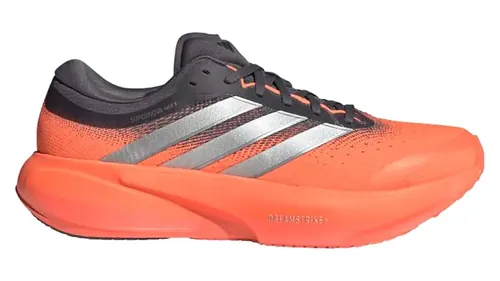
Adidas Supernova Rise 3 uses updated Dreamstrike+ foam and a Lighttraxion road outsole.
How does the Adidas Supernova Rise 3 perform?
This is a shoe that does everything at easy pace properly and nothing beyond that especially well. It is smooth, cushioned and quiet, and it stays comfortable as the miles add up. What it does not do is make you want to run faster.
Cushioning and ride
Dreamstrike+ lands softly and then settles rather than springing back hard. On concrete that reads as gentle and protective, especially through the forefoot where the extra 5 mm of foam does the most good. It is not a bouncy shoe in the way a supercritical foam trainer is, so if you have run in something with an obvious pop, this will feel muted. What you get instead is consistency: the cushioning at mile eight feels much like the cushioning at mile one.
Ride and running performance
With the rods gone, the roll from heel to toe is clean and there is no odd stiff spot under the arch. Easy runs and long runs are the shoe’s home ground, and it holds a steady pace without complaint. Pick the pace up and it simply keeps up rather than helping, which is the honest way to describe a shoe with no plate and no aggressive rocker shape. If your week includes a workout day, keep a lighter shoe for it and let the Rise 3 do the rest.
Stability and support
We would classify the Rise 3 as stable-neutral. There is no medial post, no guide rail and no firmer material on the inner edge, so it does not resist your foot rolling inward. What keeps it steady is geometry: the base is wider than the Rise 2 and the sidewalls come up slightly around the heel, which cups the foot and reduces side-to-side wobble on landing. That is a helpful safety net for tired legs, but it is not the same thing as support, and it will not correct how you run. Anyone with persistent pain linked to how their foot moves should get a professional assessment rather than pick a shoe from a spec sheet.
Outsole, grip and durability
The Supernova Rise 3 uses a Lighttraxion rubber outsole, not Lighttraxion rubber. The rubber placement is designed for road running. Wet grip and long-term durability vary by surface and use, so do not assume it is slip-resistant on wet tile or painted road markings. Check for wear at the heel and forefoot as mileage builds.
Is the Adidas Supernova Rise 3 good for walking?
Yes, and it is one of the better running shoes for people who mostly walk. Three things make it work. The forefoot cushioning is now thick enough to take the edge off concrete, which is where walkers spend their time. The forefoot also bends normally, because there is no plate stiffening the shoe, so your foot can flex through each step the way walking asks it to. And the Lighttraxion outsole is meant for roads but is not slip-rated for wet tile.
For standing all day it is fine rather than ideal, since a softer max-cushion shoe is kinder when you are barely moving. Travel is a good use, because it is light enough to pack and secure enough to walk a city in. If you use a thin orthotic, the sockliner lifts out and there is room for it, though a bulky custom insert plus a standard-width upper will feel tight.
Supernova Rise 3 versus Supernova Rise 2
The differences are easy to see side by side:
Supernova Rise 3 | Supernova Rise 2 | |
Midsole | Reformulated Dreamstrike+, no rods | Dreamstrike+ with plastic Support Rods |
Stack height | About 37 mm heel, 29 mm forefoot | About 34 mm heel, 24 mm forefoot |
Drop | 8 mm | 10 mm |
Feel underfoot | Softer, smoother, one continuous platform | Firmer, with a stiff patch under the arch |
Weight | Lighter | Heavier |
Buy the new model in almost every case: it is lighter, softer, smoother and the same kind of price. Buy the previous model only if you find it heavily discounted and you specifically liked the firmer, lower-stack feel, or if you already own a pair that works for you and see no reason to change. The original Supernova Rise is also still around, and our Adidas Supernova Rise review explains how much ground the line has made up since then.
Adidas Supernova Rise 3 Alternatives
The Rise 3 is a soft, steady, well-priced neutral trainer with a calm ride. These options each trade one of those qualities for something else.
- Brooks Ghost 18: the closest direct rival, slightly firmer and with a longer track record for durability, and the safer pick if you want a shoe you already know the feel of (check price | read review).
- Asics Gel-Cumulus 28: softer again through the heel and with a roomier toe box, which suits people who found the Rise 3 tight across the front (check price | read review).
- Nike Pegasus 42: a livelier ride thanks to its air units, worth the extra money if the Rise 3’s flat feel is the thing putting you off (check price | read review).
- Hoka Clifton 11: lighter and more rockered, so it rolls you through each step and feels easier on long walks (check price | read review).
Price and value
Adidas launched the Supernova Rise 3 at $140, which is $10 to $30 less than most of the trainers it sits against. For that you get a genuinely improved midsole, a wider and steadier platform and a road-focused Lighttraxion outsole. The compromise is character: nothing about the ride will excite you, and width availability varies. If your priority is a comfortable, hard-wearing shoe for daily miles and you would rather not pay $160, the value case is strong.
Final verdict
Best for: neutral runners and walkers who want a comfortable, hard-wearing daily shoe at a sensible price, and who do not need it to double as a fast shoe.
Avoid if: you need a dedicated stability shoe to manage excessive inward rolling, cannot find a comfortable fit even in Wide, or want a specialist speedwork trainer.
Fit: Adidas sells regular and Wide versions. Try the Wide if the standard upper feels restrictive. Check availability by size and color.
Verdict: Adidas has finally built the everyday trainer the Supernova name deserved. Taking out the support rods was the right call, the added cushioning may suit runners who found older versions too firm and $140 is a fair ask. It will not thrill anyone, and wide-footed runners have to look elsewhere, but as the shoe you pull on without thinking four mornings a week it does the job well. Check the latest price.
Frequently Asked Questions for Adidas Supernova Rise 3
Adidas offers regular and Wide versions. Try your usual running size but check the forefoot and width carefully.
The Rise 3 removes the plastic Support Rods and revises the Dreamstrike+ midsole for a different ride.
No. Dreamstrike+ and Boost are different Adidas cushioning technologies. Adidas describes the updated Dreamstrike+ foam as softer.
It may work for marathon training if you test the fit and cushioning on progressively longer runs. No shoe guarantees comfort for every runner.
The Rise 3 uses a Lighttraxion road outsole, not Continental rubber. Wet traction varies, and the mesh upper is not waterproof.
The Supernova Rise 3 emphasizes comfortable everyday running, while the Adizero Evo SL is lighter and more speed-oriented. Both can handle everyday miles.
Yes. Adidas offers Wide versions, subject to size, gender and color availability.