Last Updated on September 22, 2026
| Quick Answer: Best Shoes for Women With Flat Feet in 2026. Flat feet do not automatically require a stability shoe, and many women with low arches have no symptoms at all. If your feet ache, tire quickly or roll inward excessively, look for a shoe that feels stable, fits the width and volume of your foot and leaves room for an orthotic if you use one. Our current picks are the Asics Gel-Kayano 33, Brooks Adrenaline GTS 25, Brooks Glycerin GTS 23, Saucony Guide 19, Hoka Gaviota 6, New Balance 847v4 and Orthofeet Coral Stretch Knit. |
Flat feet, also called pes planus, simply mean the arch is low or absent when you stand. That can be completely normal. Cleveland Clinic notes that many people with flat feet do not need treatment when they have no symptoms.
The more useful question is whether your feet hurt or move in a way that makes walking or running uncomfortable. Flat feet and overpronation are related, but they are not the same thing. A 2026 study in Foot & Ankle Orthopaedics found limited agreement between structural flatfoot and pronated foot posture, reinforcing that low arches alone do not prove you need maximum motion control.
Best Shoes for Women With Flat Feet at a Glance
The best shoe depends on your symptoms, gait and foot shape. Some women want substantial guidance for overpronation. Others simply need more room through the midfoot, a stable platform or a removable insole for an orthotic. The lineup below includes both athletic and walking shoes so you can match the shoe to how you actually use it.
Width deserves special attention. Women’s standard sizing can feel narrow through the midfoot for some low-arched feet, so several of our picks come in wide or extra-wide options. Do not size up in length just to gain width unless the shoe actually fits better that way; a longer shoe can create heel slip and instability.
Shoe | Best for | Key feature | Price |
|---|---|---|---|
Best overall stability | FLUIDSUPPORT, plush cushioning, wide options | ||
Everyday running and walking | GuideRails, balanced cushioning, secure fit | ||
Plush stability | DNA TUNED cushioning plus GuideRails | ||
Wide and extra-wide stability | CenterPath, PWRRUN, three width choices | ||
Maximum cushioning with guidance | H-Frame support, broad base, wide sizing | ||
Walking and orthotics | ROLLBAR, removable insole, extended widths | ||
Extra depth and sensitive feet | Stretch upper, roomy toe box, removable insole |
Flat Feet Do Not Always Mean Overpronation
Older shoe advice often treated flat feet and overpronation as interchangeable. They are not. Flat feet describe the shape of the arch. Pronation describes movement as the foot loads and rolls inward. Some women with low arches pronate substantially; others do not.
This matters because unnecessary stability can feel just as uncomfortable as too little support. If you are pain-free and stable in a neutral shoe, there is no reason to force your foot into the firmest motion-control model. If your ankles roll inward noticeably, your arches fatigue or you repeatedly feel unstable, a guided shoe may be worth trying.
If you are unsure what your gait is doing, use our Shoe Fit & Gait Calculator as a starting point, or have a podiatrist or physical therapist assess your feet under load.
Best Shoes for Women With Flat Feet in 2026
These seven shoes cover different levels of guidance, cushioning and fit. We favor broad platforms, predictable support and width options rather than assuming every woman with flat feet needs the same shoe. The first five are athletic shoes that work for running and brisk walking; the last two are better suited to everyday walking, orthotics and harder-to-fit feet.
If your flat feet do not hurt, choose based on comfort and activity. If you have arch pain, fatigue or clear overpronation, start with the more structured options. If you wear an orthotic, bring it when trying shoes because the insert can change both width and heel fit.
Asics Gel-Kayano 33
Best for: Plush stability for running and long-distance walking.
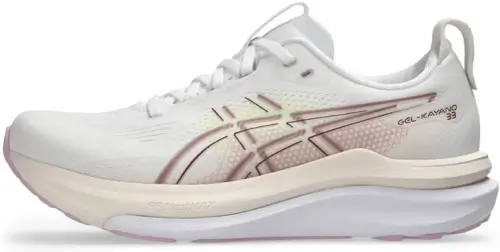
The Gel-Kayano 33 is our strongest all-around stability pick because it combines substantial cushioning with Asics’ new FLUIDSUPPORT system. Instead of the 4D Guidance System used in the Kayano 32, the 33 uses two foam densities and supportive geometry to guide the foot without a traditional hard medial post.
The women’s version uses an 8mm drop and is available in standard, wide and extra-wide versions. That width range is particularly useful for low-arched feet that feel cramped through the midfoot. The US launch price is $170.
Read our Asics Gel-Kayano 33 review.
Brooks Adrenaline GTS 25
Best for: Everyday stability without excessive bulk.

The Adrenaline GTS 25 is a dependable choice when you want support but do not want the feel of a heavy motion-control shoe. Brooks’ GuideRails system helps limit excess movement only when needed, while DNA LOFT v3 cushioning keeps the ride comfortable for walking and running.
The women’s model weighs about 9.5 ounces and uses a 10mm drop. Brooks offers multiple widths, and the US list price is $155. It is less plush than the Glycerin GTS 23 but also lighter and less expensive.
Read our Brooks Adrenaline GTS 25 review.
Brooks Glycerin GTS 23
Best for: Women who want premium cushioning with structured support.
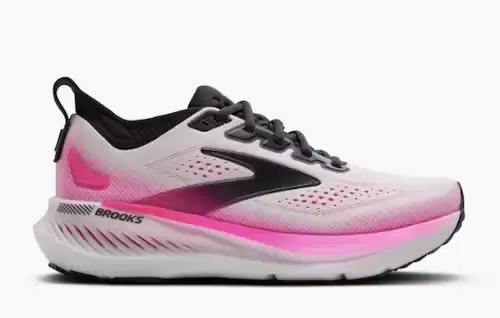
The Glycerin GTS 23 uses the same GuideRails concept as the Adrenaline but adds more DNA TUNED cushioning. The result is a softer, more luxurious ride for long walks, daily runs and extended time on hard surfaces.
The women’s model weighs about 9.8 ounces, uses an 8mm drop and lists for $180. Brooks describes the fit as accommodating, which makes it a useful option for women who need support but dislike narrow, rigid stability shoes.
Read our Brooks Glycerin GTS 23 review.
Saucony Guide 19
Best for: Women who need width choices and a smoother, less corrective stability feel.
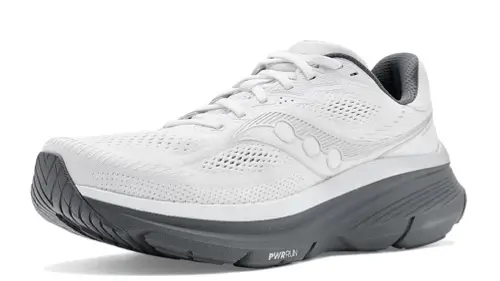
The Guide 19 uses Saucony’s CenterPath geometry, a wide platform and shaped sidewalls instead of a rigid stability post. That can work well for women who want guidance without feeling a firm piece pushing up under the arch.
Saucony offers the women’s Guide 19 in regular, wide and extra-wide versions. The shoe uses a 6mm offset and PWRRUN cushioning, with a US launch price of $150. The width range is one of its biggest advantages in this group.
Hoka Gaviota 6
Best for: Maximum cushioning with a broad, guided platform.
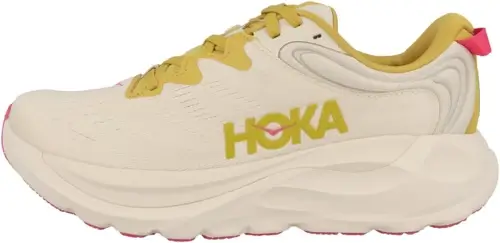
The Gaviota 6 is Hoka’s high-cushion stability option. Its H-Frame system creates guidance through the shape of the platform rather than relying on a hard post, and the broad footprint helps the tall midsole feel planted.
Hoka currently sells the women’s Gaviota 6 in standard, wide and extra-wide versions in selected markets, and lists it at $180 in the US. It is especially useful if you like the soft, high-stack Hoka feel but need more guidance than a neutral Bondi or Clifton provides.
See our Best Hoka Walking Shoes guide for more on where the Gaviota fits in Hoka’s current lineup.
New Balance 847v4
Best for: Walking, orthotics and women who need extended widths.
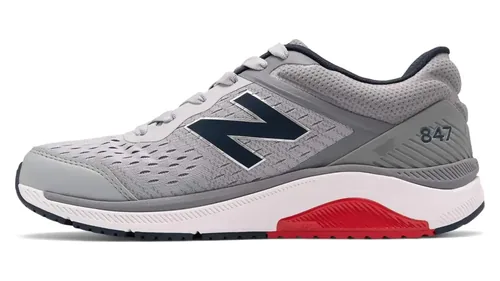
The 847v4 is a traditional motion-control walking shoe with a firm, stable feel. Its ROLLBAR system limits rearfoot motion, while the removable Ortholite insole makes it easier to use a custom orthotic.
New Balance offers the women’s version in an unusually broad width range, which is the main reason it remains relevant despite its old-school styling. The listed drop is 12mm and the current list price is about $149.99.
Read our New Balance 847v4 review.
Orthofeet Coral Stretch Knit
Best for: Extra depth, orthotics, bunions, hammertoes and swollen feet.
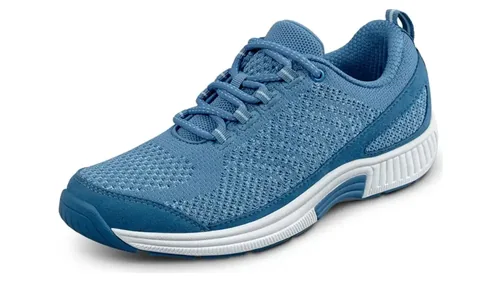
The Coral Stretch Knit is not a running shoe. It earns a place here because some women with flat feet also need accommodation for bunions, hammertoes, swelling or custom orthotics. The four-way stretch upper and seam-free lining reduce pressure from above, while the extra-depth interior creates more room around the foot.
It comes in medium, wide and extra-wide versions and uses a removable orthotic-style insole. If your main challenge is simply finding a shoe that does not squeeze a sensitive foot, the Coral can make more sense than a technical stability trainer.
Read our Orthofeet Coral Stretch Knit review.
How to Choose Shoes for Women’s Flat Feet
Start with symptoms rather than the shape of your footprint. If your feet are flat but comfortable, you may not need a special support shoe at all. If you have arch fatigue, ankle instability or pain, a broader and more guided platform may feel better.
Pay close attention to width through the midfoot. A low arch can make the foot spread farther across the platform, so a shoe that is technically the right length may still be too narrow. Several shoes in this guide are available in wide or extra-wide versions, which is usually a better solution than buying a longer shoe.
If you use orthotics, choose a removable factory insole and enough heel depth to hold the foot securely after the insert is added. If you are unsure where to start, our free Shoe Finder can narrow options by support, width, cushioning and activity.
When Flat Feet Need Medical Attention
Flat feet that have always been present and do not hurt usually do not need treatment. A newly collapsing arch, increasing pain or swelling along the inside of the ankle deserves more attention because tendon injury, arthritis or another condition may be involved.
See a podiatrist or orthopedic specialist if one foot changes shape, you develop persistent pain, balance gets worse or you can no longer comfortably stand on tiptoe. Those signs matter more than a low arch by itself.
Orthotics can help some symptomatic flat feet, but they are not a universal cure. Cleveland Clinic notes that over-the-counter inserts may help mild symptoms while persistent or severe problems may warrant evaluation for custom orthotics.
Frequently Asked Questions About Shoes for Women With Flat Feet
Low arches do not automatically determine the right shoe. Comfort, gait, width, activity and whether you use orthotics all matter. These are the questions most useful when narrowing the choices.
No. Flat feet describe arch shape, while pronation describes movement. Some women with low arches are comfortable in neutral shoes. Stability makes the most sense when it feels better, when you clearly overpronate or when a clinician recommends guidance.
The Gel-Kayano 33 is Asics’ current premium stability option. It combines FLUIDSUPPORT, an 8mm drop and standard, wide and extra-wide women’s versions.
The Adrenaline GTS 25 is the better everyday option for most women who want stability without a lot of bulk. The Glycerin GTS 23 provides a softer, more cushioned ride with the same GuideRails support concept.
They are better only if your foot actually needs the width. Low arches can make the midfoot spread, so a wide version may improve comfort, but a shoe that is too loose can allow sliding and heel movement.
Not automatically. Orthotics may help when flat feet are painful or unstable, but the support should match the condition. Persistent pain or a changing arch should be evaluated by a podiatrist.
Many can. Flat feet alone do not prevent running. Build mileage gradually, use a shoe that feels comfortable and stable and get evaluated if you develop persistent pain or recurring injuries.
Seek an evaluation if flat feet become painful, one arch suddenly changes, swelling develops along the inside of the ankle, balance worsens or symptoms keep limiting walking or running.