Last Updated on September 29, 2026
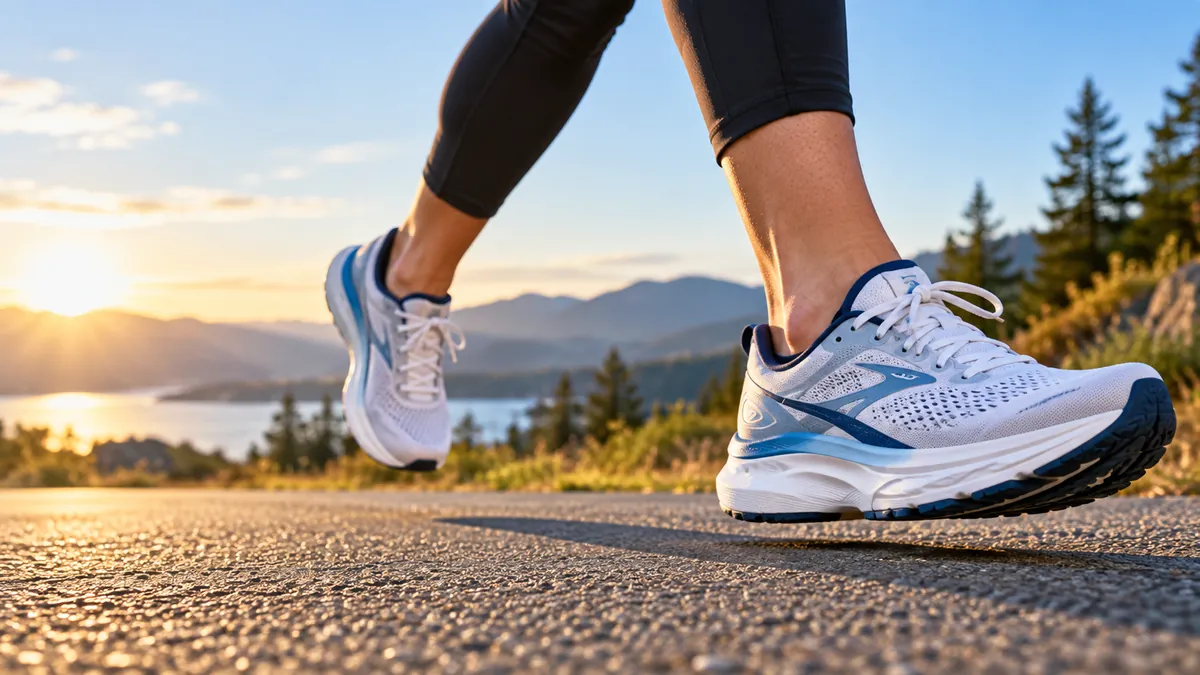
Quick Answer: The Brooks Ghost 18 is our best running shoe for most beginners in 2026 because it has a predictable ride, comfortable cushioning and a straightforward fit. The Asics Gel-Cumulus 28 and Saucony Ride 19 are strong alternatives, while the Hoka Clifton 11 and New Balance 1080v15 add more cushioning. Choose the Asics Gel-Kayano 33 only if you prefer extra guidance. If you are returning after time away, see our How to Start Running Again guide.
If you are new to running, choosing your first pair of running shoes can feel more complicated than it needs to be. There are dozens of models, different types of cushioning and plenty of technical terms, but you do not need to understand all of them before you start.
For most beginners, the goal is simple: find a running shoe that feels comfortable, fits well and works for the kind of running you plan to do. You do not need carbon plates, racing technology or the most expensive shoe on the shelf.
Our top pick for most new runners in 2026 is the Brooks Ghost 18 because it offers comfortable cushioning, a stable feel and an easy-to-get-along-with ride. The Asics Gel-Cumulus 28 and Saucony Ride 19 are strong alternatives, while the Hoka Clifton 11 and New Balance 1080v15 offer more cushioning. If you prefer extra support, consider the Asics Gel-Kayano 33.
The best beginner running shoe is not necessarily the fastest or most advanced one. It is the shoe that feels good on your feet and makes it easier to keep running.
In the table below you’ll see a term call heel-to-toe drop, which is the difference in height between the heel and the front of the shoe. A higher number means the heel sits higher; a lower number creates a flatter feel. Neither is automatically better. Comfort matters most.
Running Shoe | Best For | Why a Beginner Might Like It | Heel-to-Toe Drop | Launch Price |
|---|---|---|---|---|
Brooks Ghost 18 | Best overall | A comfortable, predictable shoe that is easy to run in. A great place to start if you have no idea what kind of running shoe you need. | 10 mm | $150 | Check latest price |
Asics Gel-Cumulus 28 | Smooth everyday running | Plenty of cushioning without feeling overly bulky. Good for easy runs, short runs and gradually building mileage. | 8 mm | $145 | Check latest price |
Saucony Ride 19 | Best versatile trainer | Comfortable and versatile enough for run-walk workouts, regular runs and everyday walking. | 8 mm | $145 | Check latest price |
Nike Pegasus 42 | Running and general fitness | A do-a-little-of-everything shoe that works for beginner runs, workouts and general fitness. | 10 mm | $145 | Check latest price |
Hoka Clifton 11 | Cushioned comfort | A softer, highly cushioned option for beginners who want more comfort underfoot, especially on pavement. | 8 mm* | $155 | Check latest price |
New Balance 1080v15 | Maximum comfort | Soft cushioning and multiple width options make it worth considering if comfort and fit are your biggest priorities. | 6 mm | $170 | Check latest price |
Asics Gel-Kayano 33 | Stability | A supportive, highly cushioned choice for beginners who feel more comfortable in a shoe that provides additional guidance. | 8 mm | $170 | Check latest price |
Ready to start running? Compare current prices on beginner-friendly running shoes at Amazon.
How to Choose Running Shoes for Beginners
Buying your first pair of running shoes can become unnecessarily complicated. Shoe companies use terms such as stack height, heel drop, pronation, rocker geometry and energy return, but beginners do not need to become footwear experts before going for their first run.
Start with the basics: comfort, fit, where you plan to run and how the shoe feels when you move.
Start With Comfort
Comfort should be one of your first filters.
A running shoe should feel comfortable when you put it on. Do not assume a shoe that pinches, rubs or feels awkward in the store will somehow become the perfect running shoe after 50 miles.
The cushioning should also feel natural. Some runners like a soft, plush shoe such as the New Balance 1080v15. Others prefer the more balanced feel of the Brooks Ghost 18, Asics Gel-Cumulus 28 or Saucony Ride 19.
There is no cushioning level that is automatically best for beginners.
Buy a Daily Trainer First
Most beginners should start with a daily trainer, which is a running shoe designed to handle ordinary training rather than one specific job. You can use it for short runs, easy runs, longer runs and often walking. If gym work is also part of your routine, see our training shoes vs. running shoes guide because a running shoe is not always the best choice for lifting or lateral movement.
The Brooks Ghost 18, Asics Gel-Cumulus 28, Saucony Ride 19 and Nike Pegasus 42 all fit this category.
You can always add specialized shoes later if running becomes a bigger part of your routine.
Don’t Start With a Racing Shoe
Carbon-plated racing shoes and so-called super shoes are designed primarily to help runners move efficiently at faster speeds. They are also expensive and highly specialized.
A beginner generally gets more value from a comfortable daily trainer that can handle hundreds of ordinary training miles. If you eventually sign up for races and want a dedicated race-day shoe, you can add one later.
Get the Size Right
Running shoes should usually have more room in front of your toes than casual shoes. Your feet can expand during exercise, particularly as runs become longer. Aim for roughly a thumb’s width of room between your longest toe and the front of the shoe.
Your heel should feel secure, and your foot should not slide excessively from side to side.
Do not automatically size up to solve a width problem. If the shoe feels tight across the forefoot, look for a model available in a true wide or extra-wide width.
The Ghost 18 and New Balance 1080v15 are particularly useful places to start if you need multiple width choices.
See our shoe recommendation calculator for help with size, fit and use.
Neutral or Stability?
Most beginners can start by trying neutral running shoes.
Neutral shoes make up most of the running-shoe market and include models such as the Brooks Ghost 18, Hoka Clifton 11, Saucony Ride 19 and Asics Gel-Cumulus 28.
Stability shoes include design features intended to provide additional guidance as your foot moves through each stride. The Asics Gel-Kayano 33 is one example.
Pronation, or the inward movement of your foot during the stride, is normal. Simply noticing that your feet pronate does not automatically mean you need a stability shoe.
If a stability shoe feels noticeably more comfortable or a qualified health professional has recommended additional support, it may be the better choice.
Understand Heel-to-Toe Drop
Heel-to-toe drop measures the difference between the height of the heel and the height of the forefoot.
The Brooks Ghost 18 and Nike Pegasus 42 have traditional 10 mm drops. The Gel-Cumulus 28 and Ride 19 use 8 mm drops, while the New Balance 1080v15 drops to 6 mm.
Beginners do not need to target a particular number.
If you spend most of your time in conventional athletic shoes, a moderate drop can make a straightforward starting point. If you already wear flatter footwear, a lower-drop shoe may feel completely natural.
Major changes in shoe drop are best introduced gradually.
Don’t Assume More Cushioning Is Better
Modern running shoes can have a lot of foam underfoot.
That can feel great, particularly if you are starting with run-walk workouts or spending a lot of time on concrete. But maximum cushioning is not necessary for everyone.
More foam can create a softer ride, while a more moderate platform may provide better ground feel.
Try to find the balance that feels comfortable and stable rather than simply buying the shoe with the tallest midsole.
Consider Where You’ll Run
If most of your running will be on streets, sidewalks or a treadmill, start with a road running shoe. If you expect to do most of your early miles indoors, see our best treadmill running shoes guide.
If you plan to run primarily on dirt, mud, rocks or uneven trails, choose a trail running shoe instead. Trail shoes use more aggressive outsole lugs and often provide additional protection around the foot.
For more rugged terrain, see our Best Trail Running Shoes guide.
Look at Width, Not Just Length
Width is one of the most overlooked parts of choosing running shoes.
Your toes should be able to sit naturally without being squeezed together. At the same time, your heel and midfoot should remain secure.
Some shoes are naturally more accommodating than others, but buying a shoe that merely looks wide is not the same as buying the correct width.
If you regularly find shoes tight around the forefoot, look specifically for Wide, 2E or 4E options where appropriate.
For wide running shoes, see our guide.
You Can Start With Run-Walk Workouts
You do not have to run continuously from your first day.
Alternating short periods of running and walking can help you gradually build endurance while learning how your new shoes feel. The important part is consistency rather than pace. Our How to Start Running Again guide includes a simple walk-run progression you can adapt.
Avoid dramatically increasing your mileage or adding hard speed workouts simply because your first few runs feel good. Build your running volume gradually and give your body time to adapt.
How Much Should Beginners Spend?
You do not need a $200 running shoe.
You do not need to buy a premium running shoe to get started. Previous-generation models and simpler daily trainers can offer excellent value. See our best cheap running shoes for lower-cost running-first options, or our affordable running shoes for walking and workouts if you need a crossover shoe.
That creates a good opportunity for beginners. If a previous model fits well and the new version only makes minor changes, buying the older shoe on sale can offer excellent value.
When Should You Replace Running Shoes?
There is no exact mileage at which every running shoe suddenly stops working.
Outsole wear, foam durability, your body weight, running surface and shoe construction all influence how long a shoe lasts.
Pay attention to the shoe itself. Excessive outsole wear, compressed or uneven cushioning, a damaged upper or a noticeable decline in comfort can all indicate that replacement time is getting closer.
Do not replace a shoe merely because an arbitrary mileage number tells you to if it still feels and performs well.
Try More Than One Shoe if Possible
Running-shoe recommendations are useful for narrowing your choices, but they cannot tell you exactly what will feel best on your feet. If possible, try two or three models and compare them.
Walk around. Jog if the store allows it. Or order more than one pair from Amazon, but be sure they have a free return policy. Pay attention to pressure around the toes, arch and heel.
The best beginner running shoe is ultimately the one that fits comfortably, feels natural while you run and makes you want to put it on again.