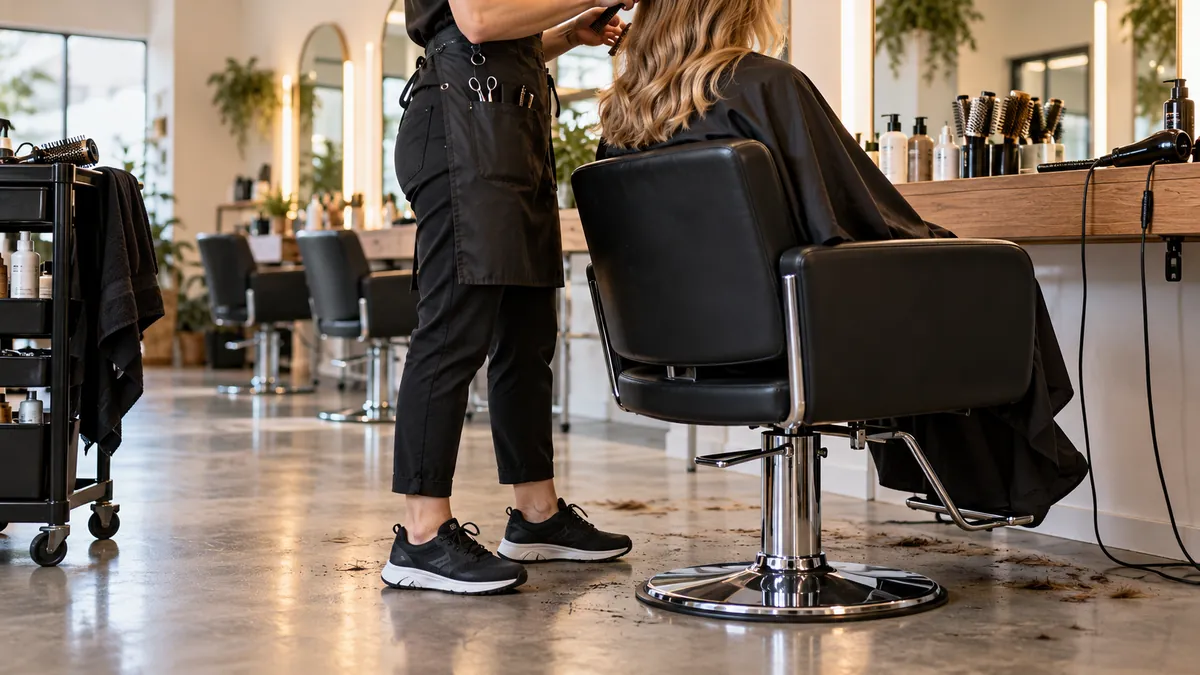
Hairdressers, barbers and other salon workers spend hours standing, sidestepping around chairs and walking between stations. A shoe that feels pleasant on a short walk can become tiring when you spend a whole shift on tile or sealed concrete. Hair clippings and occasional water or product spills also make traction and easy cleaning more important than they are for many office jobs.
This guide is organized around different salon needs, not one universal winner. For broader workplace options, see our standing-all-day shoe guide and retail-worker roundup.
Best shoes for hairstylists: quick comparison
| Shoe (jump to review) | Best for | Price & availability |
|---|---|---|
| Hoka Bondi SR | Salons that require work-specific traction | Check latest price |
| Brooks Addiction Walker 2 | Stylists who prefer strong guidance and a firm fit | Check latest price |
| Dansko XP 2.0 | Hairdressers who prefer a rocker-style clog | Check latest price |
| New Balance 626v2 | Salon workers looking for wider fitting options | Check latest price |
| Skechers Max Cushioning Elite 2.0 | Dry-floor salons where soft cushioning is the priority | Check latest price |
What makes a good salon shoe?
Start with your floor. A smooth, dry salon floor allows more footwear choices than a damp shampoo area, where dependable traction matters more. A conventional running shoe may offer soft cushioning but should not be described as certified work-slip-resistant unless the exact style has that rating. If your workplace has a footwear policy, it also takes priority over appearance.
Next, think about how you move. Hairdressers often stand with weight shifted to one side, pivot repeatedly and take small steps around a client. Shoes should hold the heel comfortably and give the toes space when feet swell through the day. Softness alone is not the same as support: some workers prefer a broad, stable platform or more structured guidance.
Finally, choose materials you can live with. Leather or other wipe-clean uppers can make cleaning hair clippings and product residue easier than open mesh. A removable insole can be useful if you already wear compatible orthotics, but fit still needs to be assessed in the actual shoe.
Hoka Bondi SR

Hoka Bondi SR
Best for: salons that require work-specific traction
Choose it if you spend long shifts moving between stations and want an enclosed, easy-to-wipe shoe. Water-resistant leather upper, substantial cushioning and a slip-resistant work outsole. The Bondi SR makes the most sense when easy cleaning and a work-focused outsole matter more than a light, airy feel. Check your employer’s footwear requirements and try turning in it, not just walking straight ahead.
The trade-off is straightforward: Its warm, heavy construction may feel excessive in a hot salon. If your salon is warm or you dislike bulky shoes, compare its fit and weight with a lighter option before buying.
Who should skip it: Skip it if you want a light, breathable shoe or cannot tolerate its heavier work-shoe feel.
Read our full Hoka Bondi SR review for more detail on its fit and construction.
Brooks Addiction Walker 2

Brooks Addiction Walker 2
Best for: stylists who prefer strong guidance and a firm fit
A useful alternative if soft, high-stack shoes feel unsteady as you turn around the styling chair. Full-grain leather upper, BioMoGo DNA cushioning, Extended Progressive Diagonal Rollbar and slip-resistant outsole. Its more structured feel may suit stylists who dislike a very soft shoe. Try a few short pivots and check whether the heel stays secure without crowding your toes.
The trade-off is straightforward: It is stiffer and heavier than a flexible everyday sneaker. That firmer, guided feel can be reassuring for some people but uncomfortable for others. Test it near the end of a workday, when feet may be swollen.
Who should skip it: Skip it if you prefer a highly flexible shoe or find structured support restrictive.
Read our full Brooks Addiction Walker 2 review for more detail on its fit and construction.
Dansko XP 2.0

Dansko XP 2.0
Best for: hairdressers who prefer a rocker-style clog
Consider this if you mainly stand in one place and are already comfortable walking in professional clogs. Leather clog, removable dual-density footbed, defined arch shape and slip-resistant outsole. The rocker shape can feel supportive at a stationary styling station, but it is worth testing while stepping sideways around a chair and turning to reach tools.
The trade-off is straightforward: A clog does not hold the heel in the same way as a lace-up sneaker; the firm rocker feel divides opinion. If you are new to clogs, practice the sideways steps and repeated turns common behind the chair before committing to a full shift.
Who should skip it: Skip it if you need lace-up heel security or dislike a pronounced rocker underfoot.
Read our full Dansko XP 2.0 review for more detail on its fit and construction.
New Balance 626v2
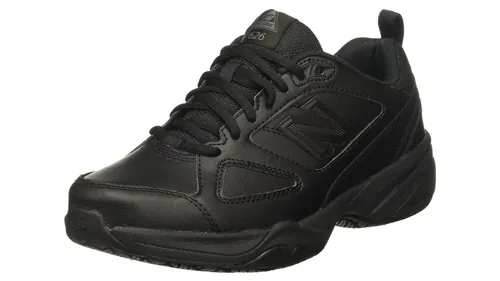
Best for: salon workers looking for wider fitting options
Worth a look if ordinary shoes pinch at the forefoot during a long workday. Leather work-shoe upper, ABZORB heel cushioning, work-oriented slip-resistant outsole and wide-fit choices. If toe room is your main concern, try the available widths with your usual work socks. A wide label alone will not guarantee enough room at the toes or a secure heel.
The main trade-off is its utilitarian appearance. It has no protective safety toe, although most salon jobs do not require one. Choose the 626v2 for practical fit and work-oriented construction, not appearance. Make sure its shape fits your forefoot rather than sizing up only for width.
Who should skip it: Skip this model if you want a lightweight fashion sneaker or a protective safety toe.
Read our full New Balance 626v2 review for more detail on its fit and construction.
Skechers Max Cushioning Elite 2.0

Skechers Max Cushioning Elite 2.0
Best for: dry-floor salons where soft cushioning is the priority
Consider this only where the floor conditions and dress code permit an everyday walking shoe. Thick foam cushioning and curved sole geometry aimed at comfortable everyday walking. Treat its cushioning as a comfort option for dry floors, not as proof of salon-safe traction. Check the workplace dress code and whether your feet feel steady during turns.
The trade-off is straightforward: This is not a certified slip-resistant occupational shoe, and soft cushioning may not suit workers seeking firm support. If there is frequent water or product on your floor, prioritize an appropriate occupational outsole over plush foam.
Who should skip it: Skip it if your employer requires occupational slip resistance or you feel unstable on very soft cushioning.
Read our full Skechers Max Cushioning Elite 2.0 review for more detail on its fit and construction.
How to choose shoes for a full day behind the chair
For a primarily dry, seated-and-standing salon role, first decide whether you like softer cushioning or firmer, more structured support. Compare the Skechers Max Cushioning Elite 2.0 with the Brooks Addiction Walker 2 to feel that distinction. For stylists who cross wet shampoo areas frequently, move the Bondi SR, New Balance 626v2 and Dansko XP 2.0 higher on your comparison list because their work-oriented outsole designs are more relevant.
If wide shoes are hard to find, start with the wide work-shoe roundup. For foot discomfort that continues despite better-fitting footwear, don’t assume a shoe can diagnose or treat it. Our standing-and-walking foot-pain guide explains other considerations. You can also compare personalized options through the Free Shoe Finder.
Frequently asked questions
Start with a work-focused shoe that fits your foot well and matches the salon floor. The Hoka Bondi SR and Brooks Addiction Walker 2 are practical comparison points for traction and long-shift wear; choose between their different cushioning and support feels.
They can be comfortable in a dry salon that permits sneakers, but ordinary running shoes should not be assumed to meet slip-resistant work-footwear requirements. The exact outsole and workplace conditions matter.
That depends on floor conditions and employer rules. Work areas exposed to water, product spills or slick surfaces call for more attention to traction than consistently dry floors.
Some workers like the structured feel and wipe-clean upper of a work clog such as the Dansko XP 2.0. Others prefer the heel hold of a lace-up shoe, especially when turning quickly around chairs.
The New Balance 626v2 is worth comparing for its width options. The right width also requires enough toe space without heel slipping; a longer standard-width shoe is not always a solution.
No. Very soft foam can be comfortable, but some people find a firmer and more stable platform easier to stand and pivot in for long periods. Fit and support preferences differ.
Replace shoes when outsole traction, cushioning or structural support noticeably deteriorates, rather than relying on a single universal month count. Inspect high-wear areas regularly and compare the feel with an unworn pair.