Quick Answer: Topo Athletic is a strong choice if you want a roomy toe box without the fully zero-drop feel of Altra. For most runners, the Phantom 4 is the everyday road option, the Atmos 2 adds maximum cushioning, the Ultrafly 6 adds stability, and the Specter 3 is better for faster long runs. Trail runners should start with the Ultraventure 5 for everyday trail use or the MTN Racer 4 for more technical terrain. See recommendations side by side.
Topo Athletic has built its running lineup around a simple idea: give the toes room to spread while keeping the heel and midfoot secure. Most models also use a low heel-to-toe drop, which gives them a different feel from traditional 8–12 mm running shoes without forcing every runner into zero drop. That combination makes Topo especially interesting for runners who want more forefoot space but still prefer some heel elevation. For the full brand lineup, walking models and fit guidance, see our Topo Athletic shoes guide.
Best Topo Athletic Running Shoes at a Glance
| Topo shoe | Best for | Why consider it | Price |
|---|---|---|---|
| Phantom 4 | Daily road running | Balanced cushioning and a roomy forefoot | Check latest price |
| Atmos 2 | Maximum cushioning | High-cushion road shoe for easy miles and walking | Check latest price |
| Ultrafly 6 | Stability | Guided daily trainer with Topo’s roomy forefoot | Check latest price |
| Specter 3 | Faster long runs | Lighter performance trainer with more cushioning | Check latest price |
| Cyclone 3 | Tempo and speedwork | Lighter and more nimble than Topo’s daily trainers | Check latest price |
| Ultraventure 5 | Everyday trail running | Versatile trail model with wide-size availability | Check latest price |
| MTN Racer 4 | Technical trails | More secure trail platform for rougher terrain | Check latest price |
Topo Athletic Phantom 4

The Phantom 4 is the easiest Topo road shoe to recommend as a starting point. It sits in the middle of the lineup: more cushioned than the lightweight Fli-Lyte or Cyclone, but less bulky than the Atmos 2. That makes it a practical choice for daily running, easy mileage and walking. The key Topo fit is still present — extra room across the toes with a more secure heel and midfoot — so it can work well for runners who feel squeezed in more tapered shoes. Read our full Topo Phantom 4 review for fit, cushioning and walking details. The low-drop geometry will still feel different if you are coming from a traditional high-drop trainer, so it is sensible to build mileage gradually rather than switching all at once.
Gender-specific buy links: Men’s version | Women’s version
Topo Athletic Atmos 2
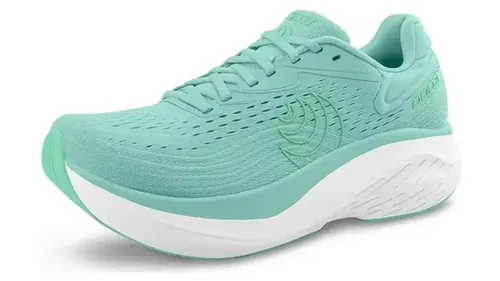
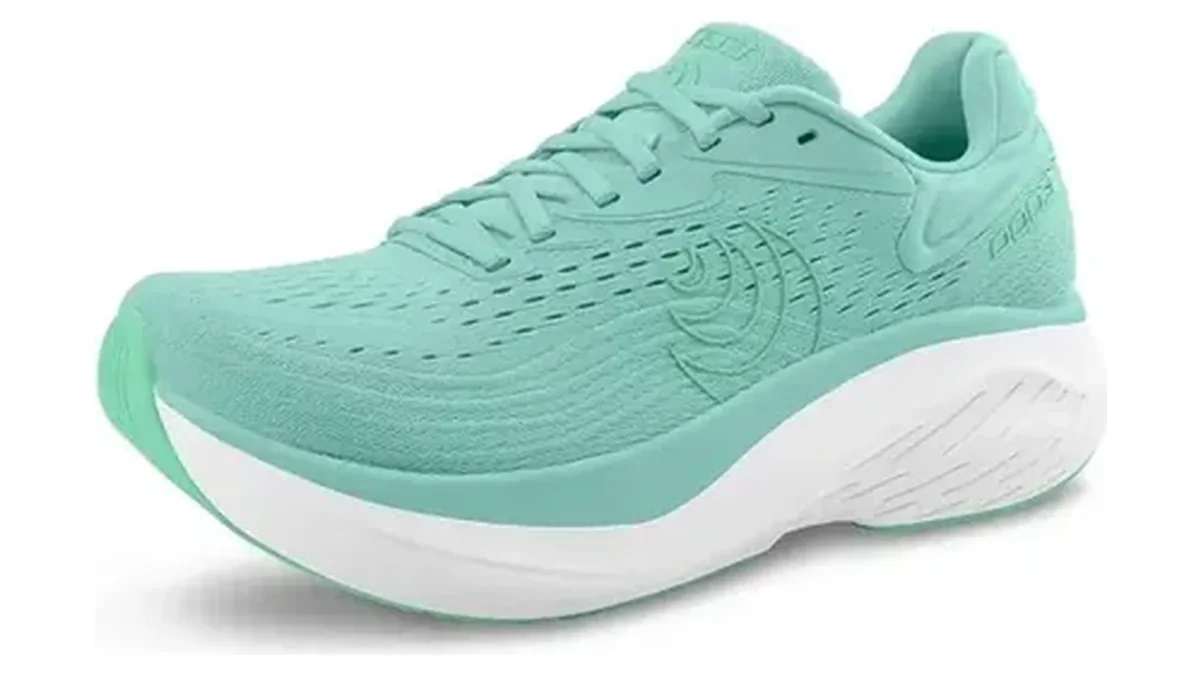
The Topo Atmos 2 is the maximum-cushion road option in the current lineup. It is the better fit if your priority is comfort on easy runs, longer walks or long days on your feet. Compared with the Phantom 4, it feels like more shoe underfoot and is less focused on quick turnover. That extra cushioning can be useful for runners who simply prefer a softer, more substantial platform, but people who like a lighter and more flexible ride may find the Phantom or Specter more natural. The roomy forefoot is one of the Atmos 2’s biggest advantages for people whose toes feel crowded in conventional max-cushion shoes.
Gender-specific buy links: Men’s version | Women’s version
Topo Athletic Ultrafly 6
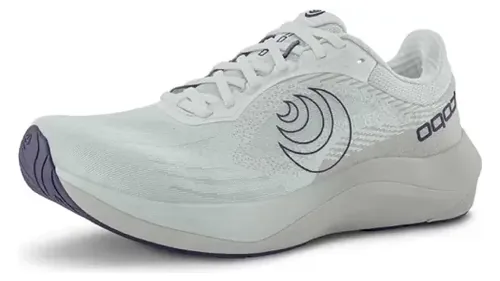
The Ultrafly 6 is the stability-focused road shoe in Topo’s current range. It makes the most sense for runners and walkers who like Topo’s roomy front fit but want a steadier platform than a neutral daily trainer provides. It is not a traditional heavy motion-control shoe; the appeal is that it adds guidance while keeping the overall ride closer to a modern daily trainer. That makes it a useful comparison against shoes such as the Asics GT-2000, Brooks Adrenaline GTS or New Balance 860. If you do not know whether you need stability, start with comfort and gait rather than assuming more support is automatically better.
Gender-specific buy links: Men’s version | Women’s version
Topo Athletic Specter 3

The Topo Athletic Specter 3 is the performance-oriented road trainer to look at when the Phantom feels too ordinary and the Cyclone feels too minimal. It is aimed at runners who want cushioning for longer efforts but also want the shoe to feel quicker when the pace increases. That makes it a useful second shoe in a rotation: a Phantom or Atmos for easy miles, then a Specter for progression runs, faster long runs or workouts. It also keeps the roomier Topo forefoot, which is unusual among faster road shoes that often narrow significantly through the toes.
Gender-specific buy links: Men’s version | Women’s version
Topo Athletic Cyclone 3

The Cyclone 3 is the lighter, faster road shoe in this group. It is better suited to tempo sessions, shorter races and runners who like a more direct feel underfoot. It gives up some of the relaxed cushioning of the Atmos and Phantom in exchange for lower weight and quicker transitions. If you only want one shoe, the Phantom 4 will be easier to live with. If you already own a comfortable daily trainer and want something more fun for faster days, the Cyclone 3 is the more logical addition. Its low-drop setup also makes it better suited to runners who are already comfortable with Topo-style geometry.
Gender-specific buy links: Men’s version | Women’s version
Topo Athletic Ultraventure 5

The Ultraventure 5 is the trail shoe to start with if your routes are mostly moderate dirt, gravel and rolling trail rather than highly technical mountain terrain. Topo lists it as a current trail model and offers wide sizes, which gives it an advantage for runners who want more room without moving into a very minimalist trail shoe. It is the more versatile choice for long trail days, hiking and mixed off-road use. If your trails are rougher, steeper or more technical, move to the MTN Racer 4. If you want something even more protective for long trail mileage, Topo’s trail lineup also includes the Vista and Terraventure families.
Gender-specific buy links: Men’s version | Women’s version
Topo Athletic MTN Racer 4

The MTN Racer 4 is the more technical trail choice. It is designed for runners who need a secure fit and confident footing when the surface becomes uneven, steep or rocky. Compared with the Ultraventure 5, it is the shoe to choose when control and trail capability matter more than easy cruising. The roomy toe box is particularly useful on descents, where feet can swell and toes can get pushed forward inside a narrow shoe. It still follows Topo’s low-drop approach, so runners coming from higher-drop trail shoes should allow some adaptation time rather than immediately taking it on their longest or steepest route.
Gender-specific buy links: Men’s version | Women’s version
How to Choose a Topo Athletic Running Shoe
Start with the job you need the shoe to do. Phantom 4 is the safest all-purpose road choice. Atmos 2 is for runners who want more cushioning. Ultrafly 6 is for people who prefer a steadier, more guided road platform. Specter 3 and Cyclone 3 move toward faster running. On trails, Ultraventure 5 is the versatile option and MTN Racer 4 is better suited to more technical terrain. The common thread is fit: Topo gives the toes more room while keeping the heel and midfoot relatively secure. If you are deciding between Topo and Altra, the major difference is that many Topo models use a small heel-to-toe drop rather than zero drop.
If you’re not sure whether you need a roomy toe box or an actual wide size, read Do I Need Wide Shoes or Just a Wide Toe Box?. You can also use our free Shoe Finder to narrow your options by activity, fit and support needs.
FAQ About Topo Athletic Running Shoes
Topo shoes are known for a roomy toe box, but that is not the same thing as a uniformly wide shoe. The heel and midfoot are designed to fit more securely. Some models are also offered in dedicated wide sizes.
Not all of them. Topo is known for low-drop geometry, but many current models use a small heel-to-toe drop rather than zero drop.
The Phantom 4 is the best starting point for most runners who want a balanced road trainer. The Atmos 2 is better if you prefer maximum cushioning.
The Ultrafly 6 is the main stability-focused road model in the current lineup.
The Specter 3 is the better choice for faster long runs and performance training, while the Cyclone 3 is lighter and more suited to tempo work and shorter, quicker efforts.
Start with the Ultraventure 5 for general trail running and longer off-road days. Choose the MTN Racer 4 when you need a more technical trail shoe.
Yes. If you are used to a much higher heel-to-toe drop, gradually increasing time and mileage in a low-drop shoe gives your calves and Achilles more time to adapt.