Last Updated on October 8, 2026
| Quick Answer: Topo Athletic Specter 3 Review: The Topo Athletic Specter 3 is a lightweight, highly cushioned performance trainer built for faster daily runs, tempo workouts, and long runs. Its new RevFoam cushioning feels livelier than the Specter 2, while a strong rocker helps roll the foot quickly toward push-off without using a carbon plate. Topo’s roomy toe box gives the toes more space than most performance shoes, although no separate wide version is offered. It fits true to size for most runners. The aggressive rocker makes it less appealing for slow walking and recovery days. Prices and availability vary by size and color on Amazon. Check for latest price. |
Topo Athletic Specter 3 Review: Overview and Specifications
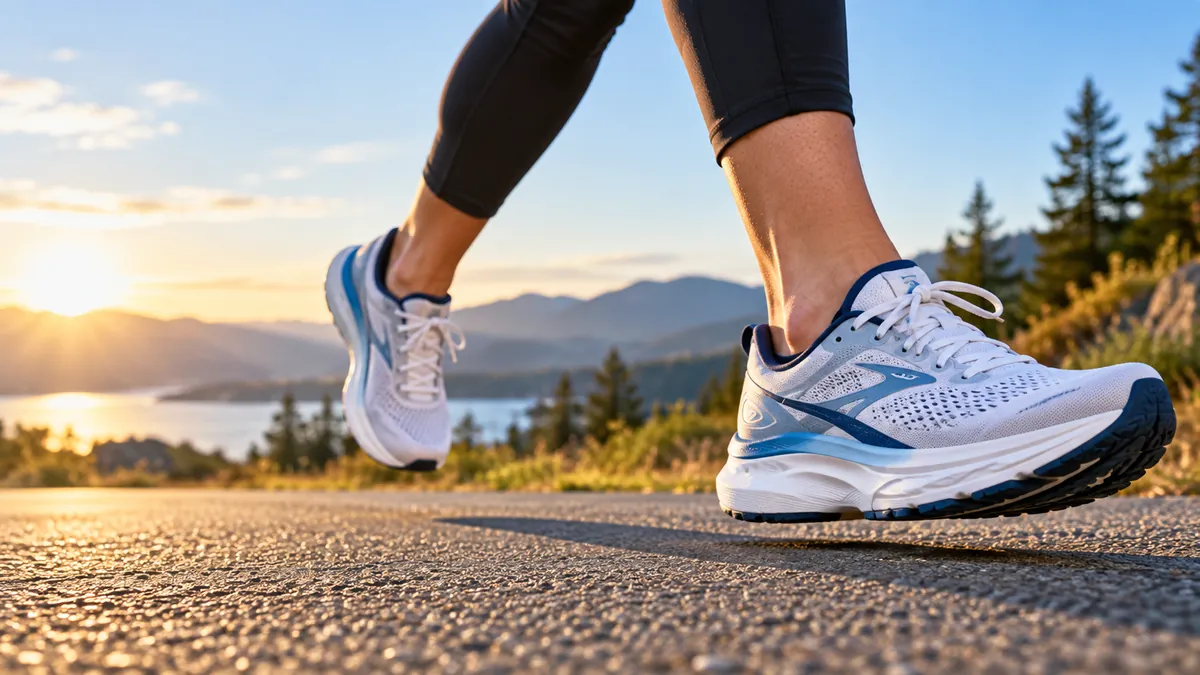
The Topo Athletic Specter 3 is a lightweight performance trainer designed for runners who want plenty of cushioning without the stiffness of a plated racing shoe. Topo describes it as an up-tempo trainer, which means it sits between an everyday running shoe and a dedicated racing shoe. It can handle regular mileage but feels most at home when the pace starts to increase. For a broader overview of walking, road and trail options, see our Topo Athletic shoes guide.
The biggest attraction is how much cushioning Topo has packed into a shoe weighing only about 7.7 ounces in a men’s size 9. The Specter 3 has a 39 mm heel stack, meaning there is a substantial amount of material between the heel and the road, yet it remains lighter than many daily trainers.
Its 5 mm heel-to-toe drop means the heel sits only 5 mm higher than the forefoot. That is lower than many traditional running shoes and may feel more natural to runners already comfortable in low-drop footwear.
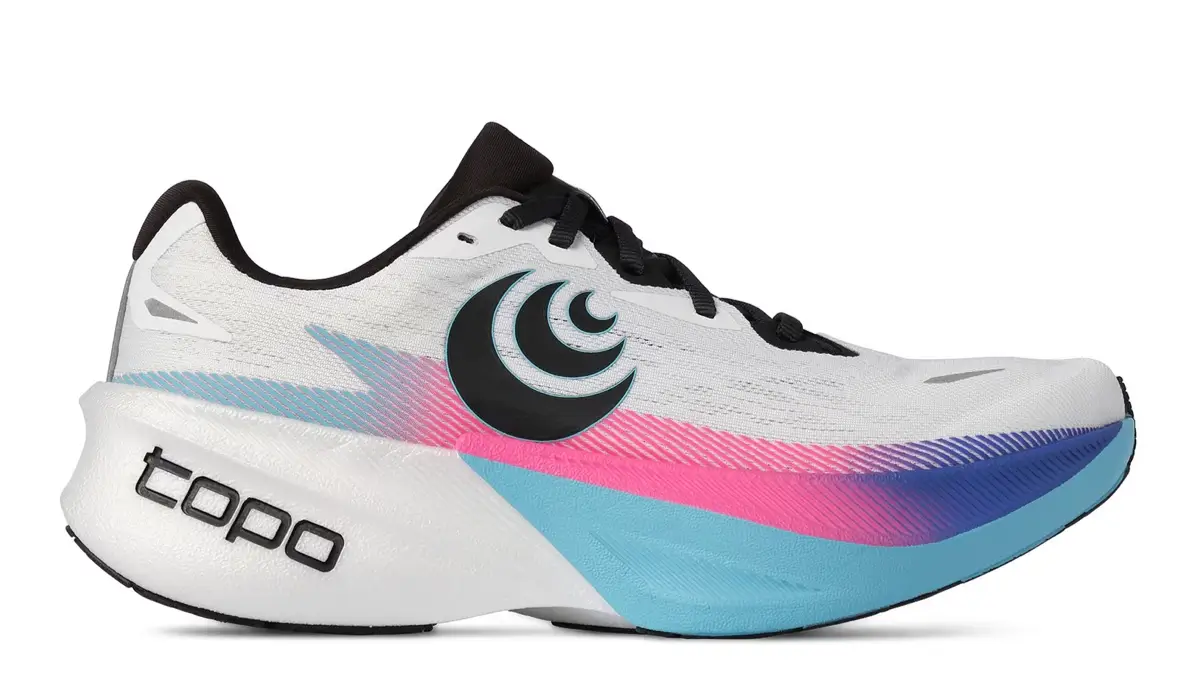
The Specter 3 is neutral, so it does not include a corrective stability system. Its defining features are instead a roomy foot-shaped toe box, lightweight RevFoam cushioning, and a pronounced rocker that encourages quick forward movement.
Specs
| Specification | Topo Athletic Specter 3 |
|---|---|
| Category | Max-cushion performance trainer |
| Men’s weight | Approx. 7.7 oz / 218 g |
| Women’s weight | Approx. 6.3 oz / 179 g |
| Stack height | 39 mm heel / 34 mm forefoot |
| Heel-to-toe drop | 5 mm |
| Support type | Neutral |
| Midsole | RevFoam ATPU |
| Internal plate | None |
| Insole | ATPU performance insole |
| Upper | Lightweight engineered mesh |
| Outsole | Rubber coverage designed for road traction and durability |
| Fit | Roomy forefoot with secure midfoot and heel |
| Available widths | Standard width only |
| Best for | Tempo runs, faster daily training, long runs, and runners wanting a roomy toe box |
| Release date | July 2026 |
| Price | Approx. $170 USD based on the manufacturer’s list price at publication. Launch price: $170 USD in July 2026. Check latest price. |
Best For
The Specter 3 is best for neutral runners who want a fast-feeling shoe but dislike narrow performance-shoe toe boxes or stiff carbon plates. It is particularly appealing for tempo runs, faster long runs, marathon training, and regular runners who want one lightweight shoe capable of handling several types of workouts.
Pros
The Specter 3 combines several features that are rarely found together in a performance trainer.
- Very light for the amount of cushioning underfoot
- Roomy anatomical toe box allows natural toe spread
- Livelier cushioning than the Specter 2
- Strong rocker encourages quick forward movement
- No stiff carbon or nylon plate
- Secure midfoot and heel despite the roomy forefoot
Cons
The shoe’s aggressive design also creates some trade-offs.
- Strong rocker may feel unnatural at slow walking speeds
- 5 mm drop may require adjustment for runners used to higher-drop shoes
- Roomy toe box can feel excessive to narrow-footed runners
- No separate wide version
- Not a true stability shoe
- Premium performance-trainer price point, at about $170 USD at release in July 2026 | Check latest price.
What’s New in the Topo Athletic Specter 3?
The Specter 3 is a major redesign rather than a small update to the Specter 2. The biggest change is the cushioning. Topo replaced the previous model’s Pebax-based midsole with a new material called RevFoam ATPU.
ATPU is a type of lightweight foam designed to compress and spring back quickly. For the buyer, the important part is simple: the Specter 3 feels softer and livelier underfoot than the firmer Specter 2.
Topo also increased the official stack height from 37 mm in the heel and 32 mm in the forefoot on the Specter 2 to 39 mm and 34 mm on the Specter 3. Despite adding cushioning, the men’s shoe drops from about 8.1 ounces to 7.7 ounces.
The shape of the sole has also changed. The Specter 3 has a stronger rocker, which is the upward curve through the front of the shoe. This curve helps the foot roll toward the toes with less bending through the forefoot and makes the shoe feel quicker during faster running.
Topo also added an ATPU insole directly beneath the foot for another layer of rebound and redesigned the rubber outsole to improve traction and durability.
The result is a shoe with a clearer purpose. The Specter 2 was a lightweight cushioned trainer. The Specter 3 moves further toward the super-trainer category while keeping Topo’s roomy fit and avoiding a plate.
Fit, Sizing, and Upper Comfort
The Specter 3 follows Topo Athletic’s recognizable fit. The front of the shoe is shaped more like a natural foot than the tapered toe boxes found on many traditional running shoes. This allows the toes to spread as the foot lands and can be particularly comfortable during longer runs when feet begin to swell.
Most runners should begin with their normal running-shoe size. The important difference is width distribution. The toe box is deliberately roomy, while the middle and heel of the shoe fit more closely. This helps prevent the entire shoe from feeling loose.
Runners coming from brands with narrow performance fits may initially think the Specter 3 is too wide. That does not necessarily mean the shoe is the wrong size. Extra space around the toes is part of the design.
Narrow-footed runners should pay particular attention to lockdown, which describes how securely the shoe holds the foot. Some may find there is simply more forefoot space than they prefer.
There is no separate wide version. However, the standard Specter 3 already provides considerably more toe room than many performance trainers. Runners who normally buy wide shoes because of forefoot pressure may therefore find the regular Topo shape works surprisingly well. Those needing extra width through the midfoot should try before buying.
The engineered mesh upper is light and breathable, while padding around the tongue and heel keeps the shoe from feeling stripped down like a racing flat. The result is a performance fit that provides toe room without giving up too much security.
Cushioning, Ride, and Running Performance
The Specter 3’s biggest improvement is the ride. Topo’s new RevFoam ATPU midsole is softer and more energetic than the Specter 2 while remaining light enough for faster running.
Energy return describes how quickly cushioning springs back after it is compressed. A shoe with higher energy return tends to feel lively rather than flat. The Specter 3 provides a noticeable rebound without relying on a stiff plate.
That last point matters. Many modern performance trainers use a carbon or nylon plate inside the midsole to stiffen the shoe and help move the runner forward. The Specter 3 does not have one. Instead, Topo relies on the foam and the shape of the sole.
The rocker is fairly aggressive. As the runner moves onto the front of the foot, the curved sole encourages a quick transition toward toe-off. Toe-off is the final part of the stride when the toes leave the ground.
This combination makes the Specter 3 particularly strong for steady-fast runs, tempo workouts, and quicker long runs. The light weight also helps when increasing pace because there is less shoe to move with each step.
The ride is less convincing at very slow speeds. A strong rocker works best when the runner has enough forward momentum to move naturally through the curve. During a slow recovery shuffle, the same geometry may feel forced.
Opinions on exactly how bouncy the shoe feels vary. Some testers describe the RevFoam as one of Topo’s liveliest midsoles, while others find the sensation more controlled than explosive. Buyers should expect a light, fast-rolling shoe rather than the extremely soft bounce of some super trainers.
| Use | How the Specter 3 Performs |
|---|---|
| Easy runs | Good, but the strong rocker may feel unnecessary |
| Daily training | Very good for runners who prefer a lively shoe |
| Long runs | Excellent for steady or faster long efforts |
| Recovery runs | Acceptable, but not its strongest use |
| Tempo runs | Excellent |
| Intervals | Very good for longer repetitions |
| Racing | Capable for runners who prefer a plateless shoe |
| Treadmill running | Good, especially at moderate and faster speeds |
The Specter 3 makes the most sense for runners who enjoy moving through several paces in the same shoe. It has enough cushioning for long mileage but enough lightness and rocker to avoid feeling sluggish when the pace increases.
Amazon availability can vary by size and color. Check size and color availability.
Walking, Standing, Stability, Grip, and Durability
The Specter 3 can certainly be walked in, but it is more running-focused than many shoes reviewed on BestWalkingFeet.com. Its extremely light construction and roomy toe box are appealing for walking, while the aggressive rocker and low drop require more consideration.
Walking and Standing
For brisk fitness walking, the Specter 3 can work very well. The rocker helps move the foot forward quickly, and the roomy forefoot gives the toes space to spread during longer outings.
Slow walking is less convincing. A performance rocker designed to help runners move quickly can feel more noticeable when strolling. Some walkers may feel pushed onto the front of the shoe sooner than they want.
The 5 mm drop also places the foot in a flatter position than traditional walking shoes with higher heels. Anyone accustomed to a 10 or 12 mm drop may notice extra work through the calves and Achilles tendon during the adjustment period.
For standing all day, there are better Topo options. The Specter 3 is light and cushioned, but its design is optimized for forward movement rather than staying stationary for hours.
Stability and Support
The Specter 3 is a neutral shoe and should not be mistaken for a stability model. Its broad forefoot and secure heel provide some natural steadiness, but the high cushioning and performance-focused shape may feel less planted at very slow speeds.
Runners who significantly overpronate or have been advised to use a stability shoe should look at a model designed specifically for additional guidance.
Grip and Durability
Topo increased rubber coverage and improved the outsole for the third version. The shoe is designed primarily for asphalt, concrete, treadmills, and other predictable road surfaces.
It can handle short stretches of packed gravel, but this is not a trail shoe. Loose surfaces reduce the advantage of its rocker and lightweight road construction.
ATPU foam is also intended to hold its properties well over repeated use. Even so, actual shoe life will vary with body weight, running form, pace, and surface.
Who Should Buy the Topo Athletic Specter 3?
The Specter 3 is particularly well suited to runners who have struggled to find a performance trainer with enough space around the toes. Most fast training shoes use a narrow or sharply tapered shape, while Topo deliberately leaves room for natural toe spread.
It is also a strong choice for runners who want the advantages of a modern super trainer without a plate. The combination of lightweight foam and rocker provides speed assistance without creating the rigid sensation some runners dislike in plated shoes.
Long-distance runners can use it for progression runs, marathon workouts, and faster long runs. A progression run begins comfortably and becomes faster as the workout continues, which suits the Specter 3’s ability to handle different paces.
The shoe can also work for runners who want one performance-oriented trainer rather than separate shoes for daily running and speed workouts.
Who Should Avoid It?
Skip the Specter 3 if you want a soft recovery shoe, strong stability support, or a traditional narrow performance fit.
It is also not the best Topo choice for someone whose main activity is slow walking or standing all day. The aggressive rocker makes more sense when moving quickly.
Runners switching from high-drop shoes should approach the 5 mm drop gradually, particularly if they have a history of calf or Achilles problems.
Topo Athletic Specter 3 Comparisons
The Specter 3 changes enough from its predecessor that existing Specter users should understand the difference before automatically buying the new version. It also competes with popular plateless super trainers such as the Asics Superblast 2.
Topo Athletic Specter 3 vs. Specter 2
The Specter 2 uses Pebax-based cushioning, weighs about 8.1 ounces for men, and has a 37 mm heel and 32 mm forefoot. The Specter 3 increases cushioning to 39 mm and 34 mm while dropping the men’s weight to about 7.7 ounces.
The new RevFoam ATPU midsole is the more important difference. It gives the third version a softer, livelier ride, while the redesigned rocker moves the foot forward more aggressively.
Choose the Specter 3 if you want the faster, lighter, and more energetic option. Choose the Specter 2 if you prefer a slightly firmer ride and can find the outgoing model at a substantial discount.
Topo Athletic Specter 3 vs. Asics Superblast 2
The Asics Superblast 2 is another highly cushioned, plateless performance trainer, but the fit and ride are different.
The Superblast 2 uses a more traditional running-shoe shape and provides a taller, substantial platform. The Specter 3 is lighter and has Topo’s much roomier anatomical forefoot and lower 5 mm drop.
The Asics may be easier to use for runners accustomed to traditional shoes and can feel more versatile across relaxed and faster paces. The Topo has the advantage for runners who prioritize toe room, lower drop, and very low weight.
Choose the Specter 3 if you want a wide toe box, low drop, light weight, and strong rocker. Choose the Superblast 2 if you want a more conventional fit and a high-cushion super trainer capable of covering a particularly broad range of training.
Price, Value, and Final Verdict
The Topo Athletic Specter 3 launched at about $170 USD in July 2026. That places it firmly in the performance-trainer category but below the price of many premium super trainers and carbon-plated racing shoes.
The value is strongest for runners who can use it for several jobs. It has enough cushioning for long runs, enough speed for tempo workouts, and enough comfort for regular training. That can reduce the need for separate daily and speed shoes.
Its roomy toe box also gives it an advantage that is difficult to duplicate among performance trainers. Runners who regularly feel squeezed in narrow speed shoes may find that feature alone worth paying for.
The value is less convincing for slow runners and walkers who will never use its lighter weight or faster geometry. There are less expensive Topo models better suited to easy walking and everyday wear.
Amazon prices can vary by size, color, and availability. Check latest price.
Final Verdict
Best for: Neutral runners who want a light, highly cushioned performance trainer with a roomy toe box and no plate.
Avoid if: You need stability support, mainly walk slowly or stand all day, or dislike aggressive rockers and low-drop shoes.
Fit: True to size for most runners, with a particularly roomy forefoot and secure midfoot and heel. No separate wide version is offered.
Verdict: The Topo Athletic Specter 3 is a major step forward for the Specter line. It combines a surprisingly low weight with generous cushioning, a lively new foam, and the foot-shaped fit Topo is known for. It is strongest as a faster daily trainer and long-run shoe rather than a slow walking or recovery model.
Frequently Asked Questions
The Specter 3 fits true to size for most runners, but its shape can feel unusual if you are accustomed to narrow running shoes. The toe box is intentionally roomy, while the middle and heel fit more closely. Start with your normal running-shoe size rather than sizing down simply because there is extra room around your toes.
It can be excellent for people who need extra toe room because Topo uses a broad, foot-shaped forefoot. However, the Specter 3 does not come in a separate wide width. Runners who need extra width through the entire shoe, rather than primarily around the toes, should try it on before buying.
No. The Specter 3 does not use a carbon or nylon plate. Its fast feeling comes from the RevFoam ATPU cushioning and strongly curved rocker. This can make it appealing to runners who want a performance trainer but find plated shoes too stiff or unnatural.
It is best for brisk or fitness walking rather than slow casual walking. The light weight, cushioning, and roomy toe box are useful for walkers, but the aggressive rocker encourages quick forward movement. People who mainly walk slowly or stand for long periods may prefer a more traditional Topo model.
Yes. Long runs are one of the Specter 3’s strongest uses, particularly when the pace is steady or gradually increases. The high stack protects the legs from repeated road impact, while the low weight and rocker help prevent the shoe from feeling bulky later in the run.
It can be if you normally wear shoes with a much higher heel. A lower drop can place more demand on the calves and Achilles tendon. Runners moving from 10 or 12 mm shoes may want to introduce the Specter 3 gradually rather than immediately using it for every run.
The Specter 3 is lighter despite having more cushioning. It replaces the Specter 2’s Pebax-based foam with livelier RevFoam ATPU and uses a stronger rocker for quicker forward movement. The overall result is a softer, lighter, more performance-focused shoe while retaining the same 5 mm drop and roomy Topo fit.
No. The Specter 3 is a neutral performance trainer. Its roomy forefoot and secure heel can provide a reasonably controlled fit, but the shoe does not have a support system designed to control excessive inward movement of the foot. Runners who need dedicated stability should consider another model.