Quick Answer: The Saucony Echelon 11 in Wide or Extra Wide is our top pick for custom orthotics: Saucony labels it orthotic friendly, and it has a removable sockliner, a straight base and a no-gusset tongue. For men's sizes to 6E, look at the New Balance Fresh Foam X 1540v4. The Brooks Addiction Walker 2 is the leather pick, the Brooks Beast GTS 26 and Ariel GTS 26 add the most stability, and the Propet Stability Walker comes in 5E. Only Orthofeet Edgewater and Coral state extra depth; the rest rely on a removable insole and roomy build. The catch: the sturdiest picks are heavy, up to 15 oz.
This guide is for walkers with wide feet who wear custom orthotics for walking, standing at work or travel, with six picks covering eight shoes.
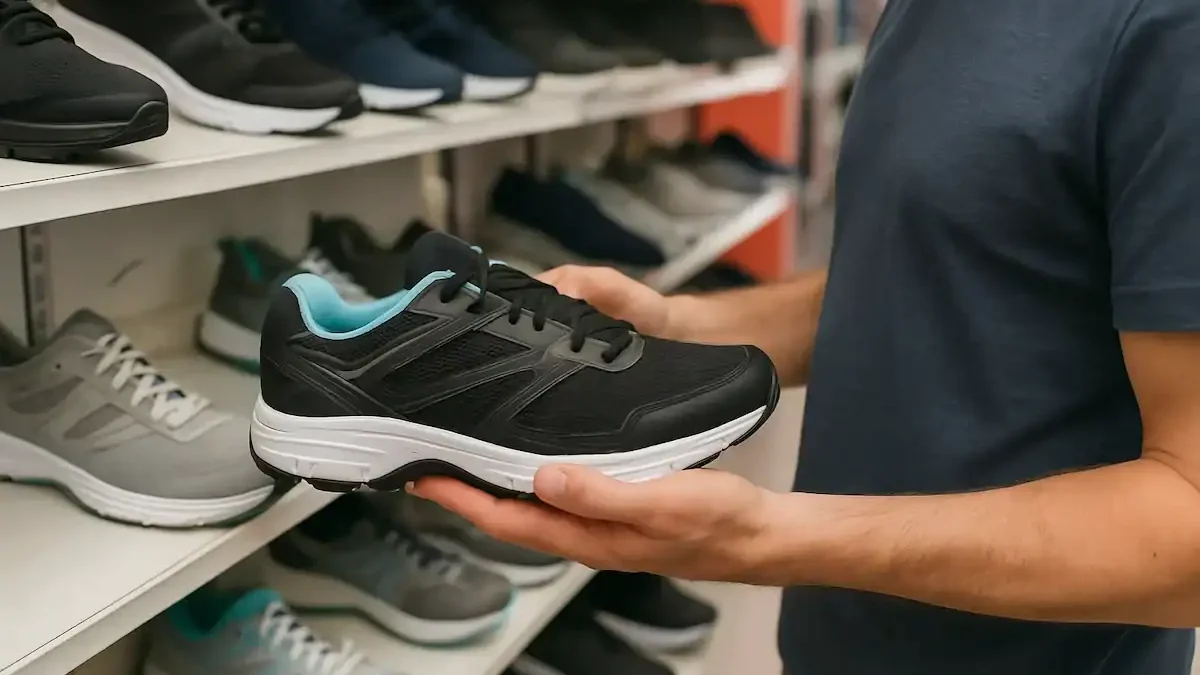
The key idea is simple: your orthotic should replace the shoe's factory insole, not sit on top of it.
New to inserts? Our guide to what orthotics are covers the basics. If width is your main problem, our shoes for very wide feet roundup ranks more shoes by size.
Our picks at a glance
| Shoe (click to jump to review below) | Best for | Key orthotic and width feature | Price & availability |
|---|---|---|---|
| Saucony Echelon 11 | Orthotic wearers who walk and jog | Orthotic Friendly badge, straight base, men's to 4E | Check latest price |
| New Balance Fresh Foam X 1540v4 | The widest men's sizes | Two removable inserts, men's to 6E | Check latest price |
| Brooks Addiction Walker 2 | A supportive leather walker | Removable insole, leather upper, to 4E | Check latest price |
| Brooks Beast GTS 26 (men's) | Maximum stability and cushion | GuideRails support, D, Wide and 4E | Check latest price |
| Brooks Ariel GTS 26 (women's) | Maximum stability and cushion | Wide D and Extra Wide 2E, orthotic-ready upper | Check latest price |
| Orthofeet Edgewater Stretch (men's) | Swollen feet needing extra depth | Extra depth, removable 1/4-inch insole, stretch knit | Check latest price |
| Orthofeet Coral (women's) | Swollen feet needing extra depth | Extra depth, up to Extra Wide 2E/3E | Check latest price |
| Propet Stability Walker | Men who need 5E | Removable footbed, D, 3E and 5E | Check latest price |
How we chose
We looked for current walking shoes with a removable insole and either an orthotic-friendly build or extra depth, sold in at least 2E for men or D for women. Each pick differs from the others in how it fits or supports the foot. Our picks are based on manufacturer pages, retailer spec listings and fitting advice from the American Academy of Orthopaedic Surgeons. We did not test these shoes hands-on.
Notes about this roundup
- Bring your orthotics when you try on shoes so you can judge the fit together.
- If your prescriber's fit advice differs from ours, follow theirs.
- See a doctor or podiatrist if foot pain is severe, lasts or gets worse.
Saucony Echelon 11

Saucony Echelon 11: best overall for custom orthotics
Best for: orthotic wearers who walk and sometimes jog
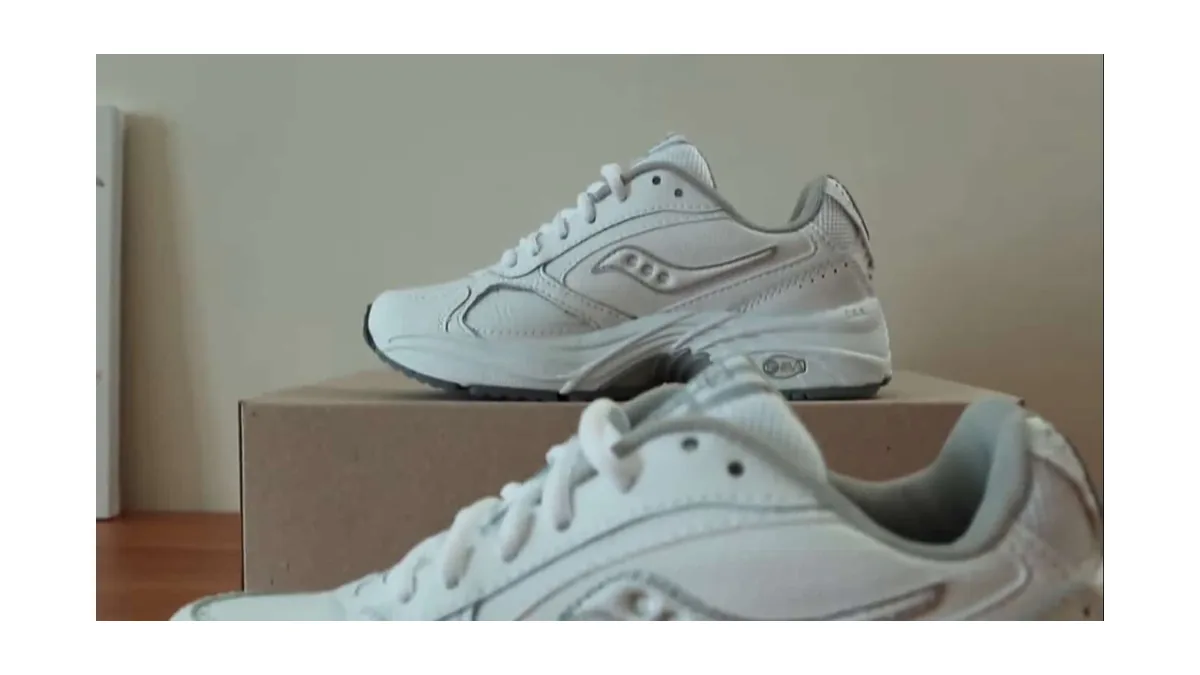
The Saucony Echelon 11 is a strong option on paper for orthotic wearers. Saucony calls it a dedicated stability shoe with a solid base for running, walking and everyday movement, and its product page carries an Orthotic Friendly badge. It is straight-lasted, meaning built on a straight, flat platform, which gives a full-length orthotic a broad, even surface to sit on.
Saucony also dropped the gusset, the fabric that ties the tongue to the sides, which it says gives a roomier fit. In our view, that helps because a thick insert takes up room over the foot. Saucony says the midsole has 20% more PWRRUN foam than before. The insole lifts out, and The Running Company says it accommodates custom orthotics.
The likely trade-offs are weight and heel hold. Marathon Sports lists the men's shoe at 11.5 oz. Dave's Running found plenty of midfoot room for an orthotic but warned that adding one risks some heel slippage. Skip it if your orthotic is thick at the heel or you want a light, flexible shoe.
Suits orthotic wearers who want a badged orthotic-friendly design. Weigh its 11.5 oz weight and possible heel slip.
Pros
- Saucony badges it Orthotic Friendly and the sockliner lifts out
- Straight, broad platform gives a full-length orthotic an even base
- No-gusset tongue frees up room over the top of the foot
- Men's sizes come in Regular, Wide 2E and Extra Wide 4E
Cons
- 11.5 oz for men, a likely trade-off if you want a light shoe
- Some heel slip is possible with an orthotic in place
- The chunky stability look will not suit dressier outfits
- Type: stability shoe for running and walking (Saucony)
- Platform: straight-lasted, solid base
- Cushioning: PWRRUN foam, 20% more than the previous version (Saucony)
- Upper: engineered mesh with a no-gusset tongue
- Insole: removable PWRRUN+ sockliner
- Men's widths: Regular, Wide 2E, X Wide 4E
- Women's widths: B, D (wide), 2E (extra wide)
- Drop: 8 mm (men's, retailer listing)
- Weight: 11.5 oz (men's, retailer listing)
Read our full Saucony Echelon 11 review.
New Balance Fresh Foam X 1540v4

New Balance 1540v4: best for the widest men's sizes
Best for: the widest men's sizes and firm rearfoot control
If even a 4E pinches, look at the New Balance Fresh Foam X 1540v4. New Balance listings for the men's version include D, 4E and 6E widths, and the women's include B and 2E. At 6E, it is the widest men's option on this list, and the version we picked is made in the USA.
New Balance describes a dual insert system: two removable inserts that may let you customize the fit around a custom orthotic. It also builds in a Rollbar, a firm stability post at the back of the shoe that New Balance says adds rearfoot support.
The upper is the possible weak spot. In individual reviews on Zappos, one reviewer said the fabric upper did not have enough side stability to hold their orthotics in place, and another said it ran narrower than their older 1540s in the same size. Skip it if you need a firm upper to keep an orthotic from shifting.
Suits men who need 6E and want rearfoot support. Individual reviewers flag an upper that may let an orthotic move.
Pros
- Men's widths go up to 6E, the widest on this list
- Two removable inserts may allow fit customization around an orthotic
- Rollbar post adds rearfoot support, per New Balance
- Made in USA version available
Cons
- One Zappos reviewer found the upper too soft to hold orthotics steady
- One Zappos reviewer found it narrower than older 1540s
- Women's widths stop at 2E
- Support: Rollbar stability post for rearfoot support (New Balance)
- Inserts: dual insert system with two removable inserts
- Men's widths: D, 4E, 6E
- Women's widths: B, 2E
- Made in: USA
Brooks Addiction Walker 2

Brooks Addiction Walker 2: best leather walker for orthotics
Best for: a supportive leather walker for work, errands and hard floors
The Brooks Addiction Walker 2 is a classic leather walking shoe with structure underfoot. Zappos lists it in B, D, 2E and 4E with a supple leather upper and a removable insole. In our view, leather should hold its shape around a bulky insert better than soft mesh.
Under the arch sits what Brooks calls an Extended Progressive Diagonal Rollbar: a firmer, two-density section of foam on the inner side of the shoe. The midsole is Brooks' BioMoGo DNA foam. The listing also shows the APMA Seal of Acceptance and PDAC A5500 approval, which may matter if you are looking into shoes for diabetic foot care.
The trade-off is weight: Zappos gives 15 oz for a size 10, the heaviest listed weight here. Skip it if you want soft cushioning or a sneaker for dinner out. For long shifts on hard floors, see our guide to shoes for standing.
Suits walkers who want leather and a firm arch side. Expect a heavy, sensible shoe.
Pros
- Leather should hold its shape better than soft mesh (our view)
- Widths from B up to 4E
- Removable insole makes room for a custom pair
- Listed with the APMA Seal and PDAC A5500 approval
Cons
- 15 oz in a size 10, the heaviest listed shoe here
- Firm, structured build will not suit walkers who want soft cushioning
- Plain styling limits it for casual or dressier outfits
- Upper: supple leather
- Midsole: BioMoGo DNA foam
- Support: Extended Progressive Diagonal Rollbar, a dual-density post under the inner arch
- Insole: removable
- Widths: B, D, 2E, 4E (retailer listing)
- Weight: 15 oz, size 10 (retailer listing)
- Approvals: APMA Seal of Acceptance, PDAC A5500 (retailer listing)
Read our full Brooks Addiction Walker 2 review.
Brooks Beast GTS 26 and Ariel GTS 26

Brooks Beast GTS 26: best for maximum stability with orthotics
Best for: maximum stability and cushioning with an orthotic
The Brooks Beast GTS 26 for men and the women's Brooks Ariel GTS 26 are big, supportive daily shoes. Zappos lists the men's Beast in D, Wide and 4E, sizes 8 to 15. Retailers sell the Ariel in Wide D and Extra Wide 2E, and PR Run and Walk says its mesh upper accommodates custom orthotics.
Support comes from what Brooks calls GuideRails, which the Zappos listing describes as structured stability designed to keep excess movement in check.
The catch is height. Zappos lists the men's Beast with a 38 mm heel stack and a 26 mm forefoot stack, a 12 mm drop. That puts thick cushioning under your orthotic, but in our view the tall heel can make the shoe feel less nimble. Learn more about shoe drop. Skip these if you want a low, flexible shoe or a light one for travel.
Suits walkers who want strong stability and a thick stack under their orthotic. Expect a tall, bulky shoe.
Pros
- GuideRails designed to keep excess movement in check
- Men's sizes run to 4E and 15; women's to Extra Wide 2E
- Listed 38 mm heel stack under the orthotic
- Beast listed with the APMA Seal and PDAC A5500 approval
Cons
- 12 mm drop and tall stack may feel less nimble on uneven ground
- Big, bulky look
- Women's widths stop at 2E
- Support: GuideRails structured stability
- Men's widths (Beast): D, Wide, 4E; sizes 8 to 15 (retailer listing)
- Women's widths (Ariel): Wide D, Extra Wide 2E (retailer listings)
- Stack height: 38 mm heel, 26 mm forefoot (men's, retailer listing)
- Drop: 12 mm (men's, retailer listing)
- Approvals: APMA Seal, PDAC A5500 (Beast, retailer listing)
Read our full Brooks Beast GTS 26 review.
Orthofeet Edgewater Stretch and Orthofeet Coral

Orthofeet Edgewater Stretch: best for extra depth
Best for: swollen or sensitive feet that need extra depth
Orthofeet builds every shoe with extra room inside, so the Orthofeet Edgewater Stretch for men and Orthofeet Coral for women suit a thick orthotic or feet that swell during the day. Orthofeet says all its shoes are made with extra depth and come with removable insoles about 1/4 inch thick.
Extra depth means more height inside, from the footbed to the top of the shoe, so a bulky orthotic has more room above it. In our view, the Edgewater's stretch knit upper should give a little around puffy or bony spots. Orthofeet's Edgewater listing gives three widths. Healthy Feet Store lists the Coral in Medium (B/D), Wide (D/E) and Extra Wide (2E/3E).
The trade-off is structure. In our view, a soft knit upper holds an orthotic less firmly than leather or a stability shoe, so if yours tends to slide, the Brooks or Saucony picks may suit you better. The Coral's paired width labels are also less exact, since Wide covers D to E. Skip these for brisk fitness walks.
Suits walkers who need height inside the shoe, not just width. Expect give rather than firm support.
Pros
- Extra depth across the whole Orthofeet line
- Removable insole about 1/4 inch thick frees space for your orthotic
- Stretch knit upper on the Edgewater
- Coral runs up to Extra Wide 2E/3E
Cons
- Soft upper likely holds an orthotic less firmly than the stability picks
- Paired width labels such as D/E make sizing less exact
- With a thin orthotic, the extra volume may feel loose
- Depth: extra depth (Orthofeet)
- Insole: removable, about 1/4 inch thick
- Upper (Edgewater): stretch knit
- Edgewater widths: three widths (Orthofeet)
- Coral widths: Medium (B/D), Wide (D/E), Extra Wide (2E/3E) (retailer listing)
Read our full Orthofeet Edgewater Stretch review.
Propet Stability Walker
Best for: men who need 5E in a simple, classic walking shoe
The Propet Stability Walker is a no-frills walking shoe for men with very wide feet, suited to errands and neighborhood walks. Propet says the footbed can be removed to fit custom orthotics. Locally lists the men's model (M2034) in D, 3E and 5E, which sits between the 4E picks and the 6E New Balance offers.
We found no cushioning technology listed for it, so if you want named cushioning, a lighter feel or a sportier look, the Saucony or Brooks picks may suit you better. The widths step from 3E to 5E, so if 3E feels snug and 5E sloppy, the Brooks Addiction Walker 2 in 4E is the closest alternative here.
Suits men who need 5E in a plain walker that takes an orthotic. No cushioning technology is listed.
Pros
- Men's widths in D, 3E and 5E
- Propet says the footbed comes out to fit custom orthotics
- 5E fills the gap between 4E and 6E shoes
Cons
- Widths jump from 3E to 5E, so in-between feet may not find a perfect fit
- Plain, old-school styling
- No cushioning technology listed, unlike the running-based picks
- Footbed: removable to fit custom orthotics (Propet)
- Men's widths: D, 3E, 5E (retailer listing)
- Men's model number: M2034
What to look for in a wide shoe that fits orthotics
These features decide whether an orthotic will fit:
- A removable insole, so the orthotic replaces it instead of stacking on top
- Depth at the heel and toes, so the orthotic does not lift your heel out or press your toes down
- A firm heel counter, the stiff cup at the back that keeps your heel seated
- A straight, broad base that gives the orthotic a flat, even surface
For more on support styles, read our stability shoe explainer. Our guide to roomy toe boxes explains width versus toe shape. If you are switching brands, use our shoe size converter.
Frequently Asked Questions About Buying Wide Shoes for Orthotics
Yes, in most cases. A custom orthotic is made to replace the shoe's insole, and stacking both eats into toe and heel room. AAOS OrthoInfo says shoes with removable insoles let you swap in an orthotic without taking up extra space.
Go wider before you go longer. AAOS OrthoInfo says that if a shoe is not made in your width, try a brand with a wider toe box rather than sizing up. It also suggests about half an inch between your longest toe and the tip of the shoe. Our free Shoe Finder can point you to roomier options.
Width is how roomy a shoe is from side to side, shown by letters such as D, 2E and 4E. Depth is the height inside the shoe, from the footbed to the top. A shoe can come in 4E and still press down on your toes once a thick orthotic goes in. Extra-depth shoes such as the Orthofeet Coral add room from the footbed up, and Orthofeet says its insoles are about 1/4 inch thick, so taking one out frees space for yours.
Bring them with you. The APMA advises taking your orthotics when you try on shoes so you can make sure they fit together comfortably, HealthDay reports. Shop toward the end of the day, when feet have swelled, and have your feet measured standing up, because your weight spreads the foot, according to AAOS OrthoInfo.
An orthotic can sit your heel higher in the heel cup than the factory insole did, leaving less of the shoe around the back of your foot. Make sure the factory insole is out, then try snugging the laces through the top eyelets or choose a shoe with a deeper, firmer heel. Dave's Running flagged this risk with the Saucony Echelon 11.
Sometimes. Zappos lists the Brooks Addiction Walker 2 and the Brooks Beast GTS 26 with PDAC A5500 approval. Ask your doctor or a Medicare footwear supplier whether you qualify and which shoes count, and see our diabetes shoes guide for more.