Extra-depth fit, limited current availability
Quick Answer: Dr. Comfort Ranger Review: The Dr. Comfort Ranger is a men’s leather work and hiking boot built with the extra width and depth used in therapeutic diabetic footwear, so a swollen foot, bunions, hammertoes or a custom orthotic have room without crowding the toes. A no-tie closure with elastic laces and a toggle makes it easy to put on, and it was offered in medium, wide and extra-wide fittings, although current stock is much more limited. It is a sturdy boot rather than a light walking shoe, and it has no safety toe, so it suits rough ground better than long days on pavement or job sites that require protective toes..
The Dr. Comfort Ranger comes from a brand that builds shoes to a medical pattern rather than an athletic one. Dr. Comfort makes therapeutic footwear: shoes cut deeper and wider than normal so that feet affected by diabetes, swelling, bunions or hammertoes have more room, and so a prescribed insole can fit without pushing the foot up against the top of the shoe.
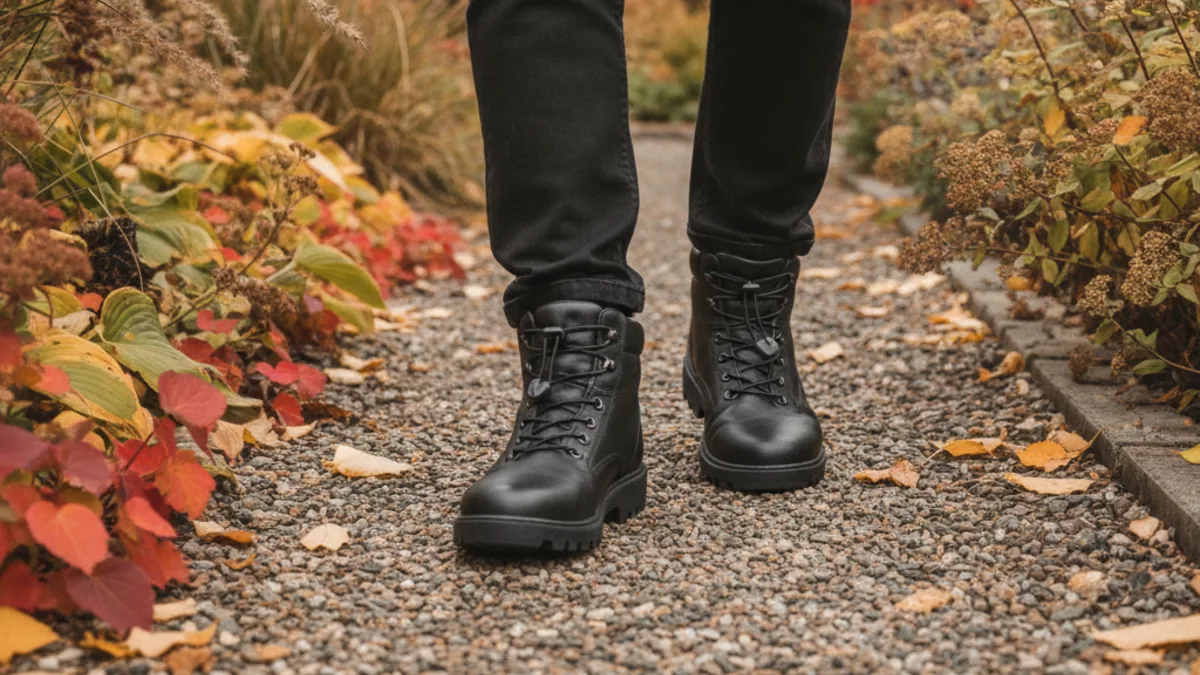
Most therapeutic footwear is a soft walking shoe. The Ranger is the boot version. Dr. Comfort calls it a men’s work and hiking boot that is “rugged enough for all your outdoor adventures,” with a full top-grain leather upper, a padded heel and tongue and a wide toe box. That makes it a practical option for men who need extra room but spend their days in the yard, on gravel paths, around a farm or in a workshop rather than on smooth indoor floors.
Earlier Dr. Comfort catalogs listed the men’s Ranger in black and chestnut with medium, wide and extra-wide options across a broad size range. The current U.S. manufacturer listing is marked final sale and shows only black, extra-wide (EEE/EEEE) in sizes 6.5 and 7. Availability at other retailers may differ, so check the exact size and width before buying.

Dr. Comfort Ranger men’s extra-depth leather work and hiking boot in black, side view. Image: Amazon
Specs
Here are the specifications for the Dr. Comfort Ranger:
| Type | Men’s extra-depth therapeutic work and hiking boot |
| Best for | Men who need extra room or wear orthotics and want a boot for yard work, rough paths and outdoor errands |
| Upper | Full top-grain leather with a padded heel cup and tongue |
| Closure | No-tie elastic laces with an adjustable toggle and a hook-and-loop fastener |
| Toe box | Wide and deep, with a protective toe box against stubbing (not a safety toe) |
| Insole | Removable footbed to accommodate prescribed orthotics; check the included insert with the seller |
| Heel | Firm heel counter for side-to-side support |
| Widths | Historically medium (B/C/D), wide (E/EE) and extra wide (EEE/EEEE); current manufacturer stock shows extra-wide only |
| Sizes | Historically men’s 6 to 15; manufacturer currently lists only 6.5 and 7 in black extra-wide (Oct. 2026) |
| Colors | Historically black and chestnut; currently listed in black only by Dr. Comfort |
| Medicare | Listed by Dr. Comfort among its A5500 reimbursable styles |
| Original listed price | $165 | Check latest price |
Pros
- Extra depth leaves room for a custom orthotic without crowding the toes.
- Three width fittings, up to extra wide, so broad feet do not have to size up in length.
- The no-tie closure is easy to manage if bending or tying laces is difficult.
- Padded heel and tongue reduce common rub points.
- Leather upper offers more protection outdoors than a mesh walking shoe.
Cons
- It is a boot, so it feels heavier and firmer than a cushioned walking shoe on long pavement walks.
- No safety toe, so it will not meet steel or composite toe requirements.
- Dr. Comfort does not list it as waterproof.
- Plain, functional styling.
Why extra depth matters, and what the Ranger adds
A therapeutic or “extra-depth” shoe is built with more vertical room inside than an ordinary shoe, especially over the toes and forefoot. That space has two jobs. It gives swollen feet and toe shapes such as bunions and hammertoes room to sit without pressure, and it leaves space for a custom orthotic or a thick supportive insole, so adding one does not shove your toes into the roof of the shoe. Dr. Comfort says extra width and depth can help ease pressure on swollen feet, bunions and hammertoes, which is the core reason people seek this kind of footwear.
For people with diabetes, pressure matters more than for most. Diabetes can reduce feeling in the feet and slow circulation, so a rub or pressure point may not be noticed until it has caused damage. A roomier shoe that fits well is one part of looking after your feet, alongside daily checks and regular care from your doctor or podiatrist.
What the Ranger adds is a boot’s toughness. The full top-grain leather upper is sturdier than the mesh used on many therapeutic walking shoes, the protective toe box shields against stubbing, and a firm heel counter, the stiff cup that wraps the back of your heel, gives what Dr. Comfort describes as extra medial and lateral support. In everyday terms, it helps keep your heel steady on uneven ground rather than rolling from side to side.
Inside, Dr. Comfort fits gel insoles as standard in its shoes and says they provide comfort, shock absorption and support. Gel is designed to spread pressure across the bottom of the foot. The insole also lifts out, which is important, because many people who wear this kind of boot use a custom insert instead.
Who should buy the Dr. Comfort Ranger
Buy it if you have been advised to wear extra-depth footwear and you need a boot rather than a sneaker. Yard work, gardening, gravel driveways, farm chores and rough walking paths are hard on soft walking shoes, and the Ranger gives you the room of a therapeutic shoe with the protection of leather.
Buy it if a custom orthotic has made ordinary boots too tight. Because the Ranger is built with extra depth, an orthotic can replace the gel insole without leaving your toes pressed against the top of the boot.
And it is worth a look if laces are a struggle. The no-tie closure, with elastic laces, an adjustable toggle and a hook-and-loop fastener, means you can put the boot on and snug it up without tying a bow, which helps if you have arthritis in your hands, limited reach or trouble seeing your feet.
If you have diabetes and Medicare Part B, the Ranger may also be an option through the Medicare therapeutic shoe benefit. Dr. Comfort lists it among its A5500 reimbursable styles and says Medicare coverage requires a qualifying diagnosis, documentation from a qualified physician and ordering through one of its providers. Ask your doctor or a certified fitter whether you qualify before paying full price.
Who should probably skip it
Skip it if your feet are an ordinary width and shape and you do not wear an orthotic. You would be paying for room you do not need, and a mainstream hiking boot or walking shoe will usually feel lighter. Skip it if your job requires a safety toe, because the Ranger’s protective toe box is not a steel or composite safety cap. And skip it if most of your day is spent walking on hard, flat floors, where a cushioned walking shoe will be far more comfortable than a boot.
These are better fits for those needs:
- Dr. Comfort Protector: the brand’s steel-toe diabetic boot, for job sites that require toe protection (check price)
- Hoka Bondi SR: a deeply cushioned leather walking and work shoe with a slip-resistant outsole, for long shifts on hard indoor floors (check price | read review)
- Brooks Ghost Max 3: a roomy, highly cushioned everyday shoe for pavement walking when you do not need a boot (check price | read review)
Not sure what kind of shoe your feet need? Our Free Shoe Finder can help narrow it down, though it is not a substitute for advice from your podiatrist.
Fit: buy your length, then choose the right width
Fit is the reason this boot exists, so take your time with it. Start with your measured length, then choose the width that matches your foot: medium (B/C/D), wide (E/EE) or extra wide (EEE/EEEE). Picking the right width keeps the ball of your foot over the widest part of the sole. Going up in length to get more room usually leaves your heel loose and moves the boot’s flex point to the wrong place.
If you plan to wear your own orthotic, take out the gel insole and put your insert in before you judge the fit. An orthotic raises your foot inside the boot and uses some of the extra depth the Ranger is built to provide.
The padded heel cup and tongue mean the parts of a boot that usually rub are cushioned from the start, and the firm heel counter helps hold the back of your foot in place. Leather softens and shapes to your foot with wear, so break the boots in with short days before a long one, and check your feet for red marks after each wear.
If you have reduced feeling in your feet, have the boots fitted in person by a certified fitter or pedorthist rather than guessing. You may not feel a pressure point until it has already done harm.
How it feels on rough ground and around the yard
The Ranger feels solid and roomy rather than soft and springy. Cushioning comes mainly from the gel insole, which is designed to spread pressure across the bottom of the foot instead of letting it build under the heel and ball. Underfoot, expect a supportive, fairly firm feel. If you are used to a modern running shoe with a thick, soft midsole, it will feel flatter, and that firmness is part of what makes a boot steady on uneven ground.
On gravel, grass, dirt paths and around a yard or farm, the leather upper and protective toe box earn their keep. The firm heel counter keeps the back of your foot steady, which helps when the ground is lumpy or sloped. Dr. Comfort says the boot is built from top-quality materials for a longer-lasting shoe, and leather generally holds up to scuffs and knocks better than mesh.
On long walks over hard, flat pavement, a boot like this will feel heavier and less forgiving than a cushioned walking shoe. Dr. Comfort does not list the Ranger as waterproof, so treat the leather as weather resistant at best, keep it conditioned and let it dry naturally away from direct heat after wet days.
Is the Dr. Comfort Ranger good for walking?
It is good for the kind of walking that happens on uneven ground: yard work, farm tracks, gravel paths and light trails. The extra depth and width mean your toes are not squeezed while you do it, and orthotics fit without a fight, which is the main reason many people choose it.
For long walks on pavement or in town, a cushioned walking shoe will usually feel easier on your legs. If that describes most of your walking, look at our guides to the best shoes for diabetics and the best walking shoes, and choose a model with the depth and width your feet need.
Dr. Comfort Ranger Alternatives
If you like what the Ranger offers but want a different balance, these are worth considering.
The Dr. Comfort Yukon is the brand’s high-top hiking and work boot. It adds more ankle coverage and support for rougher ground, which suits men who spend more time on uneven trails or job sites (check price).
The Dr. Comfort Boss is a rugged leather lace-up work boot with an oil-resistant outsole, according to Dr. Comfort. It suits men who prefer traditional laces and work around oil or grease (check price).
If you need a supportive shoe for pavement more than a boot for rough ground, the Brooks Addiction Walker 2 is a leather walking shoe with built-in support for feet that roll inward (check price | read review).
For more extra-room options, see our guides to the best orthopedic shoes for men and the best shoes for very wide feet.
Price and value
The Ranger’s value is in its fit rather than flashy features. Extra depth, historically available width options, a removable insole, a no-tie closure and a leather upper can make this boot useful for hard-to-fit feet, and those features are hard to find together in mainstream footwear.
The original listed price was $165, but Dr. Comfort’s current U.S. listing is final sale with limited sizes. Medicare therapeutic-shoe eligibility is separate from retail pricing and requires qualifying documentation and ordering through an authorized provider. Check both stock and coverage before buying. If your feet are a standard shape and you do not need the extra room, a regular hiking boot will usually be the better value.
A note on diabetic footwear
Footwear for anyone with diabetes, neuropathy or a history of foot ulcers is a medical decision, and this review is not medical advice. Comfort and suitability depend on your foot shape, sensation, circulation, gait, injury history and daily activities. Have shoes fitted in person by a qualified fitter if you have reduced feeling in your feet, check your feet every day for redness, blisters or cuts, and see your doctor or podiatrist promptly about any sore, swelling or pain that does not settle.
Final verdict
Best for: men who need an extra-depth, wide-fitting boot for yard work, farm chores or rough paths, especially those who wear a custom orthotic.
Avoid if: your feet are a standard shape, your job requires a safety toe or most of your walking is on hard, flat pavement.
Fit: use your measured length, confirm that your width is actually stocked, and try it with your prescribed insole in place. Most historic size-width combinations are not currently listed by Dr. Comfort.
Verdict: The Dr. Comfort Ranger fills a real gap. Most therapeutic footwear is a soft walking shoe, and this is a leather boot with the room to make an orthotic and sensitive feet comfortable, plus a no-tie closure that is easy to manage. It is not a safety boot or a lightweight walker, but for the feet and jobs it is designed for, it is a sensible choice.
Check the latest price on the Dr. Comfort Ranger.
Frequently Asked Questions About Dr. Comfort Ranger
Extra depth means there is more vertical room inside the shoe than usual, especially over the toes. That space helps swollen feet and toe shapes such as bunions and hammertoes fit without pressure, and it leaves room for a custom orthotic.
Dr. Comfort lists the Ranger among its A5500 reimbursable styles. Coverage under the Medicare therapeutic shoe benefit requires a qualifying diagnosis and physician documentation, and Dr. Comfort says eligible items must be ordered through one of its providers.
No. It has a protective toe box against stubbing, but it is not a safety-toe boot. If your job requires steel or composite toe protection, look at a safety-rated boot such as the Dr. Comfort Protector.
Yes. The gel insole is removable, and the boot’s extra depth is designed to make room for a custom orthotic. Try the boot on with your orthotic in place before deciding on size.
Dr. Comfort lists medium (B/C/D), wide (E/EE) and extra wide (EEE/EEEE) in men’s sizes 6 to 15. Choose the width that fits your foot rather than sizing up in length.
Dr. Comfort does not list it as waterproof. The leather upper handles light weather better than mesh, but treat it as weather resistant rather than waterproof and keep the leather cleaned and conditioned.