Last Updated on September 28, 2026
| Quick Answer: Best Shoes for Diabetes in 2026. If you have diabetes but no neuropathy, ulcers, major swelling or foot deformity, a well-fitting everyday walking shoe may be appropriate. If you have reduced sensation, a history of ulcers, significant deformity or other diabetes-related foot disease, ask your clinician whether you need therapeutic shoes or inserts. Our current picks include the Propet Stability Walker, New Balance 847v4, Orthofeet Coral Stretch Knit, Brooks Addiction Walker 2 and Skechers Arch Fit 2.0. The first two are especially relevant when extra depth, extended widths or Medicare therapeutic-shoe eligibility may matter. |
Diabetes changes the footwear conversation because nerve damage and reduced circulation can make a small blister, pressure point or cut much more serious than it would be for someone without diabetes. A shoe that merely feels “soft” is not enough. Fit, internal seams, toe room, width, depth and daily foot checks all matter.
The CDC says diabetes-related nerve damage can reduce your ability to feel pain, heat and cold, so a blister or sore may go unnoticed. The American Diabetes Association similarly advises wearing shoes that fit well, checking inside them before putting them on and asking a doctor about therapeutic shoes or inserts when ordinary footwear no longer fits comfortably.
Best Shoes for Diabetes at a Glance
These are not interchangeable. Some are everyday comfort shoes; others are more appropriate when width, extra depth or therapeutic-shoe coding matters. If you have neuropathy, an ulcer, a history of ulceration or significant deformity, let your medical team guide the choice.
Shoe | Best for | Key feature | Price |
|---|---|---|---|
Extra depth and Medicare-eligible therapeutic footwear | Five widths, removable insole, A5500 coding | ||
Extended widths and structured walking support | ROLLBAR, removable Ortholite insole, A5500 diabetic style | ||
Women with bunions, hammertoes or swelling | Stretch, seam-free upper and extra depth | ||
All-day structured walking | Rollbar support, leather upper, slip-resistant outsole | ||
Lower-risk feet needing everyday arch support | Removable contoured insole, wide versions |
When Diabetes Changes What You Need From a Shoe
Not everyone with diabetes needs a special shoe. The key question is whether diabetes has affected your feet. Neuropathy can reduce sensation. Poor circulation can slow healing. Foot deformities can create pressure points, and ulcers can form when skin is repeatedly rubbed or overloaded.
If you still have normal sensation, no ulcer history and no major foot deformity, your needs may look much like anyone else’s: correct size, enough width, a secure heel and no rubbing. If sensation is reduced, the standard changes. You cannot rely on pain alone to tell you that a shoe is too tight, so daily inspection becomes essential.
The American Diabetes Association recommends checking your feet daily, avoiding barefoot walking and asking about special therapeutic shoes or inserts if regular shoes do not fit comfortably.
Best Shoes for Diabetes in 2026
Propet Stability Walker
Best for: People who need extra depth, extended widths or a shoe that may qualify under the Medicare therapeutic-shoe benefit.
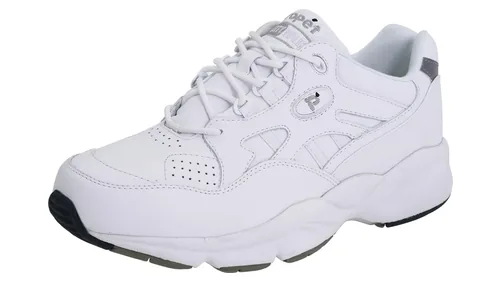
The Stability Walker is one of the most relevant models here because it is built around fit rather than fashion. Propet offers five widths from narrow through 4E, plus extra depth and a removable footbed. That gives swollen, wide or orthotic-dependent feet far more room than an ordinary sneaker.
It is coded A5500, which means it can be eligible under Medicare’s therapeutic-shoe benefit when the person meets the medical requirements and the shoe is furnished through the proper process. That does not mean Medicare automatically pays for every pair bought at retail.
Read our Propet Stability Walker review.
New Balance 847v4
Best for: People who need multiple widths, a removable insole and firm walking stability.
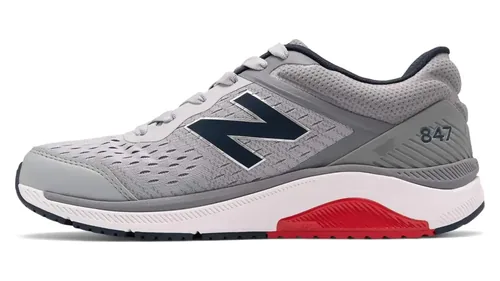
The 847v4 is a structured walking shoe with ROLLBAR posting, a secure heel and extended widths. Its removable Ortholite sockliner also makes it easier to fit a custom insert without crowding the foot.
New Balance lists the 847v4 as an A5500 diabetic style. As with any therapeutic-shoe claim, Medicare coverage depends on your eligibility, your doctor’s certification and how the footwear is supplied—not simply the model name.
Read our New Balance 847v4 review.
Orthofeet Coral Stretch Knit
Best for: Women whose feet swell or who have bunions, hammertoes or tender pressure points.
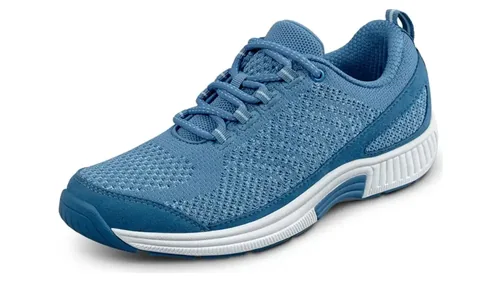
The Coral’s main advantage is the upper. It stretches in multiple directions and has a seam-free lining, so the material is less likely to rub against a bunion, hammertoe or swollen area. It also has extra depth and a removable insole.
Those are useful features for sensitive feet, but the Coral should not be treated as a substitute for prescribed therapeutic footwear if you have high-risk diabetes-related foot disease.
Read our Orthofeet Coral Stretch Knit review.
Brooks Addiction Walker 2
Best for: Lower-risk feet that need a very stable, durable walking shoe.
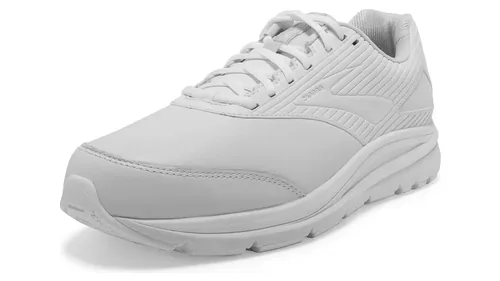
The Addiction Walker 2 is a leather motion-control walking shoe with a broad, supportive platform, multiple widths and a slip-resistant outsole. It makes sense for people who want a secure work or everyday walking shoe and do not need specialized extra-depth therapeutic footwear.
The leather upper is more structured and less forgiving than a stretch shoe, so it is not our first choice when swelling, bunions or deformity make pressure points a concern.
Read our Brooks Addiction Walker 2 review.
Skechers Arch Fit 2.0
Best for: Lower-risk feet that need an affordable everyday walking shoe with noticeable arch support.
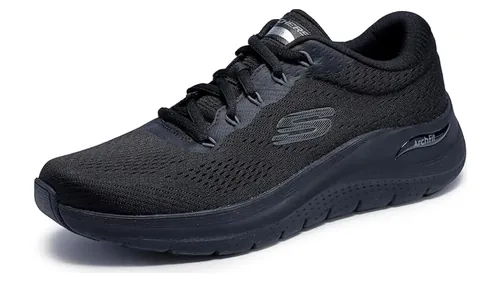
The Arch Fit 2.0 uses a removable contoured insole and is sold in wide versions. It can be a practical everyday shoe for someone with diabetes who has intact sensation and no major foot deformity or ulcer history.
It is not a therapeutic diabetic shoe. If you have neuropathy or high-risk foot disease, a clinician-guided option is more appropriate than choosing this model because it feels soft or supportive.
Read our Skechers Arch Fit 2.0 review.
What to Look for in Shoes if You Have Diabetes
The first priority is fit. The shoe should not pinch the toes, rub the heel or create a ridge over a bunion or other prominent area. If sensation is reduced, visually inspect your feet after wearing a new pair because discomfort may not warn you early enough.
Look for enough toe room, smooth interior construction, a secure heel and the right width. A removable insole is useful if you wear a prescribed insert. Adjustable closures can help if swelling changes through the day.
The ADA advises checking inside shoes for small objects before wearing them and avoiding barefoot walking, even at home. The CDC also recommends breaking in new shoes slowly rather than wearing them all day immediately.
How Medicare Covers Therapeutic Shoes for Diabetes
Medicare Part B covers therapeutic shoes and inserts for eligible people with diabetes and severe diabetes-related foot disease. Coverage can include one pair of extra-depth shoes plus three pairs of inserts, or custom-molded shoes in qualifying cases.
The doctor treating your diabetes must certify the need for therapeutic shoes or inserts. Medicare coverage also has provider and supplier requirements. A product carrying A5500 coding may be eligible for the benefit, but buying that model from an ordinary retailer does not by itself guarantee reimbursement.
When to Call Your Doctor About a Diabetes-Related Foot Problem
Do not wait for pain if you have reduced sensation. Contact your clinician promptly for a blister, cut, sore, redness, swelling, drainage, color change or wound that is not healing. The ADA advises that every foot ulcer should be seen by a doctor, even when it does not hurt.
Daily inspection matters because neuropathy can hide an injury. Check the tops, soles and between the toes, and inspect the inside of the shoe before putting it on.
Frequently Asked Questions About Diabetes and Shoes
No. People with diabetes who have normal sensation, no ulcer history and no major foot deformity may be able to wear ordinary well-fitting shoes. Therapeutic footwear becomes more important when neuropathy, deformity, ulcers or other high-risk foot problems are present.
A good fit, enough toe room, the correct width, smooth interior construction, a secure heel and room for prescribed inserts can all reduce rubbing and pressure. High-risk feet may need extra-depth or custom therapeutic footwear.
Some can, particularly if they have intact sensation and no high-risk foot disease. A running shoe is not automatically appropriate for neuropathy, ulcers, deformity or major swelling. In those cases, ask your clinician about therapeutic footwear.
Medicare Part B can cover therapeutic shoes and inserts for eligible people with diabetes and severe diabetes-related foot disease. Your diabetes doctor must certify the need, and provider and supplier requirements apply.
No. They should have enough room to avoid pressure but still hold the heel securely. A shoe that is too loose can create friction and instability, while one that is too tight can create pressure points.
Reduced sensation can make it difficult to feel a pebble, torn lining or other object inside the shoe. The CDC and ADA recommend checking shoes before wearing them to reduce the risk of unnoticed injury.
Contact a clinician promptly for sores, blisters, cuts, redness, swelling, drainage, color changes or wounds that are not healing. Do not wait for pain if sensation is reduced.