Last Updated on October 10, 2026
The trail shoe that starts on pavement
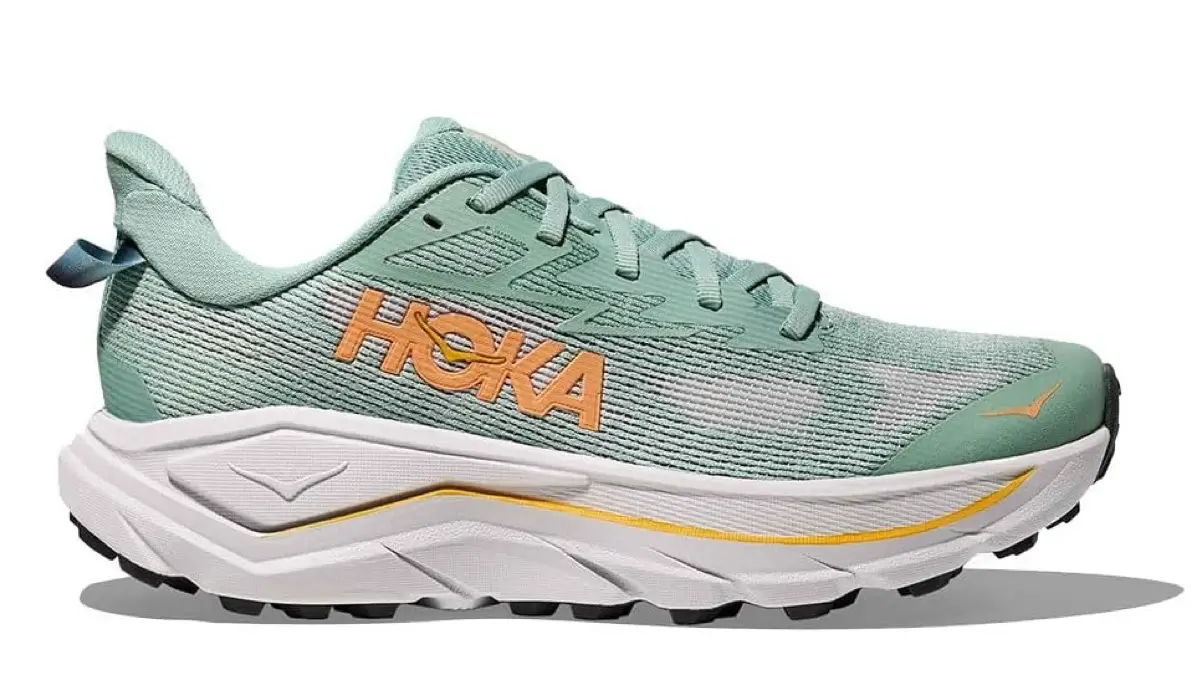
Quick Answer: Hoka Challenger 8 Review: The Challenger 8 is a door-to-trail shoe for neutral runners whose routes mix pavement, gravel and easy dirt. Shallow lugs mean it stays comfortable on road where an aggressive trail outsole would feel like walking on studs, and Hoka raised the stack and lifted the drop from 5 mm to 8 mm, which makes it far more forgiving for heel strikers. The trade-off is that it gained weight, and shallow lugs do not grip mud or wet rock. Check latest price.
The Hoka Challenger 8 solves a specific and very common problem. Most people who run trails do not start on a trail: they run a mile or two of pavement to get there. A dedicated trail shoe with 5 mm lugs is miserable on that pavement, and a road shoe is unsafe once the surface turns to dirt. The Challenger is Hoka’s answer, and the category is usually called door-to-trail.
The compromise sits in the outsole. Lugs are shallow enough that hard surfaces feel normal underfoot rather than studded, but present enough to bite into gravel, packed dirt and dry singletrack. That is a genuine engineering trade, and understanding which side of it you need is the whole buying decision.
The 8 makes two significant changes. Hoka raised the stack to around 42 mm at the heel and 34 mm at the forefoot, and lifted the drop from 5 mm to 8 mm. Taken together, they turn a relatively low, firm shoe into a properly cushioned one that is far friendlier to heel strikers than earlier Challengers were.

Specs
Here are the specifications for the Hoka Challenger 8:
| Type | Door-to-trail running shoe, neutral, cushioned |
| Best for | Mixed road and trail routes, gravel paths, easy dirt, walking |
| Midsole | Compression-molded EVA with Hoka’s rocker geometry |
| Stack height | About 42 mm heel / 34 mm forefoot as listed; one independent lab measured nearer 40.2 mm and 30.1 mm, so treat as approximate |
| Heel-to-toe drop (?) | 8 mm, up from 5 mm on previous versions |
| Weight | About 9.5 oz (269 g) to 10.2 oz men’s US 9 depending on source, roughly 8 percent heavier than the Challenger 7 |
| Upper | Engineered mesh with a gusseted tongue and a reinforced toe |
| Outsole | Shallow multi-directional lugs, tuned for mixed surfaces |
| Widths | Standard and wide on selected colorways |
| Price | Launched at $155 in July 2025. Check latest price |
Pros
These are the reasons it suits mixed-surface runners:
- Shallow lugs mean it is genuinely comfortable on pavement, unlike a proper trail shoe
- Still grips gravel, packed dirt and dry singletrack confidently
- A taller stack makes long mixed runs far more comfortable than the Challenger 7
- Raising the drop from 5 mm to 8 mm suits heel strikers and eases calf load
- Rocker geometry keeps the stride rolling, which helps on both surfaces
- Wide fittings available, and it doubles as a capable walking shoe
Cons
These are the limits of a compromise shoe:
- Shallow lugs slip on mud, wet grass and wet rock
- Gained roughly 8 percent in weight over the Challenger 7
- The listed stack was measured lower by an independent lab, so figures vary
- No rock plate, so sharp stones are felt on rougher trail
- At $155 it costs about the same as more specialised shoes on either side
What is new versus the Challenger 7
The drop change is the most consequential. Going from 5 mm to 8 mm shifts load off the calves and Achilles and makes a heel-first landing feel more natural, which matters because a large share of Challenger buyers are running road as well as trail and land on the heel when they do.
Hoka also raised the stack. More foam means more protection over a long mixed run, and it moves the Challenger closer to the cushioned character of Hoka’s road shoes. Independent measurement put the actual figures a little below the listed ones, which is common and worth knowing if you compare specs closely.
The cost is weight, up around 8 percent. That is the recurring pattern in this update: more shoe, more comfort, more mass. Runners who valued the Challenger 7 for feeling nimble will notice, while those who wanted it to handle longer days will be pleased.
Who should buy the Challenger 8
Buy the Challenger 8 if your runs cross surfaces. Anyone whose route involves pavement to reach a park, gravel paths, canal towpaths or dry dirt trails is exactly who this shoe is for, and it removes the awkward choice between a road shoe that is unsafe on dirt and a trail shoe that is unpleasant on tarmac.
It suits heel strikers better than any previous Challenger, thanks to the 8 mm drop and the deeper heel. Runners coming from a road shoe with a similar drop will find the transition far easier than moving to a 4 mm or 5 mm trail shoe.
It is also a strong walking and hiking option on easy ground. The cushioning depth handles hard surfaces, the shallow lugs work on gravel without being awkward on pavement, and wide fittings on some colorways widen the range of feet it fits.
Who should avoid the Challenger 8
Avoid it if your trails are genuinely technical or wet. Shallow lugs do not bite into mud, wet grass or steep loose ground, and there is no rock plate, so sharp stones are felt underfoot. A dedicated trail shoe is the safer and more comfortable tool there.
Avoid it if you want a light, nimble shoe. This version gained weight, and at around 9.5 to 10.2 ounces it is on the heavy side for a shoe that is not offering maximum protection or grip.
Runners who run only on road will get more from a proper road trainer, which will be lighter and grip better on wet pavement. Runners who need stability features will find nothing here designed to limit inward roll, and persistent pain deserves a professional assessment rather than a footwear guess.
How does the Challenger 8 fit?
Here is the shoe’s fit and comfort info.
Fit and sizing
The Challenger 8 fits true to size with a moderately accommodating shape, more generous than Hoka’s performance road shoes and less roomy than a dedicated ultra trail shoe. The midfoot is secure and the heel is well held.
Wide fittings are offered on some colorways, which is useful given how much of this shoe’s appeal is everyday versatility. Runners planning long mixed runs should consider going up a half size to allow for feet swelling.
Upper and step-in comfort
Step-in comfort is good. The engineered mesh is soft, the collar is padded and the gusseted tongue, meaning it is stitched to the sides, keeps dirt and grit from working their way in on dusty paths. The toe reinforcement is modest but adequate for the terrain the shoe is meant for.
Breathability is reasonable and the upper drains and dries acceptably after a wet path or a shallow crossing. It is lighter and less protective than a technical trail upper, which is consistent with the shoe’s purpose.
How does the Challenger 8 perform?
Here is what you need to know about this shoe’s performance.
Midsole and cushioning
The midsole is compression-molded EVA, a durable comfort foam rather than a bouncy performance one, and there is now plenty of it. On pavement the depth insulates well, and on gravel and packed dirt it takes the edge off the small sharp impacts that a lower shoe transmits.
Energy return is modest, so the shoe protects rather than propels. The absence of a rock plate is the notable gap: on smooth trail it does not matter, and on rocky ground you feel the shapes underfoot more than in a shoe with one.
Ride and running performance
The ride is smooth and undemanding across surfaces, which is the point. Hoka’s rocker geometry, the curved sole that tips the foot forward, keeps the stride rolling on road and on dirt alike, and the 8 mm drop means the transition feels natural for a heel-first landing.
Speed is not on the menu. The weight is against it and the foam gives little back, so this is a shoe for covering mixed ground comfortably rather than quickly. Judged on that it does its job well.
Stability and support
The Challenger 8 is a neutral shoe with no support features. Stability comes from a wide base and midsole sidewalls that rise slightly around the foot, keeping it centred on uneven ground rather than limiting inward roll. The firmer EVA also resists uneven compression, which helps when you land across a root or a rut.
On a tall platform that is adequate rather than exceptional, and on genuinely off-camber ground a lower trail shoe feels more secure. Runners who need dedicated support should choose a stability shoe.
Outsole, grip and durability
The shallow multi-directional lug pattern is the shoe’s defining compromise. On pavement it behaves like a road outsole, with no studded feel and no instability on hard flat ground. On gravel, packed dirt and dry singletrack it bites well enough to run confidently. On mud, wet grass and wet rock it does not, and that limit is worth respecting.
Durability is better than a deep-lugged trail shoe precisely because shallow lugs do not shear off on tarmac. The usual 300 to 500 mile figure is a broad guideline, and a Challenger used mostly on mixed surfaces generally sits within it.
Is the Challenger 8 good for walking?
Yes, and it is one of the better crossover shoes for it. The raised 8 mm drop suits a heel-first walking stride far better than the old 5 mm did, the deep EVA midsole handles concrete and gravel equally well, and the shallow lugs mean you get useful grip on paths without the unsteady, studded feel a proper trail shoe has on pavement. The rocker helps at walking pace by rolling you through each step.
It works particularly well for people whose walks mix sidewalks, parks and gravel trails, and wide fittings on some colorways help with fit. The caution is wet ground: shallow lugs do not hold on mud or wet grass, so walkers on soft or slippery terrain should look at something more aggressive.
Challenger 8 vs. Challenger 7
Here is how the two versions compare:
Challenger 8 | Challenger 7 | |
Drop | 8 mm | 5 mm |
Stack | Taller, more cushioned | Lower and firmer |
Weight | About 8 percent heavier | Lighter and more nimble |
Heel strikers | Much better suited | Demanding on the calves |
Outsole | Shallow mixed-surface lugs | Shallow mixed-surface lugs |
Price | $155 USD at launch in July 2025. Check current price |
Buy the 8 if you are a heel striker or your mixed runs are getting longer, since the drop and stack changes both help there. Buy the 7 while discounted if you liked its lighter, lower feel and your runs are short.
Hoka Challenger 8 Alternatives
Runners whose trails are rockier or wetter than the Challenger can handle should step up to the Hoka Speedgoat 6. Its Vibram Megagrip outsole and 5 mm lugs grip wet rock and mud properly, at the cost of being unpleasant on pavement (check price | read review).
Where the missing rock plate is the issue, the Saucony Peregrine 16 adds one along with a Vibram outsole, which makes it far better on stony ground while sitting much lower and closer to the trail (check price).
Runners who actually spend most of their miles on pavement should consider the Hoka Clifton Pro instead. It is lighter, grips wet road better and cushions more, giving up only the modest off-road capability that the Challenger offers (check price | read review).
For a heavier-duty mixed-surface option with a wider, more planted base, the Brooks Cascadia 20 covers rougher ground while remaining reasonable on hard-packed paths (check price).

Price and value
The Challenger 8 launched at $155 in July 2025, which is in line with mainstream trail shoes and slightly above a typical road trainer. Its value depends entirely on your routes. If most runs genuinely cross surfaces, owning one pair instead of two is a real saving, and the shallow lugs mean it wears well because they are not being destroyed on tarmac. If your running is overwhelmingly one surface or the other, you are paying for a compromise you do not need, and a dedicated road or trail shoe will do that job better for the same money.

Final verdict
Best for: mixed road and trail routes, gravel paths, easy dirt and walking, particularly for heel strikers.
Avoid if: your trails are muddy, wet or rocky, you run only on road, or you want a light and nimble shoe.
Fit: true to size, moderately accommodating, with wide fittings on some colorways.
Verdict: Raising the drop to 8 mm and adding stack makes the Challenger 8 a far better fit for the runners who actually buy it, which is people mixing pavement and easy trail. It is heavier than before and it will not grip anything slippery, so match it honestly to your routes. You can check size availability before ordering.
Frequently Asked Questions for Hoka Challenger 8
Yes for most runners, with a moderately accommodating shape that is roomier than Hoka’s road racing shoes. Wide fittings are offered on some colorways, and going up a half size is worth considering for long mixed runs.
Yes, and that is the point of it. The lugs are shallow enough that pavement feels normal rather than studded, unlike a proper trail shoe. It grips wet road less well than a dedicated road trainer, but it is entirely usable.
Gravel paths, packed dirt, canal towpaths and dry singletrack. It does not grip mud, wet grass or wet rock, and there is no rock plate, so sharp stones are felt. For anything technical or slippery, choose a dedicated trail shoe.
Most Challenger buyers run road as well as trail and land heel first when they do. A higher drop shifts load off the calves and Achilles and makes a rearfoot landing feel more natural, so the change addresses how the shoe is actually used.
Hoka lists around 42 mm at the heel, but one independent lab measured closer to 40.2 mm, with the forefoot lower than listed too. The difference is small in practice, though it is worth knowing if you compare specifications closely.
Choose the Challenger if your runs include real pavement mileage, since the Speedgoat’s deep Vibram lugs are uncomfortable and wear fast on tarmac. Choose the Speedgoat if your trails are rocky, wet or technical, where the Challenger’s shallow lugs are not enough.