Quick answer: Hoka vs. Brooks for Plantar Fasciitis: Which Should You Choose?
Both brands make excellent shoes for people with plantar fasciitis, and neither one treats the condition, so match the shoe to your gait and how you spend your day, not to the logo. Choose Hoka (the neutral Bondi 9 or stability Gaviota 6) if you want the softest possible landing and a pronounced rocker for easy toe-off, especially for standing all day and walking on hard floors. Choose Brooks (the neutral Ghost 18 or stability Adrenaline GTS 25) if you prefer a higher heel drop, a firmer and more grounded ride, or the widest range of width options. If your calves or Achilles feel tight, the higher-drop Brooks models are the safer first try. Check latest price on current Hoka and Brooks models.
At a glance: Hoka vs. Brooks shoe picks for plantar fasciitis
The table below compares the four models most people with heel pain actually cross-shop. Stack and drop figures are the manufacturers’ published numbers; independent labs sometimes measure a millimeter or two lower, and we note that where it matters.
Model | Support and feel | Drop | Widths | Best for plantar fasciitis | Main drawback | Check price |
|---|---|---|---|---|---|---|
Hoka Bondi 9 | Neutral, very soft | 5 mm | Regular to X-wide | Maximum cushioning, standing and hard floors | Bulky; lower drop may not suit tight calves | |
Hoka Gaviota 6 | Stability, soft | 6 mm | Regular to X-wide | Overpronation with plenty of cushioning | Heavy and expensive | |
Brooks Ghost 18 | Neutral, balanced | 10 mm | Narrow to extra-wide | Everyday walking, tight calves and a stable feel | Less plush than Hoka | |
Brooks Adrenaline GTS 25 | Stability, balanced | 10 mm | Narrow to extra-wide | Overpronation, tight calves and walking-running use | Heavier and more structured |
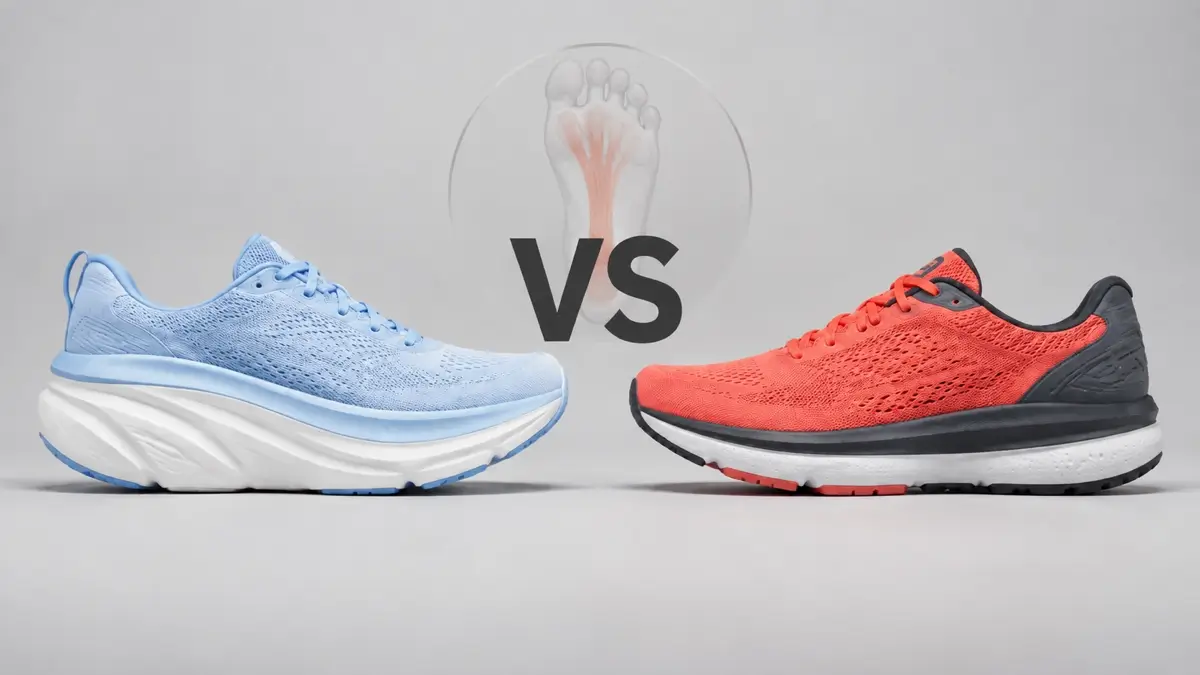
The pattern to notice is not “Hoka = soft vs Brooks = supportive”, both brands sell neutral shoes, stability shoes, and max-cushion shoes. The real split is geometry: Hoka pairs a low heel drop with a very tall, rockered midsole that independent labs measure among the tallest here, while Brooks pairs a higher drop with a firmer, more grounded platform that lab teardowns confirm runs lower and firmer. Those two recipes feel different underfoot, and the better one for you depends on your calves, your gait, and where you walk.
How we compared them
This comparison is based on the manufacturers’ published specifications, independent lab teardowns, the fit reports that recur across multiple reviewers, and the biomechanical literature on drop and rocker geometry. We did not wear-test these shoes ourselves, and nothing here is medical advice. Where a manufacturer’s number and a lab’s number disagree, which happens most often with stack height, we say so rather than pick one silently.
The main difference a walker will feel
Step into a Hoka and the first thing you notice is how far off the ground you are and how the sole seems to tip you forward. That forward tip is the Meta-Rocker: a curved sole that shortens how far your forefoot has to bend at push-off. Step into a Brooks and you feel closer to the ground, with a firmer heel and a taller ramp from heel to toe. Neither sensation is “correct.” A pronounced rocker helps some people ease pressure at toe-off; a higher drop helps others by reducing how much the ankle has to flex as the body rolls over the foot, which can feel kinder to a tight calf or Achilles. Both effects are comfort mechanisms, not cures.
Hoka: soft, cushioned and built to reduce impact
Hoka is known for thick cushioning and curved soles that help the foot roll smoothly from heel to toe. For plantar fasciitis, the neutral Bondi 9 is the standout. Its deep cushioning helps soften the impact of walking on concrete and other hard surfaces, while its rocker shape reduces how much the foot must bend with each step.
The Bondi 9 has earned the American Podiatric Medical Association Seal of Acceptance. This means podiatrists reviewed its design and found that it supports foot health. It does not mean the shoe is proven to treat or cure plantar fasciitis. If your feet roll inward, the Gaviota 6 offers a similar cushioned feel with added support to help keep your steps steady.
Hoka is especially appealing if you spend long shifts standing or walk many miles on hard surfaces. However, these shoes are thick, bulky and heavier than many everyday walking shoes. Their lower heel-to-toe drop may also feel uncomfortable if you have very tight calves or an irritated Achilles tendon. Skip Hoka if you prefer a lighter, more flexible shoe or want to feel firmly connected to the ground.
Brooks: supportive, dependable and good for everyday walking
Brooks shoes are a strong choice for plantar fasciitis because they combine comfortable cushioning with a stable base and a slightly raised heel. That higher heel may reduce pulling on the plantar fascia, Achilles tendon and calves. The Ghost 18 is the neutral option. It feels supportive and grounded without being hard, making it a dependable choice for everyday walking.
The Ghost 18 now has a 10 mm heel-to-toe drop. Older articles may list the Ghost as a 12 mm shoe, but that applies to the Ghost 16 and earlier versions. If your feet roll inward as you walk, consider the Adrenaline GTS 25 instead. Its GuideRails system helps control excess movement without the hard, intrusive feeling of traditional stability shoes.
Brooks also offers an excellent range of widths, including narrow, standard, wide and extra-wide options. This makes it easier to find a secure fit without squeezing your toes or the sides of your feet. However, Brooks shoes are not as soft or pillowy as the Hoka Bondi. Skip them if you want maximum cushioning, an especially lightweight shoe or a very flexible feel.
Best current models for plantar fasciitis
These are the current, purchasable versions as of July 2026. Confirm the version before you buy, because both brands update on a roughly annual cycle.
Hoka Bondi 9, maximum softness, neutral gait
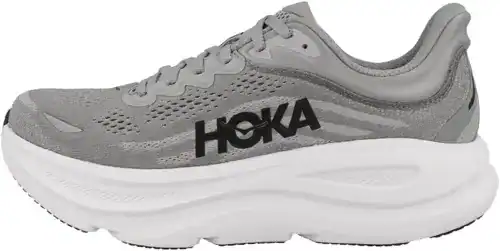
Best for standing all day and walking on concrete; the removable insole leaves room for an over-the-counter orthotic. Main advantage: unmatched impact absorption. Main drawback: tall, heavy, and low-drop, so tight-calf walkers should test it carefully. Neutral, 5 mm drop, 39/34 mm stack, Meta-Rocker, standard and wide. Check price. Read review.
Hoka Gaviota 6, cushion plus overpronation control

Best for walkers with plantar fasciitis who also overpronate or prefer a broad, highly cushioned and guided platform. Main advantage: strong stability without a rigid medial post. Main drawback: bulky and heavy, with less flexibility than a traditional walking shoe. Stability, 6 mm drop, 36/30 mm stack, cushioned EVA midsole and H-Frame support. Check price. Read review.
Brooks Ghost 18, balanced daily walker
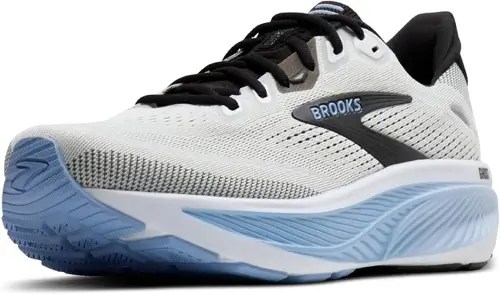
Best for walkers with plantar fasciitis who want a stable, traditional ride and a higher heel-to-toe drop that may reduce strain on the plantar fascia and Achilles tendon. Main advantage: secure, versatile and widely sized. Main drawback: less plush than a max-cushion shoe. Neutral, 10 mm drop, 36/26 mm stack, nitrogen-infused DNA LOFT v3 cushioning and widths up to extra-wide. Check price. Read review.
Brooks Adrenaline GTS 25, stability for tight Achilles and walk-plus-run
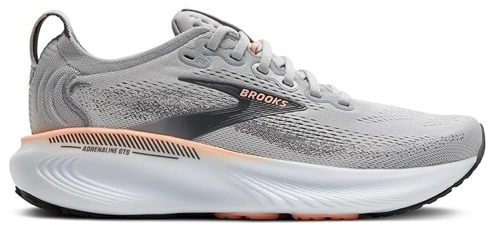
Best for walkers with plantar fasciitis who overpronate, have tight Achilles tendons or alternate between walking and running. Main advantage: a supportive, high-drop design that may reduce strain on the plantar fascia and Achilles tendon. Main drawback: heavier and more structured than many neutral shoes. Stability, 10 mm drop, 37/27 mm stack, nitrogen-infused DNA LOFT v3 cushioning, GuideRails support and widths up to extra-wide. Check price. Read review.
Walking performance, situation by situation
Because this is a walking-shoe question first, here is how the two approaches sort out across the situations people actually ask about.
- Standing all day / hard floors: Hoka Bondi 9. The tall, soft stack is the most forgiving option here.
- Long-distance walking: Close. Bondi 9 for pure softness; Ghost 17 if you want a firmer platform that doesn’t feel mushy late in a long walk.
- Brisk fitness walking: Ghost 17 or Adrenaline GTS 25, the firmer platform and higher drop transition more crisply at speed.
- Treadmill and travel: Ghost 17 for its lower weight and grippy outsole; Bondi 9 if cushioning is the priority.
- Walking with orthotics: Both accept a standard over-the-counter insole once you remove the stock sockliner; Brooks’s firmer platform tends to hold a rigid orthotic more securely.
- Walking plus occasional running: Adrenaline GTS 25 is the most natural crossover.
- Heavier walkers: Gaviota 6 or Adrenaline GTS 25 for the extra structure.
Foot type, gait, and heel pain
Plantar fasciitis does not automatically require a stability shoe. If your gait is neutral, a cushioned neutral shoe (Bondi 9 or Ghost 17) is usually the better starting point, and adding stability you don’t need can feel intrusive. If you overpronate, your arch collapses inward noticeably as you load the foot, a stability model (Gaviota 6 or Adrenaline GTS 25) may feel steadier. Tight calves or limited ankle mobility nudge you toward the higher-drop Brooks; a preference for softness and rocker nudges you toward Hoka. A biomechanics study of a rocker-plus-stiff sole found it reduced modeled Achilles force and plantarflexion moment but did not significantly reduce plantar-fascia strain, so treat the rocker as a comfort feature, not a fix for the fascia itself.
Fit, width, and heel lockdown
Fit is where these brands genuinely diverge for plantar fasciitis, because a heel that slips or a toe box that pinches undoes any cushioning advantage. Brooks offers the wider range of widths, narrow through extra-wide on both the Ghost 17 and Adrenaline GTS 25, and its heel counters lock the rearfoot down firmly, which many people with heel pain prefer. Hoka fits generally true to size with a secure midfoot and a roomier, rounded toe box; the Gaviota 6 comes in wide and extra-wide, while the Bondi 9 tops out at wide. If you have a narrow heel, Brooks’s narrow option and firmer counter are worth trying; if you have a high-volume or wide forefoot, Hoka’s toe box or a Brooks extra-wide will feel better. Whichever you pick, size the shoe to hold your heel without pressure and to leave a thumb’s width at the toes, especially if you plan to add an orthotic.
Comfort, ride, and durability
Hoka’s ride is soft and rolling; Brooks’s is firmer and more connected to the ground. Softness is not the same as shock absorption or stability, a very soft midsole absorbs impact well but can feel less planted, which is why some walkers with heel pain actually prefer the steadier Brooks platform even though it’s less plush. Both brands use durable outsole rubber in the high-wear zones, and both midsole foams hold up well for daily walking; expect to replace either when the midsole stops feeling supportive rather than watching for a fixed mileage number.
Potential drawbacks, side by side
No shoe here is without compromises, and it’s worth seeing them plainly.
- Hoka: tall and heavier; very soft foam can feel tippy; low drop can aggravate a tight calf; premium pricing on the Gaviota.
- Brooks: firmer and lower-slung, so less plush; GuideRails guidance is unnecessary for neutral feet; the Ghost’s cushioning is understated next to a max-cushion rival.
Decision guide
Use these quick rules to choose the best shoe for your feet and walking routine.
Choose Hoka if: You want the softest cushioning, spend hours standing or walking on hard floors, or prefer a shoe that helps your foot roll smoothly forward. Choose the Hoka Bondi 9 for neutral feet or the Hoka Gaviota 6 if your feet roll inward.
Choose Brooks if: You prefer a more stable, grounded feel, need narrow or extra-wide sizing, or find that higher-drop shoes feel better on tight calves or Achilles tendons. Choose the Brooks Ghost 18 for neutral feet or the Brooks Adrenaline GTS 25 for added support.
Consider another shoe if: Hoka feels too bulky or Brooks feels too firm. If you want soft cushioning with a higher heel-to-toe drop, consider the Saucony Triumph 24. You can also compare more options in our guide to the best walking shoes for plantar fasciitis.
Final verdict
For most people weighing Hoka vs. Brooks for plantar fasciitis, the honest answer is that both are strong and the deciding factors are your calves, your gait, and your day. Best overall for pure impact relief and standing: Hoka Bondi 9. Best for a neutral gait that wants a higher drop: Brooks Ghost 17. Best for stability: Brooks Adrenaline GTS 25 (Gaviota 6 if you want that stability with maximum cushion). Best for wide or narrow feet: Brooks, on width range alone. Best for tight calves: Brooks, on drop. If you can, try both brands, walk in them on a hard floor, and let the fit of the heel and the feel of the first few steps decide.
How to test either shoe indoors
Before you commit, evaluate a few things on a hard indoor floor while returns are still possible. Check that the heel is held with no slip, that the arch feels supported but not pressed, that your toes have room to spread, and that the shoe stays steady side to side. Walk through a full push-off and notice any new pressure under the heel, against a bunion, or up the Achilles. Immediate comfort matters, but a few steps in a store can’t guarantee long-term success, so buy where you can return them and try them indoors first.
This comparison is educational and not medical advice. Footwear is one part of managing plantar fasciitis; if heel pain is severe, persistent, or getting worse, see a podiatrist or physical therapist.
Frequently asked questions
Neither is universally better. Hoka leads on cushioning and rocker geometry for neutral feet and hard floors; Brooks leads on higher drop, firmer stability, and width options for overpronators and tight calves. Match the shoe to your gait and your day.
For many people, yes. Hoka’s tall cushioning and rocker sole can offset the lower 5–6 mm drop by softening impact and easing toe-off. If your calves or Achilles are tight, though, a higher-drop Brooks may feel more comfortable.
The Adrenaline GTS 25 is the common pick because it pairs cushioning and GuideRails stability with a 10 mm drop. Neutral walkers who don’t need stability often do better in the cushioned Ghost 17.
The Bondi 9 for a neutral gait that wants maximum softness, or the Gaviota 6 if you overpronate and want that cushioning with added stability and wider sizing.
Only if you overpronate or feel steadier with support. Many people with a neutral gait do better in a cushioned neutral shoe, and unnecessary stability can feel intrusive. Heel pain by itself does not require a stability shoe.
Yes. Both brands use removable sockliners, so you can swap in an over-the-counter or custom orthotic. Size the shoe to accommodate it, and note that Brooks’s firmer platform tends to hold a rigid orthotic more securely than Hoka’s softer foam.