Last Updated on October 10, 2026
Genuinely versatile at everyday paces, without race-day sharpness
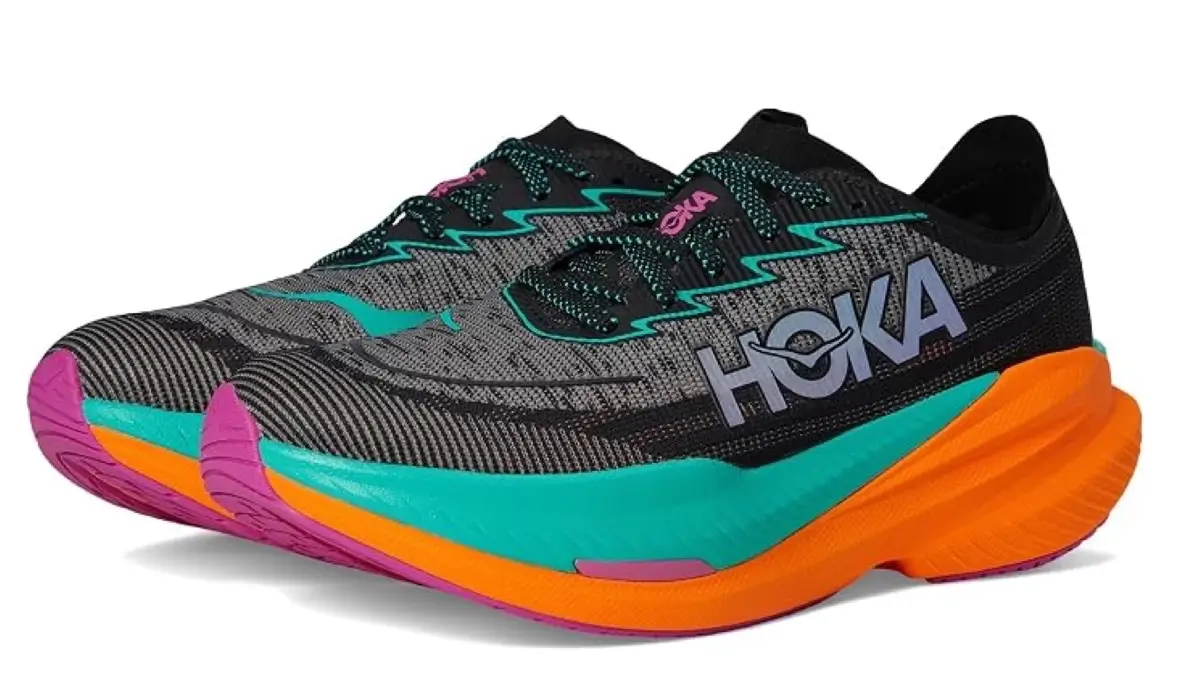
Quick Answer: Hoka Mach X 2 Review: The Mach X 2 is a plated super trainer for neutral runners who want one shoe for tempo work, long runs and race-pace efforts. Hoka sandwiches a Pebax plate with extended forefoot winglets between a lively PEBA top layer and a firmer EVA base, and raised the stack by about 5 mm over the original. The result is more cushioning and a smoother roll. The trade-off is that a Pebax plate is far less aggressive than carbon, so it is not a racer. Check latest price.
The Hoka Mach X 2 is made for runners who want one fast, lively shoe that can handle more than race day. It sits between the lighter, plateless Mach and Hoka’s full carbon racers, making it a strong choice if you want something for tempo runs, intervals and faster long runs without buying a dedicated racing shoe.
That versatility comes largely from the midsole. Hoka uses a bouncy PEBA foam directly under the foot, backed by a firmer EVA layer underneath. The PEBA gives the Mach X 2 the springy, energetic feel you notice when you pick up the pace, while the EVA adds enough support and durability to make the shoe practical for regular training. Hoka also added more PEBA than it used in the original Mach X, helping this version feel noticeably livelier.
Instead of a carbon plate, the Mach X 2 uses a Pebax plate. It still adds some snap and structure, but it does not feel quite as rigid or demanding as a typical carbon-plated racing shoe. Hoka extends the plate into small winglets around the forefoot, which help keep your foot centred on the tall platform and give you a little extra leverage as you push off.
The result is a shoe best suited to runners who like a cushioned, energetic ride and want help maintaining pace without feeling as though they are wearing an all-out racing shoe every time they run.
I’d also make the buyer profile even more explicit elsewhere in the review: this is especially appealing to runners who want a “fast-day plus long-run” shoe rather than a lightweight daily trainer or pure racer.

Specs
Here are the specifications for the Hoka Mach X 2:
| Type | Road super trainer, neutral, plated |
| Best for | Tempo runs, long runs at effort, daily mileage with pace, half marathon racing |
| Midsole | PEBA top layer over a firmer EVA base |
| Plate | Pebax plate with extended winglets at the forefoot |
| Stack height | About 44 mm heel / 39 mm forefoot men’s, about 38 mm / 33 mm women’s, approximate |
| Heel-to-toe drop | 5 mm |
| Weight | About 9.2 oz (261 g) men’s US 9, roughly 0.2 oz lighter than the original Mach X |
| Upper | Engineered mesh with a lightly padded collar and a minimal heel structure |
| Outsole | Rubber in the high-wear zones with exposed foam elsewhere |
| Widths | Standard width only |
| Price | Launched at $190 in September 2024. Check latest price |
Pros
These are the reasons it works as a one-shoe rotation:
- PEBA on top gives real bounce, so the shoe feels alive rather than merely cushioned
- The firmer EVA base protects the soft foam, so it lasts far longer than a racer
- Pebax winglets steady the forefoot without locking the toes the way carbon does
- Taller than the original Mach X, which makes long runs noticeably more comfortable
- Light for a plated trainer at around 9.2 ounces
- Comfortable enough at easy paces to be used more than twice a week
Cons
These are the compromises:
- A Pebax plate is far less propulsive than carbon, so it will not replace a race shoe
- A 5 mm drop on a 44 mm platform asks a lot of the calves and Achilles
- Standard width only, with a fairly snug performance fit
- Exposed foam on parts of the outsole limits durability against a fully rubbered sole
- At $190 it is expensive for a shoe that is neither the fastest nor the softest option
What is new versus the original Mach X
The biggest change is underfoot. Hoka added roughly 5 mm of stack height, giving the Mach X 2 more cushioning than the original. The first Mach X felt lower and firmer, which made it a good workout shoe but a little less comfortable for longer efforts. The extra foam makes the Mach X 2 feel better suited to long runs as well as faster sessions.
Hoka also increased the amount of PEBA foam in the upper part of the midsole. That puts more of the shoe’s light, springy foam directly under your foot, so you feel more bounce when you pick up the pace. It helps the Mach X 2 feel more energetic even though the shoe is taller and more cushioned.
The Pebax plate has changed too. Hoka extended the plate into winglets around the forefoot, creating a little more support along the sides of the shoe. That matters because a taller shoe can sometimes feel less stable, especially when cornering or running on tired legs. The winglets help keep your foot centred without making the shoe feel overly rigid.
Hoka even managed to trim about 0.2 ounces from the weight. That is not a difference most runners will notice on its own, but it is impressive considering the Mach X 2 gained both cushioning and stack height.
Who should buy the Mach X 2
The Hoka Mach X 2 is a strong choice if you want one performance shoe that can handle several jobs during the week. It is lively enough for tempo runs and faster workouts, cushioned enough for long runs and durable enough that you do not need to save it only for race day.
It also makes sense for runners who like the extra push of a plated shoe but find carbon racers too stiff or demanding. The Pebax plate has more flex than carbon, so the Mach X 2 feels more natural underfoot and is easier to use at a wider range of paces.
Midfoot and forefoot strikers are likely to get the most from the shoe. The 5 mm drop, rocker shape and supportive forefoot geometry all work especially well when you land farther forward.
And if you already run in the Hoka Mach but want more cushioning, more bounce and a little extra help when the pace increases, the Mach X 2 is the logical next step.
Who should avoid the Mach X 2
The Hoka Mach X 2 is a strong choice if you want one performance shoe that can handle several jobs during the week. It is lively enough for tempo runs and faster workouts, cushioned enough for long runs and durable enough that you do not need to save it only for race day.
It also makes sense for runners who like the extra push of a plated shoe but find carbon racers too stiff or demanding. The Pebax plate has more flex than carbon, so the Mach X 2 feels more natural underfoot and is easier to use at a wider range of paces.
Midfoot and forefoot strikers are likely to get the most from the shoe. The 5 mm drop, rocker shape and supportive forefoot geometry all work especially well when you land farther forward.
And if you already run in the Hoka Mach but want more cushioning, more bounce and a little extra help when the pace increases, the Mach X 2 is the logical next step.
How does the Mach X 2 fit?
Here are the fit and comfort factors about this show that you need to know.
Fit and sizing
The Mach X 2 fits true to size with a performance shape: snug through the midfoot, secure at the heel and adequate rather than roomy at the toes. It is cut to be worn reasonably tight, which is what a shoe intended for fast running should do.
There is no wide fitting. Runners between sizes usually do better going up, particularly if the shoe will be used for long runs where feet swell over a couple of hours.
Upper and step-in comfort
Step-in comfort is good for a performance shoe without being plush. The engineered mesh is light and breathable, the collar has modest padding and the heel structure is minimal, all of which keeps weight down while still holding the foot in place on a tall platform.
Breathability is a strength, which suits summer training and hard efforts. There is little insulation for cold mornings, and the thin heel construction means runners sensitive around the Achilles should try the shoe on.
How does the Mach X 2 perform?
Here is the performance info about this shoe.
Midsole and cushioning
The two-foam arrangement is what makes this shoe work. PEBA is light and highly resilient, meaning it compresses easily and returns a large share of that energy, and putting it directly under the foot means you feel it. The EVA base is firmer and more durable, and it does the unglamorous work of carrying load and keeping the platform stable.
With around 44 mm at the heel there is plenty of protection, and the increase over the original is what turns the Mach X from a workout shoe into a long-run shoe as well. The overall feel is bouncy rather than plush.
Ride and running performance
At tempo and steady effort the Mach X 2 is excellent. The rocker and the plate work together to roll the foot forward, the PEBA layer gives back at toe-off and the shoe holds its rhythm well over long repeats. It is the kind of ride that flatters a runner rather than demanding something of them.
At genuinely fast paces the limits show. Pebax gives a smooth transition rather than a sharp lever, so short intervals feel less precise than in a carbon shoe. At easy paces the shoe is comfortable, which many plated trainers are not, and that breadth is the real argument for it.
Stability and support
The Mach X 2 is a neutral shoe with no support features. What steadies it is the pair of winglets curving up at the forefoot edges of the plate, which create a shallow cradle and stop the foot rolling off the side of a tall platform. The firmer EVA base also resists uneven compression.
Even so, 44 mm of stack on a 5 mm drop is a lot of shoe, and on cambered roads or tight corners it feels less planted than a lower trainer. Runners who need genuine stability should choose a stability shoe rather than rely on the plate geometry.
Outsole, grip and durability
Hoka places rubber where wear occurs and leaves foam exposed elsewhere to save weight. Grip on dry and damp road is dependable, though the exposed sections offer less bite and wet paint and metal covers deserve the usual caution.
Durability is better than a pure racer because the PEBA sits above a protective EVA layer rather than forming the whole midsole. Exposed foam on the outsole is the limiting factor for runners who scuff. The familiar 300 to 500 mile figure is a broad guideline and the Mach X 2 generally sits within it.
Is the Mach X 2 good for walking?
The Mach X 2 is not a shoe for regular walking. The key reason is the plate. The Pebax plate adds structure through the forefoot, which is useful when you are running faster but less natural when you are walking and your toes need to bend more freely. Instead of flexing easily with your foot, the Mach X 2 tends to roll you forward through its rocker.
Its 5 mm drop is also lower than many dedicated walking shoes. Most walkers land more heavily on the heel, so a little more heel-to-toe offset can make the stride feel smoother and more comfortable.
The tall, soft platform can also feel less stable at slower speeds, especially when stepping off curbs or walking across uneven sidewalks. And because the fit is designed for running, it may feel snug after several hours on your feet.
It is perfectly comfortable for walking before or after a run, but do not buy it primarily for walking. For that, you’d be better served by a shoe with a more flexible forefoot, a stable platform and a fit designed for all-day comfort.
Instead, see our guide to the best walking shoes.
Mach X 2 vs. the original Mach X
Here is how the two versions compare:
Mach X 2 | Mach X | |
Stack | About 5 mm taller | Lower |
PEBA layer | More of it, nearer the foot | Less |
Plate | Pebax with extended forefoot winglets | Pebax, flatter |
Long-run comfort | Considerably better | Firmer, workout oriented |
Weight | About 0.2 oz lighter | Slightly heavier |
Price |
Buy this shoe if you want one shoe for workouts and long runs, since the extra stack is what makes that possible. Buy the original while discounted if you prefer a lower, firmer shoe and long runs are covered by something else.
Hoka Mach X 2 Alternatives
Runners who want the same versatility without any plate should look at the Saucony Endorphin Azura. It relies on a resilient PEBA foam alone, which keeps the forefoot flexible and makes it more comfortable across every pace, at the cost of the Mach X 2’s structured roll (check price | read review).
Where the tall platform and low drop are the concern, the Hoka Mach 7 sits considerably lower and lighter with no plate at all. It is the better choice for runners whose calves object, and it costs a good deal less (check price | read review).
When race day is the actual target, a carbon racer is the honest upgrade. The Nike Vaporfly 4 is dramatically lighter and more propulsive over a half or full marathon, though it will not survive being your training shoe (check price | read review).
For the easy days the Mach X 2 does not need to cover, the Asics Novablast 6 pairs with it well. Its bouncy, plateless platform makes recovery running enjoyable and saves the more expensive shoe for the sessions that matter (check price | read review).
Agreed. Better to make it restrained and factual:
Price and value
The Hoka Mach X 2 launched at $190, putting it squarely in super-trainer territory. That is expensive for an everyday running shoe, but reasonable for a model built with PEBA foam and a Pebax plate.
Because the Mach X 2 is no longer a new release, the current price may be significantly lower than its original $190 launch price, depending on size and color. Check the latest Mach X 2 price.
Its value comes from how many jobs it can handle. You can use it for tempo runs, faster workouts and long runs without feeling as though you need to save it for special occasions. The firmer EVA layer underneath the PEBA also gives the shoe a durable foundation for regular training.
The Mach X 2 makes the most sense for runners who regularly include faster sessions or progression runs in their training. At a discounted price, it can be especially good value for runners who want a plated super trainer without paying current-model pricing.
If most of your running is easy-paced mileage, however, you probably do not need this much shoe. A good cushioned daily trainer will be cheaper, more relaxed at slower speeds and better suited to the way you actually run.

Final verdict
Best for: tempo runs, long runs at effort and everyday mileage with pace, for neutral runners who want one versatile shoe.
Avoid if: you want race-day performance, your calves dislike a low drop, you need a wide fitting or you need stability features.
Fit: true to size, snug performance shape, standard width only.
Verdict: Adding stack and more PEBA turned the Mach X into a genuine do-everything trainer, and the Pebax plate keeps it friendly across paces where carbon would not be. It is expensive, and it is not a racer, so buy it for the training weeks rather than for race day. You can check size availability before ordering.
Frequently Asked Questions for Hoka Mach X 2
Yes for most runners, with a snug performance shape through the midfoot and an adequate toe box. There is no wide fitting, and runners between sizes usually do better going up, especially if the shoe is for long runs.
Pebax is stiff but far more flexible than carbon, so it smooths the transition and adds structure without locking the forefoot. That makes the shoe comfortable across a wide range of paces, which is what a training shoe needs, at the cost of race-day snap.
They are extensions of the plate that curve up at the forefoot edges, forming a shallow cradle. On a 44 mm platform they stop the foot rolling off the side of the shoe, which is the main stability risk with a tall super trainer.
You can, and plenty of runners do, but a carbon racer will be faster over the distance. The Mach X 2 makes most sense as the shoe you train in through the block and then race in only if you would rather not buy a second pair.
It can be. A low offset shifts load onto the calves and Achilles, and the height amplifies movement, so the combination is demanding. Build up gradually rather than doing your longest run in it first, and get a professional assessment if pain persists.
The Mach 7 is lower, lighter and plateless, which suits runners who want a simple fast trainer or who find tall platforms unsettling. The Mach X 2 adds stack, more PEBA and a plate, which makes it better for long runs at effort and for workouts.