Excellent cushioning underfoot with a slide’s limitations
Quick Answer: The Hoka Ora Recovery Slide 3 is a cushioned post-run slide with a 6 mm drop, early-stage Meta-Rocker, dual-density geometry and four airflow channels through the footbed. Hoka uses an injection-molded sugarcane EVA midsole and EVA outsole, with a listed weight of about 7.8 oz (221 g). It is best for recovery, around-the-house wear and short easy walks. The trade-offs are the usual slide limits: no heel retention, no strap adjustment and less wet-surface grip than a rubber-outsole sandal.
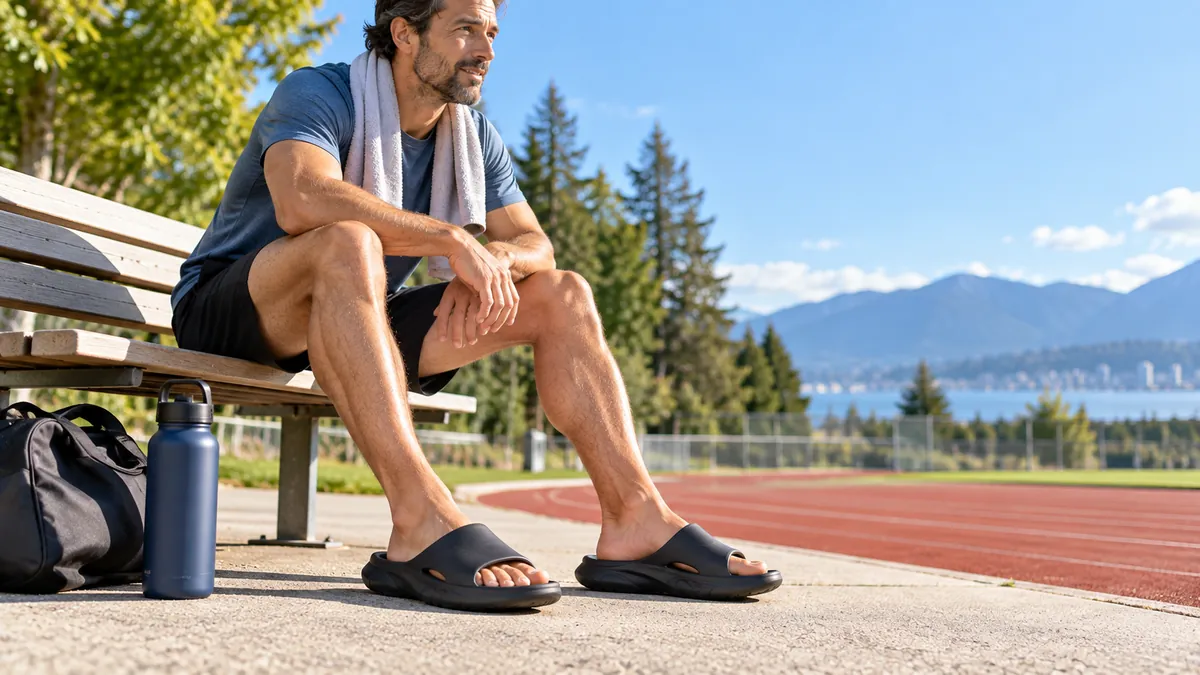
The Hoka Ora Recovery Slide 3 does one job: it is what you put on after the run. Feet that have absorbed thousands of impacts want something soft and unrestrictive, and a slide with a genuinely cushioned midsole is a large improvement on either a flat sandal or a bare floor.
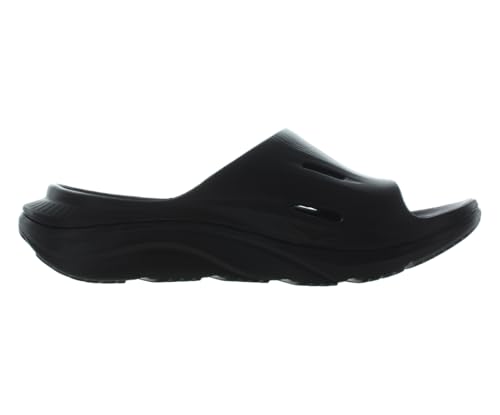
What separates it from a generic foam slide is the geometry. Hoka carries over its early-stage Meta-Rocker, meaning the sole curves up early toward the toe, so the slide tips the foot forward through each step rather than requiring the toes to bend. Combined with dual-density construction, where the foam is softer in some areas and firmer in others, that gives a controlled feel rather than the vague squish of a cheap slide.
The update in this version is ventilation. Hoka added four airflow channels through the footbed, so air moves under the foot and heat can escape, which addresses the one consistent complaint about foam recovery footwear. The midsole and footbed both use sugarcane-derived EVA.
If you want more adjustability, compare our Hoka Ora Luxe review. If the rocker shape is what interests you most, see our best rocker-bottom shoes guide.

Specs
Here are the specifications for the Hoka Ora Recovery Slide 3:
| Type | All-gender recovery slide |
| Best for | Post-run recovery, around the house, locker room, travel and short easy walks |
| Midsole | Injection-molded sugarcane EVA |
| Geometry | Dual-density construction with early-stage Meta-Rocker |
| Ventilation | Four airflow channels through the footbed |
| Outsole | Injection-molded EVA |
| Heel-to-toe drop | 6 mm |
| Weight | About 7.8 oz (221 g); exact weight varies by size |
| Fit | All-gender sizing, molded strap, no adjustment |
| Other | Vegan |
| Price | $60 US list price. Check latest price |
Pros
These are the reasons runners keep a pair by the door:
- Genuinely cushioned underfoot, which is immediately noticeable after a hard session
- The Meta-Rocker rolls you forward, so the foot does not have to bend through the step
- Dual-density geometry gives a controlled feel rather than a vague squish
- Four airflow channels let heat escape, which most foam slides do not manage
- Light at around 7.8 oz, so it is easy to pack in a gym bag
- A wide base makes it feel steadier than a thin flip-flop
Cons
These are the limits of the format:
- No adjustment at all, so fit is entirely down to choosing the right size
- Nothing holds the heel, so it is not suitable for walking any distance
- An EVA outsole grips less than rubber, particularly on wet tile
- All-gender sizing, so check the conversion rather than assuming your usual number
- EVA compresses over time, so the cushioning that makes it worth buying does fade
What is new versus the Ora Recovery Slide 2
The airflow channels are the headline change. Foam recovery footwear traps heat against the sole of the foot, and after a run that is exactly when feet are hottest, so cutting four channels through the footbed to let air move is a targeted fix rather than a cosmetic one.
Hoka kept the dual-density geometry, which is what stops the slide feeling like undifferentiated foam. Using softer material where the foot lands and firmer material where it needs support gives a more considered feel than a single block would.
The materials also shifted further toward sugarcane-derived EVA in both the midsole and the footbed. That is a supply-chain change rather than a performance one, and the ride is essentially unchanged.
Who should buy the Ora Recovery Slide 3
Buy it if you want something to change into after training. That contrast, going from a firm running shoe into deep soft foam, is the entire point, and runners who do it consistently find it one of the more satisfying small purchases in the sport.
It suits people who dislike toe posts. A slide has a single band across the forefoot with nothing between the toes, which is easier to get on and off and avoids the pressure point that rules thong sandals out for many people, particularly anyone with bunions.
Anyone whose feet run hot should note the ventilation. Four airflow channels is a genuine differentiator against solid foam recovery footwear, and it makes the slide more comfortable in summer and after hard efforts.
Who should avoid the Ora Recovery Slide 3
Avoid it as walking footwear. Nothing holds the heel, so the foot has to work to keep the slide on, and over any distance that changes how you walk and tires the foot differently. It is designed for short distances and standing.
Be careful on wet surfaces. The outsole is injection-molded EVA rather than rubber, which keeps the weight down and grips less, so poolside and shower use deserves caution.
Finally, recovery footwear is not a treatment. It may feel comfortable and it may make standing on hard floors more pleasant, but comfort depends on fit, foot shape and arch, and no slide cures or corrects anything. Persistent or worsening foot pain deserves a professional assessment.
How does the Ora Recovery Slide 3 fit?
Fit and sizing
Hoka sells the Ora Recovery Slide 3 in all-gender sizing, and the strap is molded rather than adjustable. That makes sizing more important than it would be on a buckle or hook-and-loop sandal. Start with your usual Hoka size, check the men’s/women’s conversion carefully and pay attention to foot volume: a very low-volume foot can feel loose under the strap, while a high-volume foot can feel crowded.
The Active Foot Frame seats the foot down into the midsole rather than on top of it, so the slide only feels right if your foot sits in the intended position. Too large and the foot moves around; too small and the heel hangs off the back.
Strap and step-in feel
Step-in feel is the product. The foam gives noticeably, the foot settles into the frame and the Meta-Rocker means the slide already curves toward the toe so nothing has to bend. Compared with a flat rubber slide the difference is obvious within a few steps.
The single band across the forefoot is soft and moulded rather than stitched, so there is no hard edge to rub. It holds the foot less securely than a thong would, which is the trade for being easier to get on and kinder to sensitive toes.

How does the Ora Recovery Slide 3 perform?
Cushioning and recovery use
The injection-molded sugarcane EVA is soft and deep, in the way Hoka’s running shoes are, and that is what makes the slide worth its price over a supermarket alternative. Dual-density construction means the softness is placed rather than uniform, so the slide supports as well as cushions.
What it does is feel comfortable. Recovery footwear may make standing on hard floors more pleasant after training, and comfort depends on fit, foot shape, arch and personal preference. It is not a treatment and it does not accelerate anything.
Stability and support
A wide base and the Active Foot Frame, which sinks the foot into the midsole rather than perching it on top, together make the slide feel steadier than its softness suggests. Hoka describes it as offering moderate stability for neutral gaits, which is a fair characterisation.
There is still no heel counter and nothing designed to control foot motion, so it is fine for standing and short distances and not a substitute for a supportive shoe. Anyone with persistent pain should seek a professional assessment rather than rely on footwear.
Grip, durability and care
The outsole is injection-molded EVA rather than a separate rubber compound. That keeps the slide light and comfortable, but it does not give you the same traction margin as a rubber-outsole walking sandal. It is fine for dry pavement, locker rooms and around the house; on wet tile, pool decks or smooth floors, slow down and treat it like a foam slide.
Durability is reasonable but finite. EVA compresses over months of regular wear, and once the cushioning flattens the slide has lost the quality that justified buying it. The airflow channels help keep the footbed hygienic, and the whole thing rinses clean easily.
Is the Ora Recovery Slide 3 good for walking?
For short distances, yes, and better than most slides. The Meta-Rocker helps here more than it does in most recovery footwear, because it tips the foot forward through each step rather than requiring the toes to bend, and the deep cushioning makes hard floors and short walks around the house or a car park genuinely comfortable.
For real walking it is the wrong footwear. There is nothing holding the heel, so the foot grips to keep the slide on and your gait changes over any distance, and the EVA outsole offers limited grip on wet surfaces. Treat it as the thing you change into rather than the thing you walk in, and keep a cushioned walking shoe for distance.
Ora Recovery Slide 3 vs. a thong recovery sandal
The main choice in recovery footwear is how the sandal attaches to the foot:
| Ora Recovery Slide 3 | Thong recovery sandal | |
| Attachment | Single band, no toe post | Post between the toes |
| Ease of use | Very easy on and off | Slightly more effort |
| Foot security | Less | More, so slightly better for moving |
| Suits bunions and toe issues | Yes | Often not |
| Ventilation | Four airflow channels | Usually solid foam |
Buy the slide if you want the easiest thing to step into and you dislike toe posts. Choose a thong sandal if you want the foot held a little more securely while you move around.
For shoes and sandals intended for longer walks, compare our walking-sandal guide.
Hoka Ora Recovery Slide 3 Alternatives
The main rival is the Oofos OOriginal, which is softer still underfoot and adds a molded arch and cupped heel. It is a thong rather than a slide, so it holds the foot more securely and rules itself out for anyone who cannot tolerate a toe post (check price).
People who want a firmer, longer-lasting recovery sandal with a proper cork footbed should consider the Birkenstock Arizona. It supports the arch far more rigidly and lasts for years, though it needs breaking in and feels nothing like as soft (check price).
Where the real need is comfort while walking rather than after, a cushioned walking shoe does far more. The Hoka Transport 2 pairs deep foam with a grippy Vibram outsole and a secure fit, which no slide can offer (check price).
Runners who want that soft, forgiving feel on easy days rather than only afterward should look at a max-cushion trainer such as the Brooks Ghost Max 3, whose wide soft platform suits recovery running and walking alike (check price | read review).
Price and value
The Ora Recovery Slide 3 has a $60 US list price, although sale pricing varies by color and retailer. That is expensive compared with a basic foam slide, but the value comes from the deeper cushioning, dual-density geometry, rocker and ventilated footbed rather than from ruggedness or walking performance. If you will use it after most runs or long shifts, the price is easier to justify than if it will only live by the back door.
Final verdict
Best for: post-run and post-workout recovery, wearing around the house, locker room and poolside use, and travel.
Avoid if: you want a sandal to walk distances in, you need secure footing on wet tile, or you expect recovery footwear to treat a problem.
Fit: all-gender sizing with no adjustment, so getting the size right matters; the Active Foot Frame only works if the foot sits in the intended position.
Verdict: Adding airflow channels fixes the one real complaint about foam recovery footwear, and the Meta-Rocker makes this more pleasant to move in than most slides. It is still a slide, so treat it as the shoe you change into. You can check size availability before ordering.
For more Hoka options, browse our Hoka shoe guides and reviews.
Frequently Asked Questions for Hoka Ora Recovery Slide 3
Most people should start with their usual Hoka size, but this is an all-gender slide with no adjustable strap, so fit depends heavily on foot volume. If you are between whole sizes, compare the unisex conversion carefully before buying.
Hoka lists the slide at about 221 g, or roughly 7.8 oz, with exact weight varying by size. Hoka’s seasonal catalog lists 195 g for M6/W8 and 236 g for M10/W12.
The Ora Recovery Slide 3 has a 6 mm heel-to-toe drop. Hoka also uses an early-stage Meta-Rocker, which gives the sole a curved profile that helps the foot roll forward through each step.
The molded EVA materials handle water well, but the slide is not marketed as waterproof footwear and the outsole is EVA rather than a grippy rubber compound. Use extra care on wet tile, pool decks and smooth indoor surfaces.
It is better for short, easy walking than for long distances. The rocker and cushioning make it pleasant around the house, locker room or after training, but a slide has no heel retention and is less secure than a walking shoe.
The most obvious update is ventilation. Hoka added four airflow channels through the footbed while keeping the dual-density geometry, sugarcane EVA midsole and injection-molded EVA outsole.
The US list price is $60, although sale pricing varies by color and retailer. That puts it well above a basic foam slide but far below a running shoe.