Last Updated on October 16, 2026
Serious grip and comfort with a less precise feel
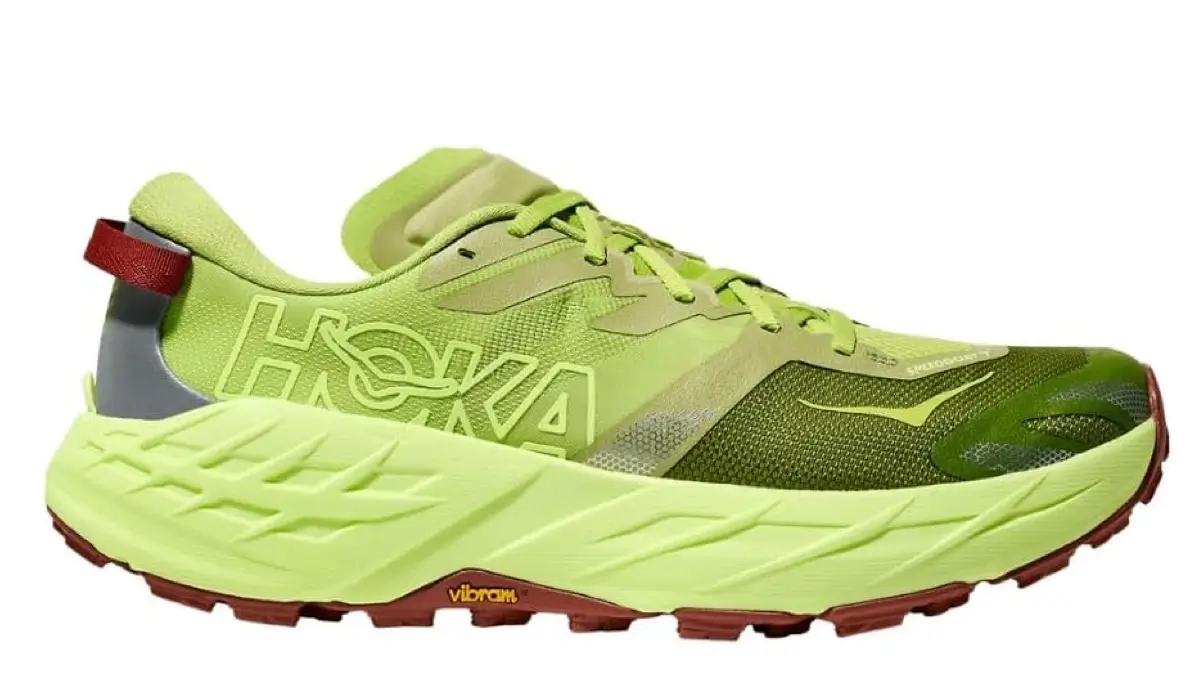
Quick Answer: Hoka Speedgoat 7 Review: The Speedgoat 7 is a cushioned trail running shoe for neutral runners tackling rocky, technical terrain and long days out. Hoka switched to a supercritical EVA midsole, which makes it lighter and noticeably bouncier than the Speedgoat 6, and kept the Vibram Megagrip outsole with deep 5 mm lugs for confident traction on rock, mud and loose dirt. The trade-off is a tall, soft platform that feels less precise than a lower-slung trail shoe. Check latest price.
The Hoka Speedgoat 7 is the seventh version of the shoe that made Hoka’s name off road, and it is the biggest change the line has seen in several generations. The formula has always been the same: more foam than anyone else puts under a trail shoe, wrapped in an outsole with enough bite to hold on to rock. What has changed is the foam itself.
Hoka moved to a supercritical EVA midsole for the 7. Supercritical foaming means gas is forced into the material under high pressure, creating a lighter, more resilient structure than standard EVA. In practice the shoe returns more of the energy you put into it and weighs less doing so, which is why this is the lightest Speedgoat to date at roughly 9.7 ounces in a men’s US 9. Runners coming from the 6 will feel both differences immediately.
The outsole carries over the part nobody wanted changed. Vibram Megagrip with 5 mm lugs is still the best combination in mainstream trail running for wet rock and loose ground, and it is the main reason the Speedgoat gets recommended for technical terrain rather than smooth fire roads. The upper is now a split construction that separates the fit around the forefoot from the lockdown around the midfoot.
Specs
Here are the specifications for the Hoka Speedgoat 7:
| Type | Trail running shoe, neutral, cushioned |
| Best for | Technical trails, rocky terrain, ultra distance, long hikes |
| Midsole | Supercritical EVA |
| Stack height | About 37 mm heel / 32 mm forefoot; some sources list lower figures, so treat as approximate |
| Heel-to-toe drop | 5 mm, 1 mm more than the Speedgoat 6 |
| Weight | About 9.7 oz (275 g) men’s US 9, about 235 g women’s, the lightest Speedgoat to date |
| Upper | Split-upper construction with a reinforced toe bumper |
| Outsole | Vibram Megagrip with 5 mm lugs |
| Widths | Standard and wide on selected colorways |
| Price | Launched at $165 in January 2026. Check latest price |
Pros
These are the reasons the Speedgoat keeps winning trail recommendations:
- Vibram Megagrip with 5 mm lugs holds on wet rock, mud and loose gravel where most outsoles let go
- Supercritical EVA is lighter and springier, so the shoe no longer feels dull on climbs
- Deep cushioning protects the feet on sharp rock over long distances
- Lightest version of the shoe so far, which matters over ultra distance
- Substantial toe bumper and upper reinforcement stand up to trail abuse
- Wide fitting available on some colorways, unusual for a technical trail shoe
Cons
These are the compromises that come with all that foam:
- Tall, soft platform reduces ground feel, so foot placement on technical ground is less precise
- The softer supercritical foam makes the shoe feel slightly less planted than the firmer Speedgoat 6
- Deep lugs are noisy and wear quickly on road or hard-packed sections
- At $185 it is one of the more expensive mainstream trail shoes
- The 5 mm drop asks more of the calves than a higher-drop trail shoe
What is new versus the Speedgoat 6
The midsole is the change that matters. The Speedgoat 6 used a conventional compression-molded EVA, which was protective but flat, and runners often described it as absorbing energy rather than returning it. The 7 replaces that with a supercritical EVA that is both lighter and more resilient, so climbs feel less like hard work and the shoe has some life at the end of a long descent.
Weight came down with it, making this the lightest Speedgoat Hoka has built. Over 20 or 30 miles of trail that is a meaningful saving, and it is the main reason runners upgrading from the 6 report less leg fatigue late in an ultra.
Hoka also raised the drop by 1 mm, to 5 mm, and rebuilt the upper as a split construction so the forefoot and the midfoot can be tuned separately. The idea is a roomier front end for swelling feet with a tighter hold through the middle for technical footwork. The Vibram Megagrip outsole and 5 mm lug depth carry over unchanged, which is the right decision.
Who should buy the Speedgoat 7
Buy the Speedgoat 7 if your trails are rocky, rooty or wet and you spend hours on them. The combination of deep cushioning and aggressive Vibram Megagrip lugs is aimed exactly at that: protection from sharp rock underfoot and confidence that the shoe will hold when you push off a damp slab. Ultra runners have made this the default for a reason.
It suits neutral runners who value comfort over precision. If you have finished long trail runs with bruised feet, the Speedgoat’s stack is the fix, and the new supercritical foam means you no longer pay for that protection with a heavy, lifeless ride. Hikers and fastpackers get the same benefit, and the shoe is a genuine alternative to a low hiking shoe on non-technical terrain.
Runners coming from the Speedgoat 6 should upgrade if weight and energy return were your complaints. If your objection was ever that the shoe felt too tall, the 7 will not solve it, because it goes slightly softer rather than lower.
Check the sizing and colorways availability on Amazon.
Who should avoid the Speedgoat 7
Avoid it if you run genuinely technical, fast terrain and you need to feel exactly where your foot is landing. A tall stack of soft foam sits between you and the ground, and while that protects the foot it also blurs the feedback that lets you place a step precisely on rock. Runners who want ground feel are better served by a lower trail shoe.
It is also the wrong shoe for mixed road and trail. Five millimeter lugs on pavement are noisy, unstable and wear down fast, so anyone whose run starts with a couple of road miles will destroy the outsole faster than the shoe deserves. A hybrid trail shoe with shallower lugs is the right tool there.
Finally, runners with a history of calf or Achilles trouble should approach the 5 mm drop carefully, particularly if they are coming from a road shoe with a much higher one. Build up gradually, and seek a professional assessment if pain persists rather than expecting a change of shoe to resolve it.
How does the Speedgoat 7 fit?
Here is our commentary on fit and sizing for this trail shoe.
Fit and sizing
The Speedgoat 7 fits close to true to size, with a fit that is more accommodating than the shoe’s reputation suggests. The split upper gives a little more room across the forefoot than earlier versions while holding the midfoot firmly, which is the right compromise for long days when feet swell.
A wide fitting is offered on some colorways, which is worth seeking out if you have struggled with Hoka’s trail shoes before. For ultra distances, many runners size up half a size to allow for swelling, and that is sensible advice here given how much of the shoe’s job happens in the last few hours of a run.
Upper and step-in comfort
Step-in comfort is good for a technical trail shoe. The mesh is soft, the collar is padded enough to keep grit and debris from irritating the ankle and the tongue is gusseted to reduce the amount of trail dirt that finds its way inside. The toe bumper is substantial, which matters when you kick a rock at hour four.
Drainage and drying are reasonable rather than exceptional. The upper is built for durability first, so it holds a little more water than the lightest trail shoes, and runners crossing streams regularly will notice that.
How does the Speedgoat 7 perform?
Here is how the Hoka Speedgoat 7 performs.
Midsole and cushioning
The supercritical EVA is the whole story of this version. It is softer and more resilient than the standard EVA it replaces, which means it absorbs the sharp impacts of rock and root while giving back some energy rather than swallowing it. Over a long day that combination reduces the accumulated pounding that leaves feet bruised at the end of a technical route.
The cost is a slightly less settled platform. Softer foam under a tall stack moves more when you land off center, which is the fundamental compromise of a max-cushion trail shoe and something runners either accept or reject outright.
Ride and running performance
On rolling and moderately technical trail the Speedgoat 7 is superb. The rocker geometry, meaning the curved sole that tips you forward, keeps the stride rolling on climbs and the cushioning absorbs the repeated braking impacts of a long descent. The lower weight makes it feel quicker than any previous Speedgoat.
On sharp, fast, technical ground it asks for care. The height of the platform means the foot sits further from the rock, so quick edge-of-shoe placements are less certain than in a lower shoe. Runners who slow down for those sections and let the shoe do its work on everything else get the best from it.
Stability and support
The Speedgoat 7 is a neutral shoe. It gets what stability it has from a wide platform and midsole sidewalls that rise around the foot, which keep the foot centered on uneven ground rather than limiting how far it rolls inward. There is no medial post and nothing designed to control overpronation, so runners who need support features should not choose it for that reason.
Because the new foam is softer, the 7 feels marginally less planted than the 6 on off-camber terrain. The wide base compensates for most of it, but runners who prized the previous version’s firmness should be aware of the change.
Outsole, grip and durability
Vibram Megagrip (what is this?) is the reason to buy this shoe. The compound stays tacky on wet rock, where most rubber becomes unreliable, and the 5 mm lugs dig into mud and loose dirt rather than skating over it. The lug pattern also sheds mud reasonably well, so the outsole does not clog and turn into a flat slab on soft ground.
Durability off road is strong. On road it is not, since deep lugs abrade quickly on tarmac, so minimize pavement mileage. The usual 300 to 500 mile figure is only a broad guideline, and on trail the upper and outsole often outlast the midsole rather than the other way around.
Is the Speedgoat 7 good for walking?
On trails, yes, and it is one of the better hiking alternatives Hoka makes. Walkers get the same deep cushioning that protects runners from rock, the same Vibram Megagrip that holds on wet stone and roots and a toe bumper that survives being kicked into things. For day hikes and fastpacking on rough ground it is lighter and more comfortable than a traditional boot, and the wide fitting on some colorways helps if your feet swell over a long day.
On pavement it is a poor choice. The 5 mm lugs are the problem: they are noisy, they make the shoe feel unsteady on hard flat ground and they wear away quickly, so a walking commute will ruin the outsole that makes the shoe worth owning. Anyone walking mainly on sidewalks should buy a road walking shoe and save this one for the dirt.
Speedgoat 7 vs. Speedgoat 6
Here is how the two versions compare on the trail:
Speedgoat 7 | Speedgoat 6 | |
Midsole | Supercritical EVA, softer and springier | Standard compression-molded EVA, firmer and flatter |
Weight | Lightest Speedgoat so far | Heavier |
Drop | 5 mm | 4 mm |
Upper | Split construction, roomier forefoot | Conventional single-piece build |
Outsole | Vibram Megagrip, 5 mm lugs | Vibram Megagrip, 5 mm lugs |
Buy the 7 if you want a lighter, livelier shoe and you run long. Buy the 6 while it is discounted if you preferred a firmer platform underfoot, since the older foam gives a slightly more planted feel on off-camber ground and the outsole is identical.
Hoka Speedgoat 7 Alternatives
The most obvious alternative is the shoe it replaces. The Speedgoat 6 keeps the same Vibram Megagrip outsole and lug depth but uses a firmer midsole, which gives a more planted feel on off-camber ground and usually costs considerably less now (check price | read review).
Runners who found the Speedgoat too tall and too vague on technical ground should look at the Saucony Peregrine 16. It sits far lower to the trail, which restores the ground feel the Speedgoat trades away, though it protects the feet much less on sustained rocky descents (check price).
For soft mud and steep, loose ground rather than rock, the Salomon Speedcross 6 grips more aggressively still. Its lug pattern is built to bite into churned dirt where even Megagrip smears, at the cost of comfort on anything hard (check price).
Anyone whose complaint is the narrow forefoot rather than the stack should try the Altra Lone Peak 9. Its foot-shaped toe box gives the toes room to spread on long descents, and the zero drop platform is a very different proposition from the Speedgoat’s 5 mm (check Lone Peak 9’s price).
Price and value
The Speedgoat 7 launched at $165 in January 2026, which is at the upper end for a mainstream trail shoe and roughly $30 more than the category average. The premium buys two things worth paying for: a full Vibram Megagrip outsole, which is expensive to fit and is the single biggest factor in trail confidence, and a supercritical midsole that finally gives the shoe some energy return. Runners who put in serious trail mileage will get their value, since the outsole and upper are built to survive it. Occasional trail users will find cheaper shoes do most of the job.
Final verdict
Best for: rocky and technical trails, ultra distance, long hikes and neutral runners who want maximum protection underfoot.
Avoid if: you need ground feel for fast technical running, you run mixed road and trail or you want a low-drop shoe only after building up to it.
Fit: close to true to size, roomier in the forefoot than before, wide fitting on some colorways, and worth sizing up half for ultra distance.
Verdict: The supercritical foam fixes the Speedgoat’s oldest complaint, and the outsole was never the problem. If you want cushioning and grip above all else on rough ground, this is still the shoe to beat. You can check size availability before you commit.
Frequently Asked Questions for Hoka Speedgoat 7
Yes for most runners. The split upper gives a little more forefoot room than earlier versions, and a wide fitting is offered on some colorways. Many ultra runners size up a half to allow for feet swelling over a long day.
Only briefly. The 5 mm lugs are noisy on pavement, make the shoe feel unsteady on hard flat ground and wear down fast. A short road connector to reach a trailhead is fine, but regular road mileage will ruin the outsole.
The standard version is not. It uses a breathable mesh upper that drains and dries after stream crossings. Hoka has historically offered a Gore-Tex version of the Speedgoat for wet conditions, so check the specific model if waterproofing matters to you.
Supercritical foaming forces gas into the material under high pressure, producing a lighter and more resilient foam than standard EVA. In the Speedgoat 7 it means less weight to carry and more energy returned on climbs, which addresses the flat feel of previous versions.
On rough ground, yes. The cushioning protects the feet on rock, the Vibram Megagrip outsole holds on wet stone and the toe bumper takes abuse. It is lighter and more comfortable than a traditional boot, though it offers no ankle support.
Upgrade if weight and a flat, dead ride were your complaints, because the supercritical midsole fixes both. Stay with the 6 if you liked its firmer, more planted feel, since the outsole is identical and the older shoe is now cheaper.