Last Updated on October 10, 2026
Quick Answer: The Saucony Ride 19 is our best daily running shoe for most runners in 2026 because it balances cushioning, weight and versatility across easy runs, steady mileage and occasional faster efforts. Choose the Saucony Triumph 24 for more cushioning, the Asics Novablast 6 for a livelier ride, the New Balance 880v15 for wide feet or the Asics Gel-Kayano 33 if you prefer added guidance. New to running? See our best running shoes for beginners.
The best daily running shoes are rarely the most extreme shoes in a brand’s lineup. They are the shoes you can lace up for an easy three-mile run on Tuesday, another five miles on Thursday and a longer run on the weekend without wondering whether you brought the wrong pair.
A good daily trainer needs cushioning, durability and comfort, but it also needs versatility. Too soft and it may feel sluggish. Too aggressive and it becomes unnecessary for easy mileage.
For 2026, the category ranges from straightforward workhorses such as the Brooks Ghost 18 to surprisingly energetic shoes such as the Asics Novablast 6 and Saucony Triumph 24. If most of your mileage is on pavement or asphalt, compare our broader best road running shoes guide.
Not sure what type of shoe fits your feet and running style? Use our Free Shoe Finder to narrow current options by activity, fit, cushioning, width and support.
Best Daily Running Shoes at a Glance
Running shoe (click to scroll to review) | Best for | Support | Drop | Men’s weight* | Launch price |
|---|---|---|---|---|---|
Best overall | Neutral | 8 mm | 8.9 oz | $145 | Check latest price | |
Max cushioning | Neutral | 10 mm | 8.8 oz | $170 | Check latest price | |
Faster daily runs | Neutral | 8 mm | 8.9 oz | $155 | Check latest price | |
Traditional daily training | Neutral | 10 mm | 10.2 oz | $150 | Check latest price | |
Wide feet | Neutral | 6 mm | 10.7 oz | $140 | Check latest price | |
Running and walking | Neutral | 8 mm | 9.9 oz | $155 | Check latest price | |
Value | Neutral | 8 mm | About 8.1 oz | $140 | Check latest price | |
Beginners | Neutral | 10 mm | 10.2 oz | $145 | Check latest price | |
Added stability | Stability | 8 mm | 10.5 oz | $170 | Check latest price | |
Durability | Neutral | 8 mm | 9.4 oz | $150 | Check latest price |
Note: Published men’s weights. Sample sizes differ by manufacturer, so weight comparisons are approximate.
Prices shown are U.S. launch or original retail prices. Current Amazon prices can be significantly lower depending on size, color and inventory.
Current specifications were checked against manufacturer information and current 2026 product testing.
Which Daily Running Shoe Should You Choose?
You do not necessarily need to compare every shoe on this page. Start with what you want your daily trainer to do.
- Want one shoe for almost everything? Start with the Saucony Ride 19.
- Want maximum cushioning without excessive weight? Look at the Saucony Triumph 24.
- Want a bouncier shoe for faster daily runs? Choose the Asics Novablast 6.
- Prefer a traditional running-shoe feel? The Brooks Ghost 18 is hard to overlook.
- Have wide feet? Start with the New Balance 880v15.
- Run and walk in the same shoes? Consider the Hoka Clifton 11.
- Want strong grip at a lower price? Look at the Puma Velocity Nitro 5.
- Buying your first serious running shoe? The Nike Pegasus 42 is an easy place to start.
- Prefer more guidance underfoot? Consider the Asics Gel-Kayano 33.
- Want a durable workhorse for high mileage? Look at the Mizuno Wave Rider 30.
These are starting points rather than rigid rules. Fit should always outrank an award on a running-shoe roundup.
How We Chose the Best Daily Running Shoes
A daily trainer needs to do more than feel impressive during the first few steps. For this guide, BestWalkingFeet considered current model availability, manufacturer specifications, cushioning, shoe weight, outsole coverage, fit, width availability and how useful each shoe is across normal training. We also considered independent shoe testing where useful and our own existing BestWalkingFeet reviews where available. We did not assume the newest foam, tallest stack or lightest shoe was automatically better.
The goal was to identify shoes that solve different everyday running needs while avoiding a list filled with nearly identical choices. We also verified that every primary recommendation was a current-generation model as of August 2026.
Saucony Ride 19
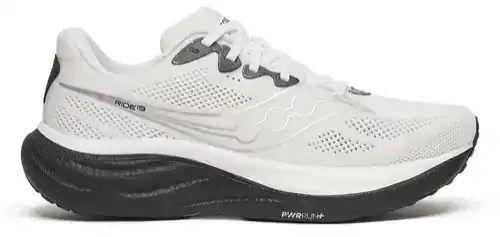
Best Overall Daily Running Shoe
The Saucony Ride 19 (check current price | read full review) is our best overall daily running shoe because it does almost everything a daily trainer needs to do without becoming overly specialized.
Saucony reformulated its PWRRUN+ cushioning for the Ride 19, giving the shoe a softer and more responsive feel. The men’s version weighs about 8.9 ounces and uses an 8 mm heel-to-toe drop. Launch pricing started at $145. That combination gives the Ride an advantage over trainers that work exceptionally well at one pace but become less convincing outside it.
Easy run? Fine. Longer steady run? Fine. Want to increase the pace for a few miles? The Ride can handle that too.
It also avoids the huge stack and heavily rockered geometry appearing in some modern trainers. Runners who prefer a more conventional transition can still flex through the forefoot rather than feeling as though the shoe is controlling every step.
The Ride 19 is not a racing shoe and it is not a true max-cushion shoe. That middle ground is precisely why it earns the top position.
Best for: Everyday mileage, easy runs, steady runs, moderate long runs and runners who want one versatile trainer.
Avoid if: You want maximum cushioning, aggressive stability or a dedicated speed shoe.
Men’s version | Women’s version
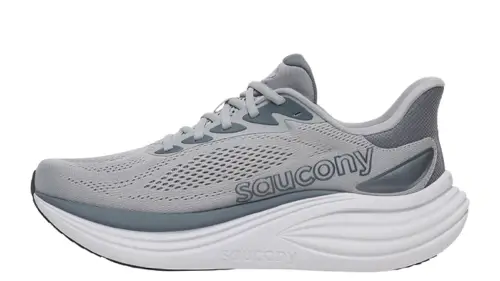
Saucony Triumph 24
Best Max-Cushion Daily Trainer
The Saucony Triumph 24 is what I would choose when comfort and cushioning matter more than keeping the shoe as simple as possible. (check current price | read full review)
Saucony made a major change for version 24 by introducing its new incrediLUX midsole foam. The men’s Triumph weighs about 8.8 ounces despite having approximately 43 mm of heel cushioning, while the advertised drop is 10 mm. Launch price is $170.
That weight is particularly impressive for a shoe offering this much cushioning. The Triumph therefore avoids one of the traditional problems with max-cushion trainers: feeling like a lot of shoe during normal daily mileage.
The new foam also gives the Triumph more energy than a conventional soft EVA platform, making it useful beyond slow recovery runs. You can put serious mileage into it without feeling as though every run needs to happen at an easy pace.
The Ride 19 remains the better all-around choice because it is simpler and less expensive. The Triumph 24 is the better choice if you regularly run longer distances or simply want more protection beneath your feet.
Best for: High mileage, long runs, runners who enjoy substantial cushioning and anyone who wants max cushioning without a heavy shoe.
Avoid if: You prefer lower stacks, greater ground feel or a less expensive daily trainer.
If you want a lighter high-cushion option, the Mizuno Neo Zen 2 is another strong daily trainer. It pairs a 40 mm heel stack with a smooth rocker and stays light enough for easy runs, long runs and walking.
For a lower-priced cushioned option, the Asics Dynablast 6 uses FF Blast Plus foam and an 8 mm drop for easy daily mileage. It is less performance-focused than the Novablast, but it is a practical $120 choice for steady running and walking.
If price is the priority, the Nike Downshifter 14 is a straightforward entry-level alternative. It is heavier and less responsive than most shoes here, but the $80 price, Wide option and stable ride make it appealing for beginners and easy daily running.
If you prefer more room around the toes and a lower-drop platform, the Altra Experience Flow 3 is another useful daily option. Its 4 mm drop, secure midfoot and roomy toe box make it especially appealing to runners who also use the same shoe for walking.
The On LightSpray Cloudmonster 3 Hyper is another high-cushion daily option if you want long-run comfort without a bulky feel. It is much less adjustable than a normal trainer because the upper is laceless, so it makes the most sense when the fixed fit works well for your foot. For the broader brand lineup, compare our On shoes guide.
Men’s version | Women’s version
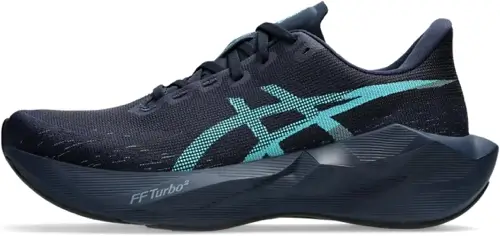
Asics Novablast 6
Best for Faster Daily Runs
The Asics Novablast 6 (check latest price | read full review) makes sense for runners who want one daily trainer that does not feel sleepy when the pace increases.
Asics combines FF Blast Max cushioning with an FF TURBO SQUARED forefoot pod intended to increase energy during toe-off. The men’s shoe weighs about 8.9 ounces, uses an 8 mm drop and launched at $155. Asics also added AsicsGRIP rubber beneath the forefoot.
That makes the Novablast noticeably different from more traditional trainers such as the Ghost.
It is tall and well cushioned, but it is designed to give some of that energy back rather than simply absorbing impact. That is useful if your daily runs vary. You can cruise through easy mileage one day and pick up the pace the next without immediately wanting a different shoe. The trade-off is that the ride has more personality.
Runners who prefer a low, planted or very predictable platform may find the Novablast unnecessarily lively. Runners who enjoy bounce and a more modern running-shoe feel are much more likely to appreciate it.
Best for: Faster daily running, progression runs, longer runs and neutral runners who enjoy an energetic ride.
Avoid if: You want a firm, low or particularly traditional daily trainer.
Men’s version | Women’s version
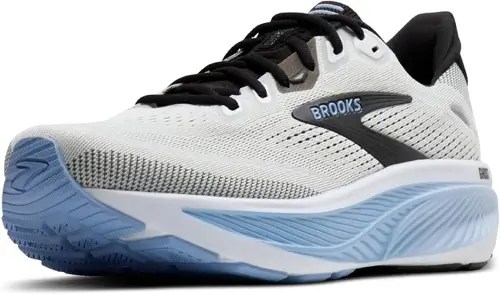
Brooks Ghost 18
Best Traditional Daily Trainer
The Brooks Ghost 18 (check latest price | read full review) remains one of the easiest shoes to recommend to someone who does not want their running shoe to feel experimental.
Brooks continues to use nitrogen-infused DNA LOFT v3 cushioning. The Ghost 18 has a 10 mm drop, weighs about 10.2 ounces in men’s sizing and launched at $150. Brooks positions it for road running, daily runs and walking.
It is not the lightest trainer here and it is not the bounciest. It also does not have a towering block of foam or a plate hidden inside the midsole. That is part of the appeal.
The Ghost delivers a relatively conventional heel-to-toe transition with enough cushioning for normal training and a durable RoadTack rubber outsole. Multiple widths also make it easier to fit than shoes available in only one basic shape.
The 10 mm drop can also appeal to runners who prefer more heel elevation or tend to land farther back on the foot. If you want something exciting, look elsewhere. If you want a running shoe that quietly handles your weekly mileage, the Ghost still deserves its place.
Best for: Everyday running, heel strikers, beginners and runners who want a conventional trainer.
Avoid if: You want very low weight, maximum cushioning or a highly energetic ride.
Men’s version | Women’s version
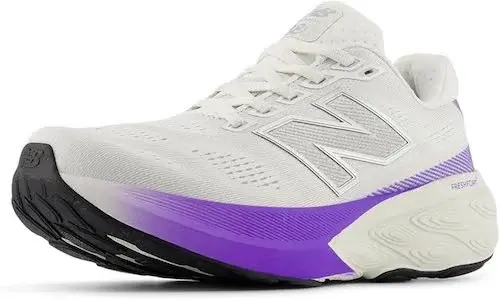
New Balance Fresh Foam X 880v15
Best Daily Running Shoe for Wide Feet
The New Balance Fresh Foam X 880v15 (check latest price | read full review) earns this position because a daily running shoe is useless if it does not fit your foot.
New Balance offers the 880v15 in narrow, standard, wide and extra-wide men’s sizing, with multiple widths also available for women. That gives it one of the broadest fit ranges among mainstream daily trainers.
The v15 uses Fresh Foam X cushioning with a much taller platform than previous 880s. It has a 6 mm drop and weighs about 10.7 ounces in men’s sizing. Its original U.S. retail price was $140, although retailer pricing now varies.
The 880 is not designed to feel explosive. Instead, the platform provides substantial cushioning with a relatively stable and predictable ride. That works well for routine mileage and longer sessions where comfort matters more than speed.
The additional width options are especially important because runners with wide feet sometimes compensate by buying shoes that are too long. Getting the correct width is generally a better solution.
Best for: Wide feet, extra-wide feet, everyday mileage and runners who prioritize fit and predictable cushioning.
Avoid if: You want an especially lightweight or aggressive trainer.
Men’s version | Women’s version
Hoka Clifton 11
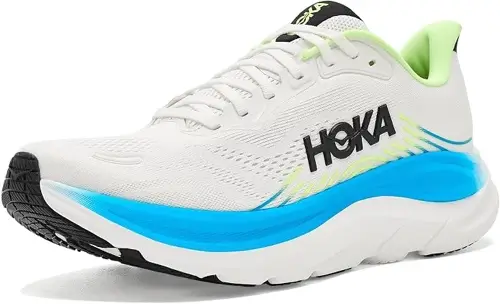
Best for Running and Walking
The Hoka Clifton 11 (check latest price | read full review) is one of the strongest choices for someone who wants one pair for running, walking and everyday use.
Hoka keeps the Clifton’s compression-molded EVA midsole and broad, rockered geometry. Version 11 has an advertised 8 mm drop, weighs about 9.9 ounces in men’s sizing and launched at $155. Wide and extra-wide versions are also available.
The rocker is important. Instead of requiring a lot of forefoot flex, the curved geometry helps the shoe roll through the stride. That can feel particularly smooth during easy running and walking.
The Clifton also provides substantial cushioning without moving all the way into Bondi territory.
Where it falls behind shoes such as the Triumph 24 and Novablast 6 is energy return. The Clifton still uses conventional compression-molded EVA rather than one of the newer high-energy foams. Independent lab testing reflects that difference.
For relaxed mileage, however, responsiveness may not be your first priority.
Best for: Easy running, recovery days, walking, travel and people who use the same shoe for several activities.
Avoid if: You want a particularly energetic shoe for tempo running.
Men’s version | Women’s version
Puma Velocity Nitro 5
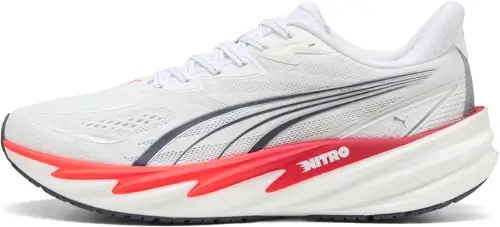
Best Value Daily Trainer
The Puma Velocity Nitro 5 (check latest price | read full review) proves that a daily trainer does not need to cost close to $200.
Puma designed the fifth-generation Velocity specifically as an everyday running shoe. It uses NITROFOAM cushioning, a 35 mm heel and 27 mm forefoot for an 8 mm drop, plus the company’s PumaGRIP rubber outsole. Puma lists a men’s UK size 8 at about 230 grams, or roughly 8.1 ounces. U.S. reference pricing is about $140.
Grip is one of the strongest reasons to choose it. PumaGRIP provides substantial outsole coverage and makes the Velocity particularly attractive if your normal routes include damp pavement or less-than-perfect surfaces.
The shoe is also lighter and less bulky than many highly cushioned daily trainers. That does mean you get less material beneath your feet than with something such as the Triumph or Clifton. High-mileage runners who want maximum protection may prefer a larger shoe.
For normal everyday mileage, however, the Velocity Nitro 5 delivers a strong mix of grip, cushioning, weight and price.
Best for: Value, wet pavement, shorter and medium-length daily runs and runners who dislike oversized shoes.
Avoid if: Maximum cushioning is your top priority.
Men’s version | Women’s version
Nike Pegasus 42
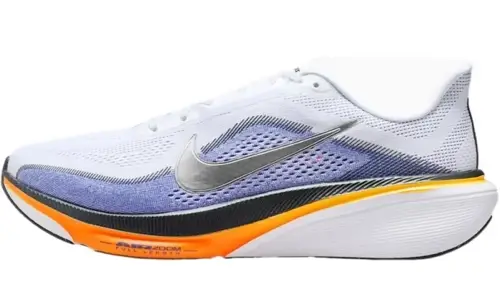
Best Daily Running Shoe for Beginners
There is a reason the Nike Pegasus has survived for more than four decades: it is relatively easy to understand.
The Pegasus 42 (check latest price | read full review) uses ReactX foam paired with a curved, full-length Air Zoom unit. Nike also increased toe spring and made the forefoot roomier than the Pegasus 41.
The advertised drop remains 10 mm. Independent launch testing lists the men’s shoe around 10.2 ounces in a US size 9, with a $145 launch price. Nike’s own specifications put a men’s US size 10 at about 10.6 ounces.
That makes the Pegasus a good starting point for newer runners who want one recognizable, versatile road shoe rather than a highly specialized trainer.
The high-abrasion Waffle outsole also gives it plenty of rubber for regular road use.
It is heavier than the Ride 19 and less lively than the Novablast 6, so experienced runners may find other shoes more interesting.
But beginners do not need complicated shoes. They need something comfortable, reasonably durable and suitable for a range of normal running speeds.
Best for: Beginners, everyday road running, runners who like a 10 mm drop and longtime Pegasus users.
Avoid if: You want max cushioning or a particularly lightweight daily trainer.
Men’s version | Women’s version
Asics Gel-Kayano 33
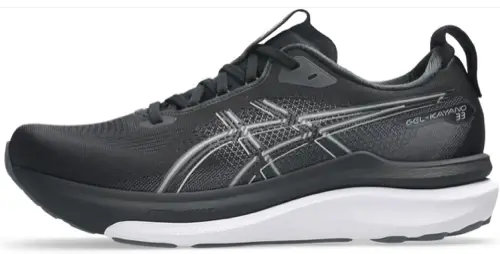
Best Daily Trainer With Added Stability
The Asics Gel-Kayano 33 (check latest price | read full review) is our choice for runners who prefer more guidance than a neutral daily trainer provides.
Asics now uses FLUIDSUPPORT technology rather than relying on the old-fashioned firm medial posts once common in stability shoes. The system is designed to provide guidance during key parts of the gait cycle while allowing more natural movement.
The Kayano 33 combines FF Blast Plus and FF Blast Max foams. It weighs about 10.5 ounces, uses an 8 mm drop and retails for $170. Wide and extra-wide models are available.
That makes this the most structured recommendation in the guide.
The trade-off is weight and agility. It is not designed to disappear on the foot like the Ride or Velocity Nitro.
What you get instead is a wide, cushioned platform with added guidance and a more controlled ride.
Do not assume you need a stability shoe just because you have flat feet or because your foot pronates. Pronation is a normal part of walking and running. Choose added stability when it improves your comfort or when it has been recommended for a specific reason.
Best for: Runners who prefer stability, overpronators who are comfortable in guidance shoes, long runs and wide feet.
Avoid if: You prefer lightweight, flexible neutral shoes.
Men’s version | Women’s version
Mizuno Wave Rider 30
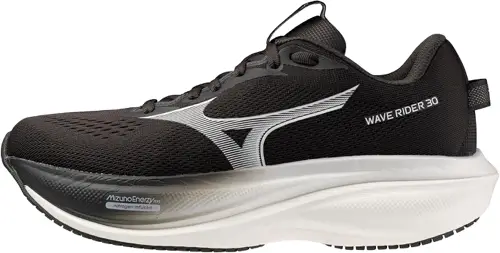
Best for Durability and High Mileage
The Mizuno Wave Rider 30 (check latest price | read full review) is one of the newest shoes on this list and represents a significant redesign of Mizuno’s long-running daily trainer.
Mizuno uses nitrogen-infused Enerzy NXT cushioning together with a full-length Mizuno Wave plate. Unlike the carbon plates found in racing shoes, the Wave plate is intended primarily to influence cushioning, transitions and stability rather than turn the shoe into a racer.
The Wave Rider 30 weighs about 9.4 ounces in a men’s size 9. It has a 42.5 mm heel, 34.5 mm forefoot and an 8 mm drop. U.S. retail price is $150.
Mizuno also uses its X10 carbon rubber outsole, making durability a major part of the shoe’s design.
The result is a high-stack trainer that still feels structured rather than excessively soft.
That makes the Wave Rider particularly appealing to runners who put in significant mileage but do not enjoy unstable or overly squishy cushioning.
The latest version is also a major change from the Wave Rider 29, including a lower drop and substantially updated platform.
Best for: Regular mileage, long runs, durability and runners who like a structured neutral shoe.
Avoid if: You want a very soft or minimalist platform.
Men’s version | Women’s version
What Is a Daily Running Shoe?
A daily running shoe, also called a daily trainer, is a running shoe designed to handle most of your normal weekly mileage.
For many recreational runners, it may be the only running shoe they need. Daily trainers generally prioritize comfort and durability over the extremely low weight of a racing shoe. They also tend to be less specialized than tempo shoes, trail shoes or max-cushion recovery shoes.
A good daily trainer should provide enough protection for repeated road use while remaining comfortable at your normal pace. That usually means looking for a balance of several characteristics:
- Comfortable cushioning
- Secure fit
- Appropriate support
- Durable outsole
- Reasonable weight
- Enough versatility for different distances and speeds
Some modern daily trainers now use advanced foams that would once have been reserved for performance shoes. That is why shoes such as the Novablast 6 and Triumph 24 can feel much more energetic than traditional trainers.
If EVA, PEBA, TPU, nitrogen-infused foam and other cushioning terms are confusing, our Running Shoe Foam Guide explains how the major materials differ.
How to Choose a Daily Running Shoe
Choosing the best daily running shoe starts with your feet and training, not the shoe with the highest review score.
Start With Fit
Fit matters more than almost every other specification. Your heel should feel secure without excessive slipping. The midfoot should be comfortably held, and your toes need enough room to spread without sliding around.
A longer shoe is not always the answer to a cramped forefoot. If the length is correct but the sides of your feet feel squeezed, try a wider size. Models such as the New Balance 880v15, Brooks Ghost 18, Hoka Clifton 11 and Asics Gel-Kayano 33 offer multiple width choices.
Choose Your Cushioning Level
More cushioning is not automatically better. A high-stack shoe can reduce how much impact you feel beneath the foot and may be comfortable during longer runs. It can also feel less stable or reduce ground feel.
The Triumph 24 and Clifton 11 provide substantial cushioning.
The Ride 19, Pegasus 42 and Velocity Nitro 5 sit closer to the middle.
Neither approach is universally correct. Pick the amount of cushioning that feels natural during your normal runs.
Match the Shoe to Your Normal Pace
Think about how you actually train. If almost every run is easy, comfort and durability should dominate your decision.
If you frequently increase the pace during daily runs, look for a shoe that has enough energy to come with you.
The Novablast 6 and Ride 19 are especially useful when your training pace changes.
You do not need a carbon plate simply because you occasionally run faster.
Consider Support Without Overcorrecting
Most runners can wear neutral running shoes. Others prefer additional guidance from a stability shoe.
Modern stability trainers such as the Gel-Kayano 33 increasingly use geometry and adaptive support rather than placing a hard piece of foam beneath the arch.
If you have persistent pain or a significant gait issue, a running-shoe roundup should not be used as a diagnosis. A qualified health professional can determine whether something beyond a shoe change needs attention.
Can You Use One Pair of Running Shoes for Every Run?
For many runners, absolutely. If you run three or four times a week primarily for fitness, a versatile daily trainer can cover almost everything you do. You do not need a shoe rotation simply because serious runners on social media own six pairs.
A rotation becomes more useful when your workouts become specialized.
Someone doing track intervals, easy recovery runs, long marathon sessions and races may appreciate having different shoes designed for those jobs.
Until you can identify a specific job your daily trainer does poorly, buying another shoe may not improve your running very much.
A comfortable daily trainer is usually the smartest place to start.
How Long Should Daily Running Shoes Last?
You will often see 300 to 500 miles quoted as the expected life of a running shoe. Treat that as a broad guideline rather than an expiration date.
A shoe’s useful life depends on runner weight, gait, running surface, outsole design, midsole material and how the shoe is used. Instead of throwing out a shoe automatically when an app reaches a specific mileage number, look for changes.
The outsole may wear through in high-contact areas. Cushioning may begin feeling noticeably flatter. The shoe may tilt or compress unevenly. You may also start feeling discomfort during runs that previously felt fine. Those clues are more useful than mileage alone.
Frequently Asked Questions About Daily Running Shoes
The Saucony Ride 19 is our best overall daily running shoe for 2026 because it balances cushioning, weight, responsiveness and price particularly well. The best shoe for an individual runner may be different depending on foot width, cushioning preference, support needs and training style.
A daily trainer is a running shoe designed to handle most ordinary training. Daily trainers prioritize comfort, cushioning, durability and versatility rather than specializing in racing, trail running or speed workouts.
Yes. Many recreational runners can comfortably use one daily trainer for nearly all of their running. A shoe rotation becomes more useful when training includes specialized workouts such as track intervals, recovery runs, very long runs or races.
Not necessarily. Max-cushion shoes provide more material beneath the foot, which some runners find comfortable during long or easy runs. Others prefer a lower, lighter and more connected ride. Cushioning preference is highly individual.
Most beginners do not need specialized technology. A comfortable, properly fitting daily trainer is generally a better starting point. Shoes such as the Nike Pegasus 42, Brooks Ghost 18 and Saucony Ride 19 are designed to work across a range of everyday running.
Many running shoes last somewhere around 300 to 500 miles, but there is no universal replacement mileage. Replace them when outsole wear, midsole compression or changes in comfort indicate that the shoe is no longer performing as it did when newer.
Yes. Many daily trainers work well for walking because they are designed for regular movement rather than racing. The Hoka Clifton 11, Brooks Ghost 18 and New Balance 880v15 are particularly useful running-and-walking crossover options. Comfort at walking speed should still be judged separately from how the shoe feels while running. See also best walking shoes.