Deep, steady cushioning for walking and easy miles, without modern foam
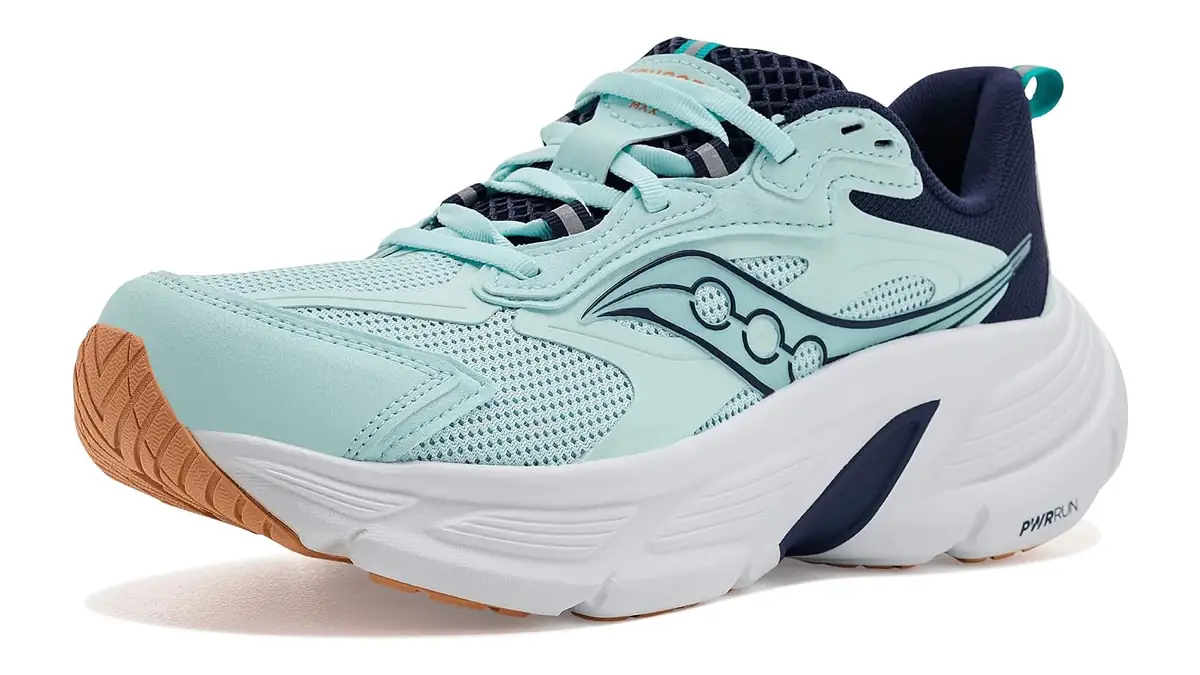
Quick Answer: Saucony Procyon Max Review: The Saucony Procyon Max is a broad, deeply cushioned neutral shoe built for walkers and easy-paced runners rather than for speed. A thick slab of PWRRUN foam sits inside raised sidewalls that cradle the foot, which makes the platform feel settled and secure under a long day of walking. It is comfortable, sensible and easy to live with. The foam is the older, heavier kind, so nothing here springs back. Check latest price.
The Saucony Procyon Max sits toward the everyday end of the brand’s road range, well below the premium Triumph and the plated Paramount Max. It is the shoe Saucony makes for people whose priority is comfort rather than performance, and it is unusually open about that: the marketing talks about runners and walkers in the same breath, which is rarer than it should be.
The design reflects it. This is a broad, low-drama shoe with a lot of foam, walls that come up around the foot and an outsole built to survive being walked on. It is worth saying plainly that Saucony does not publish a launch month or a launch price for this model, so anyone shopping for it is working from retail listings rather than an announcement. What we can say is that it is sold now across the US, in both men’s and women’s versions, and that it is one of the more affordable max-cushion shoes on the shelf.
Specs
Here are the specifications for the Saucony Procyon Max:
| Type | Max-cushion neutral road shoe for running and walking |
| Gait type | Neutral, with raised sidewalls that add a settled feel |
| Midsole | A thick layer of PWRRUN, Saucony’s standard everyday cushioning foam, with higher walls around the foot |
| Stack height | About 36 mm heel, 30 mm forefoot, which is a generous amount of foam underfoot |
| Heel-to-toe drop | 6 mm, meaning the heel sits only slightly higher than the toes, which keeps the ride level |
| Weight | Not confirmed. One listing quotes about 9.4 oz without stating which size it refers to |
| Upper | Breathable mesh, cut for all-day comfort rather than a locked-down performance fit |
| Outsole | Zoned XT-900 rubber, Saucony’s hard-wearing compound, with grooves cut in for flexibility |
| Widths | Standard confirmed. A wide fitting could not be verified, and Saucony suggests going up half a size for broad feet |
| Price | Not confirmed. Saucony does not publish a launch price or launch month for this model. Check latest price |
Pros
Here is where the Procyon Max does well:
- Plenty of soft foam underfoot, which takes the edge off concrete and hard shop floors
- Raised sidewalls cradle the foot, so the platform feels planted rather than wobbly
- A broad base, which is the single most useful thing a walking shoe can have
- XT-900 rubber is one of the harder-wearing compounds around, so it stands up to pavement
- Designed for walkers as well as runners, which shows in the fit and the sole shape
Cons
And where it holds back:
- PWRRUN is the older style of foam, so it absorbs impact without giving much back
- No confirmed wide fitting, which is a gap in a shoe aimed at all-day comfort
- Saucony publishes no weight or launch price, so you are buying on feel rather than specification
- Dull at anything above an easy pace, and not a shoe for workouts
- Less cushioning than the true max-stack shoes it competes with
What is new about the Procyon Max
The Procyon Max is a stand-alone model rather than the next version of something, so the useful question is what it does differently from the rest of Saucony’s cushioned range.
Two things stand out. The first is the shape of the midsole. Rather than simply stacking foam upward, Saucony has widened the base and pulled the foam up the sides of the shoe so that it forms shallow walls around your foot. The practical effect is that you sit down into the shoe rather than on top of it, which makes a soft platform feel far steadier than its height suggests. The second is the material. PWRRUN is Saucony’s ordinary cushioning foam, not the premium PWRRUN PB used in its racers and super trainers, so this is a shoe built around comfort and durability rather than energy return. That choice keeps the price down and it is also why the shoe feels the way it does. If you want to know what a shoe is for, look at what the brand chose not to spend money on.
Who should buy the Saucony Procyon Max
Buy it if you walk more than you run. This is one of the few running shoes designed with walking genuinely in mind, and it shows in the broad base, the flexible sole grooves and the hard-wearing rubber. For fitness walking, long days on your feet or covering a city on foot, it does the job with no fuss.
Buy it if soft shoes usually feel unstable to you. The raised sidewalls are the clever part here. Plenty of cushioned shoes feel vague and tippy because there is nothing holding your foot in place on top of all that foam, and this one avoids that by letting the foam come up around you. If you have tried a max-cushion shoe and disliked the wobble, this is a sensible next thing to try.
Buy it if you want comfort without a premium bill. The whole shoe is built around getting a lot of cushioning and a lot of durability for a sensible amount of money, and it does that well. For someone who runs three easy miles a few times a week and walks a great deal more than that, spending an extra $60 on a springier foam would buy nothing they would ever use.
Who should probably skip it
Skip it if you want your running shoe to feel lively. PWRRUN cushions well and returns very little, so anything above an easy effort feels like work. Skip it if your feet are broad, because a wide fitting could not be confirmed and Saucony’s own advice is to size up, which lengthens the shoe without widening it. And skip it if your feet roll inward noticeably, since the sidewalls give a feeling of security rather than actual guidance.
These suit that person better:
- Brooks Glycerin 23: a genuinely plush premium trainer with a livelier nitrogen-infused foam, sold in a wide fitting (check price | read review)
- Brooks Beast GTS 26: a broad, structured support shoe built for heavier walkers, orthotic users and feet that need real guidance (check price | read review)
- Skechers Max Cushioning Elite 2.0: a dedicated max-cushion walking shoe with a rolling sole, at a fraction of the price and with wide versions (check price | read review)
How does the Saucony Procyon Max fit?
The Procyon Max fits like a comfort shoe rather than a performance one, which is the right call for what it is. It is roomy enough to be forgiving over a long day and secure enough that your foot does not slide around, with nothing that needs breaking in.
Fit and sizing
Take your usual Saucony size. Length runs true and the heel is held comfortably, while the midfoot is wrapped by the upper without much pressure. The toe box is reasonably accommodating, which matters in a shoe you are going to spend eight hours in, because feet swell as the day goes on. The complication is width. We could only confirm a standard fitting, and Saucony’s own guidance for broad feet is to go up half a size, which is a workaround rather than a solution: it buys length you do not need and leaves the heel looser than it should be. If your feet are genuinely wide, this is the shoe’s weak point.
Upper and step-in comfort
The upper is a plain breathable mesh, soft rather than structured, with enough padding at the tongue and collar to be comfortable over a long day. It is built for all-day wear rather than for holding a foot steady at speed, and it succeeds at what it set out to do. Step-in comfort is the shoe’s best first impression: you sink into the heel, the sidewalls close gently around the foot and the whole thing feels settled immediately. Breathability is fine for warm weather. Nothing about the upper is clever, and in a shoe like this that is entirely appropriate.
How does the Saucony Procyon Max perform?
This is a shoe with a deliberately narrow job description, and within it there is very little to criticize. It is soft, steady and predictable at an easy effort, and it makes no attempt to be anything else.
Cushioning and ride
Stack height means the depth of foam between your foot and the ground, and about 36 mm at the heel is a generous amount, if short of the 40 mm-plus that true max-stack shoes now carry. PWRRUN is Saucony’s everyday foam, made from the traditional materials rather than the modern springy ones, and it behaves accordingly: landings are well cushioned, hard surfaces stop feeling hard and the impact is absorbed rather than returned. The ride is soft, quiet and slightly flat. That combination is exactly what you want for walking and easy running, and exactly what you do not want for anything quicker.
Ride and running performance
At an easy pace the Procyon Max is comfortable and entirely unremarkable, which for a recovery shoe is a compliment. It is stable, nothing distracts you and the grooved outsole lets the shoe bend where your foot bends. Ask for more and it declines politely. There is no plate, no rocker and no spring in the foam, so quicker running feels like pushing rather than flowing. Longer runs are fine so long as they are slow. This shoe is a good choice as the easy-day pair in a rotation, or as the only pair for someone whose running is genuinely gentle, and a poor choice for anyone with a training plan that includes intervals.
Stability and support
This is a neutral shoe with no support posts or guidance features, so it does nothing to correct or control how your foot moves. What it has instead is geometry, and the geometry is good. The base is broad, the foam is not the sloppy kind of soft and the raised sidewalls mean your foot sits inside the midsole rather than perched on it. The combined effect is a shoe that feels planted, which is why it works for walkers who dislike the vagueness of tall cushioned shoes. Anyone who has been advised they need real support for overpronation should still choose a stability model, because feeling settled and being guided are not the same thing.
Outsole, grip and durability
XT-900 is Saucony’s hard-wearing rubber and it is used here in zones, with grooves cut between them so the sole can flex. That combination is well judged for a shoe that will spend most of its life on pavement, because walking wears an outsole differently from running: more of the foot touches down, and it touches down more often. Grip on dry and damp sidewalks is dependable. Durability should be a strength, since a traditional foam like PWRRUN holds its character longer than the light modern ones and XT-900 is among the tougher compounds in use. The 300 to 500 mile figure quoted for running shoes is only a broad guideline, and a walker will generally get more calendar time out of a shoe like this than a runner will.
Is the Saucony Procyon Max good for walking?
Yes, and it is probably the main reason to buy it. Almost every design decision here points at walking. The base is broad, which is what keeps you steady at a slow pace on uneven sidewalks. The foam is deep enough to make concrete tolerable and firm enough not to feel vague after a few hours. The sidewalls hold your foot in place, and the grooved sole bends through the middle, which matters more when walking than running because you roll through the whole foot on every step.
The hard-wearing XT-900 rubber is the practical bonus, since pavement chews through soft outsoles quickly. It suits travel, long errand days, fitness walking and standing shifts on hard floors. Two honest limits: there is no built-in arch support, so anyone who depends on structure will want an insole, and the absence of a confirmed wide fitting is a real problem for a shoe whose whole pitch is all-day comfort. If those apply to you, a dedicated walking shoe in wide widths is the better buy.
Procyon Max vs Saucony Paramount Max
With no previous version to compare, the useful contrast is with Saucony’s premium max-cushion shoe:
Feature | Procyon Max | Paramount Max |
Midsole | PWRRUN, the standard everyday foam | Saucony’s premium super trainer cushioning |
Character | Soft, steady, quiet | Much softer and more energetic |
Best use | Walking and easy running | Long runs and faster training |
Weight | Not confirmed | About 10.6 oz men’s size 9 |
Price at launch | Not confirmed | $200, July 2026 |
Buy the Procyon Max if walking and easy miles are what you do, and you would rather spend less on a shoe that does exactly that. Buy the Paramount Max if you run properly, because the premium foam is the thing you will feel on a long run and there is no substitute for it in the cheaper shoe.
Saucony Procyon Max Alternatives
Three shoes answer the most likely reasons to keep looking.
Hoka Bondi 9 is the benchmark for this kind of shoe and the fairest comparison. It carries more foam, adds a rocker shape that rolls you through each step and comes in wide and extra wide fittings, which is the one thing the Saucony cannot offer. It costs more, and for walkers it is usually worth it (check price | read review).
Where the Procyon Max feels flat, Brooks Ghost Max 4 feels smooth. It is tall, softly cushioned and rockered, with a genuinely roomy fit, and it splits its time between easy runs and long walks as willingly as this shoe does (check price | read review).
Runners who are buying mostly to run should compare Asics Gel-Cumulus 28. It sits in a similar price band with a livelier foam and a roomier toe box, and it is the better choice if your miles matter more than your steps (check price | read review).
Price and value
Saucony does not publish a launch price for the Procyon Max, which makes a value judgment harder than it should be, and it is worth knowing that before you shop. What can be said is where the money went and where it did not. It went into a broad, well-shaped platform, a hard-wearing outsole and a comfortable upper. It did not go into a premium foam, a plate or a rocker, all of which cost real money and none of which a walker needs. That is a coherent set of choices rather than a set of corners cut, and it is why this shoe sits below the Triumph and the Paramount Max on the shelf. Check the current listing before buying, since without a published figure the price is the one thing you cannot judge in advance.
Final verdict
Best for: walking, standing shifts, travel, easy and recovery runs, and anyone who finds soft shoes unsteady.
Avoid if: you want energy return, you run fast at all, your feet are broad, or you need genuine support.
Fit: true to size, comfortable heel, accommodating toe box. Standard width confirmed, wide unverified.
Verdict: The Procyon Max is an honest shoe that knows who it is for. Saucony has spent its budget on the things a walker actually benefits from, a wide base, deep foam, sidewalls that hold the foot and rubber that survives pavement, and skipped the things a walker never notices. The result is comfortable and steady in a way that plenty of pricier shoes are not. It is also flat and unhurried, and the missing wide fitting is a genuine gap. As a walking shoe that can also run, it makes a lot of sense.
Frequently Asked Questions for Saucony Procyon Max
Both, and unusually it is honest about that. It is built on a running shoe platform but the broad base, the flexible grooved sole and the hard-wearing rubber are all choices that suit walking. Use it for walking and easy running and it fits the job perfectly. Use it for workouts and it will feel like the wrong tool.
It is Saucony’s standard cushioning material, used across the everyday end of its range. It is made from the traditional foam ingredients rather than the light modern ones, so it is durable and comfortable but does not spring back much. Saucony’s faster shoes use a different, pricier foam called PWRRUN PB, which is where the bounce lives.
We could only confirm a standard width. Saucony’s own guidance for broad feet is to order half a size up, which lengthens the shoe rather than widening it and loosens the heel in the process. If your feet are genuinely wide, a shoe sold in a proper wide fitting is the better answer.
They are the foam of the midsole brought up around the edges of your foot, so you sit down inside the shoe rather than on top of it. On a soft platform that makes a real difference to how settled it feels, because there is something stopping your foot from sliding sideways. It is a feeling of security rather than actual support, which is an important distinction if you have been told you overpronate.
Usually yes. The insole lifts out and there is reasonable depth inside, which is what an orthotic needs. The one thing to watch is that a custom insert raises your foot slightly, which reduces the effect of the sidewalls, so take the orthotic with you when you try the shoe on rather than judging the fit without it.
Saucony simply does not list those figures for this model, and retail listings do not agree with each other either. It is not unusual for shoes at the everyday end of a range, where brands promote the feel rather than the specification. It does mean this is a shoe worth trying on in a store, since the numbers will not tell you much.