Quick Answer: Nike Savaleos Review: The Nike Savaleos is a weightlifting shoe for people who want the benefits of a raised heel without buying a full competition lifter. A rigid midsole, a flat, wide base and a hook-and-loop midfoot strap keep you planted under a loaded bar, while the modest heel lift makes it easier to adapt to than taller lifters. Nike says it fits small and recommends a half size up, and the toe box is snug. It is a great first lifting shoe, but a poor walker. Check latest price.
The Nike Savaleos is a weightlifting shoe, which means it has a solid, raised heel and a sole that does not squash. That raised heel lets your knees travel forward as you squat, so you can sit lower while keeping your chest up. It has been part of Nike’s training lineup for several years and sits below the Romaleos, Nike’s competition lifting shoe.
Nike describes it as a sturdy, stable power builder: it straps your foot down to a flat, wide base, and the rigid midsole has a lift at the heel to help you push power into the floor. Nike also says the raised heel adds some versatility when you are training without weight, which is a hint at who this shoe is really for.
That buyer is the regular gym-goer who squats, presses and maybe does a few Olympic lifts, but is not chasing competition numbers. If you have been squatting in running shoes and suspect you should not be, this is a sensible next step.

Nike Savaleos weightlifting shoe in white, side view with midfoot strap. Image: Amazon
Specs
Here are the specifications for the Nike Savaleos:
| Type | Weightlifting shoe, entry level |
| Best for | Squats, presses, Olympic lifts in a general gym, first-time lifting shoe buyers |
| Heel height | About 15 mm (retailer spec), lower than most dedicated lifting shoes |
| Midsole | Rigid, with a raised heel; built not to compress under load |
| Base | Flat, wide sole for a stable platform |
| Closure | Laces plus one hook-and-loop midfoot strap |
| Upper details | Padded mesh inset at the heel, padded tongue and collar, pull tab |
| Sizing | Unisex, men’s 3.5 to 18; Nike says it fits small and recommends a half size up |
| Width | One standard width |
| Price | Check latest price |
Pros
- The rigid, flat base does not squash, so more of your effort goes into the floor instead of into the shoe.
- A modest heel lift helps you squat deeper with a more upright chest, and it is easy to get used to.
- The midfoot strap and laces hold your foot firmly on the platform.
- Nike’s sizing advice is clear: go a half size up, which takes much of the guesswork out of ordering.
- Priced well below Nike’s competition lifter, so it is a lower-risk way to find out whether lifting shoes suit you.
Cons
- Runs small, so your usual size will likely feel short.
- The toe box is snug and there is no wide version.
- The heel is lower than serious Olympic lifters usually want.
- Stiff and heel-raised by design, so it is no good for walking, running or cardio work.
What the Savaleos is built to do, and how it differs from the Romaleos
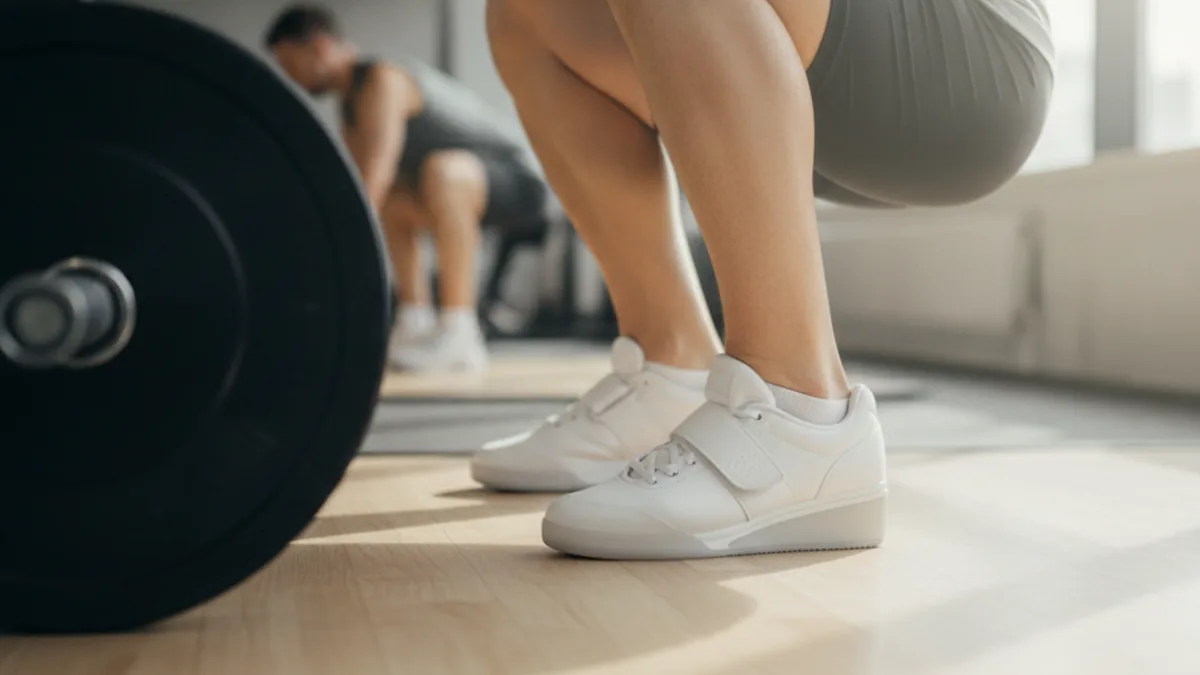
A lifting shoe has one job: stay still while you move a heavy weight. The Savaleos does that with three things. The first is a rigid midsole. Running shoes use soft foam that compresses with every step, which feels nice on a jog but turns into a wobbly base under a barbell. The Savaleos sole is built not to give, so your feet stay level and your force goes into the ground.
The second is the heel lift. At about 15 mm, it raises your heel above your toes enough to let your knees move forward as you lower into a squat. For many people, especially those with stiff ankles, that makes it easier to hit depth without your chest folding forward. The third is the flat, wide base and the hook-and-loop strap, which keep your foot centered on the platform instead of rolling to the edge.
The Romaleos is Nike’s competition shoe, and it pushes all of this further, with a taller heel and two straps. The Savaleos keeps things simpler with one strap and a lower lift. That makes it less extreme, easier to adapt to and better suited to a general gym where you might do lunges or step-ups between heavier sets.
Who should buy the Nike Savaleos
Buy it if this is your first pair of lifting shoes. It is the most approachable way to find out whether a raised heel helps your squat, and the modest lift makes the change less jarring than a full competition shoe.
It suits people whose training centers on squats, front squats, overhead presses and cleans, with some lighter bodyweight work in the same session. Nike itself points to the extra versatility of the raised heel when you are not under a bar.
It is also a good fit if your ankles are moderately stiff. A little heel height can make a deep squat feel more natural without changing your movement as much as a taller shoe would. Treat that as a comfort and positioning benefit, not a cure for poor mobility.
Who should probably skip it
Skip the Savaleos if you have wide feet. The toe box is snug and there is no wide fitting. Feet also tend to spread when you stand up with something heavy, which is exactly when a tight shoe hurts most. Sizing up adds length, not width.
Skip it too if you compete in Olympic weightlifting and want the tallest heel and most locked-down fit you can get, or if most of your training is deadlifts, where a flat shoe that keeps you close to the floor is the usual choice. If you have pain when you squat, a shoe may change how the movement feels, but persistent pain is a reason to see a physical therapist or qualified coach.
These shoes suit those lifters better:
- Reebok Legacy Lifter III: a tall-heeled lifter with room for wide feet, for lifters the Savaleos squeezes (check price | read review)
- Nike Romaleos 4: Nike’s competition lifter, with a taller heel and two straps for maximum lockdown (check price)
- Xero Shoes 360: a flat, zero-drop gym shoe with a roomy toe box, for deadlift-heavy training (check price | read review)
Not sure which kind of gym shoe you need? Our Free Shoe Finder can point you in the right direction.
Fit: order a half size up and check the toe box
Nike is unusually direct about sizing on this one: it says the Savaleos fits small and recommends ordering a half size up. Take that advice. A lifting shoe that is too short is miserable, because your toes need room to spread and grip as you drive out of a squat.
Width is the bigger question. The Savaleos is snug through the forefoot and comes in one width. A slim or average foot should feel secure once the strap is closed. A broad foot will likely feel pinched, and sizing up will only add length. If narrow shoes usually bother you, look at a lifter known for a roomier toe box instead.
The upper is firm and supportive rather than plush, with padding at the tongue, collar and a padded mesh inset at the heel. Expect a short break-in period while the upper softens. On your first session, pay attention to how the toes feel as you stand up from the bottom of a squat, since that is when a tight fit shows itself.

Nike Savaleos side view showing the raised heel wedge and hook-and-loop strap. Image: Amazon
How the Savaleos feels under a barbell
The first thing you notice is how direct it feels. With no soft foam under the heel, the floor feels closer, and nothing sinks when you push. That is the point: a firm base lets you press evenly through your whole foot, which is why lifters trust shoes like this for heavy squats.
The heel lift is where most people feel the difference. As you lower into a squat, your knees can travel forward a little more easily, so your hips can drop lower while your chest stays up. If stiff ankles have been tipping you forward at the bottom, the Savaleos may make that position feel more comfortable on the first set.
For cleans and snatches, the flat, wide base and midfoot strap keep your feet stable when you catch the bar. Competitive lifters chasing maximum weights tend to prefer a taller heel and a second strap, which is where the Romaleos comes in. For gym lifters, the Savaleos gives you the important part: a stable, non-squishy platform.
Stability here comes from structure, not from any feature that guides how your foot rolls. A lifting shoe changes the angles you lift from and gives you a solid base. It does not correct your movement, and it is no substitute for coaching or mobility work.
Grip, durability and how long a lifting shoe lasts
The flat outsole is built for gym floors and lifting platforms, where a broad, even contact patch matters more than deep tread. Grip on rubber flooring and wooden platforms should feel predictable.
Lifting shoes generally lead easy lives compared with running shoes. There is no constant pounding to wear down foam, so the parts that see stress are the strap, the stitching and the flex area at the front of the shoe. Using them only for lifting, rather than for running intervals or long conditioning pieces, is the best way to make a pair last.

Nike Savaleos flat outsole for gym floors and lifting platforms. Image: Amazon
Is the Nike Savaleos good for walking?
No. A lifting shoe keeps your heel raised on a rigid wedge with no give, which means you are always standing on a slight downhill slope. That is useful for a set of squats and tiring for an hour of walking, because it shifts your weight toward the balls of your feet and gives your calves little rest.
The stiff sole also stops your foot from rolling naturally from heel to toe, and the snug toe box gets less comfortable as feet swell during a long day. Wear the Savaleos for the lifting part of your workout and change into a cushioned shoe for everything else. Our best walking shoes guide has comfortable options for the rest of the day.
Nike Savaleos vs. Nike Romaleos 4
Here is how Nike’s two lifting shoes differ:
Nike Savaleos | Nike Romaleos 4 | |
Heel height | About 15 mm, lower | Taller |
Straps | One midfoot strap | Two straps |
Feel | Simpler and easier to adapt to | More rigid and locked down |
Best for | First-time buyers and general gym lifting | Competition and maximum lifts |
Buy the Savaleos when this is your first lifting shoe, your training is varied or you want a lower heel that is easier to adapt to. Buy the Romaleos 4 when you compete or train Olympic lifts seriously and want the tallest heel and firmest lockdown Nike makes.
Nike Savaleos Alternatives
If you like the idea of a dedicated lifter but want a taller, even more solid heel, the Adidas Adipower 3 is the step up. Its plastic heel does not give under load and it feels slim on the foot, though it shares the Savaleos’ narrow toe box and costs more (check price | read review).
Prefer one shoe for lifting and class work? The TYR CXT-3 is a firm cross-training shoe with a raised heel and a planted feel under a loaded bar. It gives up some of the Savaleos’ dedicated lifting stability in exchange for being easier to wear through jumps and sprints (check price | read review).
On a tighter budget, the Do-Win Weightlifting Shoes take the dedicated-lifter route with a non-compressible plastic heel, a double strap and a roomier toe box, at a price below most big-brand lifters (check price).
For more help choosing, see our guides to CrossFit shoes and the best cross-training shoes.
Price and value
The Savaleos sits well below Nike’s Romaleos in price, and what you are paying for is the part that matters most in a lifting shoe: a rigid, flat, wide base with a raised heel. For a first-time buyer, that is good value, because it lets you find out whether a lifting shoe helps your squat without committing to competition-shoe money. The value drops sharply if you have wide feet, since a shoe that pinches will not get worn, no matter how good the platform is.
Final verdict
Best for: first-time lifting shoe buyers and gym lifters who squat, press and clean a few times a week.
Avoid if: you have wide feet, compete in weightlifting or want a shoe for walking and cardio.
Fit: Nike says it fits small, so order a half size up; snug toe box, one width.
Verdict: The Nike Savaleos gets the essentials right with a rigid, stable base and a raised heel that most people can adapt to quickly. Check the fit carefully, and it is one of the easiest ways into proper lifting shoes. Check the latest price.
Frequently Asked Questions for Nike Savaleos
Yes. Nike says it fits small and recommends ordering a half size up. Your toes need room to spread as you lift, so follow that advice rather than buying your usual size.
Retailers list a heel height of about 15 mm. That is lower than most dedicated weightlifting shoes, which makes it easier to adapt to but gives competitive lifters less lift.
Yes. The rigid base and modest heel give you the main benefits of a lifting shoe, and it costs less than Nike’s competition lifter. It is a sensible way to test whether a raised heel helps your squat.
You can, but a flat shoe is the usual choice for deadlifts, because a raised heel adds a little distance and shifts your weight forward. If deadlifts are your main lift, a flat gym shoe may suit you better.
It handles the lifting parts well and copes with light bodyweight work. For running, rowing or lots of jumping, a cross-training shoe is more comfortable, so it is worth switching shoes mid-session.
Not usually. The toe box is snug and there is no wide version. A lifter known for a roomier forefoot is a better choice for broad feet.