Fast and versatile, but the fit runs snug
Quick Answer: The Nike Zoom Fly 6 is a carbon-plated performance trainer for neutral runners who want one shoe for tempo runs, long runs at pace and occasional racing. ZoomX foam and a full-length carbon-fiber plate give it a smooth, propulsive feel, while the firmer carrier makes it more practical for regular training than a pure racer. Its biggest limitation is fit: the upper runs snug and low-volume, and Nike’s women’s listing recommends going up half a size. It is best for runners who value speed and versatility over roomy comfort.
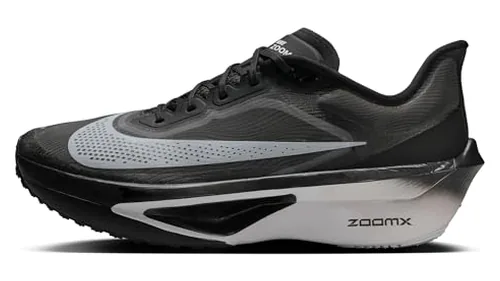
The Nike Zoom Fly 6 is Nike’s plated training and racing option for runners who want a faster feel without stepping all the way into a race-only shoe. Nike pairs responsive ZoomX foam with a full-length carbon-fiber Flyplate, while independent lab and review sources identify a firmer SR-02 carrier below. The result is a performance-focused road shoe that sits between a daily trainer and a dedicated racer. For the broader lineup, see our best Nike running shoes guide.
A super trainer borrows fast foam and plate geometry from racing shoes but is built for regular training. The Zoom Fly 6 follows that idea closely. Its full-length carbon-fiber Flyplate stiffens the forefoot and works with the rockered sole to encourage a rolling transition. The platform is tall, but the shoe is intended for faster road running rather than easy everyday mileage.
Compared with the Zoom Fly 5, the Zoom Fly 6 is lighter and more responsive. Compared with the Vaporfly, it is heavier and less aggressive but more practical for regular training. That middle ground is the reason to consider it.
Specs
Here are the specifications for the Nike Zoom Fly 6:
| Type | Road performance trainer / racer, neutral, carbon plated |
| Best for | Tempo runs, long runs at pace, workouts and occasional racing |
| Midsole | ZoomX top layer over a firmer SR-02 carrier |
| Plate | Full-length carbon-fiber Flyplate |
| Stack height | About 40 mm heel / 32 mm forefoot from independent measurements |
| Heel-to-toe drop | 8 mm |
| Weight | Nike: about 9.3 oz (265 g), men’s US 10; about 7.5 oz (214 g), women’s US 8 |
| Upper | Lightweight synthetic upper with a snug, performance-oriented fit |
| Outsole | Thin road rubber in key contact areas |
| Widths and sizing | Men’s and women’s versions; standard width. Nike says the women’s version fits small and recommends going up half a size. |
| Launch price | $180 | Check latest price |
Pros
These are the things the Zoom Fly 6 does better than most shoes in its class:
- ZoomX and the carbon-fiber plate give it a faster, more responsive feel than the Zoom Fly 5
- Versatile enough for workouts, long runs at pace and racing
- Lighter than the previous generation
- More training-friendly than a pure race shoe
- Rockered geometry helps keep the stride moving forward at faster paces
Cons
These are the limitations to consider before buying:
- Snug, low-volume fit will not suit every foot
- No wide option
- Tall platform can feel less planted on uneven or sharply cambered roads
- More shoe than most runners need for easy daily mileage
- $180 launch price is high for a trainer
What is new versus the Nike Zoom Fly 5
The Zoom Fly 5 was a heavy, firm shoe that carried a carbon plate without giving much back. Its midsole used ZoomX only in a limited way, and the ride was widely described as stiff and dull. The 6 is a redesign rather than an update.
Two changes drive the difference. First, ZoomX now forms the top layer of the midsole, so the foot lands on the resilient foam instead of on a firm carrier. Second, Nike raised the stack to around 40 mm at the heel and reshaped the sole into a more pronounced rocker, meaning the sole curves up at both ends so the shoe rolls you through the step. Together they turn a shoe that felt like work into one that feels like it is helping.
Weight came down by roughly 0.8 ounces, which is a large saving in a category where every gram is argued over. The upper was also stripped back, and this is where opinions divide: it is lighter and holds the foot well, but it is also cut much lower in volume than the 5, so runners who fitted the previous version comfortably cannot assume they will fit this one.
Check latest price and size availability
Who should buy the Nike Zoom Fly 6
Buy the Zoom Fly 6 if you want one plated shoe that can cover workouts, long runs at pace and race day. It is especially useful for runners building toward a half or full marathon who want a training shoe that feels closer to a racer without being reserved only for race day.
It suits neutral runners who like a tall, rolling ride and a close performance fit. Runners who already own a Vaporfly may also like it as the more practical training partner in the rotation.
It also makes sense as a first plated shoe, because the softness makes the transition less jarring than a race-only model. The plate is there and you will feel it, but the ZoomX above it takes the harshness out of the experience in a way a lower, firmer plated shoe does not.
Who should avoid the Nike Zoom Fly 6
Runners with wide or high-volume feet should be cautious. The Zoom Fly 6 is snug through the midfoot and forefoot, and Nike does not list a wide version. Nike’s current women’s product page specifically says the shoe fits small and recommends ordering a half size up.
Runners who want a firm, aggressive lever will also be disappointed. The Zoom Fly 6 reads as soft, and the plate works with the rocker rather than snapping you forward. If you like the very stiff, propulsive feel of a rod-based or firm-carrier super trainer, this will feel imprecise by comparison.
It is also a specialized choice for an only shoe. The plate and tall platform make more sense for faster running than for relaxed daily mileage. If you are unsure whether a plated performance trainer fits your gait, training and comfort needs, try the Free Shoe Finder before buying.
How does the Nike Zoom Fly 6 fit?
Fit and sizing
Fit is the main buying caution. Independent testing consistently finds the shoe snug through the forefoot and midfoot. Nike’s current women’s listing says it fits small and recommends ordering a half size up. Runners with a wide foot or high instep should be especially careful because there is no listed wide version.
Nike currently sells separate men’s and women’s versions rather than a single unisex model. If possible, try the shoe on before buying. If you order online, use a retailer with a straightforward return policy because fit is more likely to decide whether this shoe works than the cushioning or plate.
Upper and step-in comfort
The upper is thin, light and race-oriented. There is a small amount of padding at the collar and almost none in the tongue, which keeps weight down but concentrates lace pressure across the top of the foot. Breathability is good, which suits summer training and warm race conditions.
Step-in feel is firm and snug rather than plush. Once moving, the hold is excellent, with no sliding at the heel and no movement across the forefoot when you push hard. That security is the upside of the tight cut, and it is why the shoe feels controlled at speed despite the height of the platform.
How does the Nike Zoom Fly 6 perform?
Midsole and cushioning
The dual-density setup is the heart of the shoe. Nike describes ZoomX as its lightest and most responsive foam and pairs it with a full-length carbon-fiber Flyplate. Independent lab and review sources identify a firmer SR-02 carrier beneath the ZoomX. That combination gives the shoe a softer landing than the old Zoom Fly while keeping more structure than an all-ZoomX racer.
Cushioning depth is generous. Forty millimeters at the heel means long runs on concrete stay comfortable well past the point where a lower shoe starts to sting, and that protection is a genuine reason to choose the Zoom Fly 6 for marathon training rather than only for speed sessions.
Ride and running performance
The ride is smooth and rolling rather than sharp. The carbon plate stiffens the forefoot so the toes cannot flex back far, and the rocker shape carries the momentum forward, so the sensation is one of being tipped into the next stride. At tempo and marathon effort that feels effortless in the best way.
At very fast paces the softness becomes a limitation. There is more give than in a true racer, so some of the force disappears into the foam instead of rebounding, and short, sharp intervals feel less precise. At easy paces the shoe is comfortable but the plate is doing nothing useful, which makes it an expensive way to jog.
Stability and support
The Zoom Fly 6 is a neutral shoe with no support features, and the combination of a tall stack and soft top foam makes it one of the less planted shoes in its category. On smooth, straight road it is fine. On cambered surfaces, tight corners or uneven pavement it can feel tippy, and tired runners late in a long effort will notice that more.
The plate does contribute some torsional rigidity, which is to say it resists the shoe twisting along its length, and that helps hold the platform together. Runners who need genuine stability features should not choose this shoe, and anyone experiencing persistent pain should seek a professional assessment rather than solve it with footwear.
Outsole, grip and durability
Nike places rubber where the wear occurs and leaves foam exposed elsewhere to save weight. Grip is dependable on dry roads and adequate in the wet, though the exposed foam sections offer less bite than a fully rubbered outsole and deserve caution on wet paint and metal.
Durability is one reason to choose the Zoom Fly 6 over a race-only shoe. The outsole uses rubber in key contact areas, and independent reviewers generally report solid wear for a performance trainer. Actual lifespan still depends on body weight, gait, surface and pace, so it is better to judge replacement by changes in cushioning, grip and comfort than by a fixed mileage promise.
Is the Nike Zoom Fly 6 good for walking?
It can handle short walks, but it is not a strong all-day walking shoe. The carbon plate makes the forefoot stiff and the rocker is designed around faster running. That can feel efficient while running but less natural at walking pace.
The snug fit is another reason walkers should look elsewhere, especially if their feet swell during long days. For walking, a more flexible cushioned shoe is usually the better choice. See our best walking shoes guide for options built around walking comfort.
Nike Zoom Fly 6 vs. Zoom Fly 5
Here is how the two generations compare where it matters:
Zoom Fly 6 | Zoom Fly 5 | |
Midsole | ZoomX over firmer SR-02 | Firmer foam with limited ZoomX |
Feel | Soft and bouncy | Firm and flat |
Stack | About 40 mm heel | Lower |
Weight | About 0.8 oz lighter | Heavier |
Fit | Much lower volume | More accommodating |
Buy the 6 unless the fit defeats you, because it is a better shoe in every performance respect. Buy the 5 while it is discounted only if you need the extra room over the instep or you specifically want a firmer, lower plated trainer.
Nike Zoom Fly 6 Alternatives
Fit is the Zoom Fly 6’s most common dealbreaker, and the Saucony Endorphin Azura solves it with a far more accommodating upper. It also drops the plate entirely, using a resilient PEBA-based foam to supply the roll, which suits runners who want the bounce without a stiff forefoot (check price | read review).
Runners who found the Zoom Fly 6 too soft and too tall should look at the Hoka Mach 7. It is lower, firmer and lighter, with no plate at all, so short intervals feel far more precise and the shoe stays planted on rough or cambered road where the Nike gets tippy (check price | read review).
If the plan is actually to race rather than to train, the Nike Vaporfly 4 is the shoe the Zoom Fly imitates. It is dramatically lighter and more aggressive over 5K to half marathon distances, at the price of a much shorter life and no real use as a training shoe (check price | read review).
For the easy days this shoe should not be covering, the Asics Novablast 6 pairs with it neatly. Its tall, bouncy midsole makes slow miles enjoyable without a plate dictating the stride, and having both in a rotation covers the full range of paces properly (check price | read review).
Price and value
The Zoom Fly 6 launched at $180 in the U.S. Nike still lists a $180 regular price, although some colorways may be discounted. The value case is strongest for runners who will use it for workouts, long runs at pace and occasional races. If most of your running is easy, a normal daily trainer will usually give you more comfort and flexibility for less money.
Check latest price and size availability
Final verdict
Best for: tempo and long runs at effort, half and full marathon racing, and neutral runners who want carbon plate feel in a durable shoe.
Avoid if: you have wide or high-volume feet, you want a firm and snappy lever, you need stability features or you want one shoe for everything.
Fit: snug and low-volume. Standard width only. Nike’s women’s listing recommends going up half a size.
Verdict: The Zoom Fly 6 is a useful plated trainer for runners who want one shoe for faster training and occasional racing. It is lighter and more responsive than the Zoom Fly 5, but the close fit is the main risk. Try it on if you can, especially if you have a wide foot or high instep.
Buy: Men’s version | Women’s version
See where the Zoom Fly 6 fits in our Nike running shoe comparison, and compare it with other options in our best shoes for tempo runs and best racing shoes guides.
Frequently Asked Questions for Nike Zoom Fly 6
The fit is snug and low-volume. Nike’s current women’s listing specifically says the shoe fits small and recommends going up half a size. If you have a wide foot or high instep, try it on or buy from a retailer with easy returns.
Yes. It can work for half-marathon and marathon racing, especially for runners who want one plated shoe for both training and race day. It is heavier and less aggressive than the Vaporfly, but it is more practical for regular mileage.
Independent lab and review sources identify a firmer SR-02 carrier beneath the softer ZoomX layer. That firmer layer adds structure and helps make the Zoom Fly 6 more training-oriented than Nike’s race-only super shoes.
Usually not as a first running shoe. The carbon plate, snug fit and tall platform make it more specialized than a normal daily trainer. Beginners are generally better served by a comfortable neutral trainer unless they specifically want a plated performance shoe.
The Vaporfly is lighter and more race-focused. The Zoom Fly 6 is heavier and less aggressive, but it is designed to handle regular training as well as faster sessions and racing. Choose the Zoom Fly 6 for versatility and the Vaporfly when race-day speed matters most.
It is a neutral shoe, not a stability shoe. The plate adds structure, but the tall platform can feel less planted on uneven or sharply cambered roads. Runners who need dedicated guidance or stability support should choose a stability model instead.
It can handle short walks, but it is not a strong choice for all-day walking. The carbon plate makes the forefoot stiff, the fit is snug and the shoe is designed around faster running. Most walkers will be better served by a more flexible cushioned walking shoe.