| Quick Answer: Best Racing Shoes of 2026. The Nike Vaporfly 4 is the best racing shoe for most runners because it is light, fast and versatile enough for a 5K, 10K, half-marathon or marathon. The New Balance SuperComp Elite v6 is a more comfortable first racing shoe and comes in a wide option. Marathon runners should also consider the Adidas Adizero Adios Pro 4, while the Hoka Cielo X1 3.0 provides a smoother, more stable ride. Buy the shoe that fits your foot and race distance, not simply the most expensive model. Check Latest Price |
A good racing shoe should make your goal pace feel a little easier without distracting you. It should fit securely, feel comfortable at speed and protect your legs for the full distance. For most modern race-day shoes, that comes from a combination of lightweight foam, a stiff carbon plate and a curved sole that helps the foot roll forward.
You do not need to understand every foam formula to choose well. The important questions are simple: Does the shoe fit? Does it feel stable enough? Does it work at your race pace? Can you still imagine wearing it when your form starts to fade late in the race?
This guide is for runners buying their first serious racing shoe or replacing an older one. Every selection is a current road-racing model as of September 2026. The advice focuses on how each shoe may help an everyday runner, where it fits best and what could make it the wrong choice.
Need help choosing? Use our free Shoe Finder to narrow current options by activity, fit, cushioning and support.
Best Racing Shoes at a Glance
| Racing shoe | Best for | Race distances | Drop | Launch price | Check latest price |
|---|---|---|---|---|
| Nike Vaporfly 4 | Best overall | 5K to marathon | 6 mm | $270 | Check latest price |
| New Balance SuperComp Elite v6 | Best first racing shoe | Half-marathon to marathon | 8 mm | $274.99 | Check latest price |
| Adidas Adizero Adios Pro 4 | Best marathon balance | 10K to marathon | 6 mm | $250 | Check latest price |
| Asics Metaspeed Sky Tokyo | Best lightweight marathon shoe | 10K to marathon | 5 mm | $270 | Check latest price |
| Hoka Cielo X1 3.0 | Best smooth, stable ride | Half-marathon to marathon | 7 mm | $275 | Check latest price |
| Puma Fast-R Nitro Elite 3 | Best aggressive racer | 5K to marathon | 8 mm | $300 | Check latest price |
| Saucony Endorphin Elite 3 | Best maximum bounce | Half-marathon to marathon | 8 mm | $290 | Check latest price |
Launch prices are manufacturers’ U.S. prices. Current prices and availability may vary by size, color and seller. Check the price link for latest cost.
Nike Vaporfly 4
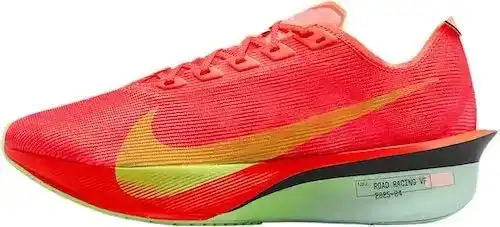
Best for: Most runners buying one racing shoe
The Nike Vaporfly 4 is the safest starting point for a runner who wants one serious race shoe for several distances. It is light enough to feel exciting in a 5K or 10K, yet it has enough ZoomX cushioning for a half-marathon or marathon. Nike combines that soft, responsive foam with a full-length carbon plate that stiffens the shoe and helps it roll forward as you push off. (Check latest price and availability.)
The fourth version feels lower and leaner than many tall marathon shoes. That makes it easier to change direction, hold a quick rhythm and feel connected to the road. It is not built only for elite runners. A recreational racer can benefit from the low weight and smooth movement even when running well behind the lead pack.
The main question is fit. The Vaporfly 4 has a close race-day shape, and Nike says it fits small. Going up half a size may help, especially if your toes swell during longer races. Runners with wide feet should try it before buying or look at the New Balance SuperComp Elite v6 in wide.
It can also feel less planted than a daily trainer. The heel is narrow, the foam is soft and the upper uses little extra padding. That is normal for a shoe designed to save weight, but it may not suit runners who need a broad, highly supportive base. Use it for a few faster workouts before race day. If the fit works and the ride feels secure, the Vaporfly 4 is one of the simplest ways to add a genuine race-day advantage without choosing a highly specialized shoe.
For a first race, choose the Vaporfly when you value low weight and a quick feeling more than plush comfort. It is especially easy to recommend if your calendar includes several distances. You will not need one shoe for a spring 10K and another for a fall marathon. Just avoid saving it untouched in the box. A short tempo run and a longer workout will tell you whether the close upper or narrow heel becomes distracting.
Specs
- Weight: About 6.7 ounces for men; 5.4 ounces for women
- Drop: 6 mm
- Midsole: ZoomX foam
- Plate: Full-length carbon Flyplate
- Support: Neutral
- Launch price: $270
Pros
- Very light and fast
- Works for distances from 5K to marathon
- Responsive without feeling extremely bulky
- Widely recognized as a proven race-day design
Cons
- Close fit may feel narrow
- Less stable than broader racing shoes
- Thin outsole is not intended for daily training
More info: See our full Nike Vaporfly 4 review
Gender-specific buy links: Men’s version | Women’s version
New Balance SuperComp Elite v6

Best for: A first carbon-plated racing shoe
The New Balance SuperComp Elite v6 is the best place to start if you want a race shoe that feels less intimidating. It still has the light foam, carbon plate and tall stack expected from a modern racer, but the shape is more familiar than the sharply cut platforms used by some competitors. The cushioning is soft and protective, making it especially appealing for a first half-marathon or marathon. (Check latest price and availability.)
New Balance uses its new Infinion foam and a carbon plate that becomes stiffer toward the front of the shoe. In plain language, the foam cushions the landing while the plate helps create a firm push forward. You do not have to run at an elite pace to notice the difference. The shoe should feel most useful when you settle into a steady race effort and want to protect your legs for the later miles.
Fit is another major advantage. The SuperComp Elite v6 is one of the few top racing shoes offered in a wide version. That does not make the standard shoe unusually roomy, but it gives runners with wider feet a real alternative to squeezing into a narrow unisex racer.
The trade-off is that it may not feel as sharp as the Vaporfly 4 or Puma Fast-R Nitro Elite 3 during a short, all-out race. It favors comfort and rhythm over a hard snap. The soft foam may also feel less controlled to runners who prefer a firm shoe. For the first-time racing-shoe buyer, however, that friendly character is a strength. It offers a noticeable performance upgrade without making every step feel unfamiliar.
This is also the model to put near the top of your list if comfort problems have spoiled races before. The extra room and protective ride reduce some of the usual race-shoe compromises. It still needs a proper test, especially through tight turns, but it asks for less adjustment than many narrow, stiff competitors. For a runner focused on finishing a first long race strongly, that confidence may be more valuable than saving a fraction of an ounce.
Specs
- Weight: About 7 ounces
- Drop: 8 mm
- Stack height: About 40 mm at the heel and 32 mm at the forefoot
- Midsole: Infinion foam
- Plate: Full-length carbon plate
- Support: Neutral
- Widths: Standard and wide
- Launch price: $274.99
Pros
- Comfortable for long races
- Available in a wide width
- Smooth, less aggressive introduction to carbon shoes
- Light despite its protective cushioning
Cons
- Not as sharp for short races
- Soft ride will not suit everyone
- High price for a first race shoe
More info: See our full review of the New Balance SuperComp Elite v6.
Gender-specific buy links: Men’s version | Women’s version
Adidas Adizero Adios Pro 4
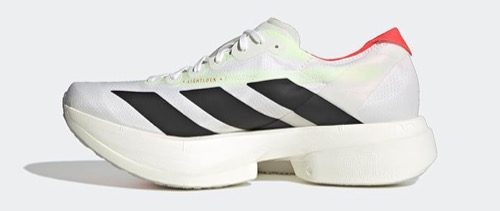
Best for: Marathon performance with dependable grip
The Adidas Adizero Adios Pro 4 is a strong choice for the runner who wants one racer for a 10K, half-marathon and marathon. Its Lightstrike Pro foam feels energetic without becoming difficult to control, while carbon-infused EnergyRods add stiffness through the forefoot. These rods follow the general direction of the foot bones instead of using one solid plate, but the result is similar: less bending and a stronger forward roll at race pace. Read our full Adidas Adizero Adios Pro 4 review. (Check latest price and availability.)
The Adios Pro 4 stands out because it balances speed with road manners. It has enough cushioning to protect tired legs late in a marathon, yet it does not feel as large or unusual as the most extreme super shoes. Continental rubber also gives it dependable grip, which matters on wet roads, painted lines and crowded turns. That makes it easier to trust when race-day weather is less than perfect.
Its upper is light and built for racing, not comfort in the daily-trainer sense. The heel and tongue have limited padding, and the fit can be snug. Adidas currently describes the men’s model as true to size in some colors, while several women’s listings recommend sizing up. That inconsistency makes an in-person fitting or a retailer with easy returns particularly valuable.
The shoe is not the cheapest option at full price, but the Adios Pro line is often discounted after new colors arrive. Compare the final price in your size before assuming another shoe offers better value. For a runner entering a first marathon who wants a fast shoe without a highly unstable or radical feel, the Adios Pro 4 remains one of the most complete choices available.
Choose it over the Vaporfly if traction and a slightly more grounded ride matter more than having the lightest shoe. It also makes sense for runners whose race calendar includes wet spring events or courses with many corners. The ride still feels special, but it does not demand a dramatic change in the way you run. That balance helps explain why it remains a dependable first marathon option.
Specs
- Weight: About 7.1 ounces
- Drop: 6 mm
- Stack height: About 39 mm at the heel and 33 mm at the forefoot
- Midsole: Lightstrike Pro foam
- Plate: Carbon-infused EnergyRods
- Outsole: Continental rubber
- Support: Neutral
- Launch price: $250
Pros
- Excellent mix of speed and long-distance protection
- Reliable outsole grip
- Smooth at several race paces
- Often available below its launch price
Cons
- Race-day upper has little padding
- Fit can vary by gender and color
- Not as light as the fastest short-distance options
Gender-specific buy links: Men’s version | Women’s version
Asics Metaspeed Sky Tokyo

Best for: Runners whose stride gets longer as they speed up
The Asics Metaspeed Sky Tokyo is a remarkably light option for runners who want marathon-level cushioning without a heavy or bulky feel. Asics designed it for what the company calls “stride-style” runners. That means runners who tend to get faster by taking longer steps while keeping their step rate fairly steady. You do not need a laboratory test to identify yourself. Look at your watch data from easy and fast runs. If your stride length rises more clearly than your cadence, the Sky is the more logical Metaspeed model to try. (Check latest price and size availability.)
The shoe combines two responsive foams with a carbon plate placed higher in the midsole. That design creates a firm platform to push against while leaving softer foam closer to the road. The sensation is light, bouncy and more direct than the tall shape suggests. It is well suited to runners who already have efficient form and want a shoe that rewards a strong push through the front of the foot.
The Sky Tokyo is not automatically better than the Metaspeed Edge Tokyo. The Edge positions its plate differently for runners who increase speed mainly by turning their legs over faster. Most runners do not fit perfectly into either label, so comfort during a race-pace workout should settle the decision.
The Sky’s unisex fit is secure and focused on racing. It may feel tight to broad feet, and the light construction offers little of the soft padding found in a daily shoe. It is also expensive. Still, a runner who wants a very light half-marathon or marathon racer may find it delivers the protection of a super shoe without making the foot feel disconnected from the road.
This is not the best blind online purchase for a new racer because the Sky-versus-Edge choice and unisex fit add two decisions. If possible, try both Metaspeed versions during faster strides. Choose the one that disappears underfoot and lets you run naturally. When the Sky matches your movement, it feels quick without forcing you onto your toes or making you fight a large rocker.
Specs
- Weight: About 6 ounces
- Drop: 5 mm
- Stack height: About 39.5 mm at the heel and 34.5 mm at the forefoot
- Midsole: FF Leap and FF Turbo Plus foams
- Plate: Full-length carbon plate
- Support: Neutral
- Sizing: Unisex
- Launch price: $270
Pros
- Exceptionally light for a marathon shoe
- Responsive foam feels lively at race pace
- Enough cushioning for long events
- Secure fit for fast running
Cons
- Stride-style label can confuse buyers
- Unisex fit may be narrow for some feet
- High price
See also: Our full review of the Asics Metaspeed Sky Tokyo
Gender-specific buy links: Men’s version | Women’s version
Hoka Cielo X1 3.0
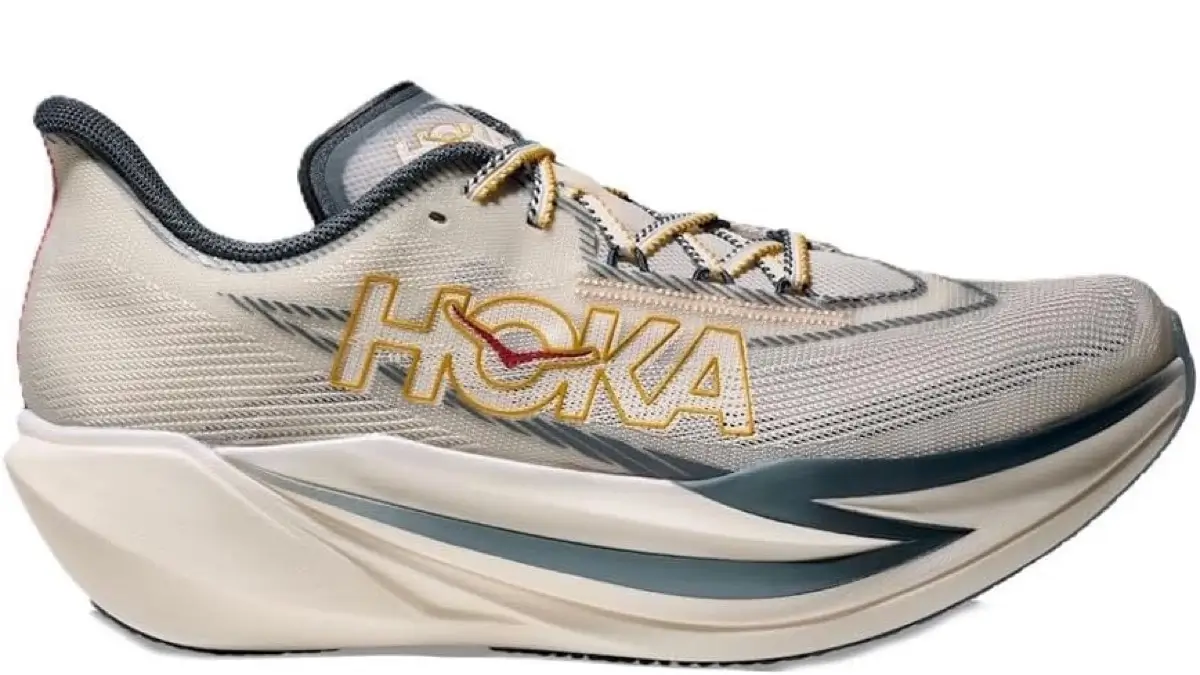
Best for: A smooth, stable half-marathon or marathon ride
The Hoka Cielo X1 3.0 suits runners who want a super shoe to guide them forward instead of feeling loose or unpredictable. Hoka reduced the weight from earlier versions, refined the heel and widened the sense of control underfoot. It remains a tall carbon-plated racer, but its broad base and strong rocker make it easier to settle into a steady rhythm. (Check latest price and size availability.)
A rocker is the curved shape that helps the shoe roll from landing to toe-off. In the Cielo, that movement is easy to notice. The shoe works best when you lean into race pace and let it carry you forward. This can be helpful late in a half-marathon or marathon when tired legs no longer move as freely. The PEBA foam provides soft, responsive cushioning, while the carbon plate keeps the platform from feeling mushy.
The more secure design makes this a useful option for runners who have felt nervous in narrow super shoes. It is still a neutral shoe, not a stability model for overpronation. Runners who need medical or corrective support should not treat the wide base as a replacement for advice from a qualified professional.
The Cielo is less convincing at slower speeds. During an easy jog, the rocker and stiff plate can feel awkward, which is why it should remain a race and fast-workout shoe. The all-gender fit also requires careful size conversion, and the asymmetrical lacing may take a few attempts to adjust. For a runner who values a smooth transition and a more planted feeling over the lowest possible weight, the Cielo X1 3.0 is one of the easiest high-end marathon racers to trust.
Consider it if your main goal is reaching the final miles with your legs feeling protected, not chasing the lightest possible setup. It suits a controlled, steady effort and runners who enjoy Hoka’s rolling sensation. Make sure the heel stays secure during faster running. If it does, the broad platform can provide welcome confidence on crowded courses and when your form becomes less tidy late in the race.
Specs
- Weight: 7.52 ounces
- Drop: 7 mm
- Stack height: About 40 mm at the heel and 33 mm at the forefoot
- Midsole: PEBA foam
- Plate: Carbon-fiber plate
- Support: Neutral with a broad base
- Sizing: All-gender
- Launch price: $275
Pros
- Smooth rocker helps maintain rhythm
- More stable than many narrow super shoes
- Protective cushioning for longer races
- Lighter than earlier Cielo X1 versions
Cons
- Can feel awkward at easy speeds
- Rocker is too noticeable for some runners
- All-gender sizing requires care
See also: Our full review of the Hoka Cielo X1 3.0
Gender-specific buy links: Men’s version | Women’s version
Puma Fast-R Nitro Elite 3

Best for: Runners who want the most aggressive race-day feel
The Puma Fast-R Nitro Elite 3 looks unusual because its heel and forefoot appear almost separated. The design is not only for show. Puma uses the cutaway middle, very light NitroFoam Elite and an extended carbon plate to create a strong forward push. The result is a shoe built for runners who want race day to feel clearly different from an ordinary training run. (Check latest price and size availability.)
At about 6 ounces, it is exceptionally light for a shoe with a full 40 mm heel stack. The plate and curved forefoot come alive as the pace increases. Runners who land around the middle or front of the foot may find the transition especially quick. Puma positions it for distances from 5K to marathon, although the radical shape and firm movement make it better suited to confident racers than cautious first-time buyers.
The Pumagrip outsole is a major practical advantage. It offers strong traction on wet pavement and through corners, helping the shoe feel more secure than its unusual shape suggests. The upper is thin and reinforced to hold the foot in place without adding much weight.
The Fast-R is not forgiving of a poor fit. The regular-width shape, separated platform and forceful plate can feel unstable or harsh if your foot does not sit correctly. It is also the most expensive shoe in this guide at launch. Do at least one race-pace workout and one longer run before choosing it for an important event. Runners who simply want a comfortable first carbon shoe should start with New Balance or Hoka. Runners who want a dramatic, high-energy racer and enjoy an aggressive toe-off may find the Puma delivers exactly the excitement they are paying for.
For most first-time buyers, this should be a try-before-you-buy choice rather than the default recommendation. It makes the strongest case for runners who already know they like firm plates, fast transitions and a snug hold. If an easy warmup feels strange, do not panic; judge it at race pace. If it makes you work to stay balanced, choose a calmer platform instead.
Specs
- Weight: About 6 ounces
- Drop: 8 mm
- Stack height: 40 mm at the heel and 32 mm at the forefoot
- Midsole: NitroFoam Elite
- Plate: Carbon-fiber PWRPLATE
- Outsole: Pumagrip rubber
- Support: Neutral
- Launch price: $300
Pros
- Extremely light
- Powerful feeling at fast paces
- Excellent wet-road traction
- Suitable for several race distances
Cons
- Radical design will not suit every stride
- Regular-width fit may exclude wider feet
- Highest launch price in this guide
Read the full review of this Puma racing shoe.
Gender-specific buy links: Men’s version | Women’s version
Saucony Endorphin Elite 3

Best for: Maximum bounce with improved stability
The Saucony Endorphin Elite 3 is a premium marathon racer for runners who want a soft, energetic feeling underfoot. It uses two layers of IncrediRun foam around a new slotted carbon plate. The slots allow parts of the plate to work with the foot instead of acting like one completely rigid board. Saucony also revised the shape to improve midfoot stability, addressing a common concern with very soft, high-stack racing shoes.
The key experience is bounce. The thick foam compresses at landing and springs back as you move forward, while Saucony’s SpeedRoll shape encourages a quick transition onto the toes. At race pace, this can make it easier to hold momentum. The shoe is best suited to half-marathons and marathons, where the cushioning has time to justify its height and price.
The Elite 3 is more demanding than Saucony’s Endorphin Pro 5. The Pro is the safer choice for runners who want one plated shoe for training and racing. The Elite is the faster, more specialized option for someone willing to save it for key workouts and race day. Its unisex sizing also means women generally need to convert from their usual size, so checking Saucony’s chart is essential.
Although stability has improved, no tall, soft racing shoe will feel as planted as a conventional daily trainer. Test it on turns and tired legs before committing to a marathon. The $290 price also puts it near the top of the category. This shoe makes the most sense for a runner who already knows that soft, bouncy cushioning feels good at speed and wants a highly protective racer. If you prefer a firmer, lighter or more direct ride, choose the Vaporfly 4 or Metaspeed Sky Tokyo instead.
For a first-time buyer, the decision comes down to feel. Choose the Elite 3 if you enjoy a soft landing and want each step to feel energetic. Skip it if tall shoes make you uneasy or you prefer to feel the road. A few turns and downhill miles in training are more useful than standing in the shoe at a store. Read our full Saucony Endorphin Elite 3 review.
Specs
- Weight: About 7.2 ounces
- Drop: 8 mm
- Stack height: 40 mm at the heel and about 32 mm at the forefoot
- Midsole: IncrediRun foam
- Plate: Slotted carbon-fiber plate
- Outsole: PWRTRAC rubber
- Support: Neutral
- Sizing: Unisex
- Launch price: $290
Pros
- Soft, highly responsive cushioning
- Improved midfoot stability
- Protective enough for marathon distance
- Outsole provides useful race-day grip
Cons
- Expensive
- Too soft and tall for some runners
- More specialized than the Endorphin Pro 5
Read the full review of the Saucony Endorphin Elite 3.
Gender-specific buy links: Men’s version | Women’s version
What is a Racing Shoe?
A racing shoe is a lightweight running shoe designed to help you run efficiently at faster speeds. Most premium models now combine soft, responsive foam with a stiff carbon-fiber plate or carbon rods. The foam absorbs impact and returns some of the energy from each landing. The plate limits bending and works with the shoe’s curved shape to help the foot move forward.
You will also see “stack height” and “drop” in racing-shoe descriptions. Stack height is the amount of material between your foot and the road. Drop is the difference between the heel height and forefoot height. Neither number tells you whether a shoe will feel good, but both help explain why one model feels taller or places more demand on your calves than another.
Not every racing shoe needs a carbon plate. The Asics Hyper Speed 6 is a useful lower-cost alternative for runners who want a light shoe for quicker training and shorter races without the stiffness or price of a premium super shoe.
Trail racers have a plated option too: the New Balance FuelCell SuperComp Trail v2 is built for gravel, fire roads and runnable singletrack where a carbon plate can help maintain rhythm. It also comes in Standard and Wide.
The Asics Metafuji Trail 2 is the trail-racing option for runners who want high cushioning, a full-length carbon plate and more control on technical terrain than the original version offered.
That does not mean the plate acts like a spring or guarantees a personal best. Your fitness, pacing, sleep, fueling and race conditions still matter far more. The advantage is usually subtle: Your goal pace may feel smoother, or your legs may feel less beaten up late in a long race.
Racing shoes also remove material to save weight. They may have thin uppers, limited heel padding and less outsole rubber than daily trainers. That can make them less comfortable, less durable and less stable during easy runs. Most runners should use a regular running shoe for daily mileage and save the racer for a few faster workouts and events.
How to Choose Your First Racing Shoe
Fit should come before brand, color or claims about energy return. A racing shoe must hold the heel and midfoot securely without crushing the toes. Leave enough space for the foot to swell during longer races, but do not accept sliding or heel lift.
Match the shoe to the distance. A light, direct racer such as the Vaporfly 4 works well across distances, while the New Balance, Hoka and Saucony models place more emphasis on cushioning for half-marathons and marathons. The Puma rewards speed but asks more from balance and form.
Stability matters more than many new racers expect. Tall foam can feel unsteady through corners or when fatigue sets in. If you have never worn a super shoe, begin with a broader model and test it at race pace before buying the most aggressive option.
Finally, choose a shoe that feels good at your pace. A model that works brilliantly for a professional marathoner may feel stiff during a two-hour half-marathon. Comfort is not separate from performance. If you spend the race thinking about your shoes, they are probably not the right shoes.
When Should You Wear Racing Shoes?
Wear your racing shoes before race day, but do not use them for every run. A useful plan is to complete one shorter race-pace workout, one session with turns and one longer run in them. That gives you time to identify rubbing, lace pressure, numbness or instability.
For a 5K or 10K, 10 to 20 total training miles may be enough to confirm the fit. Before a half-marathon or marathon, aim for at least one longer session that includes several miles at goal pace. Do not make race day the first time you wear the shoes for more than an hour.
Most premium racers can last beyond one event, but their fastest feel may fade before the shoe looks worn out. Save them for quality sessions and races if performance matters. Replace them when the foam feels flat, the outsole loses grip or the upper no longer holds the foot securely.
Frequently Asked Questions
They can improve running efficiency, which may make a given pace require slightly less energy. The benefit varies by runner, shoe, speed and running style. A racing shoe cannot replace training, and the model producing the best result in a laboratory may not be the one that fits you best.
No. You can race successfully in a comfortable daily trainer. A carbon-plated shoe becomes worthwhile when you are running consistently, have a time goal and want a lighter, more responsive option. It is an upgrade, not an entry requirement.
The New Balance SuperComp Elite v6 is the friendliest first option because it combines protective cushioning with a familiar ride and offers a wide width. The Nike Vaporfly 4 is better if you want one lighter shoe for everything from a 5K to a marathon.
You can, but it is usually poor value. Racing shoes cost more and often use thinner outsoles and lighter uppers. A daily trainer will normally be more durable and stable. Save the racer for speed sessions, race-pace runs and events.
They should hold the heel and midfoot more securely than a casual shoe while leaving room for the toes. Your foot should not slide on turns. For long races, allow enough space for swelling. Never assume your regular size will fit across every brand.
They can be. You do not need to run an elite pace to benefit from lower weight, responsive cushioning and a smooth rocker. However, some stiff shoes work better at high speeds. Comfort and stability at your own race pace matter more than the pace printed on your watch.
Most widely sold road-racing shoes are designed to meet World Athletics rules, including limits on sole thickness and the number of rigid plates. Rules can differ for road races and track events, and individual events may have their own policies. Competitive athletes should confirm that their exact model appears on the current World Athletics approved shoe list.