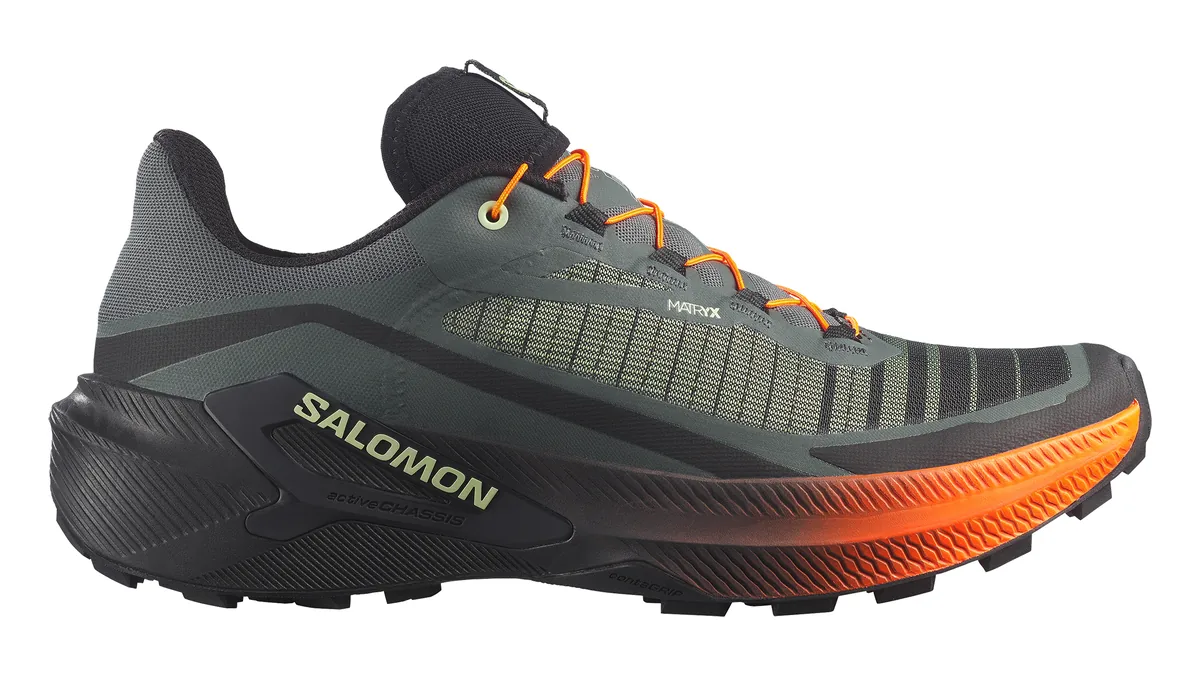
Stable, protective trail performance for rough terrain
Quick Answer: Salomon Genesis 2 Review: The Salomon Genesis 2 is a technical trail shoe for mixed, rocky and uneven terrain. Salomon combines a durable Matryx upper, revamped activeCHASSIS support, a wider midsole platform and All-Terrain contaGRIP outsole with 4 mm lugs. The ride is stable and protective rather than soft like a road shoe, but Salomon still describes the cushioning as soft and protective for trail use. A separate Genesis 2 Wide fixes one of the biggest fit concerns. It is best for technical trail running, fast hiking and long off-road outings. Check latest price.
The Salomon Genesis 2 is built for runners who spend time on mixed, rocky and technical terrain. It sits in Salomon’s versatile trail lineup rather than its pure racing range, making it a practical choice for everyday trail running, long off-road outings and fast hiking.
The appeal is not extreme cushioning or race-day speed. It is confidence on unpredictable ground. Salomon combines a wider midsole platform with its activeCHASSIS support system, durable Matryx upper and reworked 4 mm lugs to keep the shoe stable and secure when the terrain gets rough.
Version 2 focuses on stability, durability and traction. Salomon says the chassis is now fully integrated, the midsole platform is wider, the Matryx upper is lighter and more durable, and the lug geometry has been reworked for more grip.
Specs
Here are the specifications for the Salomon Genesis 2:
| Type | Technical all-terrain trail running shoe |
| Best for | Mixed, rocky and technical trails; fast hiking |
| Running feel | Stable |
| Cushioning | Soft and protective optiFOAM |
| Support | Revamped activeCHASSIS with wider midsole platform |
| Stack | 33.5 mm heel / 25.5 mm forefoot |
| Drop | 8 mm |
| Weight | Men: 10 oz |
| Upper | Matryx with endoFit internal sleeve |
| Outsole | All-Terrain contaGRIP, 4 mm lugs |
| Widths | Regular and separate Genesis 2 Wide |
| U.S. price | $150. Check latest price |
Pros
- Stable platform for mixed and technical terrain
- All-Terrain contaGRIP outsole with reworked 4 mm lugs
- Durable Matryx upper is built for abrasion resistance
- activeCHASSIS adds guidance without turning it into a traditional stability shoe
- Separate Genesis 2 Wide gives broader feet a real fit option
- $150 price is competitive for a technical trail shoe
Cons
- More structured than a soft road-running shoe
- Technical outsole is unnecessary for mostly smooth gravel or pavement
- Regular fit is still close and precise
- 10 oz weight is not especially light for runners focused on speed
What is new versus the Salomon Genesis
The biggest change is stability. Salomon says the Genesis 2 uses a newly integrated activeCHASSIS and a wider midsole platform. In plain English, the shoe gives your foot a broader, more controlled base when the ground is uneven.
Salomon also updated the Matryx upper and lug geometry. The upper is designed to be lighter, more durable and breathable, while the reworked outsole pattern is intended to improve traction on varied terrain.
The overall role stays the same: this is still a versatile technical trail shoe rather than a race-only model. The second version refines the platform instead of changing what the Genesis is for.
Who should buy the Salomon Genesis 2
Buy the Genesis 2 if your trails regularly include rock, roots, loose dirt, steep sections or off-camber ground. The stable platform, chassis and technical outsole are designed for precisely that kind of terrain.
It also makes sense if durability matters. The Matryx upper is designed to resist abrasion better than a basic mesh upper, which is useful if your routes involve scraping against rocks, roots and trail debris.
Fast hikers and trail walkers can also use it well. The stable platform and 4 mm lugs make it a good alternative to a heavier hiking shoe when you want more athletic movement and less bulk.
Who should probably skip it
Skip the Genesis 2 if most of your mileage is on smooth gravel, rail trails or pavement. The technical outsole and chassis are more shoe than you need for easy surfaces, and a simpler road-to-trail model will usually feel smoother.
If you need more room, do not automatically size up the regular Genesis 2. Salomon now sells a separate Genesis 2 Wide, which is the better starting point for broad feet. If you want a much softer, taller ride for long runnable trails, a max-cushion trail shoe may also suit you better.
Not sure which trail shoe suits your feet and terrain? Find your ideal shoe with our free Shoe Finder.
These suit those runners better:
- Hoka Speedgoat 7: much deeper cushioning with serious grip, for runners who want technical capability without the firm ride (check price | read review)
- Altra Olympus 7: a broad, foot-shaped toe box and a big stack of foam, which is the answer for wide feet and long distances (check price | read review)
- Brooks Caldera 8: deep cushioning on a wide, planted base, aimed at people who are out for hours rather than chasing a line down a mountain (check price | read review)
How does the Salomon Genesis 2 fit?
The regular Genesis 2 has Salomon’s familiar close, secure trail fit. That is useful on technical terrain because the foot should not slide around inside the shoe when you land on a slope or change direction quickly.
Fit and sizing
Start with your normal Salomon size. If you regularly need Wide shoes, use the dedicated Genesis 2 Wide instead of sizing up the regular version. For cross-brand sizing, use our shoe size converter as a starting point.
Upper and step-in comfort
The Matryx upper is designed to balance low weight, breathability and abrasion resistance. Salomon also uses an endoFit internal sleeve to wrap the foot more closely, while quickLACE provides one-pull tightening.
Step-in comfort is more performance-oriented than plush. The upper is meant to hold the foot securely rather than feel like a padded road trainer, which is appropriate for a shoe built around technical terrain.
How does the Salomon Genesis 2 perform?
The Genesis 2 makes the most sense when the trail gets uneven. Its stable platform, technical outsole and secure upper are all designed to keep the shoe controlled when the terrain changes quickly.
Cushioning and ride
Salomon lists the cushioning as soft and protective and uses optiFOAM in the midsole. With a 33.5 mm heel and 25.5 mm forefoot stack, there is enough cushioning for longer trail runs without moving into extreme max-cushion territory.
The ride still feels more structured than a soft road shoe because the activeCHASSIS and technical outsole are doing additional work. That structure is part of what gives the Genesis 2 its stable trail feel.
Ride and running performance
The Genesis 2 is built for control and adaptability more than outright speed. The wider platform and chassis help keep the shoe composed on technical ground, while the rocker geometry gives it a smoother transition than the draft suggested.
At 10 ounces in the men’s model, it is not especially light, but the weight makes more sense when you account for the protective upper, chassis and technical outsole. It is a trail tool rather than a minimalist racer.
Stability and support
Salomon describes the running feel as stable. The activeCHASSIS adds guidance and the wider platform increases the amount of shoe underfoot, but this is not a traditional medial-post stability shoe. The support is built into the platform and chassis rather than a firm wedge under the arch.
That matters on technical trails because stability often comes from keeping the shoe centered under your foot as the ground changes angle, not from trying to correct gait.
Outsole, grip and durability
The All-Terrain contaGRIP outsole is designed for wet, dry, hard and loose surfaces. Salomon uses 4 mm lugs and says the Genesis 2 has reworked lug geometry for increased traction, making it a true mixed-terrain trail shoe rather than a mud-only specialist.
The Matryx upper and generous trail outsole are built for durability, but lifespan still depends on terrain and use. Replace the shoe when the lugs lose useful traction, the cushioning feels noticeably flatter or the upper no longer holds the foot securely.
Is the Salomon Genesis 2 good for walking?
Yes. The Genesis 2 works well for trail walking and fast hiking because it combines high foot protection, a stable platform and a durable technical outsole. It is particularly useful on rocky, uneven or mixed terrain where an ordinary walking shoe may not provide enough grip.
For everyday pavement walking, choose something simpler. The Genesis 2 is optimized for off-road use, so its technical outsole and structured fit are unnecessary for city walking. For more options, see our best trail walking shoes and best trail running shoes.
Salomon Genesis 2 versus the Salomon Genesis
Feature | Genesis 2 | Genesis |
Chassis | New fully integrated activeCHASSIS | Previous chassis design |
Platform | Wider midsole platform | Previous platform |
Upper | Lighter, more durable Matryx | Previous Matryx construction |
Outsole | Reworked lug geometry | Previous lug geometry |
Current U.S. price | $150 | Varies by remaining stock |
Choose the Genesis 2 if you want Salomon’s current chassis, wider platform and updated outsole. The original Genesis may still be worth considering at a discount, but the newer shoe is the more refined technical option.
Salomon Genesis 2 alternatives
The Genesis 2 is firm, grippy, tough and moderately cushioned. These four shift one of those dials.
- Salomon Thundercross: the same brand with far deeper lugs, which is the better call if mud rather than rock is your problem (check price | read review)
- Saucony Peregrine 16: similarly grippy and low to the ground but lighter and softer, so it is easier to wear for long runnable miles (check price | read review)
- Brooks Cascadia 20: a roomier fit and a more forgiving ride for runners who like the Genesis idea but cannot get on with Salomon’s narrow shape (check price | read review)
- ASICS Trabuco Max 5: a much taller, rockered shoe for smoother trails and tired legs, at the opposite end of the ground-feel argument (check price | read review)
Price and value
Salomon currently lists the Genesis 2 at $150 in the U.S., and the Genesis 2 Wide is also $150. That is competitive for a technical trail shoe with a Matryx upper, activeCHASSIS and All-Terrain contaGRIP outsole. Check the latest price.
The value is strongest if you actually use technical trails. If most of your running is smooth and nontechnical, you will be paying for traction, structure and durability you may not need.
Final verdict
Best for: trail runners and fast hikers who want stability, traction and durability on mixed, rocky and technical terrain.
Avoid if: most of your routes are pavement or smooth gravel, or you want a very soft max-cushion trail ride.
Fit: secure and precise in the regular version; choose the dedicated Genesis 2 Wide if you need extra room.
Verdict: The Salomon Genesis 2 is a strong technical all-rounder with a stable platform, durable upper and versatile traction. Its biggest strength is confidence on rough terrain, not road-shoe softness.
Check the latest price on the Salomon Genesis 2
Frequently Asked Questions for Salomon Genesis 2
No. The Genesis 2 is Salomon’s regular technical trail model at $150, while the S/LAB Genesis 2 is a lighter, more race-focused shoe priced higher.
Yes. Salomon sells a Genesis 2 Wide in the U.S. for runners who need more room than the regular fit.
Salomon lists an 8 mm drop, with a 33.5 mm heel stack and 25.5 mm forefoot stack.
Yes. Salomon specifically positions it for mixed, rocky and technical terrain, with a revamped activeCHASSIS, 4 mm lugs and All-Terrain contaGRIP outsole.
Yes. The stable platform, durable Matryx upper and technical outsole make it a good option for fast hiking and day hikes, especially on rougher terrain.
The standard Genesis 2 is not waterproof. Salomon also lists a Genesis 2 GORE-TEX version for wetter conditions.
Salomon says the Genesis 2 adds a fully integrated activeCHASSIS, a wider midsole platform, a lighter and more durable Matryx upper and reworked lug geometry for more traction.