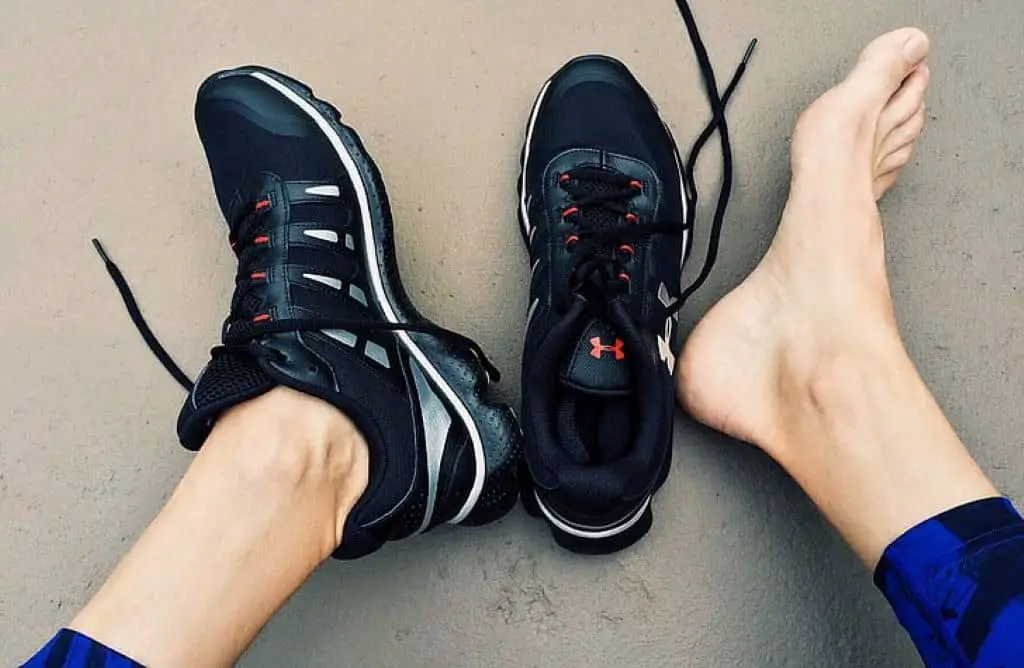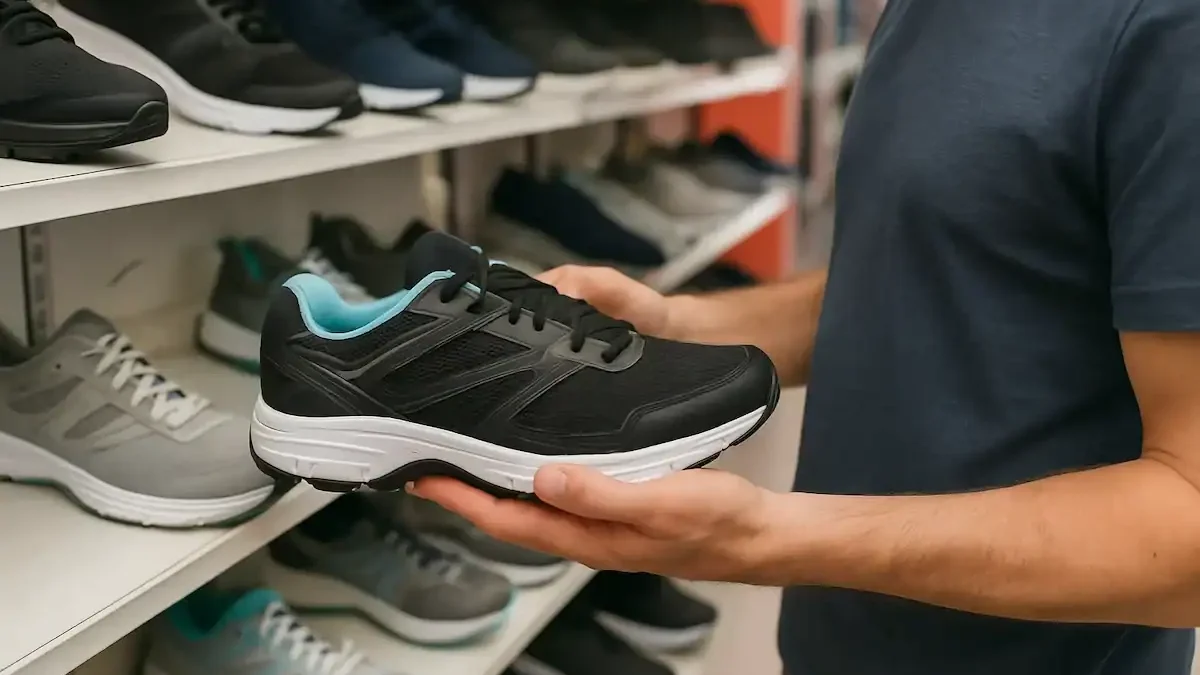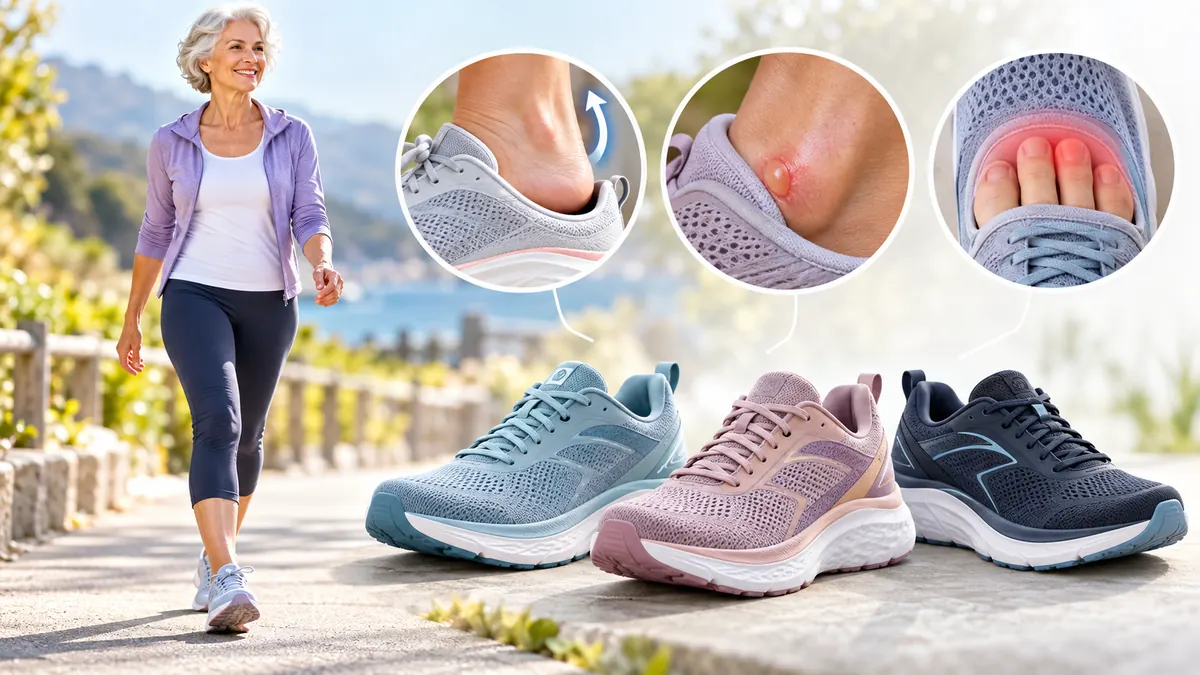
| Quick Answer: To avoid blisters, heel slipping, and toe pressure, look for a shoe that holds your heel securely without squeezing it, leaves enough length and width for your toes to move, and matches the shape of your forefoot. Blisters often come from rubbing or excess movement, heel slip usually means the rear fit is too loose or the lacing needs adjustment, and toe pressure often means the shoe is too short, too narrow, or too tapered. Fit and width matter more here than brand name. |
Blisters, heel slipping, and pressure on your toes usually point to a fit problem more than a cushioning problem. The shoe may be too long, too short, too narrow, too wide at the heel, or simply the wrong shape for your foot.
Start With the Symptom
Different fit problems leave different clues. A blister on the heel often means the heel is moving too much. Pressure on the little toe can mean the forefoot is too narrow. Soreness at the ends of the toes may mean the shoe is too short or your foot is sliding forward.
Problem | What may be happening | What to try |
|---|---|---|
Heel blisters | Heel movement or rubbing | More secure heel fit, different lacing, better socks |
Heel slipping | Shoe is loose at the rear or too large overall | Heel-lock lacing or a shoe with a narrower heel |
Toe pressure | Too short, too narrow, or too tapered | More length, width, or a wider toe box |
Forefoot blisters | Sliding, moisture, seams, or width mismatch | Better fit, moisture control, different upper shape |
How Much Room Should You Have in the Toe Box?
Your toes should not be pressed tightly together or touch the end of the shoe when you walk or run. A shoe can be technically the correct size and still be the wrong shape if the toe box tapers too aggressively for your foot.
If your toes feel crowded, compare our Do I Need Wide Shoes or Just a Wide Toe Box? guide. If you already know you want more forefoot room, see our best wide toe box shoes.
What Causes Heel Slipping?
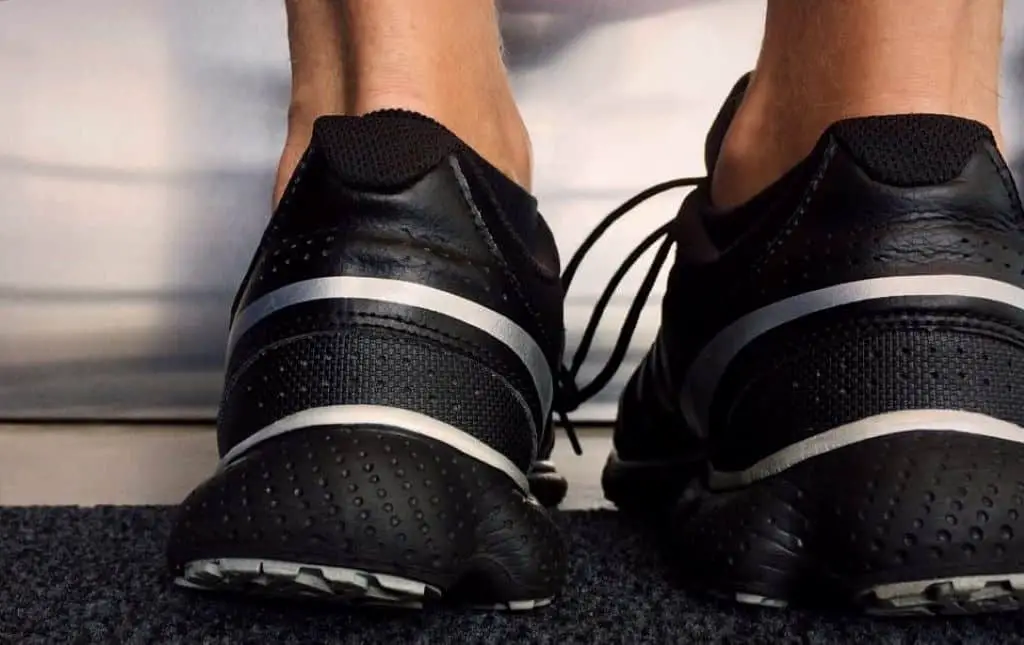
A small amount of heel movement can happen in some shoes, but repeated lifting and rubbing can lead to blisters. The shoe may be too large, the heel counter may be too wide for your foot, or the lacing may not be holding your foot securely enough.
Before changing sizes, try adjusting the lacing. A runner’s loop or heel-lock pattern can help pull the heel back without overtightening the forefoot. If the rest of the shoe already feels loose, though, a smaller size or a different shape may be the better answer.
Why Do Shoes Cause Blisters?
Blisters form when friction repeatedly irritates the skin. In shoes, that friction can come from movement inside the shoe, pressure from a seam or stiff upper, damp socks, or a fit that changes after your feet swell during a long day.
The fix is not always a softer shoe. A more secure fit can reduce rubbing, while a wider or differently shaped upper can remove pressure. Moisture-wicking socks can also help when sweat is part of the problem.
Do You Need a Wide Shoe?
Not everyone who feels toe pressure needs a full wide size. Some people have a normal-width heel but a broad forefoot, so a shoe with a naturally roomy toe box may fit better than simply moving from standard width to wide.
That distinction matters because going too wide can create heel movement even while solving pressure at the toes. Our wide-shoe guide explains how to tell the difference.
Check Brand and Model Fit Before Ordering
Shoe sizing is not perfectly consistent from one brand or model to another. A size that works in one shoe may feel shorter, narrower, or looser in another. Before ordering online, compare the manufacturer’s size chart and read fit notes for the specific model.
Our shoe brand sizing and fit guide can help, and the Shoe Size Calculators and Fit Tools page gives you additional ways to check length and sizing before you buy.
A Better Fit Checklist
- Your heel feels secure without being pinched.
- Your toes can move without pressing into the front or sides.
- The widest part of your foot lines up with the widest part of the shoe.
- The shoe does not crease sharply into your toes when you walk.
- Your foot does not slide forward or sideways.
- The fit still feels comfortable after your feet have warmed up and swollen slightly.
If You Are Still Unsure
Use the free Shoe Fit & Gait Calculator to narrow your options by foot shape, width, gait, and use. You can also browse the Common Shoe Questions hub for related answers about support, sizing, pain, work shoes, boots, and buying decisions.