A brilliant wet-weather trainer that runs hot and heavy
Quick Answer: Adidas Adizero EVO SL ATR Review: The Adidas Adizero EVO SL ATR is a winter and wet-weather version of the popular EVO SL daily trainer. It keeps the same bouncy Lightstrike Pro foam, then adds a water-repellent upper and grippier Continental rubber, which makes it one of the most confidence-inspiring shoes you can run in on cold, slick roads and gravel paths. The trade is real: it is heavier than the original and it barely breathes, so it is a poor summer shoe. Check latest price
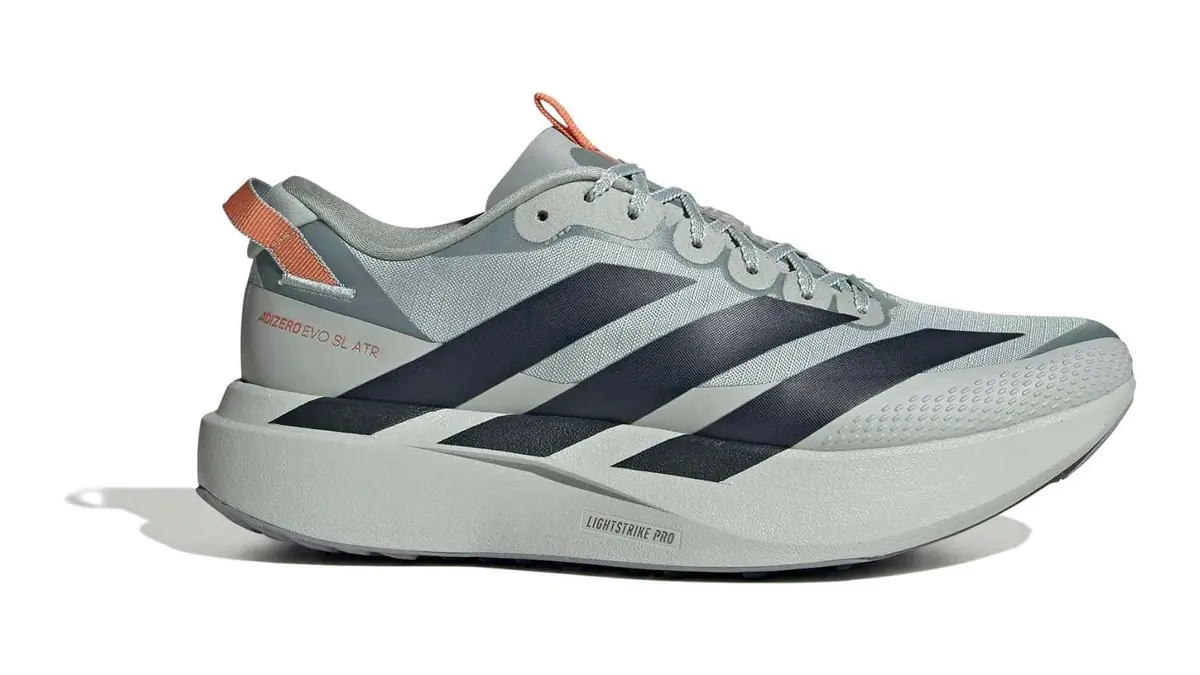
The Adidas Adizero EVO SL ATR is a weatherproofed spin-off of the Adizero EVO SL, which has been one of the most popular everyday running shoes of the last two years because it offered racing-shoe foam at a sensible price. ATR stands for all-terrain, and that is a slightly generous label. What Adidas really built here is a winter shoe: same foam, same shape, but with an upper that sheds water and an outsole that holds on when the ground is wet or loose.
It went on sale in early December 2025 and reached wider US availability in the first months of 2026, priced at $160. That is $10 more than the standard EVO SL. In the Adizero range it sits alongside the original rather than above it: the EVO SL is the year-round trainer, the EVO SL ATR is the pair you reach for from November through March, and the Adizero Adios Pro and EVO Pro racers sit well above both.
It is a neutral shoe, meaning it has nothing built in to change how your foot rolls. It suits runners with a fairly typical stride who want one dependable shoe for cold, wet, dark months, and who are happy to run everything from easy miles to a brisk tempo in it. Despite the name, it is not a trail shoe. The lugs, the raised knobs on the sole that bite into soft ground, are only 1.5 mm deep. That is enough for a gravel path or a firm dirt trail and not nearly enough for mud.

Specs
Here are the specifications for the Adidas Adizero EVO SL ATR:
| Type | Road daily trainer built for winter, wet weather and light gravel |
| Gait type | Neutral, so it offers no built-in correction for the way your foot rolls |
| Midsole | Full-length Lightstrike Pro, the light, springy foam Adidas uses in its racing shoes. There is also a small plastic shank in the midfoot, a stiffening strip that steadies the middle of the shoe |
| Stack height | 39 mm at the heel and 33 mm at the forefoot, which is the amount of shoe between your foot and the ground. That is a generous amount of cushioning. Independent lab measurement matched the heel figure closely, at 39.2 mm |
| Heel-to-toe drop | 6 mm per Adidas, so your heel sits only slightly higher than your toes. Lab measurement put it a little higher, at about 8.1 mm |
| Weight | Adidas lists about 10.1 oz (287 g) in a men’s US 9. Independent weighing came in lighter, at about 9.3 oz (264 g) |
| Upper | Water-repellent woven ripstop, a tightly woven fabric with a grid pattern that resists tearing, with a semi-gusseted tongue partly stitched to the sides |
| Outsole | Continental rubber with 1.5 mm multi-directional lugs |
| Widths | Regular and wide |
| Sizing | True to size, with an average-width toe box |
| Released | Dec. 4, 2025, with broader US availability in early 2026 |
| Price | Launched at $160 in December 2025, $10 above the standard EVO SL. Check latest price |
Pros
These are the things the EVO SL ATR does well:
- The Lightstrike Pro foam is genuinely excellent: soft enough to protect your legs on easy miles and springy enough that faster running feels rewarding rather than like hard work.
- Grip on wet pavement, damp leaves, puddles and loose gravel is a clear step up from the standard EVO SL, which is exactly the point of the shoe.
- The water-repellent upper keeps out drizzle and road spray, so your feet stay warmer and drier on winter runs.
- It handles a wide range of paces well, which means one shoe can cover most of your winter week.
- It comes in a wide as well as a regular, and the insole lifts out for custom orthotics.
Cons
These are the drawbacks worth knowing about:
- It is noticeably heavier than the standard EVO SL, and you feel it on faster efforts.
- Ventilation is close to nonexistent. That is the price of a water-resistant upper, and it makes the shoe uncomfortable above about 60 degrees.
- The shoe is significantly stiffer than the original, so it does not bend with your foot the way the EVO SL does.
- Heel hold is only adequate. Runners who land heavily on the heel may want a firmer-gripping shoe.
- There are no reflective details, which is a strange omission on a shoe designed for dark winter mornings.
What is new about the Adidas Adizero EVO SL ATR
Adidas left the best part alone. The midsole is the same full-length slab of Lightstrike Pro at the same 39 mm and 33 mm, with the same 6 mm drop, so the basic feeling of the shoe is unchanged. Everything that touches the weather is different. The airy engineered mesh of the EVO SL becomes a water-repellent woven ripstop. The thin Continental road rubber becomes a thicker Continental sheet with 1.5 mm multi-directional lugs. The tongue, which was the weakest part of the original, is now semi-gusseted, meaning it is partly sewn to the sides so it cannot slide sideways under the laces.
The costs of all that are honest and predictable. The standard EVO SL weighs about 7.9 oz. This one is listed at 10.1 oz by Adidas and weighed at about 9.3 oz independently, so call it somewhere between one and two ounces heavier. The thicker outsole and the denser upper also make the shoe stiffer, so it flexes less at the toes and relies more on its curved sole shape to roll you forward. And the sealed upper that keeps water out keeps heat in. None of this is a design mistake. It is simply the shoe doing a different job than the original.
Who should buy the Adidas Adizero EVO SL ATR
Buy it if you run through winter and you have ever slid on a wet manhole cover or a slick painted road line. That is what this shoe fixes. The combination of Continental rubber and shallow lugs makes ordinary bad-weather running feel unremarkable again, and that confidence is worth more to most runners than an ounce of weight. Add the water-shedding upper and you have a shoe that keeps your feet noticeably warmer in the cold and wet.
It also suits anyone who wants one shoe to do everything from a Tuesday recovery jog to a Saturday tempo. The foam is good enough for both, which is the trick the EVO SL pulled off and this shoe inherits. If your running takes in canal paths, gravel greenways, packed-dirt park loops and pavement in the same hour, this handles all of it without the clumsiness of a real trail shoe on the road sections. And at $160 for racing-grade foam in a weatherproof build, it is reasonable value in a market where $180 is now normal.
Who should probably skip the Adidas Adizero EVO SL ATR
Skip it if you run in a warm climate or mostly in summer. The upper barely breathes, and a hot foot in a sealed shoe is miserable and blister-prone. Skip it too if “all-terrain” made you think trail shoe. With 1.5 mm lugs it manages gravel and firm dirt and nothing more challenging, so it will let you down on mud, wet grass or anything technical. And if you are chasing a race time, the extra weight and stiffness mean the plain EVO SL or a proper racer will serve you better.
If any of that is you, these three are better suited:
- Saucony Peregrine 16: a genuine trail shoe with a full Vibram outsole and real lugs, for the off-road running this one cannot do (check price | read review)
- Hoka Mach 7: light, airy and flexible, which is everything this shoe is not, and the sensible choice for hot-weather daily miles (check price | read review)
- Brooks Cascadia 20: protection and a stable platform for rocky, rough ground, if your winter running happens on real trails rather than wet roads (check price | read review)
How does the Adidas Adizero EVO SL ATR fit?
The EVO SL ATR fits true to size with an average-width toe box, so most people can order their usual number with confidence. The woven upper is less stretchy than the mesh on the standard EVO SL, so the fit feels a little more defined and a little less forgiving. Nothing about it is tight, but it does hold its shape rather than molding around your foot.
Fit and sizing
Order your normal size. Width through the forefoot measures as average, which will suit the majority of runners, and Adidas offers a wide fitting for anyone whose feet spread out. One practical winter note: if you plan to wear thicker socks in the cold, the firmer woven upper has less give than mesh, so try the shoe with the socks you will actually run in. The insole lifts out, so custom orthotics fit without a fight, though it is on the thin side at about 3 mm and a thicker insert will take up room. Heel hold is the one weak spot in the fit. The heel counter, the stiffener that cups your heel, is only moderately firm, so if you get heel slip in other shoes you may want to use the extra lace hole at the top.
Upper and step-in comfort
Step-in comfort is good. The shoe feels substantial rather than plush, with light padding at the collar and a tongue that finally stays where it is put, which was a common complaint about the original EVO SL. The laces are a genuine upgrade too: they are textured and they hold a knot, which sounds trivial until you have retied a shoe three times in the rain. The ripstop fabric does its main job well, shrugging off drizzle and road spray so your socks stay dry on a wet run. It is water-repellent rather than waterproof, so a deep puddle still soaks you, but it dries fast afterward. The honest downside is heat. This is one of the least ventilated running shoes on the market, and it is a shoe to put away when the weather turns warm.
How does the Adidas Adizero EVO SL ATR perform?
The ride is the EVO SL’s ride with a bit more mass behind it. It is bouncy, comfortable and happy at almost any speed, and the extra rubber underneath means you can use that bounce on surfaces where the original would have been nervous. It is a shoe that makes cold, gray, wet running feel less like a chore.
Cushioning and ride
The midsole is the foam layer between your foot and the outsole, and here it is a single full-length piece of Lightstrike Pro. This is the foam Adidas puts in its marathon racers, made from a light, resilient plastic that squashes easily and springs back fast rather than staying flattened. Having a whole shoe made of it, at a daily-trainer price, is the reason the EVO SL became so popular in the first place.
In practice it means high shock absorption and high energy return at the same time, which is a combination that used to require a $250 shoe. Landings feel cushioned without feeling mushy, and push-off feels lively. The softness sits in the middle of the range rather than at the pillowy end, so the shoe stays controlled underfoot. One useful winter detail: the foam stiffens only slightly in the cold, so a January run feels much like an October one, which is not true of every foam.
Ride and running performance
There is a mild rocker here, which is the term for a sole that curves up at the toe so the shoe rolls you forward rather than making your foot bend. Combined with the small plastic shank under the midfoot, it gives the shoe a smooth, steady sense of moving through each step. Easy runs feel easy. Tempo efforts work well too, though this is a shoe that likes a steady rhythm more than sharp changes of pace.
The weight is what separates it from the original. Somewhere between one and two extra ounces per shoe does not sound like much, and on an easy run you will not notice. At faster paces, or in the last miles of a long run, you will. It is also stiffer, so it does less to help a runner who likes to feel the shoe flex under the ball of the foot. We rate it as an excellent everyday winter trainer and a reasonable tempo shoe, and we would not race in it.
Stability and support
This is a neutral shoe. There is no firmer wedge on the inside edge and no support frame, and no shoe should be expected to correct a gait. What it does have is slightly better everyday steadiness than the standard EVO SL, mainly because the stiffer build resists twisting and the midfoot shank stops the shoe folding in the middle. On a wet, cambered road that is a real advantage.
The limitation is at the back. Heel hold is only adequate, and with a lot of soft foam under a moderately firm heel counter, heavy heel strikers may feel a little loose there. Mild overpronators, meaning people whose ankles roll inward more than average, generally get on fine with neutral shoes this wide underfoot, but anyone who has been advised to run in a stability shoe should look at one instead. If foot, knee or ankle pain keeps returning, a physical therapist or podiatrist is a better guide than any shoe review.
Outsole, grip and durability
The outsole is the rubber that meets the ground, and this is the biggest practical upgrade over the standard shoe. Adidas uses Continental rubber, developed with the tire company, and it is one of the better compounds for wet pavement. Here it covers more of the sole than on the road version and carries 1.5 mm multi-directional lugs. That shallow tread does two things: it cuts through the film of water on wet asphalt, and it gives you something to grip with on gravel, packed dirt and wet leaves. On the road you do not notice the lugs at all, which is exactly right.
What it will not do is handle mud, soft ground or snow of any depth. Those need lugs several times deeper. Durability should be strong, because Continental rubber wears slowly and there is plenty of it here. The usual guidance that a running shoe lasts roughly 300 to 500 miles is a broad rule rather than a promise, and with this much rubber the foam will likely give out before the tread does.
Is the Adidas Adizero EVO SL ATR good for walking?
It is a good winter walker and an average one the rest of the year. The cushioning is generous, the mild rocker helps you roll through each step rather than fighting the stiff sole, and the grip is reassuring on wet sidewalks and icy-looking crosswalks, which is where most people actually slip. The sealed upper keeps your feet dry walking to work in the rain and warm in the cold, and that alone makes it a sensible winter commuting shoe. The catches are heat and weight. On a mild day your feet will sweat, and for standing all day or for long walks on hard floors there are lighter, more breathable shoes with softer heels. Think of it as a foul-weather walking shoe rather than an everyday one.
See more best walking shoes.
Adidas Adizero EVO SL ATR vs Adizero EVO SL
Almost everyone deciding on this shoe is really deciding between it and the original, so here is the comparison:
Adizero EVO SL ATR | Adizero EVO SL | |
Launch price | $160, December 2025 | $150 |
Stack height | 39 mm heel, 33 mm forefoot | 39 mm heel, 33 mm forefoot |
Drop | 6 mm | 6 mm |
Weight, men’s 9 | About 9.3 to 10.1 oz depending on source | About 7.9 oz |
Upper | Water-repellent woven ripstop, semi-gusseted tongue | Light engineered mesh |
Outsole | Continental with 1.5 mm lugs | Thin Continental road rubber |
Best for | Winter, rain, gravel paths | Year-round road miles, faster running |
Buy the ATR when you run through a real winter, when your routes include wet or loose surfaces, or when keeping your feet dry matters more to you than saving weight. Buy the standard EVO SL when you live somewhere warm, when most of your running is dry pavement, or when you want the lightest, most flexible version of this ride for $10 less. A lot of runners will happily own both and rotate them by season, which appears to be exactly what Adidas intended.
Adidas Adizero EVO SL ATR Alternatives
A few shoes answer the specific compromises this one makes.
- Adidas Adizero EVO SL: the original is lighter, more flexible, far cooler in warm weather and $10 cheaper, and it is the right pick if you rarely run in bad conditions (check price)
- Saucony Endorphin Azura: a softer super trainer with no plate or shank at all, which suits runners who found the ATR too stiff underfoot and want more give (check price | read review)
- Mizuno Wave Rider 30: taller and softer, and a much better shoe for walking and standing as well as running, if one pair has to cover everything (check price | read review)
- Hoka Challenger 8: a true road-to-trail hybrid with deeper lugs, worth it if the ATR’s shallow tread is not quite enough for the paths you actually run (check price | read review)
Climate decides most of this. Warm and dry points back to the standard EVO SL. Soft underfoot points to the Azura. Genuinely off-road points to the Challenger.

Price and value
At $160 this is one of the better deals in running right now, and the reason is the foam. A full-length Lightstrike Pro midsole is the same material Adidas puts in racing shoes that cost $250 and up, and getting it in a weatherproof daily trainer for $160 is unusual. Add the Continental outsole, which will outlast the foam, and the running cost per mile is low. What you are paying the extra $10 over the standard EVO SL for is the upper and the rubber, and in a wet climate that is money well spent.

Final verdict
Best for: neutral runners who train through cold, wet, dark months, anyone who has slipped on a wet road and wants that to stop, and runners who want racing foam without a racing price.
Avoid if: you run in heat, you expected a real trail shoe, or you are shopping on weight for race day.
Fit: true to size with an average-width toe box, in regular and wide. Try it with your winter socks, and use the extra lace hole if your heel slips.
Verdict: we rate the Adidas Adizero EVO SL ATR as one of the best winter running shoes available, and the clever thing about it is how little Adidas changed. The ride that made the EVO SL a favorite is intact, and the additions solve the two problems that ride had in bad weather: wet feet and uncertain grip. Accept that it is heavier, stiffer and hot, treat it as a seasonal shoe rather than a year-round one, and it is very hard to fault for the money.
Check the latest price on the Adidas Adizero EVO SL ATR
Frequently Asked Questions for Adidas Adizero EVO SL ATR
Not really. ATR stands for all-terrain, but the lugs are only 1.5 mm deep. It handles gravel paths and firm dirt well and is out of its depth on mud, wet grass or technical trails.
It is water-repellent rather than waterproof. The woven ripstop upper sheds drizzle and road spray, so your socks stay dry in ordinary rain, but stepping into a deep puddle will still soak your foot.
Yes, it is true to size with an average-width toe box. It also comes in a wide. Because the woven upper stretches less than mesh, try it on with the thicker socks you plan to wear in winter.
If you run through wet or cold weather, yes. The upgraded upper and the grippier, thicker Continental outsole are worth far more than $10 in practice. If you run mostly in warm, dry conditions, the standard version is the better buy.
It handles a light dusting on pavement and the water-resistant upper helps keep your feet dry. Anything deeper, or packed ice, needs a shoe with much deeper lugs or metal studs. Shallow 1.5 mm lugs cannot bite into snow.
No. There is a small plastic shank under the midfoot that stiffens the middle of the shoe, but no full-length carbon plate. The propulsion you feel comes from the Lightstrike Pro foam and the curved sole shape.
Yes. The insole lifts out easily. It is thin at about 3 mm, so a thicker custom insert will raise your foot and make the shoe feel snugger, in which case the wide fitting is worth considering.