Genuine racing speed with terrain limits
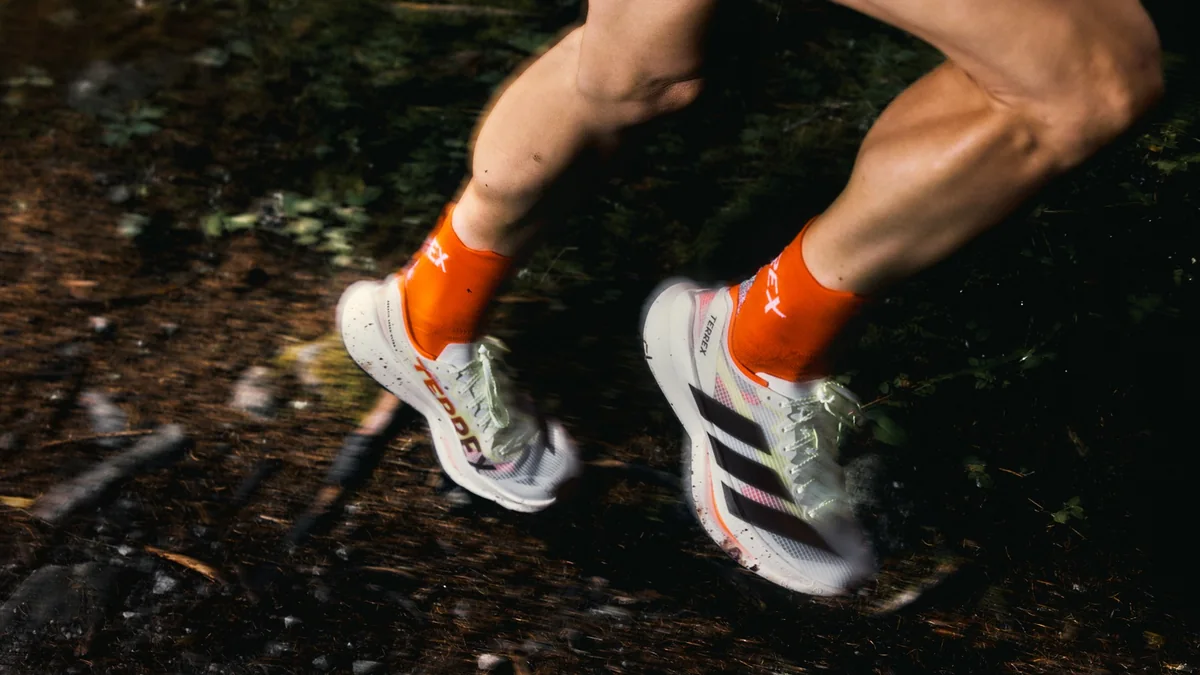
Quick Answer: The Adidas Terrex Agravic Speed Ultra 2 is a premium trail racing shoe built for long, fast efforts on runnable terrain. Adidas pairs Lightstrike Pro cushioning with Energy Rods, an 8 mm drop and a Continental rubber outsole with 3 mm and 4 mm lugs. Adidas lists the men’s weight at about 269 g and the current price at $225. It suits neutral runners who want a fast ultra-distance trail shoe for hardpack, gravel and mixed trail. The tradeoffs are price, a race-focused fit and less bite than a deeper-lug shoe in soft mud.
The Adidas Terrex Agravic Speed Ultra 2 is Adidas’s premium trail racing shoe for long, fast efforts on runnable terrain. It brings road-racing ideas such as Lightstrike Pro foam and Energy Rods into a trail package with Continental rubber and mixed-depth lugs.
It makes the most sense on hardpack, gravel, rolling singletrack and mixed trail where you can maintain momentum. For a broader comparison, see our best trail running shoes guide and our best running shoes hub.
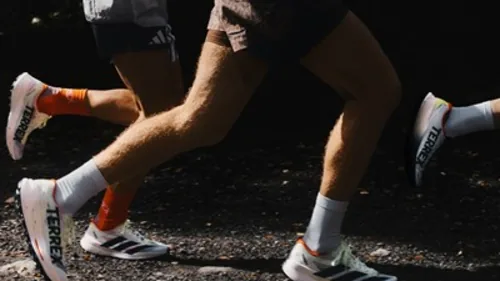
The midsole uses Lightstrike Pro, Adidas’s premium racing foam, paired with Energy Rods that add structure through the stride. The combination is designed to deliver a responsive trail-racing feel without turning the shoe into a rigid platform.
Forward motion comes from a mix of rocker geometry, responsive foam and Energy Rods. The rocker helps the shoe roll through the stride, while the rods add structure without behaving like one solid carbon plate.
Specs
Here are the specifications for the Adidas Terrex Agravic Speed Ultra 2:
| Type | Trail racing shoe, neutral, ultra distance |
| Best for | Ultra trail racing, fast long runs on runnable terrain, mixed dirt and gravel |
| Midsole | Lightstrike Pro racing foam |
| Propulsion | Energy Rods plus rocker geometry |
| Stack height | 43 mm heel / 35 mm forefoot, according to Adidas |
| Heel-to-toe drop | 8 mm, according to Adidas |
| Weight | About 269 g in the men’s version, according to Adidas |
| Upper | Updated lightweight racing mesh |
| Outsole | Continental rubber with mixed 3 mm and 4 mm lugs |
| Fit | Adidas lists the fit as true to size; standard-width racing fit |
| Price | Adidas currently lists the shoe at $225. Check latest price |
Pros
These are the reasons competitive trail runners buy it:
- Lightstrike Pro gives the shoe a responsive, race-focused feel over long distances
- Energy Rods and rocker geometry create a propulsive feel without using one solid plate
- Continental rubber is one of the best compounds for wet rock and hard ground
- Mixed 3 mm and 4 mm lugs keep the shoe versatile on hardpack, gravel and mixed trail
- Relatively light for a high-stack ultra racer at about 269 g
- High-stack cushioning is built for long-distance racing rather than short technical efforts
Cons
These are the reasons it will not suit most trail runners:
- Very expensive at $225, especially if you do not actually race
- The 3 mm/4 mm lug mix is versatile, but deeper soft-ground shoes still bite better in heavy mud
- The high 43 mm heel stack will feel excessive to runners who prefer low, precise trail shoes
- Race-focused fit with no obvious wide option
- The tall, race-focused platform feels less precise than a lower, firmer trail shoe on technical terrain
What is new versus the first Agravic Speed Ultra
The second generation refines the racing package rather than changing its purpose. Adidas keeps Lightstrike Pro and Energy Rods but adjusts the overall platform, geometry and upper to make the shoe more race-ready over long distances.
Adidas also updated the upper and lists the men’s weight at about 269 g. The result is still a light shoe relative to its 43 mm heel stack and ultra-distance cushioning.
Continental rubber, rocker geometry and the Energy Rod concept remain central to the shoe. The update is best understood as a refinement of a fast, high-stack trail racer rather than a complete redesign.
Who should buy the Agravic Speed Ultra 2
Buy the Agravic Speed Ultra 2 if you race ultras on runnable terrain and you are quick enough to make racing foam worth carrying. Smooth singletrack, fire roads, gravel and rolling dirt are where the rocker and the Lightstrike Pro pay off, and over many hours that return compounds.
It suits runners who want propulsion without one solid carbon plate. Adidas uses separate Energy Rods plus rocker geometry, which gives the platform structure while preserving more trail adaptability than a single rigid plate.
Anyone racing on hard-packed or rocky ground should note the Continental outsole. The mixed 3 mm and 4 mm lugs are aggressive enough for ordinary trail conditions without feeling excessively deep on gravel or short road connectors.
Who should avoid the Agravic Speed Ultra 2
Avoid it if your terrain is dominated by deep mud, boggy grass or very loose descents. The mixed 3 mm and 4 mm lugs are versatile, but a dedicated soft-ground shoe with deeper, more widely spaced lugs will bite better when the surface itself is moving.
Avoid it if you are not racing or doing key fast long runs. At $225, this is a specialized shoe, and most runners will get better value from a durable daily trail model for routine mileage.
Runners on genuinely technical ground should also compare lower and firmer alternatives. A 43 mm heel stack prioritizes cushioning and momentum over a close-to-ground feel, and there are no stability features for runners who need guidance.
How does the Agravic Speed Ultra 2 fit?
Fit and sizing
Adidas lists the Agravic Speed Ultra 2 as true to size. The fit is still race-focused, with a secure midfoot and heel designed to limit movement during fast trail running.
There is no obvious wide option, so runners with broad or high-volume feet should try it before committing. For ultra distances, make sure you have enough forefoot room for normal foot swelling rather than automatically sizing up.
Upper and step-in comfort
The upper is a light racing mesh, updated for this version, with minimal padding and a focus on holding the foot rather than cushioning it. Step-in comfort is unremarkable in the way racing uppers usually are.
Breathability is good, which matters over long summer races, and the upper drains and dries reasonably after a stream crossing. It offers less protection from rock strikes and scrub than a heavier trail upper would.
How does the Agravic Speed Ultra 2 perform?
Midsole and cushioning
Lightstrike Pro is Adidas’s premium racing foam, used here to keep the shoe light and responsive despite its high stack. Energy Rods add structure through the platform so the ride feels more controlled at faster paces.
The high-stack Lightstrike Pro platform is clearly aimed at long-distance protection. The tradeoff is precision: runners who prefer a low, firm trail shoe will feel farther from the ground here.
Ride and racing performance
On runnable trail, the shoe is built to maintain momentum. The rocker helps the stride roll forward, while Lightstrike Pro and Energy Rods add a more structured, responsive feel than you get from a conventional daily trail shoe.
On slow technical ground it is less convincing. A 43 mm heel stack gives you less ground feel than a lower trail shoe, and the mixed-depth lugs are designed more for versatile racing than for deep mud or very loose terrain. It rewards a runner who can keep moving.
Stability and support
This is a neutral shoe with no corrective support features. Stability comes mainly from the platform shape, secure upper and Energy Rod structure. With a 43 mm heel stack, it is not the low, planted choice for runners who prioritize ground feel.
Runners who need genuine support should not choose a racing shoe for that purpose. The Agravic Speed Ultra 2 is built for neutral runners, and persistent pain deserves a professional assessment rather than a footwear decision.
Outsole, grip and durability
Continental rubber is a major strength of the outsole. Adidas uses mixed 3 mm and 4 mm lugs, giving the shoe enough bite for ordinary trail conditions without making road connectors and gravel sections feel overly aggressive.
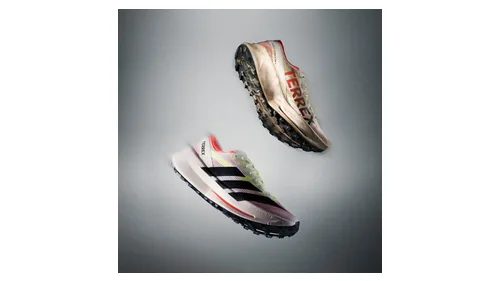
Durability is harder to generalize. The Continental outsole should protect the high-wear areas well, but this is still a lightweight racing shoe rather than a high-mileage daily trainer. Actual lifespan will depend on terrain, pace, runner weight and how often you use it outside racing.
Is the Agravic Speed Ultra 2 good for walking?
It is walkable during steep hiking sections of an ultra, but that does not make it a walking shoe. The rocker, high stack and Energy Rod structure are designed around efficient running rather than everyday walking comfort.
As a deliberate walking or hiking shoe, it makes little sense at $225. A regular trail shoe will usually be cheaper, more durable and easier to live with for day hikes or trail walking. If you are unsure what category suits you, use our free shoe finder.
Agravic Speed Ultra 2 vs. the first Agravic Speed Ultra
Here is how the two versions compare:
| Agravic Speed Ultra 2 | Agravic Speed Ultra | |
| Midsole | Lightstrike Pro with Energy Rods | Earlier Lightstrike Pro / Energy Rod setup |
| Geometry | Refined high-stack rocker | Earlier geometry |
| Weight | About 269 g, according to Adidas | Previous-generation weight varies by size/source |
| Upper | Updated racing mesh | Previous construction |
| Outsole | Continental, mixed 3 mm/4 mm lugs | Continental |
Buy the 2 if you want the current Adidas ultra-racing platform with updated geometry, upper and outsole details. The original can still make sense at a meaningful discount if you already know you like its ride.
Adidas Terrex Agravic Speed Ultra 2 Alternatives
Runners who want a different plated trail-racing feel should compare the Hoka Tecton X 3. Its twin carbon plates with winglets create a different underfoot structure and a more obviously plated ride (check price).
Where soft-ground grip is the problem, the Hoka Speedgoat 6 offers 5 mm Vibram Megagrip lugs and a more aggressive tread for mud and loose terrain. It is heavier and less race-focused (check price | read review).
Runners who want precision on technical terrain instead of speed on runnable ground should look at the Saucony Peregrine 16, which uses a lower, more traditional trail platform and costs much less (check price).
For routine training miles, the Brooks Cascadia 20 is a more traditional, durable trail option built for regular use (check price).
Price and value
Adidas currently lists the Agravic Speed Ultra 2 at $225, firmly in premium trail-racing territory. The money buys Lightstrike Pro foam, Energy Rods, a high-stack rocker and Continental rubber in a package aimed at long-distance speed.
The value case depends almost entirely on whether you race. Competitive runners targeting long events on runnable terrain have a clear reason to consider it. For routine trail mileage, a less expensive daily trail shoe will usually make more sense.
Final verdict
Best for: ultra trail racing on runnable terrain, fast long runs on dirt and gravel, for competitive neutral runners.
Avoid if: your terrain is muddy or technical, you are not racing, you have wide feet or you want a shoe you can train in.
Fit: Adidas says true to size; race-focused shape with no obvious wide option.
Verdict: The Agravic Speed Ultra 2 is a premium ultra-distance trail racer for runners who can make use of its Lightstrike Pro foam, Energy Rods and high-stack rocker. It is expensive and specialized, but the combination of speed, cushioning and Continental grip is compelling on runnable terrain. You can check size availability before ordering.
See more of the brand in our best Adidas running shoes guide, and compare other speed-focused options in our best racing shoes roundup.
Frequently Asked Questions for Adidas Terrex Agravic Speed Ultra 2
Adidas lists the shoe as true to size. It still has a race-focused fit, so runners with broad or high-volume feet should try it on if possible and make sure they have enough forefoot room for long-race swelling.
Adidas lists the shoe at 43 mm in the heel and 35 mm in the forefoot, for an 8 mm drop. Those are the most useful figures for comparing it with other current trail racers.
It does not use one solid carbon plate. Adidas uses Energy Rods inside the platform, paired with Lightstrike Pro foam and rocker geometry to add structure and propulsion.
Adidas uses a mix of 3 mm and 4 mm lugs. That is enough for hardpack, gravel, dry singletrack and mixed trail, but dedicated soft-ground shoes with deeper lugs will still grip better in heavy mud.
There is no reliable universal mileage figure. The Continental outsole protects the high-wear areas, but the shoe is still built as a lightweight racer. Lifespan will vary with terrain, pace, body weight and how much you use it for training.
Usually not. At $225, the Agravic Speed Ultra 2 makes the most sense for runners who race or do key long, fast trail sessions. A daily trail shoe is better value for routine mileage.
It is fine for the hiking sections of an ultra, but it is poor value as a dedicated walking shoe. The high-stack rocker and Energy Rod structure are designed for trail racing, while a regular trail shoe will usually be cheaper and more durable for walking.