Last Updated on October 1, 2026
Quick Answer: Altra running shoes are best known for roomy forefeet and low- or zero-drop geometry, but the models serve very different purposes. Torin is the everyday road starting point, Olympus handles max-cushion trail use and Experience Flow offers a small heel-to-toe drop for runners who do not want full zero drop. Compare fit and geometry before switching.
If you’ve been curious about Altra running shoes, you’re probably already hearing the same buzzwords: foot-shaped toe box, low-drop geometry, and a feel that rewards natural movement. What’s tricky is that “Altra running shoes” is a big universe now—daily trainers, stability options, road-to-trail hybrids, and true mountain-ready trail tanks. This comparison breaks down the newest versions in the lineup so you can quickly spot what fits your body, terrain, and training goals. Below you’ll find a summary table first, then deeper reviews, and finally a practical buyer’s guide focused on how to choose between these models.
Need help choosing? Use our free Shoe Finder to narrow options by activity, fit, cushioning and support.
Altra Running Shoes Comparison Summary Table
Shoe model | Gender | Best for | Topic features | Price |
|---|---|---|---|---|
Plush daily road miles | FootShape toe box, balanced cushioning, smooth rocker | |||
Max-cushion stability | Guidance support, high stack comfort, roomy forefoot | |||
Fast daily training + gym | Responsive feel, flexible ride, natural toe splay | |||
Versatile trail running | Grippy outsole, trail protection, confident footing | |||
Long trail days | Roomy toe shape, 30 mm cushioning, Vibram Megagrip | |||
Max-cushion trail comfort | Big cushioning, premium traction, ultra-distance friendly | |||
Road-to-trail mix | Hybrid outsole, stable platform, everyday versatility | |||
Smooth, easy road runs | Slight drop, rocker geometry, efficient turnover | |||
Premium cushioned cruising | Forward rocker, soft feel, stable landings | |||
Maximum road cushioning | High stack comfort, easy transitions, long-run protection |
In-depth Reviews for Altra Running Shoes
Choosing between Altra running shoes comes down to how much cushioning, support, and traction you want—and where you’ll run most. Use these reviews to match the ride feel to your routes and your body.
Altra Torin 9
Best for: Cushioned zero-drop daily running and walking
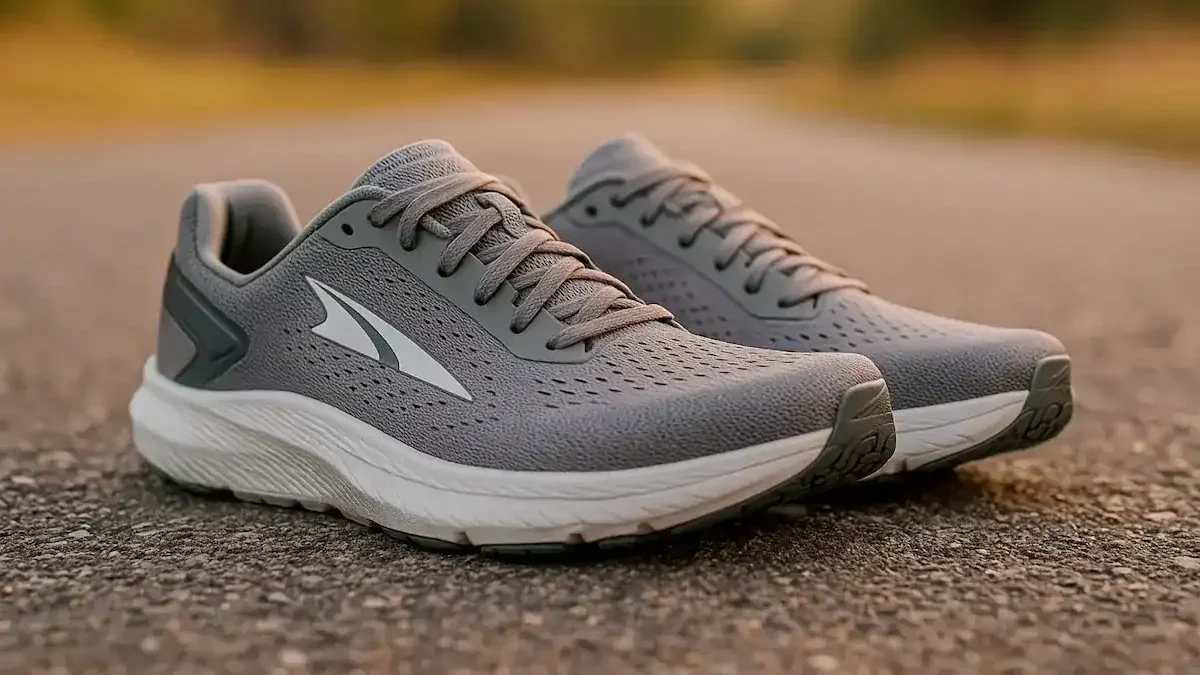
The Altra Torin 9 is the current Torin in our coverage and remains the most straightforward road-running choice for runners who want Altra’s roomy forefoot and zero-drop platform in a cushioned daily trainer. It works best for easy runs, steady mileage and walking rather than speed-focused sessions.
Gender-specific buy links: Men’s version | Women’s version
Altra Paradigm 8
Best for: Max-cushion stability
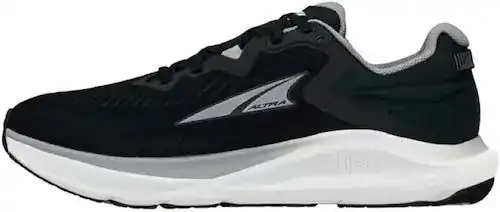
The Paradigm 8 is the stability-forward max-cushion choice in this Altra running shoes comparison, made for runners who want help staying aligned without feeling like they’re wearing a stiff “correction” shoe. The overall sensation is supportive and calm, especially when you’re tired and your form starts to wander. Instead of relying on an overly rigid feel, Paradigm aims to create guidance through the platform and structure, helping your foot land more consistently from heel to toe. T
hat makes it a great match for easy miles, long runs at a comfortable pace, and daily wear when you want your legs to feel less beat up by day’s end. Compared to Torin 9, it feels more coached: landings feel steadier, the midfoot feels more held, and transitions feel straighter. Compared to Via Olympus 2, it’s less about pure softness and more about stable protection through the stride, which can be a big deal if you dislike shoes that feel squishy or wobbly.
Paradigm also works well for people who’ve tried roomier toe-box shoes and loved the forefoot comfort, but still wanted a touch more support under the arch and heel area. In a lineup full of neutral shoes, Paradigm stands out as the best option when you prioritize stability and confidence over speed. If your goal is to rack up comfortable miles with a “set it and forget it” feel, Paradigm 8 is one of the most dependable Altra running shoes to consider.
Specs
- Weight: ~11–12 oz (men) / ~9–10 oz (women)
- Technology used: guidance/stability system, high-cushion midsole, FootShape toe box
- Health conditions it helps with: often chosen by runners dealing with overpronation tendencies, arch fatigue, or knee discomfort that worsens with unstable landings
Pros
- Supportive, stable feel without being harsh
- Excellent cushion for high-mileage comfort
- Great “late-run fatigue” confidence
Cons
- Heavier than neutral models
- Not ideal for fast intervals
- Some runners prefer a simpler, less guided ride
Gender-specific buy links: Men’s version | Women’s version
Altra Escalante 4
Best for: Fast daily training + gym
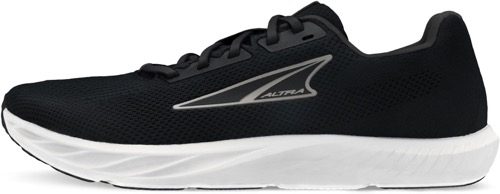
The Escalante 4 is the flexible, lively option in this list—an Altra running shoes staple for runners who like a more connected road feel and a shoe that can pull double duty for workouts. Where Torin leans plush and forgiving, Escalante leans responsive and nimble. It encourages a natural cadence by staying light on-foot and bending more easily through the forefoot, which can feel great for uptempo days, short-to-medium runs, and runs where you want your feet to do a bit more “work” rather than being carried by a big cushion.
The upper typically feels accommodating and unrestrictive, which is a big part of the Escalante appeal: you get toe-room comfort without the shoe feeling bulky or sloppy. In this comparison, Escalante is the opposite pole of Via Olympus 2—less stack, more flexibility, more feedback. That’s a win if you dislike overly soft shoes or if you want better ground awareness for cornering, quick turns, and strides. It’s also a solid pick if you split time between running and gym training, since excessively tall midsole shoes can feel unstable under lateral movements.
The trade-off is protection: if you’re doing very long road miles, especially on tired legs, Escalante may feel less forgiving than Torin 9 or FWD Via 2. If you’re building a small rotation, Escalante pairs beautifully with a more cushioned model—use Escalante when you want quickness and versatility, and use your plush shoe when you want maximum comfort.
Specs
- Weight: ~9–10 oz (men) / ~7–8 oz (women)
- Technology used: responsive midsole foam, engineered knit upper, FootShape toe box
- Health conditions it helps with: often preferred by runners wanting reduced toe pressure (bunion irritation) and a less restrictive forefoot during runs
Pros
- Light, flexible, and quick-feeling
- Great for tempo runs and gym crossover
- Natural toe room without bulk
Cons
- Less protective for very long road runs
- Not a stability shoe
- Can feel too minimal for impact-sensitive runners
Gender-specific buy links: Men’s version | Women’s version
Altra Lone Peak 9
Best for: Versatile trail running
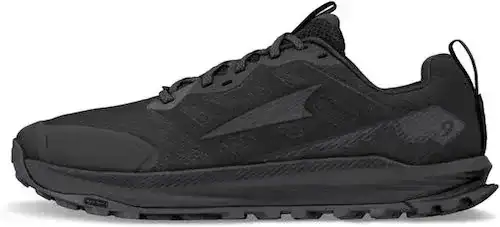
The Lone Peak 9 is the do-it-all trail icon of Altra running shoes—built for runners who bounce between packed dirt, rocky singletrack, and hiking days without wanting a specialized race-only shoe. Its character is control and confidence rather than maximum softness. You get enough underfoot protection to handle rough terrain, but the platform still feels stable and predictable when you’re stepping on uneven rocks, landing on roots, or navigating off-camber trail.
In this comparison, Lone Peak is the most versatile trail pick: it’s often the shoe that makes sense when you run a little of everything and don’t want to overthink conditions. Compared with Timp 6, Lone Peak generally feels more low-profile and precise, with a bit more ground feel and a more agile sense of where your foot is landing. Compared with Olympus 7, it sacrifices some plush comfort for better maneuverability and less “tank-like” bulk. The roomy toe box is a major advantage on descents, where toe swelling and toe bang can become a problem in narrower trail shoes; having space to splay and settle can keep longer runs comfortable.
Lone Peak is also a strong option if you’re new to trail running and want a shoe that feels stable and intuitive rather than extremely soft or extremely aggressive. If most of your runs are on smooth, mellow trail, you might prefer a more cushioned, cruisier feel from Timp or Olympus. But if you want an everyday trail workhorse that handles a wide range of terrain and doubles as a hiking shoe, Lone Peak 9 is one of the most practical choices in Altra’s lineup. For wet-weather use, see our Altra Lone Peak 9 Waterproof review.
Specs
- Weight: ~10–11 oz (men) / ~8–9 oz (women)
- Technology used: grippy trail outsole, rock protection, FootShape toe box
- Health conditions it helps with: often favored by runners who need forefoot room (toe sensitivity, bunion irritation) and want a stable base on uneven terrain
Pros
- Excellent all-around trail versatility
- Stable feel on uneven surfaces
- Toe box comfort on long descents
Cons
- Not as plush as max-cushion trail models
- Road running comfort is only “okay”
- Some runners want even more underfoot protection
Gender-specific buy links: Men’s version | Women’s version
Altra Timp 6
Best for: Long trail days with toe room and dependable grip

The Altra Timp 6 is the middle ground in Altra’s trail lineup: more cushioning than the Lone Peak 9, less bulk than the Olympus 7, and a Vibram Megagrip outsole for mixed trail surfaces. Its Standard FootShape fit gives the toes more room than many tapered trail shoes, while the 30 mm zero-drop platform keeps the ride protective without becoming a max-cushion shoe.
Choose it for long trail runs, hiking and all-day off-road use when you want toe room and grip but do not need the deepest cushioning in the range. Altra also offers Timp 6 GTX and Timp 6 Mid GTX versions for buyers who need waterproofing or more ankle coverage.
Read our full Altra Timp 6 review | Check latest price
Altra Olympus 7
Best for: Maximum-cushion trail running and long trail days
The Altra Olympus 7 is the max-cushion trail option in the current Altra lineup. Choose it when comfort and protection over long trail distances matter more than a light, nimble feel. The Lone Peak remains the more ground-connected option, while the Olympus is built for runners who want more underfoot cushioning.
Gender-specific buy links: Men’s version | Women’s version
Altra Outroad 2
Best for: Road-to-trail mix
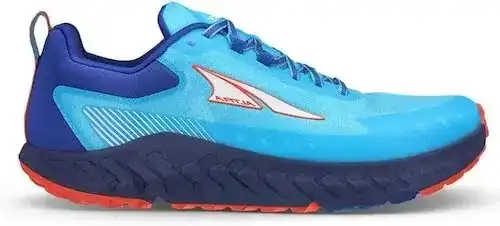
The Outroad 2 is the hybrid choice in this Altra running shoes comparison for runners whose routes don’t politely stick to one surface. If you start on sidewalks, move to gravel, hop onto park paths, then finish on pavement, Outroad is built to handle that mix without forcing you to choose between road comfort and trail security.
The midsole feel generally lands closer to road-friendly cushioning than a true mountain trail shoe, so it won’t feel like you’re clomping on asphalt with aggressive lugs. At the same time, the outsole and overall platform are designed to give you more grip and stability when the ground turns loose, dusty, or uneven. Compared with Torin 9, Outroad typically feels less plush and more versatile underfoot; it’s a more “ready for anything” tool than a pure comfort trainer. Compared with Lone Peak 9, it’s smoother on pavement and less specialized for technical trail, making it a better pick when the trail sections are mellow rather than steep and rocky.
Compared with Experience Flow 3, Outroad is simply more surface-tolerant—Flow is an efficient road runner, while Outroad is a “door-to-trail” solution. This is also a great travel shoe if you want one pair to cover casual walking, city miles, and occasional nature paths. The key is being honest about your terrain: if your trail running includes sharp rocks, mud, or long technical descents, you’ll be happier in Lone Peak, Timp, or Olympus. But if your real-world running is mixed and you want convenience without giving up toe-room comfort, Outroad 2 is one of the most practical Altra running shoes you can choose.
Specs
- Weight: ~10–11 oz (men) / ~8–9 oz (women)
- Technology used: hybrid outsole, balanced cushioning, FootShape toe box
- Health conditions it helps with: often chosen by runners who want forefoot room and a stable platform that feels steady on variable surfaces
Pros
- True road-to-trail versatility
- Smoother on pavement than trail-first models
- Great “one shoe for travel” option
Cons
- Not enough traction for very technical trails
- Less plush than max-cushion road options
- Hybrid feel won’t replace a dedicated road racer or trail specialist
Gender-specific buy links: Men’s version | Women’s version
Altra Experience Flow 3
Best for: Low-drop road running and runners transitioning away from higher-drop shoes
The Altra Experience Flow 3 gives runners an Altra-shaped forefoot with a small heel-to-toe drop instead of the brand’s traditional zero-drop geometry. That makes it a useful bridge for runners who want a roomier toe box and smoother rocker without jumping directly to a zero-drop Torin or Escalante.
Gender-specific buy links: Men’s version | Women’s version
Altra FWD Via 2
Best for: Premium cushioned cruising
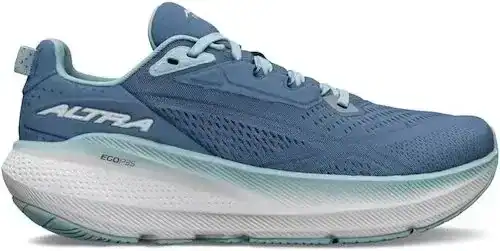
The FWD Via 2 is the premium cushioned cruiser in this Altra running shoes comparison—designed for runners who want softness and protection, but still want the shoe to feel like it’s moving them forward rather than sinking in place. Think of it as an “easy-run specialist” that can also handle long, steady miles when comfort is the goal.
The cushioning is meant to take the edge off repeated road impact, which can be a major benefit if you’re impact-sensitive, returning from a training break, or simply trying to keep your legs fresher across a higher weekly volume. What separates it from purely plush shoes is the sense of forward flow: the geometry encourages smooth transitions so the ride doesn’t feel dead or excessively mushy. Compared with Torin 9, FWD Via 2 feels more purpose-built for cushioned cruising and long-run comfort, while Torin stays more balanced and all-around. Compared with Via Olympus 2, FWD Via 2 often feels a bit more guided and “rolling,” whereas Via Olympus leans even harder into maximum stack comfort.
Compared with Experience Flow 3, the FWD Via 2 is more cushion-forward and relaxed, better for days when you want protection more than a firm, efficient feel. This makes it a strong choice for runners who want their daily trainer to reduce harshness and feel luxurious without becoming unstable. If you live for speed sessions, Escalante may suit you better. But if your training includes a lot of easy mileage and you want to finish runs feeling less battered, FWD Via 2 is one of the most comfort-driven Altra running shoes in the current lineup.
Specs
- Weight: ~10–11 oz (men) / ~8–9 oz (women)
- Technology used: rocker/forward geometry, high-cushion midsole feel, FootShape toe box
- Health conditions it helps with: often chosen by runners managing impact sensitivity and those who need forefoot room to reduce toe pressure on long road runs
Pros
- Soft, protective cushioning for long road sessions
- Smooth rolling transitions
- Great “easy day” comfort without instability
Cons
- Too plush for runners who like firm feedback
- Not a speedwork specialist
- Higher stack can feel like “too much shoe” for some
Gender-specific buy links: Men’s version | Women’s version
Altra Via Olympus 2
Best for: Maximum road cushioning
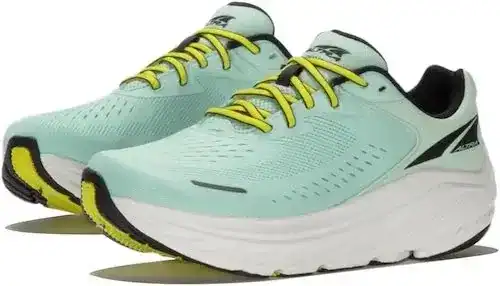
The Via Olympus 2 is the maximum-cushion road option in this Altra running shoes comparison—built for runners who prioritize underfoot protection above almost everything else. If your ideal shoe makes long runs feel kinder, recovery days feel truly restorative, and high-mileage walking feel less tiring, Via Olympus 2 sits at the top of this lineup for pure road comfort. The high stack creates a substantial buffer between your feet and the pavement, which can reduce the harshness you feel during repetitive impact.
Compared with Torin 9, Via Olympus 2 feels more like a dedicated max-cushion tool rather than an all-around daily trainer; it’s the upgrade you choose when you want more protection than “balanced” cushioning provides. Compared with Paradigm 8, it usually delivers comfort through softness and volume rather than through structured stability guidance—so it can be a great fit if you want cushy protection but don’t want a support system. Compared with FWD Via 2, Via Olympus 2 is the bigger, more cushion-dominant experience, often best at slower to moderate paces where comfort is the priority rather than quick turnover.
The roomy toe box is a major advantage here: max-cushion shoes often get used for longer sessions when feet swell, and having more space can reduce toe pressure and help prevent the cramped feeling some runners get late in a run. The trade-off is nimbleness—high stack can feel less precise on sharp turns or fast changes of direction. But if your main goal is maximum road comfort and lasting protection for the long haul, Via Olympus 2 is one of the most comfort-oriented Altra running shoes available.
Specs
- Weight: ~11–12 oz (men) / ~9–10 oz (women)
- Technology used: max-stack road cushioning, rocker geometry, FootShape toe box
- Health conditions it helps with: often preferred by runners managing impact sensitivity, heel soreness, or forefoot discomfort from tight shoes due to added cushion and toe space
Pros
- Maximum road comfort for long distances
- Excellent for recovery runs and high-mileage walking
- Roomy toe box reduces toe pressure for many runners
Cons
- Less nimble than lower-stack shoes
- Can feel too soft for runners who like firmness
- Not ideal for speedwork-heavy training
Gender-specific buy links: Men’s version | Women’s version
Buyer’s Guide for Altra Running Shoes
Start with the surface: road, trail, or truly mixed
The quickest way to choose between these Altra running shoes is to look at where most of your miles happen. Road shoes are optimized for predictable, repetitive impacts and smooth transitions, while trail shoes prioritize traction, protection, and stability on uneven ground. If you’re mostly on pavement, the road models here (Torin 9, Paradigm 8, Escalante 4, Experience Flow 3, FWD Via 2, Via Olympus 2) will feel smoother and more efficient. If your runs include dirt, rocks, roots, or steep descents, trail models (Lone Peak 9, Timp 6, Olympus 7) are worth it because they reduce slipping, protect your feet, and keep you more controlled when conditions change. If your routes often blend pavement and dirt in one run, Outroad 2 is the purpose-built compromise: it won’t replace a true technical trail shoe, but it’s far better than taking a pure road outsole onto loose terrain.
Choose cushioning by answering one question: do you want comfort now, or comfort later?
Cushion level isn’t just “soft vs firm.” It changes how your legs feel during the run and how they recover afterward. If you’re impact-sensitive, returning from a layoff, building mileage, or simply want comfort as the main event, you’ll typically do best in higher-cushion models. On road, that’s Via Olympus 2 and FWD Via 2 (most cushion-forward), with Torin 9 as the balanced daily option. On trail, Olympus 7 is the max-cushion comfort king, while Timp 6 is the long-run choice that stays a little more agile. If you prefer more feedback from the ground, want versatility for faster paces, or you find very soft shoes feel unstable, Escalante 4 (road) and Lone Peak 9 (trail) usually feel more precise.
Stability vs neutral: compare Paradigm 8 to Torin 9 and Via Olympus 2
If you’re deciding between Paradigm 8 and the neutral road models, think of Paradigm as “cushion plus guidance.” Many runners don’t need stability for every run, but they appreciate it when fatigue sets in, when running form gets messy, or when they know they overpronate more as they tire. Paradigm 8 is the most supportive shoe on this list, making it especially appealing for long easy miles when you want the platform to feel calm and consistent. Torin 9 is the neutral alternative when you want comfort without extra guidance. Via Olympus 2 is neutral-max-cushion: it’s often chosen when softness and protection are the top priority, but you don’t want a stability framework. In short: pick Paradigm for guided stability, Torin for balanced daily neutrality, and Via Olympus 2 for maximum softness and protection.
The “feel” factor: flexible speed (Escalante 4) vs rolling efficiency (Experience Flow 3)
Two shoes can be great daily trainers but feel totally different. Escalante 4 is the better choice if you like flexibility, a more natural bend, and a quicker “pop” for uptempo efforts. Experience Flow 3 is for runners who like a smoother, rolling transition that keeps them moving efficiently at easy-to-steady paces, especially when tired. If you’re new to Altra and want something that feels more familiar than a very flat ride, Flow 3 can be a comfortable transition point. If you already love a more minimalist, responsive sensation, Escalante is usually the winner.
Trail comparison: Lone Peak 9 vs Timp 6 vs Olympus 7
These three cover most trail needs. Lone Peak 9 is the versatile choice—balanced, stable, and practical for a wide range of trails, including hiking and travel. Timp 6 moves toward longer efforts with more cushioning while staying lighter and more agile than a max-cushion tank. Olympus 7 is the comfort fortress: best when you want maximum protection for long hours, rough terrain, or recovery-focused trail days. If your trails are technical and you value foot placement, Lone Peak is often the best start. If you crave comfort for long distances, choose Timp for balance or Olympus for the deepest cushion.
The one-shoe decision vs a smart two-shoe rotation
If you want one pair only and you mostly run on roads, Torin 9 is the simplest “one-shoe” pick in this comparison because it’s balanced and easy to live with. If you mostly run trails, Lone Peak 9 is the most versatile trail single-pair choice. If your routes are mixed, Outroad 2 is built specifically for that reality. If you’re open to two pairs, a simple and effective strategy is to pair one higher-cushion shoe with one more responsive or terrain-specific shoe. Examples: Torin 9 + Escalante 4 (comfort + speed feel), Via Olympus 2 + Experience Flow 3 (max cushion + smooth daily), Lone Peak 9 + Timp 6 (versatile trail + long trail), or Outroad 2 + a true road shoe (mixed routes + dedicated pavement comfort).