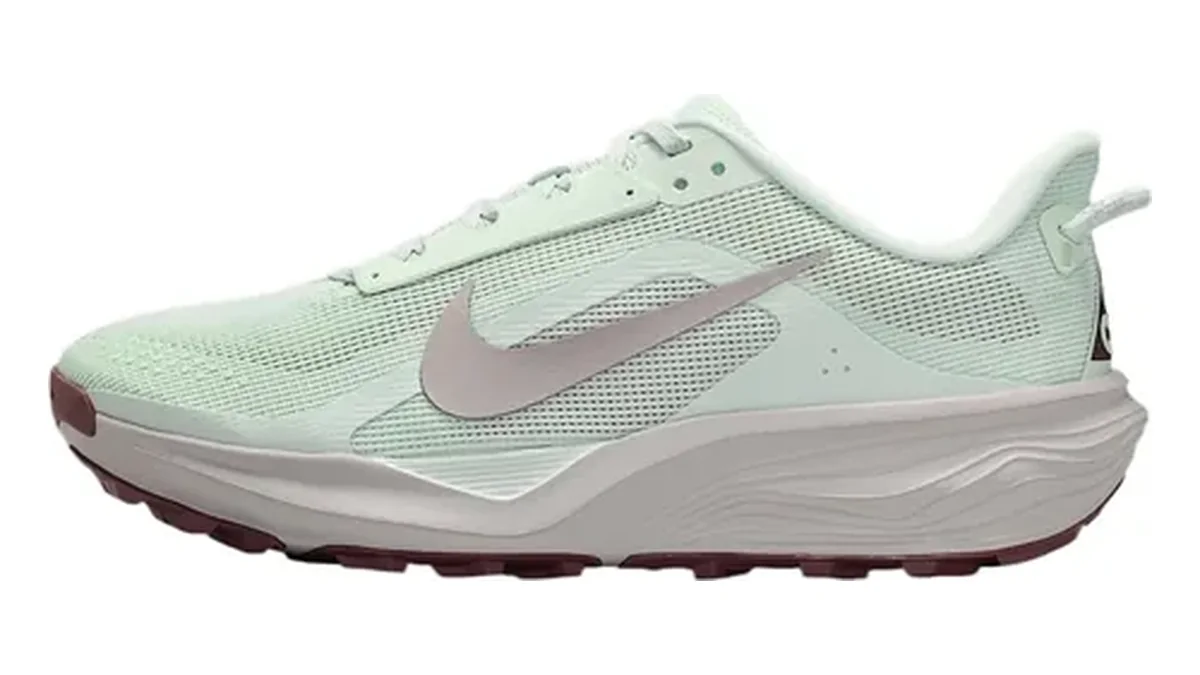
Quick Answer: Nike ACG Pegasus Trail Review: The Nike ACG Pegasus Trail is a true road-to-trail shoe for people whose routes move between pavement, gravel and moderate trails. It feels cushioned enough for road sections but more secure and capable once the surface gets rougher. The wider forefoot is a welcome change, especially for longer walks and mixed-surface runs. It works best as a one-pair solution for varied terrain. If you spend nearly all your time on pavement, choose a road shoe; if your trails are very muddy or highly technical, choose something more aggressive. Check latest price. See recommendations side by side.
A true road-to-trail shoe for pavement, gravel and moderate trails
Gender-specific buy links: Men’s version | Women’s version
The Nike ACG Pegasus Trail is the current version of Nike’s long-running road-to-trail shoe. Nike moved the model into its ACG outdoor line and dropped the version number, but the basic job remains familiar: give you one shoe that can handle pavement on the way to the trail and still feel secure when the surface turns to gravel, dirt and uneven ground.
Nike now describes the shoe as suitable for moderately technical terrain rather than just smooth paths. That matters because the wider forefoot, increased ReactX cushioning and updated All-Terrain Compound outsole support its road-to-trail role, while still keeping the ride comfortable enough for road sections.
At a glance
The useful details at a glance:
| Best for | Road-to-trail runs, gravel paths, moderate trails, trail walking and day hikes |
| Ride | Cushioned and smooth on pavement, more planted off road |
| Terrain | Pavement, gravel, dirt and moderately technical trails |
| Walking | Very good for mixed-surface walking, travel and day hikes |
| Fit | More room in the forefoot than the Pegasus Trail 5, with secure midfoot and heel hold |
| Support | Neutral; stability comes from the broader forefoot and trail platform |
| Best reason to choose it | You want one shoe that handles both pavement and trail well |
| Skip it if | You run almost entirely on road or on very muddy, highly technical trails |
Pros
- Works naturally across pavement, gravel and dirt
- More ReactX foam improves cushioning over the previous version
- Redesigned forefoot gives toes more room
- Updated All-Terrain Compound outsole improves trail traction
- Useful crossover shoe for running, walking and day hikes
Cons
- Heavier than a dedicated road-running shoe
- Not designed for deep mud or highly technical mountain terrain
- No dedicated Wide version on the current standard model
- More shoe than you need if nearly all your mileage is on pavement
What is new versus the Pegasus Trail 5
The biggest change is how much more versatile the shoe feels. Nike added more ReactX foam, so road sections feel more comfortable, but the shoe still has enough structure to stay controlled when you leave the pavement.
The outsole and fit changed in equally useful ways. Nike updated the All-Terrain Compound for better grip on wet and uneven ground, and the forefoot is wider than before. In practical terms, the shoe feels more secure on trail without squeezing the toes as much.
The naming change is simpler: Nike moved the shoe into its ACG outdoor line and dropped the version number. It follows the Pegasus Trail 5 in the lineup, but the current model is simply called the ACG Pegasus Trail.
Who should buy the ACG Pegasus Trail
Buy the ACG Pegasus Trail if your normal route mixes surfaces. It is especially useful for runs that start on sidewalks or roads and then move onto gravel paths, park trails or moderate singletrack.
It also makes sense for trail walkers and travelers who want one pair for city walking and day hikes. The ReactX cushioning is comfortable on pavement, while the wider forefoot and trail outsole make it more capable off road than a normal road shoe.
Who should probably skip it
Skip the ACG Pegasus Trail if almost all your running is on pavement; a road shoe such as the Pegasus 42 will be lighter and smoother. At the other extreme, runners who spend most of their time in deep mud, loose scree or highly technical mountain terrain should choose a more aggressive trail shoe with deeper lugs and more underfoot protection.
Not sure which shoe suits your feet and terrain? Find your ideal shoe with our free Shoe Finder.
In those cases, these are the right shoes:
- Hoka Speedgoat 6: deep aggressive lugs and a stickier compound for genuinely technical, steep and muddy ground (check price | read review).
- Asics Trabuco Max 4: a max-cushion trail shoe with a strong rocker, and the better pick for long days on non-technical trail where comfort beats agility (check price | read review).
- Nike Pegasus 42: the road version, lighter and springier, and the obvious answer if you stay on pavement (check price | read review).
How does the Nike ACG Pegasus Trail fit?
The current ACG Pegasus Trail has more room through the forefoot than the Pegasus Trail 5 while keeping a secure midfoot and heel. That combination makes sense off road: toes have room to spread while the rear of the foot stays controlled on uneven ground.
Fit and sizing
Start with your normal Nike running-shoe size. Nike specifically redesigned the forefoot to provide more toe room, but the standard shoe is still sold as a regular fit rather than a dedicated Wide model. For cross-brand sizing, use our shoe size converter as a starting point.
Upper and step-in comfort
The engineered mesh upper is designed to balance breathability and trail durability. Nike also adds a rubber wrap around the toe for protection from debris. The standard model is not waterproof, but Nike sells a separate ACG Pegasus Trail Gore-Tex version for wet-weather use.
How does the Nike ACG Pegasus Trail perform?
The ACG Pegasus Trail is most useful when the surface keeps changing. It feels comfortable enough on pavement and provides enough traction and structure for gravel, dirt and moderately technical trails.
Cushioning and ride
ReactX is Nike’s everyday performance foam, and this version uses more of it than the Pegasus Trail 5. The result is a cushioned, responsive feel without becoming excessively soft on uneven ground.
Ride and running performance
The ride is best at easy and steady paces, with enough versatility for mixed routes. It is not a racing model, yet the ReactX foam and 8 mm geometry allow it to move comfortably across roads, climbs and moderate trails without feeling like a heavy hiking shoe.
Stability and support
The ACG Pegasus Trail is a neutral shoe. Its stable feel comes from the broader forefoot, secure fit and ReactX platform rather than a traditional stability post or guidance system. Nike specifically says the wider design adds stability on technical trails.
Outsole, grip and durability
The updated All-Terrain Compound outsole is one of the main reasons to choose this model. Nike designed it for wet trails and uneven ground while keeping the tread usable on pavement. Deep mud remains outside its sweet spot, but gravel, dirt, wet paths and moderate singletrack are exactly what it is built for. Replace the shoe when traction declines, cushioning feels noticeably flatter or the upper no longer holds the foot securely.
Is the Nike ACG Pegasus Trail good for walking?
Yes. The ACG Pegasus Trail works very well for mixed-surface walking because the ReactX foam remains comfortable on pavement while the outsole adds confidence on gravel, dirt and wet park paths. The redesigned forefoot also gives toes more room during long walks.
It is also a strong option for day hikes on maintained and moderately technical trails. For deep mud, heavy backpacking or sharp rocky terrain, a more protective hiking or trail shoe will make more sense. See our best trail walking shoes and best road-to-trail running shoes for more options.
ACG Pegasus Trail versus Pegasus Trail 5
Here is how the current shoe compares with the one it replaces:
What changed | ACG Pegasus Trail | Pegasus Trail 5 |
Road comfort | More ReactX cushioning | Less underfoot cushioning |
Forefoot fit | Roomier and more stable | Narrower previous shape |
Trail grip | Updated All-Terrain Compound | Previous outsole compound |
Best use | Mixed road and moderate trail routes | Road-to-trail use with a slightly leaner feel |
Choose the ACG Pegasus Trail if you want the roomier forefoot, extra road comfort and stronger mixed-surface grip. The Pegasus Trail 5 may still appeal if you specifically preferred its leaner feel.
Nike ACG Pegasus Trail Alternatives
The closest alternatives depend on whether you want a lighter mixed-surface shoe, a more technical trail shoe or a road-focused option.
- Hoka Challenger 8: choose it if your routes lean more toward pavement and smoother trails and you want a lighter, rockered feel (check latest price | read review).
- Asics Trabuco 14: choose it if your routes are rougher and more trail-focused and you want more protection underfoot (check latest price | read review).
- Nike Pegasus 42: choose it if nearly all your mileage is on pavement and you want the smoother road-focused Pegasus experience (check latest price | read review).
Should you buy it?
Best for: runners and walkers whose routes mix pavement, gravel, dirt and moderately technical trails.
Avoid if: nearly all your mileage is on road, or your trails are dominated by deep mud and highly technical mountain terrain.
Fit: start with your usual Nike size; the current model has a redesigned, roomier forefoot while keeping secure midfoot and heel hold.
Verdict: The Nike ACG Pegasus Trail is one of the better choices if your routes genuinely mix road and trail. It is comfortable enough for pavement, secure enough for moderate off-road terrain and roomy enough up front to work well for walking and day hikes too.
Frequently Asked Questions for Nike ACG Pegasus Trail
Yes. Nike moved the current Pegasus Trail into its ACG outdoor line and dropped the version number. It fills the same road-to-trail role with more ReactX foam, a wider forefoot and an updated outsole.
Nike lists an 8 mm heel-to-toe drop.
Nike lists the men’s model at about 305 grams or 10.8 ounces in a men’s US 10.
Yes. That is its main strength. ReactX cushioning feels comfortable on pavement while the All-Terrain Compound outsole adds grip for gravel, dirt and moderately technical trails.
The standard model is not waterproof. Nike also sells an ACG Pegasus Trail Gore-Tex version for runners and walkers who want wet-weather protection.
Yes. Its cushioning, wider forefoot and mixed-surface traction make it useful for trail walking, travel and day hikes, especially when your route includes pavement as well as dirt or gravel.
It is best for runners and walkers whose routes regularly mix pavement, gravel, dirt and moderate trails, especially if they want one shoe rather than separate road and trail pairs.