Is the Nike Free Metcon 7 right for mixed gym workouts?
Quick Answer: Nike Free Metcon 7 Review: The Nike Free Metcon 7 is Nike’s hybrid gym shoe for workouts that mix lifting with jumping, lunging and short bursts of cardio. A firmer heel gives you a steady base under a barbell, while a softer, flexible forefoot lets you move, land and change direction naturally. This version swaps Nike’s old Flywire cables for a webbed lacing system and inner sleeve that hold your foot more securely, and it adds toughness at the toe and sides. It is not a heavy-lifting specialist or a running shoe.
The Nike Free Metcon 7 is the flexible member of Nike’s training family. The standard Metcon is the firm, flat, lifting-first shoe. The Free Metcon blends that stable heel with Nike Free technology, the bendy forefoot design Nike first built to mimic the natural movement of a bare foot. The result is a shoe meant for gym sessions that refuse to stay in one lane.
Nike calls it its most versatile training shoe, and that is the right way to think about it. It suits the person whose hour in the gym might include a rower warm-up, some squats, a set of box jumps, walking lunges and a few short treadmill efforts. It launched in the US on April 2, 2026, two years after the Free Metcon 6.
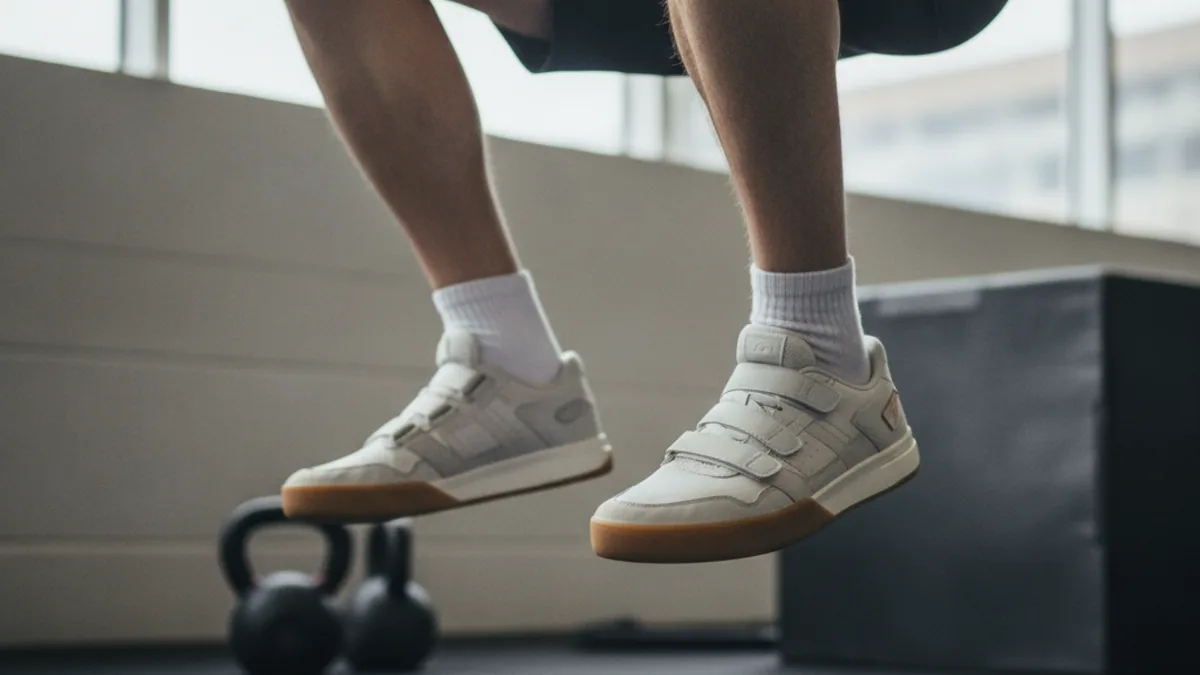
It is a strong fit for class-style workouts, circuits, HIIT and general strength and conditioning. It is less suited to max-effort lifting, real running mileage or all-day standing at work.

Nike Free Metcon 7 in Photon Dust, Off White and Pure Platinum, side view. Image: Amazon.
Specs
Here are the specifications for the Nike Free Metcon 7:
| Type | Hybrid training shoe for lifting, conditioning and short cardio |
| Best for | Gym classes, circuits, HIIT and mixed strength and cardio sessions |
| Midsole | Two-part Nike Free midsole: firmer, stable foam in the heel and softer, flexible foam in the forefoot |
| Outsole | Full-length rubber with Nike Free flex grooves |
| Upper | Lightweight, breathable mesh with a webbed lacing system and inner sleeve |
| Durability | Added reinforcement at the toe tip and the side of the shoe |
| Tongue | Keyhole-style tongue for easy on and off |
| Width | Standard width (men’s D at Road Runner Sports) |
| Price | Launched at $125 in April 2026. Check latest price |
Pros
- The stable heel and flexible forefoot let one shoe handle lifting and moving.
- The new webbed lacing and inner sleeve hold your foot securely during side-to-side moves.
- Extra reinforcement at the toe and sides helps it stand up to rope climbs and drag work.
- The breathable mesh keeps hot gym sessions more comfortable.
- The keyhole tongue makes it quick to get on and off between stations.
Cons
- It is not stable enough for heavy, max-effort lifting compared with a dedicated lifting shoe.
- It is not a running shoe, so longer runs call for something else.
- The snug, contained fit may feel tight for wide feet or high insteps.
- There is no wide option in the main men’s range.
- The firm heel is not ideal for long days of walking or standing.
What is new in the Free Metcon 7
The headline change is how the shoe holds your foot. Earlier Free Metcons used Flywire, thin cables that tightened across the midfoot as you laced up. Nike replaced them with a webbed lacing system paired with an inner sleeve, which Nike says provides added containment for a secure and snug fit. In practice, that should mean your foot stays planted over the platform when you shuffle sideways, land a jump off-balance or push out of a lunge.
The midsole keeps the formula that defines the Free Metcon: stable foam under the heel and softer, more flexible foam under the forefoot, working with flex grooves cut into the outsole. Nike says the two-part midsole lets you switch from dynamic, springy movements to strength work without changing shoes. According to a report on the launch, Nike designer Erick Ikeda based the new interlocking two-part construction on sashimono, a Japanese woodworking technique that joins pieces without fasteners, with the goal of more arch support and a steadier platform.
Durability got attention too. Nike added reinforcement around the toe tip and the side of the shoe, the areas that take a beating during rope climbs, burpees and lateral drills. The upper is a lightweight, breathable mesh, and the keyhole tongue makes the shoe easier to slip on and off.
What did not change is the core idea: firm behind, flexible in front. If you liked earlier Free Metcons for mixed workouts, this one is built to do the same job with a more secure fit and tougher wear points.
Who should buy the Nike Free Metcon 7
Buy it if your workouts mix weights and movement. Class-format sessions, bootcamps, CrossFit-style circuits and strength-and-conditioning days all ask a shoe to do two things at once. The firm heel gives you a stable base for squats, presses and moderate deadlifts, while the flexible forefoot lets you jump, skip, lunge and sprint short distances without fighting a stiff sole.
It suits people who found the standard Metcon too rigid. A flat, firm lifting shoe is great under a bar but can feel harsh for jumping and running. The Free Metcon trades some of that rigidity for a more comfortable, flexible front end, which makes it easier to wear for a full hour of varied work.
It is also a good choice if you go through gym shoes quickly. Rope climbs and drag work shred thin uppers, and the added reinforcement at the toe and sides is aimed squarely at that kind of wear.
Finally, it makes sense for anyone who wants one training shoe for most gym days. If you have been switching between a lifting shoe and a running shoe mid-session, the Free Metcon 7 is designed to replace both for moderate loads and short efforts.
Who should probably skip the Nike Free Metcon 7
Skip it if you lift heavy. A flexible forefoot and a cushioned platform are the opposite of what a max-effort squat or Olympic lift wants, which is a rigid, unmoving base. Skip it if your training is mostly running, because a cross-trainer is not built for real mileage. And if you mainly need a comfortable shoe for walking and standing all day, a cushioned walking or running shoe will treat your feet better.
If that sounds like you, these are better choices:
- Nike Savaleos: a dedicated weightlifting shoe with a rigid, raised heel for squats and Olympic lifts (check price | read review)
- Nike Pegasus 42: a proper everyday running shoe for runners who need cushioning over real miles (check price | read review)
- Hoka Bondi 9: deep, soft cushioning for long walks and all-day standing (check price | read review)
Not sure which kind of shoe your training needs? Our Free Shoe Finder builds a personalized shortlist in a couple of minutes.
A snug, locked-in fit built for quick lateral moves
The Free Metcon 7 is built to hold your foot firmly, and the fit reflects that. The webbed lacing and inner sleeve wrap the midfoot so your foot does not slide around during quick lateral moves. Expect a secure, close feel rather than a roomy one.
Nike does not publish specific sizing advice for the Free Metcon 7, so start with your usual Nike size. Try it with the socks you train in and do a few lunges, jumps and lateral steps before you decide, because a training shoe should feel secure without pinching when you move.
Width is the main thing to check. The contained midfoot that makes the shoe feel secure can feel tight on a wide foot or a high instep, and the main men’s range is a standard width. If your feet are broad, try the shoe on or buy from a retailer with easy returns.
If you use custom orthotics, test them in the shoe first. A snug, contained upper leaves less room for a thick insert, which can make the fit feel tighter across the top of the foot.

Nike Free Metcon 7 alternate angle showing the webbed lacing and mesh upper. Image: Amazon.
How it performs: steady for lifting, flexible for moving
The two-part midsole is the whole design. Under the heel, the foam is firmer so you can feel planted when you hold weight, which helps on goblet squats, kettlebell work, presses and moderate barbell lifts. Under the forefoot, the foam is softer and the outsole is cut with flex grooves, so the front of the shoe bends as your foot bends when you jump, lunge or push off.
That combination makes transitions easy. You can go from a set of squats straight into box jumps or a short sprint without feeling like you are wearing the wrong shoe for half the workout. The flexible forefoot also makes skipping, burpees and agility drills feel more natural than they do in a flat, stiff lifting shoe.
Where the compromise shows is at the extremes. Under very heavy loads, the softer forefoot and cushioned platform will not feel as solid as a dedicated lifting shoe or a flat, firm trainer. And while the shoe handles short treadmill intervals and quick runs between stations, it is not designed for longer runs; a running shoe will be far more comfortable once you are covering real distance.
Side-to-side stability comes mainly from the secure fit. The webbing and inner sleeve keep your foot centered over the platform, so lateral shuffles and quick cuts feel controlled. This is a neutral shoe with no features meant to change how your foot rolls, and it will not correct your movement. If you have persistent foot, ankle or knee pain, a physical therapist or podiatrist can help you choose the right footwear.
Rubber and reinforcement built for gym abuse
The outsole is full-length rubber, which gives dependable grip on gym rubber, wood floors and turf and protects the foam from wear. The flex grooves let the forefoot bend without the rubber fighting it.
The reinforcement Nike added around the toe tip and the side of the shoe is there for the moves that destroy training shoes: rope climbs, burpees, sled pushes and drag work. For a shoe that gets scraped and stepped on, that extra toughness matters more than it would on a running shoe.
How long it lasts depends on how you train. A cross-trainer used three or four times a week for mixed sessions will wear differently from one used mostly for lifting. The forefoot foam, which does most of the flexing and absorbing, is the part most likely to soften first.

Nike Free Metcon 7 detail view of the shoe and outsole area. Image: Amazon.
Is the Nike Free Metcon 7 good for walking?
For short walks, yes. The flexible forefoot is exactly what walking asks for, so getting to the gym, walking the dog around the block or running errands is no problem. Many people will happily wear it before and after a workout.
For long walks or all-day standing, it is not the best choice. The heel is deliberately firm for stability, so there is less cushioning where a walker lands, and hard floors will feel hard after a few hours. The snug, contained fit can also become uncomfortable as feet swell over a long day. If you are on your feet all day at work or want a shoe for travel and city walking, start with our best walking shoes guide. If you have flat feet and want a gym shoe with more support, see our best cross-training shoes for flat feet.
Free Metcon 7 vs. the standard Nike Metcon 10
Many buyers are choosing between the two Metcon lines, so here is how they differ in practice:
Nike Free Metcon 7 | Nike Metcon 10 | |
Main focus | Mixed lifting and dynamic movement | Lifting-first training |
Forefoot | Soft and flexible, with flex grooves | Firmer and more stable |
Feel under a bar | Stable heel, more forgiving front | Flatter and more solid overall |
Best for | Classes, circuits, HIIT and short cardio | Strength sessions and heavier lifts |
Buy the Free Metcon 7 when your sessions mix moderate weights with jumping, lunging and short runs. Buy the Metcon 10 when lifting dominates your training and you want the most stable platform. Our Nike Metcon 10 review covers the lifting-focused shoe in detail.
Nike Free Metcon 7 Alternatives
If you like the idea of a versatile gym shoe but want a different balance, these are worth a look.
- Nike Metcon 10: Nike’s firmer, lifting-focused trainer, for people whose sessions lean toward strength work (check price | read review)
- Reebok Nano X5: a versatile CrossFit-style trainer, a strong pick if you want a different take on the do-it-all gym shoe (check price | read review)
- TYR CXT-3: a cross-trainer built for lifting and functional fitness, for buyers who want a steadier, lifting-focused feel (check price | read review)
- On Cloud X 4: On’s running-friendly training shoe for studio classes and cardio-heavy sessions with less heavy lifting (check price | read review)
Your training mix decides this. Heavier lifting points to the Metcon 10 or the CXT-3. CrossFit-style variety points to the Nano X5. Cardio-heavy classes point to the Cloud X 4. For more options, see our best cross-training shoes roundup.
Price and value
The Free Metcon 7 launched at $125 in April 2026, which sits in the middle of the serious training-shoe market. The value case is simple: for people whose gym sessions mix strength work with jumping and short cardio, one pair can replace both a lifting shoe and a running shoe for most workouts. The added toe and side reinforcement also help it survive the kind of wear that ruins ordinary sneakers.
What you are not paying for is specialization. If your training leans heavily toward max-effort lifting or real running mileage, your money is better spent on the right tool for that job. For the everyday gym-goer who does a bit of everything, the Free Metcon 7 is good value.
Final verdict
Best for: gym-goers whose sessions mix moderate weights with jumping, lunging and short bursts of cardio, plus anyone who wants one versatile training shoe.
Avoid if: you lift very heavy, you run more than short intervals or you need a roomy fit for wide feet.
Fit: snug and secure through the midfoot, in a standard width; start with your usual Nike size.
Verdict: The Nike Free Metcon 7 keeps the stable-heel, flexible-forefoot formula that makes the Free Metcon line so useful and improves the parts that matter most for training: a more secure midfoot and tougher wear points. It is not the shoe for max lifts or real runs, but for mixed gym sessions it is one of the most versatile pairs you can buy.
Check the latest price on the Nike Free Metcon 7.
Frequently Asked Questions for Nike Free Metcon 7
The standard Metcon is built mainly for lifting, with a firmer, flatter platform. The Free Metcon keeps a stable heel but uses Nike Free technology for a softer, more flexible forefoot, so it is better for workouts that mix lifting with jumping and short cardio.
It handles moderate lifting well thanks to its firmer heel. For very heavy squats or Olympic lifts, a dedicated lifting shoe or a flatter, firmer trainer will feel more stable.
For short treadmill intervals and quick runs between stations, yes. It is not designed for longer runs, so use a cushioned running shoe for real mileage.
Nike does not publish specific sizing advice for it, so start with your usual Nike size. The midfoot is snug by design, so if you have wide feet or a high instep, try it on with your training socks or buy from a retailer with easy returns.
Nike replaced the Flywire cables with a webbed lacing system paired with an inner sleeve. Nike says the change gives added midfoot containment for a more secure, snug fit.
It is better prepared than most sneakers. Nike added reinforcement around the toe tip and the side of the shoe, the areas that usually wear out first during rope climbs and other abrasive gym moves.