Last Updated on September 23, 2026
| Quick Answer: What Is PEBA Foam in Running Shoes? PEBA foam is a lightweight, highly responsive cushioning material used in many premium running shoes. PEBA stands for polyether block amide. Compared with traditional EVA foam, PEBA can provide more rebound while using less material and adding relatively little weight. That combination has made it especially popular in racing shoes, although PEBA is now also appearing in daily trainers, max-cushion shoes and stability models. The actual ride depends on the shoe’s geometry, foam formulation and whether a plate is used. |
PEBA has become one of the most important materials in modern running shoe design. If you have looked at premium shoes from Nike, Saucony, Brooks or New Balance, there is a good chance you have already encountered PEBA or a PEBA-based proprietary foam without realizing it.
Nike ZoomX, Saucony PWRRUN PB and Brooks DNA GOLD are examples associated with PEBA. New Balance also uses a 100% PEBA FuelCell midsole in its FuelCell SuperComp Elite v5.
PEBA is especially associated with “super shoes,” but the foam and the super shoe are not the same thing. PEBA is simply the cushioning material. A manufacturer can use it with a carbon plate, nylon plate or no plate at all.
For a broader explanation of how PEBA fits alongside EVA, TPU and other cushioning technologies, start with our Running Shoe Foam Guide.
What Does PEBA Stand For?
PEBA stands for polyether block amide, sometimes written as polyether-block-amide.
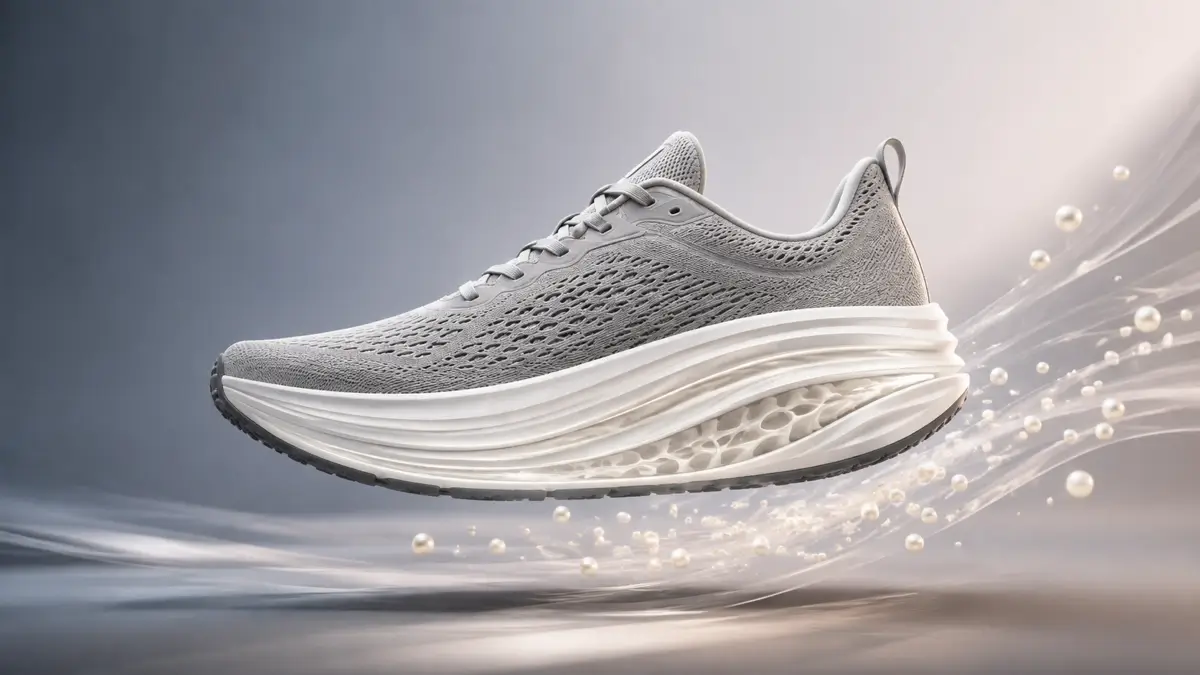
It belongs to a family of thermoplastic elastomers, materials that combine some of the flexibility of rubber with characteristics that allow them to be processed more like thermoplastics. For runners, the chemistry matters less than what manufacturers can do with it. PEBA can be expanded into extremely lightweight foam with strong resilience, meaning it compresses when loaded and then returns toward its original shape quickly.
That quick rebound is what gives many PEBA shoes their distinctive springy or energetic sensation.
You may also see the word Pebax used when reading about running shoes. Pebax is a trademarked family of high-performance polymers made by Arkema. It is not simply another generic word for every PEBA foam. In other words, Pebax can be PEBA, but PEBA is the broader material category.
Why Is PEBA Used in Running Shoes?
Running shoe designers constantly balance cushioning, weight, stability, durability and responsiveness. Improving one characteristic can sometimes make another worse.
Adding more traditional cushioning, for example, can increase shoe weight. Making a foam extremely soft can make a shoe feel unstable. Making it firm enough for stability can reduce the lively sensation some runners want.
PEBA became attractive because it allows manufacturers to create relatively thick cushioning while keeping shoe weight down and maintaining strong rebound. This helped fuel the development of the modern high-stack racing shoe.
PEBA has since moved beyond elite racing. Manufacturers now use it in shoes designed for daily mileage, long runs, speed workouts and even stability-oriented training.
That makes “PEBA shoe” a much broader category than it was several years ago.
What Does PEBA Foam Feel Like?
PEBA is commonly described as soft, springy, bouncy or responsive, but those words do not mean every PEBA shoe feels the same.
Foam chemistry is only part of the equation. A thick PEBA midsole with a wide base can feel cushioned and forgiving. Put a curved carbon plate inside a lightweight PEBA racing shoe and the result can feel significantly firmer and more aggressive. Combine PEBA with another foam and the shoe may feel more controlled.
This is why shopping only by foam type can be misleading. The Nike Vomero Plus and Nike Vaporfly 4 both use ZoomX cushioning, for example, but they are designed for very different purposes. The Vomero Plus is a max-cushion daily running shoe. The Vaporfly 4 combines ZoomX with a carbon-fiber plate and race-focused construction.
If you want a deeper explanation of Nike’s version of the material, see our guide to Nike ZoomX foam.
Benefits of PEBA Foam
PEBA became popular in performance running shoes because it can deliver several desirable characteristics at once.
The biggest advantage is the combination of low weight and resilience. Manufacturers can place a substantial amount of foam underfoot without making a performance shoe excessively heavy. PEBA can also recover quickly after compression. That is what creates the energetic sensation runners commonly describe as “bounce.”
Research comparing PEBA and EVA in advanced running shoes has also found that new PEBA-equipped shoes can improve running economy compared with comparable EVA-based footwear. Running economy refers to how much energy a runner uses to maintain a given pace.
That does not mean simply buying PEBA shoes will automatically make you faster. Shoe geometry, weight, plates, individual running mechanics and the amount of PEBA used all affect performance.
For runners who respond well to the material, however, PEBA can offer an appealing combination of cushioning and responsiveness that is difficult to achieve with conventional foam.
Drawbacks of PEBA Foam
PEBA is not automatically superior to every other running shoe foam. One obvious drawback is cost. PEBA is frequently found in premium running shoes, particularly performance trainers and racing models. Shoes using large amounts of PEBA can therefore cost considerably more than conventional EVA trainers.
Very soft PEBA formulations can also feel unstable for some runners. A wide shoe platform or supporting geometry can reduce that sensation, but foam with high rebound is not necessarily the best choice for someone who prefers a firm, predictable ride. Durability is another consideration, although this needs some explanation.
A PEBA shoe does not suddenly become unusable after a certain number of miles. However, performance characteristics can change as the foam and overall shoe accumulate mileage.
One controlled study comparing advanced PEBA and EVA shoes found that the new PEBA shoes produced a running-economy advantage over the EVA shoes, but the difference was no longer present after 450 kilometers, or about 280 miles, of wear.
That finding should not be interpreted as a universal 280-mile replacement rule. Different PEBA formulations, shoe constructions, runner weights, surfaces and running styles can produce very different wear patterns.
See our guide to when running shoes should be replaced for a more practical way to judge shoe life.
PEBA vs. EVA Foam
PEBA and EVA are two of the most important cushioning materials in current running shoes.
EVA, or ethylene-vinyl acetate (learn more), has been used in athletic footwear for decades. It remains popular because it is lightweight, relatively inexpensive and easy for manufacturers to tune. PEBA generally occupies the more performance-focused end of the market.
Here is the practical difference for most shoe buyers:
Characteristic | PEBA | EVA |
|---|---|---|
Weight | Very light for its cushioning level | Light |
Typical ride | Springy and responsive | Can range from firm to soft |
Energy return | Generally high | Usually lower, although modern EVA has improved |
Common use | Racing, speed shoes, premium trainers | Daily trainers, walking shoes, stability shoes |
Stability | Can feel soft or less stable | Often easier to tune for stability |
Price | Usually more expensive | Usually less expensive |
Durability | Depends heavily on formulation and shoe design | Depends heavily on formulation and shoe design |
Carbon plate required? | No | No |
Traditional EVA should not be dismissed as outdated. Modern manufacturing techniques, including supercritical foaming, have made some EVA formulations lighter and livelier than older versions.
For a complete explanation, see What Is EVA Foam in Shoes?.
PEBA vs. TPU Foam
TPU, or thermoplastic polyurethane, is another common alternative.
Expanded TPU foams such as those used in some premium trainers are known for durability and consistent cushioning. They can feel springier than conventional EVA while remaining relatively resistant to permanent compression.
PEBA generally has the advantage when manufacturers are prioritizing very low weight and high rebound.
TPU may be preferable when durability, stability and a consistent everyday ride matter more than shaving weight from a shoe.
This distinction helps explain why PEBA dominates many race-day models while TPU remains useful in shoes intended to absorb thousands of repeated steps during training, walking and everyday use.
Neither material is universally better. They are tools designers use to create different types of shoes.
Does PEBA Foam Require a Carbon Plate?
No, and this is one of the most common misconceptions about PEBA.
PEBA became famous partly because it appeared in advanced racing shoes alongside carbon-fiber plates. The two technologies therefore became closely associated, but they perform different jobs.
PEBA is cushioning foam. A plate is a separate structural component embedded within the midsole.
The Nike Vomero Plus uses a full-length ZoomX midsole without turning the shoe into a carbon-plated racer. Saucony also uses PWRRUN PB in several shoes that are intended for everyday training rather than purely for racing. Other models combine PEBA with nylon plates, while high-end racing shoes often pair PEBA with carbon fiber.
If you are specifically shopping for plated footwear, see our guide to carbon-plated running shoes.
Best PEBA Running Shoes
The best PEBA shoe depends heavily on what you plan to do in it. Some models are designed for racing, while others use PEBA to make everyday running softer or more responsive. Here are current examples worth considering.
Shoe (click for review) | PEBA technology | Best for | Plate | Price |
|---|---|---|---|---|
Nike Vomero Plus | ZoomX | Max-cushion daily running and long runs | No carbon plate | |
Full PWRRUN PB midsole | Responsive everyday training | Performance-focused geometry | ||
Saucony Hurricane 25 | PWRRUN PB plus PWRRUN Frame | Cushioned stability training | No carbon plate | |
Saucony Endorphin Speed 5 | PWRRUN PB | Tempo runs and faster training | Nylon plate | |
Brooks Hyperion Max 3 | DNA GOLD PEBA plus DNA FLASH v2 | Fast training and longer workouts | Nylon plate | |
Brooks Hyperion Elite 5 | 100% PEBA DNA GOLD | Road racing | Carbon-fiber plate | |
New Balance FuelCell SuperComp Elite v5 | 100% PEBA FuelCell | Race day and marathon running | Carbon-fiber plate | |
ZoomX | 10K through marathon racing | Carbon-fiber Flyplate |
Availability and prices change, particularly with premium racing shoes and new model releases.
Nike Vomero Plus
The Nike Vomero Plus shows how far PEBA-based cushioning has moved beyond racing.
Nike gives the shoe a full-length ZoomX midsole but builds it as a high-cushion everyday road shoe rather than a stripped-down racer. That makes it useful for runners who want to experience the soft and lively feel associated with ZoomX without buying a carbon-plated shoe.
It is particularly appealing for easy runs, recovery runs and longer mileage where cushioning matters more than maximum speed.
Check the Nike Vomero Plus on Amazon*
Saucony Endorphin Speed 5
The Endorphin Speed 5 demonstrates how PEBA and a less rigid plate can work together.
The shoe places a semi-rigid nylon plate between layers of Saucony’s PWRRUN PB foam. Compared with a dedicated carbon racer, this arrangement is intended to provide a more versatile combination of cushioning and propulsion.
That makes the Speed series popular with runners who want one shoe for tempo sessions, intervals, long runs with faster sections and occasional racing.
To understand the material itself, read our full guide to Saucony PWRRUN PB.
Check the Saucony Endorphin Speed 5 on Amazon*
Brooks Hyperion Max 3
Brooks uses PEBA somewhat differently in the Hyperion Max 3.
The shoe combines its 100% PEBA DNA GOLD cushioning with DNA FLASH v2 rather than building the entire midsole around a single foam. Brooks also uses a nylon SpeedVault plate.
The result illustrates an important point about running shoe foam: manufacturers frequently combine materials so each layer can perform a different job.
For runners, the Hyperion Max 3 sits between a conventional trainer and a dedicated race shoe. It is built for faster workouts, long training efforts and runners who want some of the liveliness of a PEBA racer in a more training-oriented package.
Check the Brooks Hyperion Max 3 on Amazon*
Brooks Hyperion Elite 5
The Hyperion Elite 5 takes the concept much further.
Brooks identifies its DNA GOLD cushioning in this model as 100% PEBA. The foam is combined with a carbon-fiber SpeedVault+ plate and lightweight race-oriented construction.
This is therefore a much more direct example of the classic modern super-shoe formula: very light resilient foam, substantial cushioning, race geometry and a stiff plate.
It is intended for runners chasing faster performances over road racing distances rather than someone looking primarily for an everyday walking or training shoe.
Check the Brooks Hyperion Elite 5 on Amazon*
New Balance FuelCell SuperComp Elite v5
The FuelCell SuperComp Elite v5 is another useful example because New Balance specifically identifies its FuelCell midsole as being made with 100% PEBA foam.
The shoe pairs that foam with New Balance’s Energy Arc carbon-fiber plate system.
It is designed squarely for racing, particularly longer road events where keeping shoe weight down while retaining substantial cushioning can matter.
One caution when shopping by brand technology is that a name such as FuelCell does not necessarily mean every FuelCell shoe from every generation uses exactly the same foam formulation. Check the specifications of the particular model rather than assuming an entire product family is PEBA.
Check the New Balance FuelCell SuperComp Elite v5 on Amazon*
Nike Vaporfly 4
The Vaporfly is closely associated with the rise of advanced racing footwear.
The current Vaporfly 4 combines a full-length ZoomX midsole with a full-length carbon-fiber Flyplate. Nike positions it as a road racing shoe for distances including the 10K, half-marathon and marathon.
It is a useful demonstration of why PEBA alone does not explain how a shoe performs. The lightweight upper, outsole, midsole geometry, plate position and overall construction work together with the foam.
If racing is your main reason for considering PEBA, compare the Vaporfly with other models in our guide to the best racing shoes.
Check the Nike Vaporfly 4 on Amazon*
Is PEBA Good for Walking?
It can be. A PEBA shoe can provide excellent cushioning for walking, but foam chemistry alone should not determine which walking shoe you buy.
Very tall, soft performance shoes can feel unstable when moving slowly. Race shoes may also have narrow platforms, aggressive rockers or stiff plates that make little sense for ordinary walking.
A broader daily trainer containing PEBA can be a much better option. The Nike Vomero Plus is a good example of how PEBA-based cushioning can be used without creating a race shoe. Saucony’s Hurricane 25 is another interesting option because it combines PWRRUN PB with a more supportive frame.
Walkers should generally prioritize fit, stability, outsole grip and the way the complete shoe feels before choosing a model simply because it contains PEBA.
See also: Best Walking Shoes
Is PEBA Worth Paying More For?
PEBA is worth considering when low weight, cushioning and responsiveness are high priorities.
Competitive runners and people who enjoy a lively underfoot sensation are most likely to appreciate the difference.
For an everyday walker or runner who prefers a firm, stable shoe, paying extra for PEBA may provide little practical benefit. A well-designed EVA, TPU or mixed-foam shoe may actually feel better. There is also no reason every shoe in your rotation needs PEBA.
A runner might use a durable conventional trainer for routine mileage, a PEBA speed shoe for workouts and a PEBA carbon-plated model for races. That allows each shoe to be used for the job it was designed to perform.
The best approach is to choose the shoe first and the foam second.
Frequently Asked Questions About PEBA Foam
PEBA stands for polyether block amide. It is a lightweight thermoplastic elastomer that can be expanded into highly resilient cushioning foam. Running shoe manufacturers use PEBA because it can provide substantial cushioning and strong rebound without adding as much weight as some conventional materials.
PEBA generally offers lower weight and greater rebound than conventional EVA, making it particularly useful in performance footwear. EVA can be more affordable, stable and practical for everyday shoes. Modern EVA formulations have also improved considerably, so the material alone does not determine which shoe is better.
Not exactly. PEBA is the generic material category. Pebax is a trademarked family of high-performance polymers manufactured by Arkema. The terms are sometimes used interchangeably in running shoe discussions, but technically they are different.
ZoomX is widely identified as a PEBA-based performance foam and is used in shoes ranging from the Vaporfly racing line to high-cushion models such as the Vomero Plus. Nike tunes the amount and geometry of ZoomX differently depending on the purpose of each shoe. See more on ZoomX.
No. PEBA is a cushioning material, while a carbon plate is a separate structural component. Some PEBA shoes contain carbon plates, some contain nylon plates and others are designed without a rigid plate.
There is no universal PEBA lifespan. One study found that a running-economy advantage seen in new PEBA advanced footwear was no longer present after 450 kilometers, or about 280 miles, compared with the EVA footwear tested. That does not mean all PEBA shoes are worn out at 280 miles. Shoe construction, runner weight, running surface and individual wear patterns all affect usable life.
The answer depends on how you will use them. The Nike Vomero Plus is a strong max-cushion option, the Saucony Endorphin Speed 5 and Brooks Hyperion Max 3 suit faster training, and shoes such as the Brooks Hyperion Elite 5, New Balance FuelCell SuperComp Elite v5 and Nike Vaporfly 4 are designed primarily for racing.