Last Updated on September 23, 2026
| Quick Answer: What is PWRRUN PB? It is Saucony’s lightweight, responsive PEBA-based midsole foam. It is made from small PEBA foam beads that are fused together to create cushioning that feels soft, springy and energetic underfoot. Saucony uses PWRRUN PB in daily trainers, stability shoes, trail shoes and faster Endorphin models, so the ride can vary a lot from shoe to shoe. In general, it feels lighter and more responsive than standard PWRRUN foam. It can work well for both running and walking, especially for people who like a cushioned shoe with some bounce. |
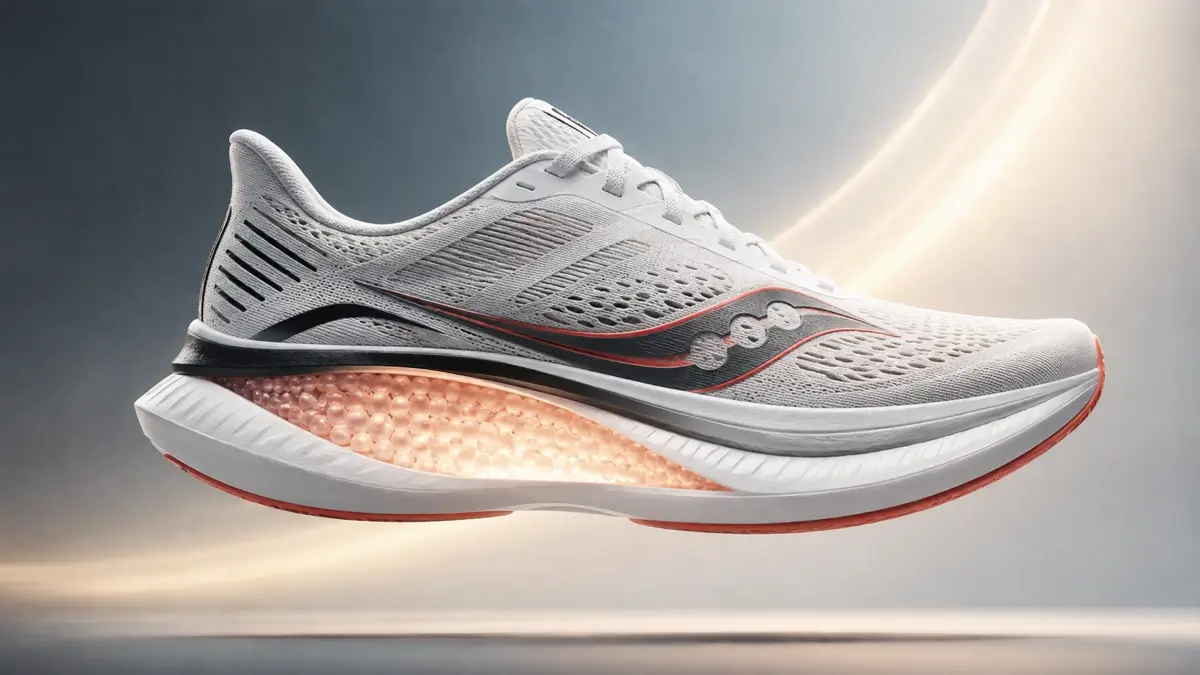
PWRRUN PB is one of Saucony’s premium cushioning materials. It is a PEBA-based foam designed to provide a light, responsive ride for both everyday running and faster efforts. Saucony makes it from PEBA foam beads, which help give the material its springy feel.
PEBA is short for polyether block amide. That sounds complicated, but you do not need to know the chemistry to understand what it does in a shoe.
When your foot lands, the foam compresses. As you move forward, it springs back toward its original shape. That quick rebound is one reason PWRRUN PB often feels livelier than traditional running shoe foam.
The foam is only one part of the shoe, though. Midsole thickness, shoe shape, outsole design and the presence of a plate can all change how PWRRUN PB feels underfoot.
What shoes contain PWRRUN PB? Click to scroll to table.
What does PWRRUN PB feel like?
The simplest description is springy. When your foot lands, the foam compresses and then rebounds quickly. That can make a shoe feel more energetic than a traditional EVA-based trainer.
Saucony describes PWRRUN PB as lightweight and highly responsive, with cushioning designed to perform consistently across different temperatures. The exact feel depends on the shoe.
In a thick, plateless trainer, PWRRUN PB can feel soft, flexible and lively. In a faster shoe with a nylon plate, it can feel more structured and propulsive. In a carbon-plated race shoe, the same foam may feel much more aggressive.
That is why seeing PWRRUN PB on a shoe’s spec sheet tells you something useful, but it does not tell you everything about the ride.
What is PWRRUN PB made from?
PWRRUN PB is made from PEBA rather than the EVA blend used in standard PWRRUN.
PEBA is a lightweight material that can be turned into soft, springy foam. Saucony forms PWRRUN PB from small foam beads, creating a midsole designed to provide cushioning while returning quickly to shape after it is compressed.
Traditional EVA foam can also provide good cushioning, but PEBA is often used when shoe companies want a lighter and more energetic ride.
That does not mean PWRRUN PB creates extra energy. Your legs still do the work.
It simply means the foam rebounds quickly after being compressed, which can make the shoe feel less flat or dull underfoot.
PWRRUN PB vs. PWRRUN
Standard PWRRUN and PWRRUN PB share a name, but they use different types of foam.
Saucony says standard PWRRUN is made from a proprietary EVA blend. It is designed to deliver dependable cushioning and shock absorption. PWRRUN PB uses PEBA foam beads and is aimed more at lightweight cushioning and responsiveness.
Here is the practical difference:
Feature | PWRRUN PB | PWRRUN |
|---|---|---|
Foam type | PEBA | EVA blend |
Typical feel | Springy and responsive | Balanced and steady |
Weight | Generally lighter | Generally heavier |
Main use | Daily training and faster running | Everyday training |
Ride | Energetic | More traditional |
Best for | Runners who want more bounce | Runners who want predictable cushioning |
Neither foam is automatically better.
A runner who enjoys a lively ride may prefer PWRRUN PB. Someone who wants a steadier and less bouncy shoe may prefer regular PWRRUN.
The design of the full shoe matters just as much as the foam.
PWRRUN PB vs. PWRRUN+
PWRRUN+ is another Saucony cushioning foam, but it has a different feel and purpose.
Saucony makes PWRRUN+ from TPU foam. The company positions it as a durable everyday cushioning material designed for comfort, stability and high mileage.
PWRRUN PB usually feels lighter and more energetic.
PWRRUN+ tends to feel more like a durable workhorse, which can make it appealing to walkers, high-mileage runners and people who spend long periods on their feet.
If you want more bounce and speed, PWRRUN PB will usually be the more interesting choice.
If you care more about lasting comfort and a predictable everyday ride, PWRRUN+ may suit you better.
PWRRUN PB vs. PWRRUN HG
PWRRUN HG is another Saucony performance foam.
Rather than always choosing one foam or the other, Saucony sometimes uses PWRRUN HG and PWRRUN PB together. The Endorphin Pro 5, for example, uses a dual-layer midsole that combines PWRRUN PB with Super Critical PWRRUN HG.
PWRRUN PB is the more versatile of the two. It appears in daily trainers, stability shoes, trail models and fast Endorphin shoes.
PWRRUN HG is more closely tied to Saucony’s top performance models.
For most runners, however, there is little reason to choose a shoe based only on the letters PB or HG. The shape, cushioning depth, plate and overall design will have a bigger effect on how the shoe actually feels.
Is PWRRUN PB a superfoam?
PWRRUN PB fits comfortably into what runners often call the “superfoam” category.
There is no official industry rule that defines a superfoam. In general, the term is used for newer performance foams that combine low weight, high cushioning and strong rebound.
PWRRUN PB has those traits, and Saucony itself describes it as a high-energy-return PEBA foam.
That does not mean every shoe with PWRRUN PB is a super shoe.
A super shoe usually combines premium foam with other features, such as a carbon plate, aggressive rocker shape or race-focused geometry.
PWRRUN PB can provide the lively cushioning, but the rest of the shoe determines whether it feels like an everyday trainer or a race-day machine.
Does PWRRUN PB have a carbon plate?
No. PWRRUN PB is foam, not a plate.
A shoe can use PWRRUN PB with a carbon plate, a nylon plate or no plate at all.
The Endorphin Azura, for example, uses a full PWRRUN PB midsole without a plate. The Endorphin Speed 5 uses PWRRUN PB with a semi-rigid nylon plate, while the Endorphin Pro 5 combines PWRRUN PB and PWRRUN HG with a carbon plate.
That means you can get the springy feel of PWRRUN PB without the stiffness that often comes with a plated shoe.
For walkers, this distinction can be useful. A plateless shoe may bend more naturally through the foot while still providing responsive cushioning.
Is PWRRUN PB good for walking?
PWRRUN PB can be very good for walking, especially if you like a shoe that feels soft, light and lively.
The foam compresses under your foot and rebounds as you move into the next step. That can make it enjoyable for fitness walking, brisk walks and longer outings.
Its low weight is another advantage. Some highly cushioned shoes can feel heavy, while PEBA helps Saucony build thicker cushioning without adding as much weight.
There are trade-offs. A tall shoe with soft foam can feel less planted than a firmer trainer. Some walkers also prefer a more stable, traditional feel and may find PWRRUN PB too bouncy.
The shape of the shoe matters too. A broad, stable shoe with PWRRUN PB may work very well for walking, while a narrow race shoe using the same foam may not.
Choose the shoe, not just the foam.
Is PWRRUN PB good for standing all day?
PWRRUN PB can work well for long periods of standing, but it will not be ideal for everyone.
Standing places steady pressure on a shoe rather than the repeated impact you get while running. Some people enjoy the softness of PEBA foam, while others are more comfortable on a firmer and more stable platform.
For jobs that involve a mix of walking and standing, PWRRUN PB can be appealing because it provides cushioning without adding much weight.
If you spend most of your shift standing in one place, stability may matter more than bounce.
Look at the width of the shoe, the firmness of the platform and how secure your foot feels before focusing on the foam name.
See more Best shoes for standing all day.
Is PWRRUN PB good for everyday running?
Yes. Saucony now uses PWRRUN PB in shoes designed for both everyday running and faster workouts. The company’s current foam guide lists it for everyday and speed-focused use.
That is important because premium PEBA foam is no longer limited to race-day shoes.
A runner can now get the light and springy feel of PWRRUN PB in shoes made for easy runs, long runs and daily training.
The Endorphin Azura is a good example. It uses a full PWRRUN PB midsole without a plate, creating a softer and more flexible alternative to Saucony’s plated Endorphin models.
For runners who want one shoe to cover several types of workouts, that versatility can make PWRRUN PB especially appealing.
Which Saucony shoes use PWRRUN PB?
Saucony has expanded PWRRUN PB well beyond its fastest race shoes.
During the 2025 and 2026 model years, the foam appeared in daily trainers, stability shoes, trail shoes and several members of the Endorphin family. Saucony’s current 2026 PWRRUN PB listings include the Endorphin Azura and Xodus Ultra 4, while its broader foam guide also identifies models such as the Endorphin Speed 5, Triumph 23 and Tempus 2 as PWRRUN PB shoes.
The table below highlights notable models from the 2025-2026 period. Model availability can overlap years because an older shoe may remain on sale after its replacement arrives.
Saucony shoe | How PWRRUN PB is used | Check price |
|---|---|---|
Endorphin Speed 4 | PWRRUN PB with a winged nylon plate | |
Endorphin Speed 5 | PWRRUN PB with a semi-rigid nylon plate | |
Endorphin Pro 4 | PWRRUN PB and PWRRUN HG with a carbon plate | |
Endorphin Pro 5 | PWRRUN PB and PWRRUN HG with a carbon plate | |
Triumph 23 | Full PWRRUN PB cushioning for daily training | |
Hurricane 25 | PWRRUN PB over a supportive PWRRUN layer | |
Tempus 2 | PWRRUN PB core with a supportive PWRRUN frame | |
Xodus Ultra 4 | PWRRUN PB cushioning in a trail-running design | |
Endorphin Azura | Full PWRRUN PB midsole with no plate |
The Endorphin Speed 4 (check price) uses PWRRUN PB with a winged nylon plate, while the Speed 5 continues with PWRRUN PB and a redesigned nylon plate.
The Triumph 23 (check price) takes a different approach, using PWRRUN PB as the main cushioning material in a high-cushion daily trainer.
The Hurricane 25 (check price) combines a soft layer of PWRRUN PB with regular PWRRUN underneath to add support and stability.
The Tempus (check price) uses a PWRRUN PB core surrounded by a supportive PWRRUN frame, showing how Saucony can use the same responsive foam in a stability-oriented shoe.
The Endorphin Azura (check price | read review) takes yet another approach. It uses a full PWRRUN PB midsole but removes the plate entirely, giving runners a more flexible everyday version of the Endorphin experience.
For shoppers, the important point is that PWRRUN PB no longer tells you what type of shoe you are buying. It can now appear in an everyday trainer, stability shoe, trail shoe, speed trainer or carbon-plated racer.
How durable is PWRRUN PB?
There is no reliable mileage number that applies to every PWRRUN PB shoe. How long a shoe lasts depends on many factors, including your weight, running or walking style, terrain, pace and how often you wear it.
The outsole matters too. A shoe with plenty of rubber covering the midsole may resist wear better than a shoe that leaves larger sections of foam exposed.
The best way to judge durability is to pay attention to the shoe itself. Watch for uneven outsole wear, a noticeable loss of cushioning, reduced comfort or a ride that starts to feel flat. Do not replace a shoe simply because it has reached an arbitrary mileage number if it still feels comfortable and performs well.
Is PWRRUN PB worth it?
PWRRUN PB is worth considering if you want a lighter and springier ride than you normally get from a traditional daily trainer. It makes particular sense for runners who want a shoe that feels comfortable at an easy pace but still has enough energy for faster efforts.
Walkers who enjoy soft, responsive cushioning may like it for the same reason. You do not need PWRRUN PB simply because it is a premium foam.
A firmer EVA shoe may be a better choice if you want maximum stability. PWRRUN+ may make more sense if durability and steady everyday comfort matter more to you.
The best foam is not the one with the fanciest name or chemistry. It is the one that feels right for the way you run or walk.
PWRRUN PB FAQs
Here are frequently asked questions and answers for PWRRUN PB.
PWRRUN is Saucony’s name for its family of cushioning technologies. PWRRUN PB is the company’s PEBA-based beaded foam designed for lighter weight and stronger rebound.
Yes. Saucony identifies PWRRUN PB as a PEBA-based foam made with foam beads.
It often feels softer and more responsive, but that depends on the shoe. Midsole thickness, shape and other components can make two PWRRUN PB shoes feel very different.
Not for everyone. PWRRUN PB is focused more on lightweight responsiveness, while Saucony positions TPU-based PWRRUN+ around durability and everyday comfort.
No. PWRRUN PB is foam. A shoe can use it with a carbon plate, a nylon plate or no plate at all.
Yes. PWRRUN PB can work very well for walking, especially if the shoe has a stable platform and you enjoy light, responsive cushioning.
Yes. Saucony uses PWRRUN PB in daily trainers as well as faster models, so it is not limited to speed workouts or racing.
Saucony says PWRRUN PB is designed to perform consistently across different temperatures.
No. Saucony also uses the foam in shoes outside the Endorphin family, including models such as the Triumph 23, Hurricane 25 and Tempus.
It can be. Heavier runners should also look at platform width, stability, cushioning depth, outsole durability and overall fit rather than choosing a shoe based only on the foam.