Last Updated on October 16, 2026
Extraordinary lightness at an extraordinary price
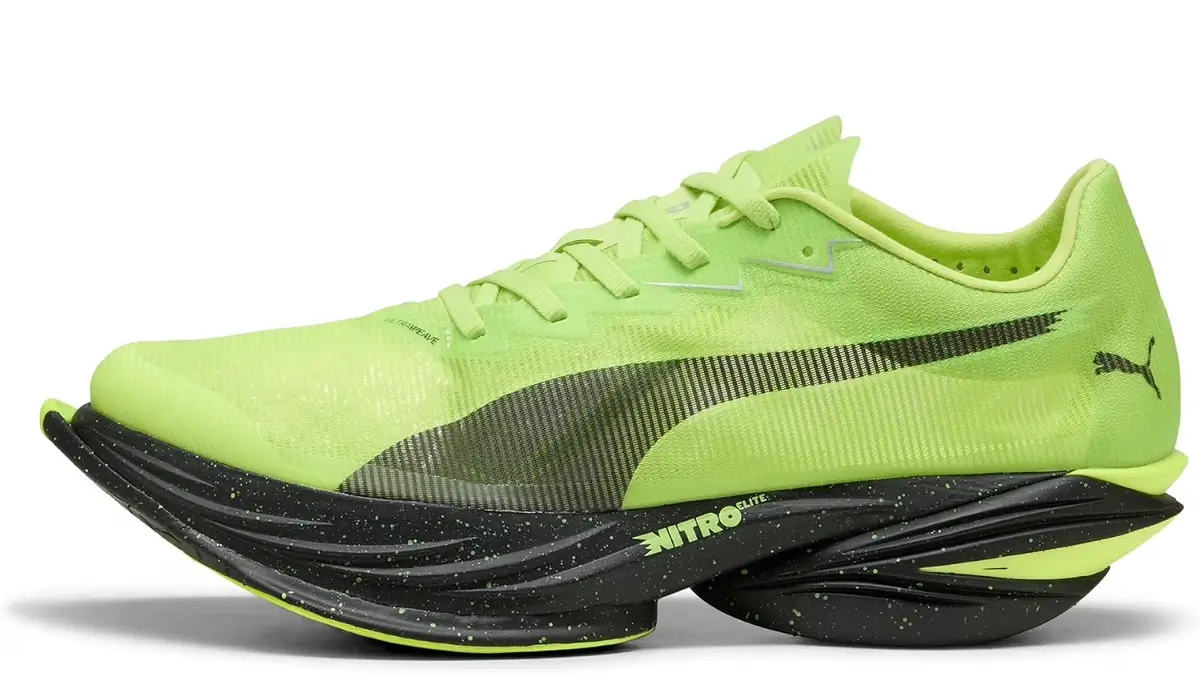
Quick Answer: Puma Fast-R Nitro Elite 3 Review: The Fast-R Nitro Elite 3 is a carbon marathon racer for neutral runners chasing a time, and its headline is weight. Puma cut it from roughly 264 g to about 170 g, which makes it one of the lightest 40 mm racing shoes ever built. A PWRPLATE carbon element works with nitrogen-infused foam to produce a sharp, forefoot-oriented toe-off. The obvious catch is price, at $300, and a ride that rewards forefoot strikers far more than heel strikers. Check latest price.
The Puma Fast-R Nitro Elite 3 is the third version of the shoe Puma races marathons in, and it represents one of the largest single weight reductions in modern running footwear. The Fast-R Nitro Elite 2 weighed around 264 grams in a men’s US 9. This one weighs about 170. That is a saving of roughly a third, on a shoe that still carries 40 mm of stack.
The engine is a PWRPLATE carbon element paired with Puma’s nitrogen-infused racing foam. Nitrogen infusion forces gas into the foam under pressure, producing a lighter and more resilient structure, and the plate resists the toes bending back at push-off so more of your force translates into forward motion. Puma shapes the whole thing around the forefoot rather than the heel, which is the defining characteristic of how it runs.
Puma also quotes a lifespan of around 500 km, roughly 310 miles, which is unusually specific for a racing shoe and worth knowing before you spend $300. That is a manufacturer figure rather than an independent measurement, but it sets expectations honestly for a category where foam life is the real limit.
Specs
Here are the specifications for the Puma Fast-R Nitro Elite 3:
| Type | Road marathon racing shoe, neutral, carbon plated |
| Best for | Half and full marathon racing, forefoot and midfoot strikers |
| Midsole | Nitrogen-infused NITROFOAM racing foam |
| Plate | PWRPLATE carbon fiber element |
| Stack height | 40 mm heel / 32 mm forefoot, approximate |
| Heel-to-toe drop | 8 mm |
| Weight | About 170 g (5.99 oz) men’s US 9, about 147 g (5.2 oz) women’s US 8, down from about 264 g for the Elite 2 |
| Upper | Ultra-light racing mesh with minimal structure |
| Outsole | PumaGRIP rubber applied minimally to save weight |
| Quoted lifespan | About 500 km (310 miles) according to Puma; a manufacturer figure rather than an independent measurement |
| Price | Launched at $300 in April 2025. Check latest price |
Pros
These are the reasons elite runners race in it:
- Around 170 grams with 40 mm of stack, which is a genuinely remarkable combination
- The PWRPLATE gives a sharp, decisive toe-off rather than a vague roll
- Nitrogen-infused foam is both light and highly resilient, so nothing is wasted on mass
- Roughly a third lighter than the Elite 2, which is a rare generational leap
- PumaGRIP holds on wet roads, which many racing outsoles do not
- Puma quotes a lifespan figure, so you can plan around the foam rather than guess
Cons
These are the reasons most runners should not buy it:
- $300 is at the very top of the market, and the shoe has a finite life
- The geometry favours forefoot and midfoot strikers, and heel strikers get less from it
- A minimal upper offers no comfort or forgiveness on any foot outside its shape
- Standard width only, cut narrow
- No training use at all, so the cost per race is high unless you race often
What is new versus the Fast-R Nitro Elite 2
Weight is the entire headline, and it is a bigger jump than most brands manage across three generations. Going from roughly 264 grams to about 170 is close to a third of the shoe removed, and every part of the construction contributed: a stripped upper, a reworked plate and far more selective outsole rubber.
The Elite 2 used a distinctive split-sole design that divided opinion sharply, with a decoupled heel that many runners found awkward. The 3 moves to a more conventional full platform while keeping the aggressive forefoot geometry, which makes it easier to run in without giving up the sensation Puma was chasing.
The result is a shoe that finally makes sense to a wider group of runners than the Elite 2 did. It is still a specialist racer with a strong forefoot bias, but it no longer asks you to adapt to an unusual sole design to benefit from it.
Who should buy the Fast-R Nitro Elite 3
Buy the Fast-R Nitro Elite 3 if you race marathons seriously and weight is what you are optimising for. Carrying 90 grams less per shoe over 26 miles is a meaningful saving, and there is almost nothing else on the market that offers this mass at this stack height.
It suits forefoot and midfoot strikers specifically. Puma builds the geometry and the plate around a forward landing, and runners who land toward the front of the foot get a sharp, immediate return. Heel strikers still get a functional racing shoe, but they are not the runner it was designed for.
Runners who race in wet conditions should also note the outsole. PumaGRIP is one of the better compounds in running and, unusually, Puma does not compromise it entirely in the search for weight, so traction is more dependable than in several rival racers.
Who should avoid the Fast-R Nitro Elite 3
Avoid it if you are a committed heel striker. The forefoot-oriented geometry means a rearfoot landing does not engage the plate as effectively, and you would get more from a racer with a more balanced or heel-friendly rocker.
Avoid it if you race occasionally. At $300 with a quoted life of around 310 miles, the cost per race for someone doing one marathon a year is severe. A durable super trainer will produce a slightly slower time and cover the whole training block as well.
Runners with wide feet have no fitting option and the upper has almost no give. Runners who need stability features will find nothing here, and anyone with persistent pain should seek a professional assessment rather than expect a racing shoe to help.
How does the Fast-R Nitro Elite 3 fit?
Here is the fit and comfort info you need for this shoe.
Fit and sizing
The Fast-R Nitro Elite 3 fits true to size in length with a narrow, close racing shape. The upper holds the foot tightly because any internal movement wastes energy and invites blisters over a marathon, and that is a deliberate design choice rather than a fit failure.
There is no wide fitting. Runners whose feet swell significantly over marathon distance should think carefully about going up a half size, since a fit that is precise at the start line can be painful at 20 miles.
Upper and step-in comfort
Step-in comfort barely exists, which is what a 170 gram shoe implies. The mesh is extremely thin, the collar carries almost no padding and the tongue is minimal. Everything not needed for holding the foot has been removed.
Breathability is excellent as a consequence, which suits warm-weather racing. It offers no protection from cold or rain, and it will not disguise a poor fit the way a padded upper might.
How does the Fast-R Nitro Elite 3 perform?
Here is the performance info you need.
Midsole and cushioning
Nitrogen-infused NITROFOAM in racing form is light and highly resilient, meaning it compresses readily and gives back a large share of that energy. At 40 mm at the heel there is enough depth to protect the legs across a marathon, which is the balance every racing shoe is trying to strike.
Because the shoe weighs so little, the foam is doing proportionally more of the work than in a heavier racer. That is what makes the ride feel unusually direct: there is very little shoe between you and the return.
Ride and racing performance
At race pace the shoe is sharp and forward-driving. The PWRPLATE stiffens the forefoot decisively, so pushing off feels like levering against something solid rather than compressing foam, and the low mass means turnover stays easy deep into a race.
The character is aggressive rather than smooth. Runners who prefer a long, gentle roll will find it demanding, and heel strikers report less benefit than forefoot runners. At easy paces it does very little, as every racer of this type does.
Stability and support
This is a neutral racing shoe with no support features, and at 40 mm of stack on a very light platform it is not especially planted. The carbon plate provides torsional rigidity, meaning it resists the shoe twisting along its length, which holds the platform together, but there is nothing designed to limit inward roll of the foot.
Moving away from the Elite 2’s split-sole design did improve matters, since a continuous platform behaves more predictably than a decoupled one. Runners who need genuine stability should not race in a shoe like this, and persistent pain warrants a professional assessment.
Outsole, grip and durability
PumaGRIP is applied sparingly to save weight, but where it is present it grips as well as anything in running. Wet asphalt is handled confidently, which matters for spring marathons, though the exposed areas mean painted lines and metal covers deserve caution.
Puma quotes roughly 500 km, about 310 miles, as the shoe’s lifespan. That is a manufacturer figure, and it is honest about the category: racing foams lose their rebound long before the upper or outsole fails. The usual 300 to 500 mile guideline for trainers does not really apply, and rationing the shoe is essential at this price.
Is the Fast-R Nitro Elite 3 good for walking?
No. A stiff carbon plate resists the forefoot bending, and walking depends on the toes flexing through a bigger range than running does, so the shoe fights the motion rather than helping it. The forefoot-oriented geometry also assumes you are landing toward the front of the foot at speed, which nobody does at walking pace, so the design does nothing useful.
The economics settle it. At $300 with a quoted life of around 310 miles, every walking mile spends performance you paid a great deal for and gives nothing back. The upper is also cut tight with no padding and no give as feet swell. Wear it to race, take it off afterward, and buy a cushioned walking shoe for everything else.
To find a better walking shoe, check out our helpful walking shoe guide.
Fast-R Nitro Elite 3 vs. Fast-R Nitro Elite 2
Here is how the two versions compare:
| Fast-R Nitro Elite 3 | Fast-R Nitro Elite 2 | |
| Weight | About 170 g | About 264 g |
| Sole design | Continuous platform | Split sole with a decoupled heel |
| Predictability | More conventional and easier to run | Divisive |
| Plate | PWRPLATE carbon, forefoot oriented | PWRPLATE carbon |
| Stack | 40 mm heel | Comparable |
Buy the 3 in essentially every case, since it is lighter and easier to run in. Buy the 2 while discounted only if you specifically got on with its split-sole feel, which a minority of runners genuinely preferred.
Puma Fast-R Nitro Elite 3 Alternatives
Heel strikers will get more from the Nike Vaporfly 4, whose geometry is friendlier to a rearfoot landing while remaining extremely light. It is also considerably cheaper, which matters in a category where the shoe is a consumable (check price | read review).
Runners who want a smoother, more forgiving marathon racer should compare the Saucony Endorphin Pro 5. Its slotted plate and long Speedroll transition suit runners who fall apart late in a race rather than those chasing an aggressive toe-off (check price).
Where the $300 price is the sticking point, the New Balance FuelCell SuperComp Elite v5 delivers carbon-plated racing performance for around $50 less, with a distinctive Energy Arc rebound instead of Puma’s forefoot bias (check price).
Runners who cannot justify a race-only shoe at all should look at the Hoka Mach X 2, which covers workouts, long runs and racing in one durable package. It is slower, and it does not need rationing (check price).
See alternatives in our Best Racing Shoes roundup.
Price and value
The Fast-R Nitro Elite 3 launched at $300 in April 2025, which puts it at the very top of the running shoe market. Puma’s own lifespan figure of around 310 miles is the number to weigh it against, because that is what you are actually buying. For a competitive marathon runner racing two or three times a year and doing key sessions in it, the weight advantage is real and the maths is defensible. For anyone else it is difficult to justify, since a $200 racer will produce a very similar result and a $190 super trainer will cover the entire training block as well.
Final verdict
Best for: half and full marathon racing, for competitive forefoot and midfoot strikers who race often enough to justify the cost.
Avoid if: you are a heel striker, you race occasionally, you have wide feet or you want a shoe you can also train in.
Fit: true to size in length, narrow racing shape, standard width only, with almost no padding.
Verdict: Cutting a third of the weight while keeping 40 mm of stack is a genuine engineering achievement, and abandoning the split sole makes the shoe far easier to run. It is expensive, short-lived and aimed squarely at forefoot runners, which narrows who should buy it considerably. You can check size availability before ordering.
Frequently Asked Questions for the Puma Fast-R Nitro Elite 3
Yes in length, with a narrow racing shape that holds the foot tightly. There is no wide fitting and the minimal upper has very little give, so runners whose feet swell over marathon distance often go up a half size.
Dramatically. The Elite 2 weighed roughly 264 grams in a men’s US 9 and the Elite 3 comes in around 170, which is close to a third of the shoe removed while keeping 40 mm of stack. It is one of the largest generational weight cuts in running.
Forefoot and midfoot strikers, clearly. Puma builds the geometry and the plate around a forward landing, so runners who land toward the front of the foot get the sharpest return. Heel strikers still get a capable racer but are not the target.
Puma quotes around 500 km, roughly 310 miles. That is a manufacturer figure rather than an independent measurement, but it is honest about the category, since racing foams lose their rebound long before the outsole or upper wears out.
Puma dropped it. The Elite 2’s decoupled heel divided opinion sharply, with many runners finding it awkward. The Elite 3 uses a continuous platform, which behaves more predictably while keeping the aggressive forefoot geometry Puma was after.
Only if you race often. Against a quoted 310 mile lifespan, the cost per race is high for someone doing one marathon a year, and a $200 racer will produce a very similar time. For a competitive runner racing several times a season, the weight advantage is real.
Compare this model with the rest of the current lineup in our Puma shoes hub and Puma running shoes comparison.