Approachable barefoot shoes, but heavier than need be
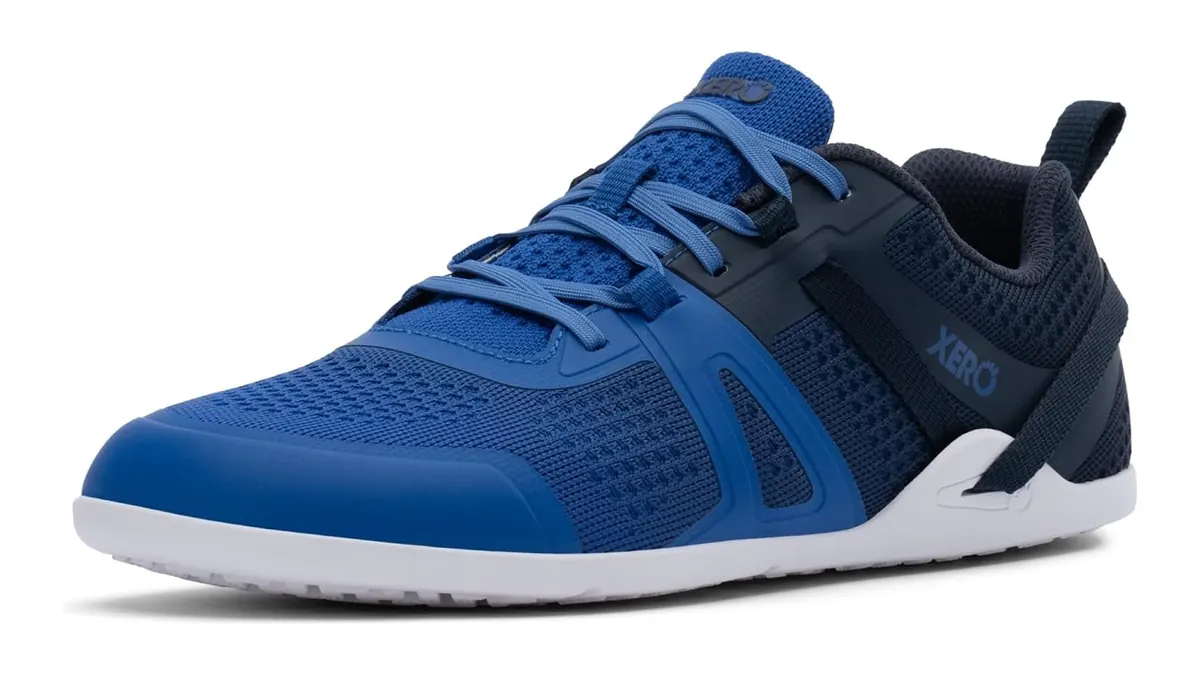
Quick Answer: Xero Shoes Prio Neo Review: The Xero Shoes Prio Neo is a barefoot-style trainer with a wide, foot-shaped toe box, a flat sole with no heel lift and enough flexibility to let your foot move naturally. It is one of the friendlier ways into minimal footwear, and it works well for gym sessions, lifting and short runs. The catches are that it weighs more than a shoe with almost no midsole ought to, and that it offers no cushioning or support at all, so the adjustment period is real. Check latest price.
The Xero Shoes Prio Neo is a barefoot shoe, and it is worth defining that before anything else. A barefoot or minimalist shoe has three features: a sole thin and flexible enough that your foot can bend and feel the ground, no height difference between heel and toe, and a toe box shaped like an actual foot so your toes can spread. The Prio Neo has all three.
Within Xero’s range, the Prio is the bestseller and the Neo is its more capable sibling, aimed at people who train. Xero positions it as a workout shoe, and that framing is accurate: it is built for gym floors, weights, functional training and short runs rather than for long distances on pavement.
If you are new to this category, read our guide to zero-drop shoes before you buy anything, because the transition matters more than the model. Going from a cushioned trainer straight into a barefoot shoe is the most common way people end up with sore calves and Achilles tendons, and no shoe protects you from doing that too quickly. For more conventional alternatives, compare our best cross-training shoes and best CrossFit shoes.
Specs
Here are the specifications for the Xero Shoes Prio Neo:
| Type | Barefoot or minimalist trainer, neutral |
| Best for | Gym training, lifting, everyday wear and short runs |
| Heel-to-toe drop | Zero, meaning your heel and toes sit at the same height. Independent measurement put the actual figure at about 0.4 mm, which is within normal manufacturing tolerance |
| Toe box | Wide and foot-shaped, designed to let the toes spread |
| Midsole | None in the conventional sense, this is a minimal sole |
| Outsole | Xero’s flexible rubber sole |
| Weight | About 9.8 oz (279 g) in the tested size, an independently measured figure rather than a manufacturer claim |
| Upper | Breathable mesh with a lace-up closure |
| Widths | One width, but the foot-shaped last means it fits wider feet than most standard shoes |
| Price | Listed at $99.99 by Xero Shoes. Xero does not publish a launch month for the Prio Neo, so we are not quoting one. Check latest price |
Pros
Here is what the Prio Neo does well:
- The toe box is genuinely wide and shaped like a foot, so your toes can spread instead of being squeezed into a point. For anyone with bunions or wide feet, that alone is a relief.
- Excellent for lifting. A flat, firm, thin sole means your weight goes straight into the floor instead of squashing into foam, which makes squats and deadlifts feel more stable.
- Very flexible. The sole bends with your foot in every direction, which is what lets the muscles in your feet actually work.
- Zero drop, so your posture is not tilted forward by a raised heel.
- Versatile. One shoe covers the gym, a walk to the shops and a short run, which is unusual.
- Reasonably priced for the category, and cheaper than most of the established barefoot brands.
Cons
And here is what to weigh against that:
- Heavy for a barefoot shoe. At roughly 9.8 oz it weighs about what a cushioned trainer does, which is a lot for something with almost no midsole.
- No cushioning. That is the point, but it means concrete is unforgiving and long distances are hard work.
- No support of any kind. There is no arch structure and no stability feature, deliberately.
- The adjustment period is real. Your calves and feet will complain if you switch over too fast, and that catches out even experienced runners.
- Not a shoe for standing all day on a hard floor unless your feet are already conditioned to it.
- One width only, so if the foot-shaped last does not suit your particular foot there is no alternative fitting.
What is new compared with the standard Prio
The original Prio is Xero’s bestselling everyday minimalist shoe and the Neo is the version aimed at training. Both share the DNA that defines a Xero: zero drop, a wide foot-shaped toe box and a flexible sole you can roll into a ball.
The Neo is the more considered build of the two. It is positioned as the workout model, with a construction that suits gym use, lifting and cross-training rather than only casual wear. If you have tried a standard Prio and liked the shape but wanted something that felt a little more purposeful under load, the Neo is that shoe.
What has not changed is the philosophy, and this is the important part. Neither shoe cushions you, supports you or corrects anything. Xero’s whole argument is that your feet do those jobs themselves once they are strong enough, and the shoe’s role is to protect the skin and stay out of the way. Agree with that and the Neo is excellent. Disagree and no version of it will suit you.
Who should buy the Xero Shoes Prio Neo
Buy it if you lift weights. This is the clearest case. A flat, thin, firm sole gives you a stable base to press against, and squashy foam under a heavy barbell is genuinely unhelpful. Plenty of people buy a shoe like this for the gym alone and never wear it anywhere else.
Buy it if you have wide feet or bunions and have spent years being pinched. The foot-shaped toe box is not a marketing line, it is a differently shaped last, and the relief of being able to spread your toes is the reason most people who try barefoot shoes stick with them.
And buy it if you are curious about barefoot shoes and want a sensible starting point. It is more forgiving than the very thinnest models, it costs less than the premium brands, and it is versatile enough that if you decide the category is not for you, it still works as a gym shoe.
Who should probably skip it
Skip it if you have any current foot or lower leg problem. Plantar fasciitis, Achilles tendinopathy, a history of stress fractures, or arthritis in the foot are all reasons to be cautious, because a barefoot shoe transfers load onto structures that a cushioned shoe protects. That does not mean minimal shoes are bad for you, it means the transition needs to be gradual and ideally supervised. If you have persistent pain, talk to a physiotherapist or podiatrist before switching.
Skip it too if you spend your day on concrete, or if you want a shoe for long walks and runs on pavement. Those readers should look at:
- Brooks Ghost Max 3: about as far from a barefoot shoe as you can get, with a tall stack and a rocker, for anyone whose feet want protecting rather than exercising (check price | read review)
- Hoka Clifton Pro: light and deeply cushioned, the right answer if you want to run properly rather than experiment with your form (check price | read review)
- Skechers Arch Fit 2.0: for readers who liked the idea of a roomier shoe but actually want arch support rather than less of it (check price | read review)
How does the Xero Shoes Prio Neo fit?
The Prio Neo fits like nothing you are used to unless you already wear barefoot shoes. It is narrow-looking at the heel and dramatically wide at the front, because it is built on a last shaped like a foot rather than the tapered shape almost every other shoe uses. Most people’s first reaction is that it looks odd and feels wonderful.
Fit and sizing
Take your usual size. Xero sizing runs close to standard, and because the width comes from the shape rather than from extra length, you should not size up to get room across the toes. Doing that gives you a shoe that slides at the heel, which matters more in a shoe with no cushioning to disguise it.
There is one width. In a conventional shoe that would be a problem for wide feet, and here it is not, because the foot-shaped last already gives you far more room across the toes than a standard 2E fitting would. The place to check is the heel and midfoot, which are held reasonably closely.
Upper and step-in comfort
The upper is breathable mesh with normal laces, and it is unremarkable in the best way: no hot spots, no stiff overlays, nothing pressing on the top of the foot. Because the shoe holds your foot rather than cushioning it, the lacing matters more than usual and it is worth taking a minute to get it right.
Step-in comfort is where expectations need managing. Put the Prio Neo on and it feels roomy and light, and it also feels flat and hard, because there is nothing soft underneath you. That is not a fault. It is what a minimal shoe is, and after a couple of weeks most people stop noticing it entirely.
How does the Xero Shoes Prio Neo perform?
Judging a barefoot shoe by the usual measures does not work, because it is designed to do less rather than more. The right question is whether it stays out of the way while protecting your skin, and on that the Prio Neo does well. On the gym floor it is excellent. On concrete over distance it is exactly as demanding as it is supposed to be.
Cushioning and ground feel
There is no cushioning. What you get instead is ground feel, meaning you can sense the texture and shape of what you are standing on through the sole. That sounds unpleasant and is, once your feet adjust, quite pleasant: your foot reads the surface and adjusts, rather than being insulated from it.
The practical consequence is that hard surfaces are hard. Walking on grass, a wooden floor or a gym mat is comfortable. Walking on cold concrete for an hour is not, and it will not become so however long you persist. Choose your surfaces and this shoe is a pleasure. Ignore them and it is a slog.
Ride and running performance
For running, the Prio Neo works best in short doses. With no cushioning, your calves and feet absorb impact that a normal shoe would have handled, which is exactly the point of running in minimal shoes and also the reason so many people injure themselves doing it. Start with a mile, not five, and build slowly over months rather than weeks.
The weight is the odd note. At around 9.8 oz it is heavier than a shoe with this little material ought to be, and when the whole appeal is feeling unencumbered, that is a genuine criticism. It is not enough to spoil the shoe, but the lightest barefoot models weigh little more than half as much.
Stability and support
There is no support system, by design. No medial post, no arch shaping, no heel counter to speak of. Xero’s position is that a strong foot supports itself and that a supportive shoe does the work your foot should be doing.
What the shoe does give you is a different kind of stability: you are flat on the ground with nothing squashing under you, so there is nowhere to wobble to. That is why it is so good for lifting, and it is a real benefit. But it will not resist a foot rolling inward, and it will not change how you walk, because no shoe corrects gait. If you have been prescribed orthotics or told you need support, the Prio Neo asks you to go in the opposite direction, and that is a decision worth taking with a clinician rather than alone.
Outsole, grip and durability
The sole is Xero’s flexible rubber, thin enough to bend easily and grippy enough for gym floors, pavements and dry trails. On a lifting platform or a rubber gym floor it is excellent, because the flat profile means full contact. On wet grass or mud it is limited, since a thin, low-profile tread cannot dig in.
Durability is a Xero strength. The brand has long offered a warranty on the sole of its shoes measured in thousands of miles, which tells you something about how the rubber is specified. The upper, as with any mesh shoe, will show wear before the sole does.
Is the Xero Shoes Prio Neo good for walking?
For short, everyday walking on forgiving surfaces, yes, and for many people it is the best part of owning one. Walking is the gentlest way to build up to minimal footwear, and the wide toe box makes an ordinary stroll noticeably more comfortable than a tapered shoe does. Grass, parks, wooden floors and dry trails all feel good.
For long walking on hard surfaces, no, at least not until your feet have had months to adapt. City pavement is relentless and there is nothing between you and it. Our practical advice is to start at 20 to 30 minutes a few times a week, keep a cushioned shoe for your longer walks, and increase gradually. Sore calves the next day are a signal to slow down rather than push on.
Transitioning to barefoot shoes safely
This deserves its own section because it is where people go wrong, and no review of a minimal shoe is complete without it. Moving from a cushioned trainer to a zero-drop shoe changes the angle of your ankle and asks your calf and Achilles to work through a longer range. Those tissues adapt, but slowly, and much more slowly than your enthusiasm does.
A sensible pattern is to wear the shoes for short periods around the house and on easy walks first, over several weeks, before doing anything athletic in them. Then add gym sessions, then very short runs. If you feel tightness in the calf or a nagging ache at the back of the heel, that is your signal to back off for a few days rather than to push through.
If you have plantar fasciitis, Achilles pain or any diagnosed foot condition, get advice before starting. Minimal footwear may suit some people well and may aggravate others, and a physiotherapist who can see your feet is a better guide than a product page. Persistent or worsening pain always warrants a professional assessment.
Prio Neo vs the standard Xero Prio
Both are sold alongside each other, so here is the practical difference.
Xero Prio | Xero Prio Neo | |
Positioning | Everyday minimalist bestseller | Workout and training model |
Drop | Zero | Zero |
Toe box | Wide, foot-shaped | Wide, foot-shaped |
Best use | Casual wear and light activity | Lifting, cross-training and short runs |
Buy the Neo if the gym is the main reason you want the shoe. Buy the standard Prio if you mostly want a comfortable everyday minimal shoe and the training features are irrelevant to you. Our guide to the Xero range covers the rest of the line-up if neither is quite right.
Xero Shoes Prio Neo Alternatives
Within minimal footwear the choices come down to how thin you want the sole and how much you are willing to spend. Outside it, the question is whether you want a barefoot shoe at all.
Merrell Vapor Glove 6 is the pick if the Prio Neo’s weight is what bothers you. It is dramatically lighter, with a thinner sole and more ground feel, which makes it the more purist choice and the less forgiving one. Expect a harder ride and a shorter outsole life (check price).
For a premium alternative with a similar training brief, the Vivobarefoot Primus Lite IV offers a very thin, flexible sole and a wide toe box in a lighter package, made from recycled and vegan materials. It costs more and its lightweight upper is less hard-wearing, so it suits city and gym use rather than rough ground (check price).
Readers who want the wide toe box and the level platform but not the lack of cushioning have a genuine middle option in the Altra Torin 9. It is zero drop with the same roomy foot shape, and it has a full cushioned midsole underneath, which makes it far more practical for distance on hard ground (check price | read review).
Price and value
Xero lists the Prio Neo at $99.99. In the barefoot category that is competitive, since the established specialist brands typically sit well above it, and you are getting a shoe versatile enough to cover the gym, casual wear and short runs rather than one that only does a single job.
The value case is helped by longevity. Xero’s rubber soles have a reputation for outlasting the uppers, so this is not a shoe you replace every season. The weight is the one place where the price feels less well spent, because lighter barefoot shoes exist at similar money. If ground feel and toe room are what you are buying, though, it delivers both at a fair price.
Final verdict
Best for: lifting and gym training, people with wide feet or bunions, and anyone taking a first careful step into barefoot shoes.
Avoid if: you have current foot or Achilles pain, you spend your day on concrete, or you want a shoe for long walks and runs on pavement.
Fit: true to size, narrow-looking at the heel and genuinely wide at the toes. One width, which is plenty given the foot-shaped last. Do not size up for width.
Verdict: the Prio Neo is one of the more sensible barefoot shoes on the market. It gives you the toe room, the flat platform and the flexibility that make this category worth trying, at a price that does not punish you for experimenting, and it is genuinely excellent under a barbell. The weight is the one real disappointment, and the absence of cushioning is a feature you either want or you do not. Go in slowly and it will reward you. Check the latest price.
Frequently Asked Questions for Xero Shoes Prio Neo
Yes, they are one of the more approachable options. The sole is thin and flexible but not the thinnest available, the toe box is generously shaped, and the price is reasonable for a first pair. The transition still needs to be gradual.
Yes, order your usual size. The extra room comes from the foot-shaped last rather than from length, so sizing up to gain width gives you a shoe that slips at the heel.
They are very well suited to it. A flat, firm, thin sole means your weight transfers straight into the floor rather than compressing foam, which makes squats and deadlifts feel more stable.
Most people need several weeks to a few months, and the adaptation is in the calves, Achilles and small muscles of the foot rather than in the shoe. Start with short spells of everyday wear, add activity gradually, and treat calf tightness as a signal to slow down.
Yes, in short doses and once your feet have adapted. With no cushioning, your legs absorb impact a normal shoe would handle, so build up over months rather than weeks and keep a cushioned shoe for longer runs.
It depends on the person and the stage of the problem, and the evidence is mixed. Minimal shoes remove the cushioning and arch support many people with heel pain are advised to use, so switching during a flare-up is risky. Speak to a podiatrist or physiotherapist before making the change.
Both share the same zero drop, wide foot-shaped toe box and flexible sole. The standard Prio is the everyday bestseller, while the Neo is built as the workout model for lifting and cross-training.