Waterproof winter grip with extra weight
Quick Answer: The North Face Chilkat V Review: The North Face Chilkat V is a sturdy, waterproof, insulated lace-up winter boot for people who shovel, walk the dog and get around town in snow and slush, with enough grip and ankle support for light winter trails. A waterproof suede upper over a molded shell keeps water out, a winter-tuned rubber outsole grips packed snow, and a snowshoe heel clip adds options. Its moderate insulation suits active days rather than standing still in deep cold. It is heavy and comes in one width, so it is not the lightest or roomiest choice..
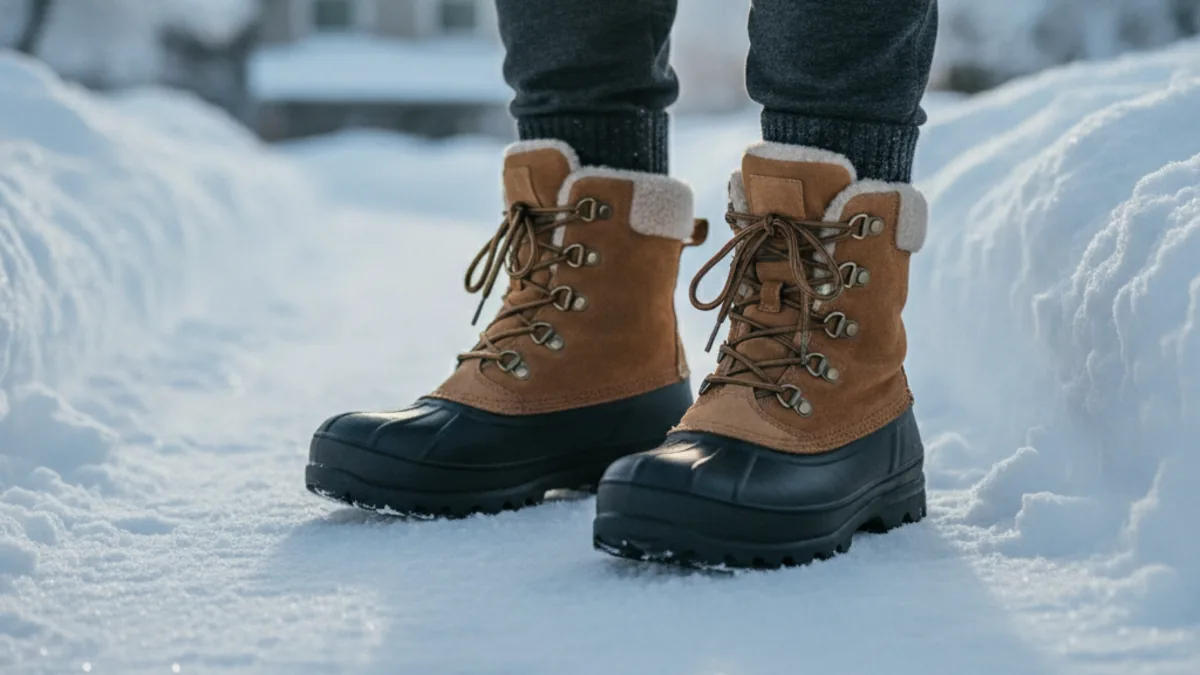
The North Face Chilkat V is the brand’s everyday winter workhorse, and The North Face describes it as an updated edition of “our classic winter workhorse.” It is not a technical mountaineering boot and it is not a fashion boot. It sits in the useful middle: a waterproof, insulated boot for clearing the driveway, walking the dog before work, crossing slushy parking lots and the occasional snowshoe outing on the weekend.
This review covers the men’s Chilkat V Lace, The North Face style NF0A5LW3, sold in sizes 7 to 14 in Utility Brown/TNF Black and TNF Black/Asphalt Grey. The brand also sells a warmer Chilkat V 400 with twice the insulation. If your winters are mostly about moving around in cold, wet conditions rather than standing still in bitter cold, the standard Chilkat V is the version to look at.

The North Face Chilkat V Lace waterproof winter boot in Utility Brown and Black, side view. Image: Amazon
Specs
Here are the specifications for The North Face Chilkat V:
| Type | Waterproof, insulated lace-up winter boot |
| Best for | Snow shoveling, dog walks, winter errands and light snowshoe outings |
| Upper | Waterproof suede over a molded TPU shell, seam-sealed construction |
| Insulation | 200 grams of Heatseeker Eco synthetic insulation |
| Midsole | Compression-molded EVA foam |
| Outsole | Surface CTRL rubber, optimized for winter conditions |
| Extras | Snowshoe heel clip, gaiter D-ring, rustproof metal hardware, heel pull loop |
| Weight | About 1 lb 8 oz per boot (The North Face’s figure), roughly 3 lb per pair |
| Widths | One width |
| Sizes | Men’s 7 to 14 |
| Price | Check latest price |
Pros
- Waterproof suede, sealed seams and a molded lower shell keep slush and wet snow out.
- The winter rubber outsole gives confident grip on packed snow and cold pavement.
- Laces and a supportive heel let you lock your foot in place on rutted, frozen ground.
- The snowshoe heel clip and gaiter ring make it a capable light winter hiking boot.
- Rustproof hardware holds up better on salted roads.
Cons
- It is heavy, and you feel the weight on long walks.
- The moderate insulation feels thin if you stand still for long periods in deep cold.
- There is no wide option for broad feet.
- Laces are fiddly with thick gloves on.
Built to keep water out and stay steady on frozen ground
The Chilkat V’s job is to keep your feet dry, warm and upright through a messy winter, and its construction is built around that. The upper is waterproof suede, and The North Face seals the seams. Below it is a molded TPU shell, a tough, flexible plastic that wraps the bottom of the boot so splashes and slush hit something that does not soak up water. The brand says the shell is streamlined for “increased flexibility,” and for you that means a boot that bends at the ball of the foot instead of forcing a stiff, flat-footed shuffle.
Warmth comes from 200 grams of Heatseeker Eco, The North Face’s synthetic insulation. That is a moderate amount, the same middle-of-the-road warmth many popular winter boots use. It keeps feet comfortable on cold days when you are moving, such as shoveling or a brisk walk, but it is not designed for long, still hours in severe cold. Pair it with wool socks rather than cotton, which hold moisture and lose heat fast; our guide on how to keep your feet warm in winter has more tips.
Grip is a real strength. The Surface CTRL outsole is made with a rubber compound The North Face says is “optimized for winter conditions.” Rubber that stays softer in the cold can mold to small bumps in packed snow and pavement instead of skating over them, which is where cheaper boots tend to slip. The deep lugs also help clear snow rather than letting it pack into a slick layer.
The extras show this boot was designed for more than sidewalks. A heel clip lets it work with many snowshoe bindings, and a D-ring at the bottom of the tongue anchors gaiters, the fabric sleeves that keep deep snow from spilling over the top of the boot. The metal hardware is rustproof, a small detail that matters when salt eats away at eyelets over a few winters.
Who should buy the Chilkat V
Buy it if you want one dependable boot for a snowy northern winter and you spend more of that winter moving than standing. Shoveling the driveway, walking the dog twice a day, getting the kids to the bus stop and running errands in slush are its natural habitat.
It also suits people who like getting off the pavement now and then. The lace-up fit and supportive heel hold your foot steady on frozen ruts, and the snowshoe clip and gaiter ring let you take it onto snowy trails on the weekend. A pull-on rubber boot will not give you that kind of ankle support or adjustability.
And it is a good choice if you want to fine-tune the fit through the season. Laces let you snug the boot around a thinner sock in early winter or loosen it for a thick wool sock in January, which a fixed-volume pull-on boot cannot do.
Who should probably skip it
Skip the Chilkat V if you mostly stand still outdoors in serious cold, such as at an outdoor job, a bus stop on a long commute or a kid’s hockey practice on an outdoor rink. Insulation works by trapping the heat you make, and when you are not moving, a moderate amount runs out quickly. Skip it if you have wide feet, because The North Face sells it in one width and sizing up is a poor fix. And skip it if you just want to step into a boot at the door, since laces take time, especially with gloves on.
These boots are better matches for those needs:
- Sorel Caribou: a traditional pac boot with a waterproof rubber lower and a thick removable felt liner, better for long, still hours in hard cold (check price | read review)
- Muck Boot Arctic Sport: a tall pull-on rubber and neoprene boot you can step into at the door, made for wet yard and barn chores (check price | read review)
- Columbia Fairbanks Omni-Heat: a lighter insulated lace-up winter boot that Columbia makes in a wide fitting, for broad feet and everyday sidewalk walking (check price)
Still weighing your options? Our Free Shoe Finder can help match a boot to your feet and your winter.
Fit: a secure heel and a single width
Start with your usual size and try the boot on with the winter socks you plan to wear. A thick wool sock takes up noticeably more room than a thin one, and a boot that fits well in the store with everyday socks can feel tight and cold in January.
The North Face says the Chilkat V “has a secure heel fit,” helped by internal support built into the heel of the collar. In practice, the back of the boot is designed to hold your heel down, so it does not lift and rub as you walk, and that heel hold is part of why the boot feels steady on uneven, frozen ground.
The bigger limit is width. The North Face lists the Chilkat V in a single width, so if you normally need wide shoes, expect it to feel snug across the front of your foot. Going up half a size adds length, not width, and can leave your heel loose. If wide fittings are a must, look at a boot that offers one rather than trying to make this one work.
The suede is sturdy rather than soft at first and should feel more comfortable after a few wears. If you use custom orthotics or a supportive insole, bring them when you try the boot on, because they take up room inside.

The North Face Chilkat V Lace waterproof winter boot, alternate view. Image: Amazon
How it feels on a long winter walk
Underfoot, the Chilkat V uses compression-molded EVA, a firmer, longer-lasting version of the foam found in many walking and running shoes. The North Face says it provides “long-lasting cushioning.” The feel is firm and planted rather than plush: there is enough padding to take the sting out of frozen pavement, and a stable base on uneven snow, but not the soft bounce of a sneaker. That firmness suits a heavy winter boot, because soft foam under a tall boot can feel wobbly on icy ruts.
The boot flexes reasonably well at the ball of the foot, so your stride stays fairly natural for a winter boot. Combined with the grippy outsole and secure heel, that makes it confidence-inspiring on packed snow, slushy sidewalks and frozen trails.
Weight is the trade-off. At about 1 pound 8 ounces per boot by The North Face’s count, it is noticeably heavier than a sneaker or a light winter boot, and you will feel it after an hour of steady walking. For most daily winter jobs that is a fair price for the protection, but it is not a boot to take on a long-distance walk unless snow and ice call for it.
On bare, wet ice, no ordinary rubber sole grips reliably, and the Chilkat V is no exception. Shorten your steps on icy patches and consider slip-on ice cleats for icy routes. To keep the boot working for several winters, rinse off road salt with clean water, let it dry away from direct heat and reapply a suede-safe waterproofing treatment when water stops beading on the surface.
Is The North Face Chilkat V good for walking?
For winter walking, yes. The flexible shell, firm cushioning and secure heel make it comfortable for dog walks, school runs and winter errands, and the grip and waterproofing let you stop worrying about slush and snowbanks. It is also one of the more capable everyday winter boots for light snowshoe hikes.
For longer walks on clear sidewalks, the weight is the drawback. If your route is mostly dry pavement, a lighter boot or a regular walking shoe will feel much easier on your legs; our guide to the best walking shoes covers good everyday options.

The North Face Chilkat V Lace winter boot, detail view. Image: Amazon
The North Face Chilkat V Alternatives
If you like the Chilkat V’s sturdy, lace-up design but want a different balance, these are worth a look.
The North Face Chilkat V 400 is the same family with more warmth. It doubles the insulation to 400 grams and rises higher on the leg, which makes it the better pick if you stand outside in real cold or wade through deeper snow, at the cost of extra weight and more heat on milder days (check price).
For deeper snow and long stretches outdoors, the Sorel 1964 Pac Nylon is a taller pac-style boot with a waterproof rubber lower and a removable liner you can pull out to dry overnight. It trades the Chilkat’s ankle support for more height and easier drying (check price | read review).
If you mostly hike in cold, wet weather and move fast enough to stay warm, the Salomon X Ultra 5 Mid Gore-Tex is a lighter, waterproof hiking boot without the bulk of insulation. Pair it with warm socks for cool-weather trails (check price | read review).
To compare more options, see our guides to the best winter boots for men and the best winter boots.
Price and value
The Chilkat V sits in the middle of the winter boot market, and its value is in the construction rather than flashy features. Sealed seams, a molded shell, a winter-tuned rubber outsole, rustproof hardware and snowshoe compatibility are the details that decide whether a winter boot is still dry and grippy in its third season.
It is less of a bargain if you need serious warmth for standing still or a wide fit, because those are exactly where it falls short. If your winters are cold and snowy and you spend them on the move, it is money well spent on a boot that should last several winters with basic care.
Final verdict
Best for: shoveling, dog walks, winter errands and light snowshoe outings in wet, snowy conditions, for people with a medium-width foot.
Avoid if: you stand still outdoors in deep cold, need a wide fit or want a lightweight boot for long walks.
Fit: start with your usual size, try it with winter socks and expect a secure heel; one width only.
Verdict: The North Face Chilkat V gets the unglamorous parts of a winter boot right. It keeps water out, grips well on packed snow and holds your foot steady on frozen ground, with extras that let it double as a light winter hiker. It is heavy and only moderately warm, but for active winter days it is a dependable, well-built choice.
Check the latest price on The North Face Chilkat V.
Frequently Asked Questions About The North Face Chilkat V
It uses 200 grams of Heatseeker Eco insulation, a moderate amount that keeps feet comfortable on cold days when you are active. For standing still for long periods in severe cold, the Chilkat V 400 or a pac boot with a removable liner is a better choice.
Yes. It combines a waterproof suede upper, seam-sealed construction and a molded lower shell. Water or snow deeper than the boot can still come in over the top, so add gaiters for deep snow.
The North Face lists it in a single width. If you need a wide fitting, choose a boot that offers one rather than sizing up, which adds length and can let your heel slip.
Yes. It has a heel clip designed for snowshoe compatibility and a D-ring at the bottom of the tongue for gaiters, which makes it a good everyday boot for light snowshoe outings.
The Chilkat V 400 uses 400 grams of insulation instead of 200 and rises higher on the leg. That makes it warmer for standing in the cold and better for deeper snow, but heavier and warmer than you may want for brisk walks on milder days.
Rinse off road salt with clean water, let the boots dry away from radiators and heaters, and reapply a suede-safe waterproofing treatment when water stops beading on the surface. Salt and heat are what dry suede out and shorten its life.