Quick Answer: The best walking shoes for plantar fasciitis combine a secure heel, useful cushioning and the right support for your gait. The Brooks Adrenaline GTS 25 is our starting point for walkers who want stability and a higher heel-to-toe drop. Choose the Hoka Bondi 9 for maximum cushioning on hard floors, the Brooks Ghost 18 for a neutral everyday walking shoe, or the Hoka Gaviota 6 when you need wider sizing plus stability. Shoes can improve comfort, but they do not treat plantar fasciitis on their own. Compare all eight picks.
The eight current models below were selected to cover neutral, stability, max-cushion, wide-width and hard-floor needs, with heel cushioning and rearfoot security as common requirements. Specifications were checked against manufacturer and independent-lab sources in July 2026; where official and lab measurements differ, we note that in the individual shoe sections.
See also: Best men’s shoe for plantar fasciitis. If your foot discomfort overlaps with bunions, arthritis or general sensitivity, compare our broader guide to walking shoes for plantar fasciitis or sensitive feet and our guide to shoes for bunions, plantar fasciitis or arthritis.
Need a more personalized shortlist? Use our free Shoe Finder to narrow current models by support, cushioning, width, activity and foot concerns.
Best shoes for heel pain during long daily walks
For heel pain during long daily walks, start with a shoe that cushions the heel, holds the rearfoot securely and matches your gait. Neutral walkers can start with the Brooks Ghost 18 or Hoka Bondi 9; overpronators should look first at the Brooks Adrenaline GTS 25 or Hoka Gaviota 6. For hard floors or long work shifts, prioritize cushioning, stability and a durable outsole over softness alone.
Not all heel pain is plantar fasciitis. Plantar fasciitis often causes sharp pain under or near the heel that is worst with the first steps after rest, although it can also flare after long periods on your feet. Heel soreness that builds only after hours of walking may be fatigue or another problem, while sudden pain after an injury, pain at the back of the heel, numbness or tingling can point to other causes. If you are not sure what is driving the pain, compare our guide to plantar fasciitis and sensitive feet or get it assessed before choosing footwear.
Shoe | Heel cushioning | Stability | Heel counter | Rocker profile | Walking suitability | Wide-width availability | Best use case |
|---|---|---|---|---|---|---|---|
High, balanced | Neutral with inherent stability | Secure, padded | Traditional, flexible transition | Excellent for long daily walks | Narrow, standard, wide, extra-wide | Neutral feet; higher-drop preference | |
High | GuideRails stability | Firm and secure | Traditional, not aggressively rockered | Excellent for daily walking | Narrow, standard, wide, extra-wide | Overpronation; tight calves | |
Very high / max cushion | Neutral, broad platform | Padded and secure | Meta-Rocker | Excellent, especially on hard floors | Standard, wide | Neutral feet; concrete and hard surfaces | |
Very high / max cushion | H-Frame stability | Structured and secure | Rockered | Excellent for long, easy walking | Standard, wide, extra-wide | Wide feet plus overpronation | |
Very high / max cushion | Neutral; tall, soft platform | Structured leather rearfoot | Rockered | Excellent for standing and work walking; heavier | Regular, wide | Long work shifts on hard or wet floors |
How to choose for your feet and your day
- Neutral feet: Start with the Brooks Ghost 18 for a traditional higher-drop ride or the Hoka Bondi 9 for softer max cushioning.
- Overpronation: Start with the Brooks Adrenaline GTS 25; choose the Hoka Gaviota 6 if you want more cushioning or more room. See our guide to shoes for overpronation, flat feet and high arches.
- Wide feet: The Hoka Gaviota 6 and Brooks Ghost 18 both reach extra-wide sizing. Compare more options in our wide-feet and roomy-toe-box guide.
- Hard concrete: Prioritize cushioning that still feels stable under you. The Bondi 9 is the softest option here; the 990v6 is firmer and more structured. See our best shoes for walking on concrete all day.
- Work shifts: If your job also needs slip resistance and an easy-clean upper, compare the Hoka Bondi SR review; it combines Bondi-style cushioning with a work-focused leather upper and slip-resistant outsole.
Medical safety note: Severe or sudden heel pain, numbness, pain after an injury, or heel pain that persists or keeps worsening should be evaluated by a qualified health professional. Footwear may improve comfort, but it should not delay assessment when symptoms are significant or ongoing.
All eight plantar fasciitis picks and current prices
Shoe | Best for | Key feature for plantar fasciitis | Price |
|---|---|---|---|
Best overall / overpronation | GuideRails stability + 10 mm drop | ||
Standing all day / hard floors | Max cushioning + rocker, softest heel | ||
Neutral gait / higher drop | Balanced cushion + 10 mm drop | ||
Long days / premium stability | FLUIDSUPPORT guidance + plush heel | ||
Easy toe-off / knee comfort | Tall rocker + 6 mm drop | ||
Wide feet / cushion + stability | H-Frame support, up to X-wide | ||
Standing on concrete / everyday | Firm structured ride + 12 mm drop | ||
Plush arch support | DNA Tuned cushion + GuideRails |
Footwear can change comfort and how load passes through the foot, but best-practice guidance for plantar heel pain treats it as one part of care, not a stand-alone treatment, and its effects depend on the design and the individual. Reviews below note official and lab-measured specs separately where they differ.
How we chose these walking shoes
We selected current, purchasable 2026 models and verified each one’s drop, stack height, weight, support system, and width options against the manufacturers’ pages and independent lab teardowns (RunRepeat, Doctors of Running). We did not wear-test these shoes, and nothing here is medical advice. Picks are spread across neutral, stability, and max-cushion designs so each earns its “best for,” and every entry lists a real drawback.
Brooks Adrenaline GTS 25
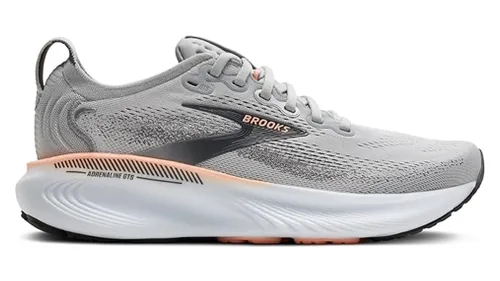
Best for: overpronators who want all-day stability
The Brooks Adrenaline GTS 25 is our overall pick because it fits the most common plantar-fasciitis profile: a walker who wants a cushioned, secure shoe with gentle support. Its GuideRails system limits excess side-to-side motion only when your foot asks for it, rather than forcing correction with a rigid post, so it feels supportive without feeling stiff. The nitrogen-infused DNA Loft v3 midsole is softer than past versions, and the 10 mm drop suits walkers with tight calves or Achilles who find low-drop shoes uncomfortable. A firm heel counter locks the rearfoot in place, which many people with heel pain prefer, and the removable insole leaves room for an orthotic. It transitions cleanly between walking and running, making it a strong single-shoe choice.
Specs
- Drop: 10 mm; stack ~37 / 27 mm
- Support: stability (GuideRails); midsole DNA Loft v3
- Weight: ~10.4 oz (men’s 9)
- Widths: narrow, standard, wide, extra-wide; removable insole
Pros
- Unobtrusive stability that suits mild-to-moderate overpronation
- Secure heel hold and higher drop for tight calves
- Widest width range here, plus orthotic-friendly
Cons
- Guidance is unnecessary for a truly neutral gait
- Firmer and less plush than a max-cushion shoe
Gender-specific buy links: Men’s version | Women’s version
Hoka Bondi 9
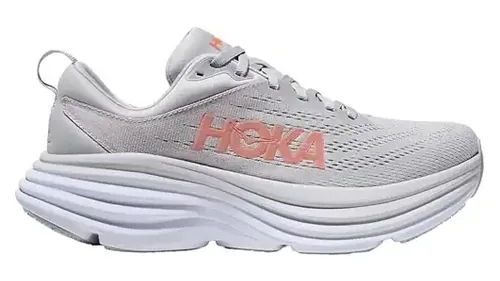
Best for: standing all day and walking on hard floors
If your heel pain is worst after hours on concrete, the Hoka Bondi 9 is the most forgiving shoe on this list. Its 39 mm heel stack of soft supercritical foam absorbs impact better than almost anything else, and the Meta-Rocker sole tips you forward so your forefoot bends less at push-off. It carries the American Podiatric Medical Association Seal of Acceptance, which reflects a design review rather than proof of pain relief. The neutral platform suits walkers who don’t need stability, and the removable insole accepts an orthotic. The trade-off is the low 5 mm drop, which some tight-calf walkers dislike, and the tall, heavier build.
Check price | Read full review
Specs
- Drop: 5 mm; stack ~39 / 34 mm
- Support: neutral, max cushion; Meta-Rocker
- Weight: ~9.9 oz (men’s 9)
- Widths: standard, wide; removable insole
Pros
- Best-in-class impact absorption for hard floors and standing
- Rocker eases toe-off
- APMA Seal of Acceptance
Cons
- Low 5 mm drop can bother tight calves
- Tall and heavy; soft foam feels less planted
Gender-specific buy links: Men | Women
Brooks Ghost 18
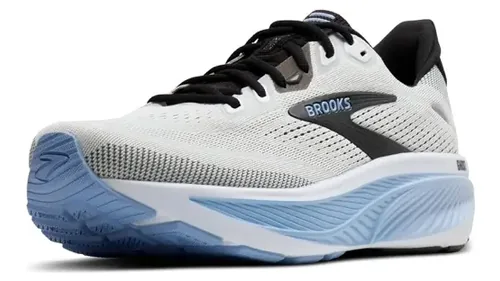
Best for: neutral walkers who prefer a higher heel-to-toe drop
The Brooks Ghost 18 is one of our better plantar fasciitis choices for neutral walkers who want cushioning without the very soft feel of a max-cushion shoe. Its 10 mm stated heel-to-toe drop and well-cushioned heel can work especially well for walkers who find lower-drop shoes uncomfortable or who have tight calves. The nitrogen-infused DNA LOFT v3 midsole provides a protective but fairly grounded ride, while the flexible forefoot helps the foot roll naturally through each step.
For plantar fasciitis, the Ghost 18’s biggest strengths are its heel cushioning, traditional higher-drop geometry and fit options. It also has a removable insole, making it easier to use with some aftermarket insoles or orthotics. Independent lab testing measured 37.3 mm of heel stack and 25.1 mm at the forefoot, slightly different from Brooks’ stated 36/26 mm geometry. The Ghost 18 is still a neutral shoe, however, so walkers who need stronger guidance for overpronation may be better served by the Brooks Adrenaline GTS.
Check price | Read full review
Specs
- Drop: 10 mm stated; 12.2 mm measured in independent lab testing
- Stack: 36 / 26 mm stated; 37.3 / 25.1 mm measured
- Support: neutral with inherent stability
- Midsole: nitrogen-infused DNA LOFT v3
- Weight: 10.2 oz men’s; 9.2 oz women’s
- Widths: narrow, standard, wide and extra-wide
- Insole: removable
Pros
- Higher drop may suit walkers who dislike low-drop shoes
- Good heel cushioning without an overly soft ride
- Broad range of widths
- Removable insole works well for many orthotic users
- Flexible enough for comfortable everyday walking
Cons
- Does not provide dedicated stability control for overpronation
- Less plush than max-cushion options such as the Ghost Max or Hoka Bondi
- Heavier than some competing neutral walking shoes
Gender-specific buy links: Men | Women
Asics Gel-Kayano 33
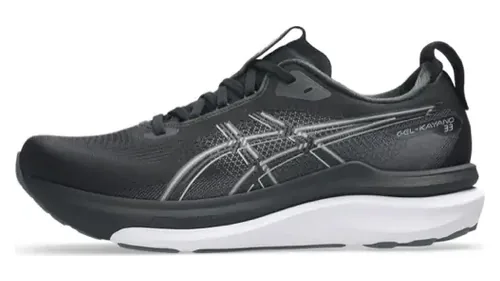
Best for: long days on your feet wanting premium stability
The Asics Gel-Kayano 33 pairs a plush heel with the new FLUIDSUPPORT system, which builds guidance into the midsole geometry rather than using the old 4D Guidance insert, making it a comfortable choice for long shifts and all-day wear. Asics lists it at a 40/32 mm stack with an 8 mm drop, though an independent lab measured the stack lower at about 36.8/28.3 mm, a good reminder to treat official numbers as descriptive. Its dual-layer midsole puts soft FF Blast Max over firmer FF Blast Plus, cushioning the heel well while keeping a stable base, and the structured heel counter holds securely. It’s a premium, substantial shoe, so it’s heavier and pricier than a basic trainer, and the guidance is more than a neutral walker needs.
Check price | Read full review
Specs
- Drop: 8 mm (official); stack official 40/32 mm vs. lab ~36.8/28.3 mm
- Support: stability (FLUIDSUPPORT); midsole FF Blast Max over FF Blast Plus
- Weight: ~10.5 oz (men’s 9)
- Widths: standard, wide; removable insole
Pros
- Plush, supportive heel for long days
- Adaptive stability without a hard post
- Secure, structured fit
Cons
- Heavier and more expensive
- More support than a neutral gait needs
Gender-specific buy links: Men’s version | Women’s version
Brooks Ghost Max 4

Best for: smooth toe-off, high cushioning and orthotic-friendly walking
The Brooks Ghost Max 4 is a strong plantar fasciitis option for walkers who want plenty of cushioning and a rocker-shaped sole that helps the foot move smoothly from heel strike through toe-off. Brooks uses its GlideRoll rocker geometry to reduce how much the foot needs to flex during each step, while the high-stack DNA LOFT v3 midsole provides substantial impact protection under the heel.
That combination can be useful for plantar fasciitis because many people find walking more comfortable when the shoe cushions heel impact and makes forward progression easier. The Ghost Max 4 also has a broad, stable platform and a removable insole, and Brooks specifically recommends it for walking and orthotics. It is lighter than the Ghost Max 3, which makes it a little less cumbersome for everyday use.
Brooks lists a 6 mm heel-to-toe drop, although independent lab testing measured 9 mm, with a 38.6 mm heel stack and 29.6 mm forefoot stack. The ride is also firmer than its tall profile might suggest, so walkers looking for very soft cushioning may prefer a Hoka Bondi. It remains a neutral shoe, so people who need stronger overpronation control should consider a stability model such as the Brooks Adrenaline GTS.
Check price | Read full review
Specs
- Drop: 6 mm stated; 9 mm measured in independent lab testing
- Stack: approximately 38.6 / 29.6 mm measured
- Support: neutral with a broad, stable platform
- Cushioning: max cushion
- Midsole: DNA LOFT v3
- Geometry: GlideRoll rocker
- Weight: 10.3 oz men’s; 9.2 oz women’s
- Widths: standard, wide and extra-wide options
- Insole: removable; designed to accommodate orthotics
Pros
- Rocker helps create a smooth heel-to-toe transition
- High heel cushioning helps reduce impact
- Broad platform feels stable despite the tall stack
- Good option for walkers who use orthotics
- Lighter than the Ghost Max 3
- Available in wide and extra-wide sizing
Cons
- Firmer than some max-cushion shoes
- Less ground feel because of the tall stack
- Neutral rather than a dedicated stability shoe
- Actual drop may feel higher than the stated 6 mm
Gender-specific buy links: Men’s version | Women’s version
Hoka Gaviota 6

Best for: wide feet wanting cushioning plus stability
The Hoka Gaviota 6 is the pick when you want Hoka’s plush ride but also need stability and roomy sizing. Its H-Frame structure controls overpronation without a rigid plastic post, and it comes in standard, wide, and extra-wide. The 39 mm stack and 6 mm drop deliver soft, rockered cushioning that suits heavier walkers and hard surfaces. It’s bulky and premium-priced, and like all Hokas the low drop may not suit very tight calves, but few stability shoes cushion this well while offering extra-wide sizing.
Check price | Read full review
Specs
- Drop: 6 mm; stack ~39 / 33 mm
- Support: stability (H-Frame), max cushion
- Weight: ~10 oz (men’s 9)
- Widths: standard, wide, extra-wide; removable insole
Pros
- Cushioning plus stability in one shoe
- Up to extra-wide for roomy fit
- Soft, rockered ride for heavier walkers
Cons
- Bulky and premium-priced
- Low drop may not suit tight calves
Gender-specific buy links: Men’s version | Women’s version
New Balance 990v6
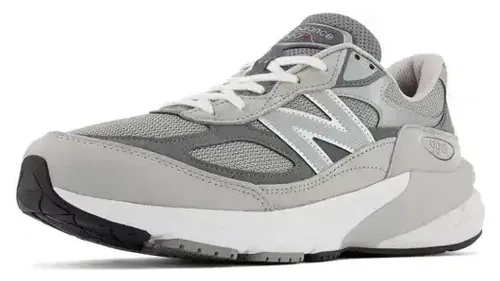
Best for: standing on concrete and everyday wear
The New Balance 990v6 is a firm, structured everyday shoe that many people wear for long days on hard floors. It pairs FuelCell foam with an ENCAP midsole, a softer core wrapped in a durable polyurethane rim, to balance cushioning with a stable, supportive platform, and its 12 mm drop is the highest here, which suits walkers with tight calves who feel better with more heel-to-toe offset. Made in the USA with a durable suede-and-mesh upper, it’s built to last and comes in multiple widths. It’s a heavier, firmer shoe with no rocker, so if you want plush or light cushioning look elsewhere, and it’s among the pricier options.
Specs
- Drop: 12 mm; stack ~39 / 24 mm
- Support: neutral, structured/firm; midsole FuelCell + ENCAP
- Weight: ~12.4 oz (men’s 9), among the heaviest here
- Widths: standard, wide, extra-wide; removable insole
- Upper: suede/mesh, made in USA
Pros
- Firm, stable platform for standing on concrete
- Highest drop here for tight calves
- Durable, multiple widths
Cons
- Firm rather than plush; no rocker
- Premium price
Gender-specific buy links: Men’s version | Women’s version
Brooks Glycerin GTS 23

Best for: plush cushioning with gentle arch support
The Brooks Glycerin GTS 23, released in February 2026, is the softest Brooks stability option, combining a nitrogen-infused DNA Tuned midsole with GuideRails support for walkers who want plush cushioning and gentle arch guidance together. The dual-density foam cushions the heel generously, softer under the heel, firmer at the forefoot, and the plush ride suits people who find the Adrenaline too firm. Note that this version drops to an 8 mm offset, so it’s a touch lower than the Adrenaline’s 10 mm. It’s heavier and pricier than the Adrenaline, and the softer foam feels less snappy at brisk paces, but for a comfort-first stability walker it’s an excellent pick. If arch support is your main concern, compare it with the other models in our best arch support shoes guide.
Check price | Read full review
Specs
- Drop: 8 mm; stack ~38 / 30 mm
- Support: stability (GuideRails); midsole DNA Tuned (nitrogen-infused, dual-density)
- Weight: ~10.8 oz (men’s 9); ~9.8 oz (women’s 8)
- Widths: standard, wide; removable insole
Pros
- Plush, bouncy cushioning with gentle stability
- Generous, softer heel cushioning
- Roomy, comfort-first fit
Cons
- Heavier and pricier than the Adrenaline
- Softer foam feels less snappy at speed
Gender-specific buy links: Men’s version | Women’s version
Fit, drop and orthotics still matter
Once you have matched the shoe to your gait and daily use with the decision path above, focus on fit. Your heel should feel secure without pinching, and you should have about a thumb’s width of space in front of your longest toe. If you plan to use an orthotic, check the fit with it in place rather than assuming your usual size will work.
Heel-to-toe drop can matter too. Walkers with tight calves or an Achilles that dislikes low-drop shoes may prefer a higher-drop model, while others are comfortable lower to the ground. Do not choose by cushioning height alone: the best option is the one that feels stable, holds your heel well and remains comfortable over the length of your normal walk.
Frequently asked questions
One with a cushioned, secure heel and support that matches your gait. Neutral walkers do well in cushioned neutral shoes; overpronators often prefer a stability shoe. A higher heel drop can help if your calves are tight. No single design is best for everyone.
No. More cushioning softens impact but can feel unstable, and softness is not the same as support. Some people with heel pain feel steadier in a firmer shoe. Match cushioning to what feels stable and comfortable for you.
There’s no universally best drop. A higher drop (10–12 mm) reduces how much the ankle flexes over the foot, which can ease a tight calf or Achilles; a lower drop suits others. Choose by comfort, not by rule. More about shoe drop.
Yes. Every shoe here has a removable insole, so you can swap in an over-the-counter or custom orthotic. Size the shoe to fit the orthotic without crowding your toes or lifting your heel. More about orthotics.
The Hoka Gaviota 6 and Brooks models (Adrenaline GTS 25, Ghost 18, Ghost Max 4) offer wide and extra-wide sizing, so they’re the easiest to fit for wide feet with plantar fasciitis.
No. Shoes can reduce the impact and heel pressure that aggravate plantar fasciitis, but they don’t cure it. Combine supportive footwear with stretching, load management, and professional care for persistent pain.