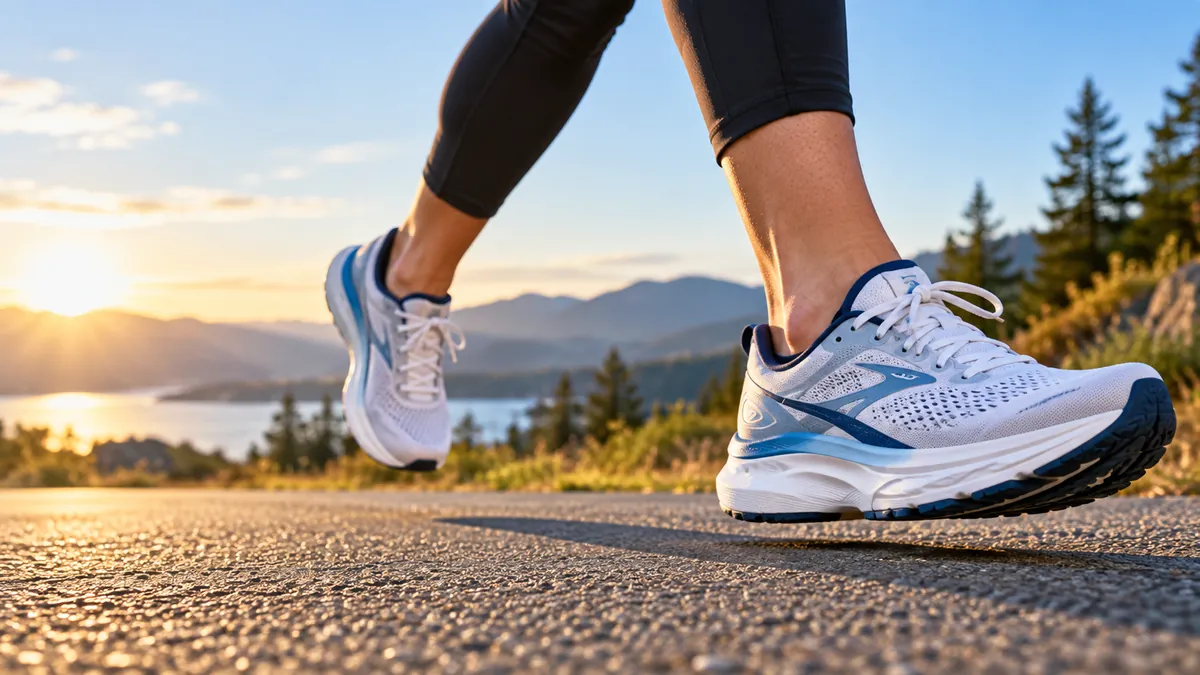
Reliable grip and cushioning for the money with a flat, unexciting foam
Quick Answer: The Adidas Terrex Agravic 4 is a dependable everyday trail shoe for gravel, hardpack and moderate mixed terrain. Lightstrike 3.0 foam gives it useful protection without turning it into a tall, unstable shoe, while a full Continental rubber outsole is the standout feature in wet conditions. The 8 mm drop and secure fit make it approachable for newer trail runners and heel strikers. The compromise is speed: the ride is steady rather than highly energetic, and the moderate lugs are not designed for deep mud or very technical ground.
The Adidas Terrex Agravic 4 is the workhorse of the Terrex trail line. Terrex is the outdoor arm of Adidas, and Agravic is the family name it uses across trail running, from this everyday model up to the very expensive Agravic Speed Ultra racers. This is the one built for regular running rather than race day.
It is aimed at the runner who wants one pair of trail shoes and does not want to spend $170 on them. Packed dirt, gravel paths, forest tracks, a bit of rock and the occasional wet root are all well within what it can handle, and it is comfortable enough for several hours out.
Version 4 softens the midsole and keeps the outsole that made the previous Agravics dependable in poor weather. Together they make a shoe that is genuinely good at being ordinary.
If you are comparing trail shoes rather than one model, start with our best trail running shoes guide.

Specs
Here are the specifications for the Adidas Terrex Agravic 4:
| Type | Everyday trail running shoe, moderate cushioning |
| Best for | Daily trail miles, gravel, hardpack, mixed terrain and trail walking |
| Gait type | Neutral |
| Midsole foam | Lightstrike 3.0, softer than the previous generation |
| Stack height | About 35–36 mm heel and 27–28 mm forefoot by published brand/reviewer figures; independent lab measurements can be lower |
| Heel-to-toe drop | 8 mm claimed; RunRepeat measured 9.1 mm |
| Weight | About 9.6–10.0 oz (272–283 g) in tested men’s samples, depending on size |
| Upper | Dense engineered trail mesh with reinforced sides and protective toe structure |
| Outsole | Full-coverage Continental rubber; RunRepeat measured 3.1 mm lugs |
| Rock protection | Flexible forefoot protection layer; Road Trail Run describes it as a woven rock plate |
| Widths | Standard width in the US |
| Price | About $140–$145 at launch in early 2026. Check latest price |
Pros
- Continental rubber is among the most trustworthy outsoles in the wet, which matters more than lug depth on most trails
- Comfortable and protective enough for several hours out, with real shock absorption underfoot
- Light for a trail shoe with this much rubber on it
- Priced below almost everything it competes with
- Versatile enough to cover running, fast walking and day hiking in one pair
Cons
- Lightstrike foam absorbs a lot and returns very little, so the ride feels flat at faster paces
- The 8 mm drop is on the high side for a trail shoe, which some runners dislike on steep ground
- Published lug depths disagree between sources, which makes the tread hard to compare on paper
- Not aggressive enough for deep mud or very steep, loose descents
- No confirmed wide fitting
What is new versus the Adidas Terrex Agravic 3
The midsole is the change that matters. Adidas moved to Lightstrike 3, a softer version of the foam it uses across its running range. The midsole is the cushioning layer between your foot and the ground, and a softer one means landings that jar your legs less, which is the single most useful improvement a trail shoe of this type can make.
The shoe also keeps a generous amount of rubber underfoot without gaining much weight, which is why it still comes in under 10 oz in most sizes. Testing puts its shock absorption at a genuinely high level for this price bracket, particularly at the heel.
What has not changed is the character. This remains a trail shoe built around protection and grip rather than speed, and the softer foam has not added any noticeable spring. If anything it has made the shoe calmer.
Who should buy the Adidas Terrex Agravic 4
Buy it if you are new to trail running. It is forgiving, stable, well cushioned and grippy, which is exactly the combination that builds confidence when you are still learning to read the ground. It also costs little enough that you are not committing heavily to a sport you may only do occasionally.
It suits people who run in bad weather. Continental rubber, the same compound family used on bicycle tires, holds noticeably better on wet rock and damp wood than most standard outsoles, and that is worth more in practice than an extra millimeter of lug.
It is also a good choice for long, steady efforts. Several reviewers have used it for ultra distances, and the reason is simple: it protects well, it is comfortable, and there is nothing about it that starts to irritate after four hours.
Who should probably skip it
Skip it if you want a shoe that feels fast. Lightstrike 3.0 is protective rather than highly springy, and while the shoe has some rocker and flexible forefoot protection, neither turns it into a propulsive race shoe. A hard effort still feels like work compared with lighter, plated or more energetic trail models.
Skip it if your ground is genuinely difficult. In deep mud, on wet grass slopes or on steep loose descents, the tread is not aggressive enough to keep you safe. And if you prefer a low heel, the 8 mm drop is at the high end for a trail shoe and can feel awkward on steep climbs.
These are better suited to those runners:
- Salomon Thundercross: deep, widely spaced lugs built for mud and soft ground, at a similar kind of price (check price | read review)
- Hoka Speedgoat 7: much deeper cushioning with a bouncier foam and aggressive grip, for steep and rocky terrain (check price | read review)
- Altra Olympus 7: a level, zero-drop platform with a broad toe box, which is the answer if a high heel or a narrow fit is your objection (check price | read review)
How does the Adidas Terrex Agravic 4 fit?
The Agravic 4 fits like a normal running shoe with extra structure around the sides. It holds the foot securely without being tight, which is a sensible middle ground for a shoe most people will wear for hours at a time.
Fit and sizing
Take your usual running size. Length is accurate and there is a fair amount of room at the front, which you want on a descent when your foot slides forward and your toes meet the end of the shoe. The middle of the foot is wrapped by reinforced panels that keep it in place on off-camber ground. Average feet are well served. Broad feet will find it close-fitting, and there is no confirmed wide version.
Upper and step-in comfort
Step-in comfort is straightforward and pleasant. The mesh is soft, the tongue and heel carry a moderate amount of padding, and the toe bumper is firm enough to protect against a kicked rock without feeling like armor.
The upper is simple and secure, which suits the shoe. There are no unusual lacing systems to learn and no rigid panels dominating the fit. The mesh is fairly dense, though, so debris protection is better than airflow. Independent reviews disagree somewhat on breathability, but both Road Trail Run and RunRepeat flag the upper as more closed than airy, which is worth knowing for hot-weather running.

How does the Adidas Terrex Agravic 4 perform?
This shoe is happiest at a steady effort on ground that varies. It absorbs impact well, stays composed when the surface changes and never demands your attention. What it will not do is make you feel quick.
Cushioning and ride
At about 36 mm under the heel there is a solid, middle-of-the-road amount of foam. In practice that means roots and small stones stop reaching your legs, but you still know what surface you are on, which is useful information on a trail.
Independent testing rates the shock absorption highly for the price, particularly at the heel. The compromise is energy return, the amount of the force you put in that the foam gives back. Lightstrike is poor at this, so the shoe feels flat when you accelerate. On an easy run that hardly matters. On a hard one it does.
Ride and running performance
The Agravic 4 flexes naturally enough to follow changing terrain. It does not use a rigid carbon or plastic propulsion plate, although Road Trail Run reports a woven rock-protection layer under the forefoot. There is also some heel and forefoot rocker rather than a completely flat geometry. The result is still a traditional, steady trail ride rather than a strongly guided or spring-loaded one.
The 8 mm drop means your heel sits 8 mm higher than your toes, which is more than most trail shoes offer. It suits runners who land heel first and feels natural on flat ground. On a steep climb, where your forefoot is already raised by the slope, the extra heel height can feel slightly odd.
Stability and support
We class the Agravic 4 as a neutral shoe. There is no firm wedge under the arch, no guidance element and nothing intended to change how your foot moves. Stability here comes from a moderate stack height, a reasonably wide base and reinforced side panels that stop the foot sliding across the platform.
That is enough for most people on most trails, and the fact that the shoe is neither very tall nor very soft means it stays planted on awkward landings. Persistent ankle or knee pain is worth discussing with a professional rather than solving with a different shoe.
Outsole, grip and durability
Continental rubber is the highlight. It is the same compound family Adidas uses on its road shoes, developed with the tire maker, and it holds unusually well on wet rock, damp wood and slick hardpack. Those are the surfaces where trail runners actually fall, so this is a more meaningful advantage than it sounds.
RunRepeat measured the lugs at about 3.1 mm, while some published figures are higher depending on where the outsole is measured. Either way, this is a moderate all-round tread: very good on dirt, gravel, rock and wet hardpack, but not deep enough for serious mud. The full Continental rubber coverage is a major durability advantage, though actual lifespan will still vary with terrain and runner weight.

Is the Adidas Terrex Agravic 4 good for walking?
On trails it is very good, and it makes a sensible light alternative to a hiking shoe. The cushioning is comfortable for a full day of walking, the Continental outsole gives more confidence on wet rock than most hiking footwear, and at under 10 oz it is far lighter than a boot. Day hikers who dislike heavy footwear will find a lot to like.
On pavement it is workable rather than ideal. The moderate lugs do not feel unstable, so getting to the trailhead is fine, but concrete wears them down and a dedicated walking shoe is more comfortable for a day in town. Standing in one spot for hours is not its strength. The insole lifts out for a custom orthotic and the shoe has enough interior volume to take most of them.
Terrex Agravic 4 versus the Terrex Agravic 3
| Feature | Agravic 4 | Agravic 3 |
| Midsole foam | Lightstrike 3, softer | Earlier, firmer Lightstrike |
| Feel underfoot | More forgiving on impact | Firmer and more direct |
| Outsole | Continental rubber | Continental rubber |
| Drop | 8 mm | 8 mm |
| Launch price | About $145, February 2026 | Not confirmed |
Buy version 4 for the softer landing, which is a clear gain on long runs and on hard-packed ground. Buy version 3 if you find it discounted and you liked a firmer, more connected feel, because the grip and the general build were already good.
Adidas Terrex Agravic 4 alternatives
The Agravic 4 is affordable, grippy, protective and flat underfoot. These four each change one of those things.
- Brooks Cascadia 20: a similarly versatile everyday trail shoe with a roomier fit and a more planted, stable base for less confident footing (check price | read review)
- Saucony Peregrine 16: lighter and lower with a full Vibram sole, which suits technical singletrack far better than the Agravic does (check price | read review)
- The North Face Vectiv Enduris 4: a plate inside gives the propulsive push the Lightstrike foam never delivers, for runners who want speed on hard ground (check price | read review)
- Asics Trabuco Max 5: much taller and rockered, which smooths out long, smooth trails in a way the Agravic’s moderate stack cannot (check price | read review)
Price and value
At roughly $140 to $145 at launch in early 2026, the Agravic 4 sits below many premium trail shoes while still giving you full Continental rubber, useful cushioning and a durable everyday build. That makes the value argument particularly strong for a first trail shoe or for someone who wants one dependable pair for mixed terrain.
The value argument is strong for anyone buying their first or only trail shoe. It is weaker if you already own a trail shoe and want something that adds a new capability, because this one is deliberately middle of the road in every direction except grip.
Final verdict
Best for: new trail runners, wet-weather running and anyone who wants one dependable pair for trail running and trail walking.
Avoid if: you want a lively, responsive ride, you run in deep mud, or you prefer a low heel.
Fit: true to size, secure without being tight, best on average feet.
Verdict: not an exciting shoe, but one of the most sensible trail purchases you can make at this price.
Check the latest price on the Adidas Terrex Agravic 4
See more trail options in our best trail running shoes guide and more of the brand in our best Adidas running shoes roundup.
Frequently Asked Questions for Adidas Terrex Agravic 4
It is rubber developed with Continental. On the Agravic 4 it covers the full outsole and provides dependable grip on wet rock, damp wood, gravel and hardpack, which is one of this shoe’s strongest reasons to buy.
RunRepeat measured the lugs at about 3.1 mm, while some published figures are higher depending on where the outsole is measured. In practice it is a moderate all-round tread for gravel, dirt and rock rather than a deep-mud outsole.
Yes. It combines a stable platform, useful cushioning, full-coverage Continental grip and a relatively accessible price, which makes it an easy shoe to learn on without buying a highly specialized trail model.
Yes, especially on smoother trails, gravel and mixed terrain. The cushioning and stable platform work well for long steady efforts. For a technical ultra with deep mud, steep loose descents or sharp rock, a more aggressive trail shoe may be the better choice.
Generally, yes. Independent reviews report a true-to-size fit with a secure midfoot. The forefoot platform is broad, but the toe box itself is not unusually wide, so very broad feet should still try it before committing.
No. The standard Agravic 4 uses a dense trail mesh rather than a waterproof membrane. It prioritizes debris protection and secure hold over maximum airflow, so it is not the best choice if waterproofing or very hot-weather breathability is your main concern.
It does not use a rigid carbon or plastic propulsion plate. Road Trail Run reports a woven rock-protection layer under the forefoot, which adds protection while allowing the shoe to remain reasonably flexible on uneven ground.