Last Updated on October 16, 2026
Propulsive plated ride with average wet grip
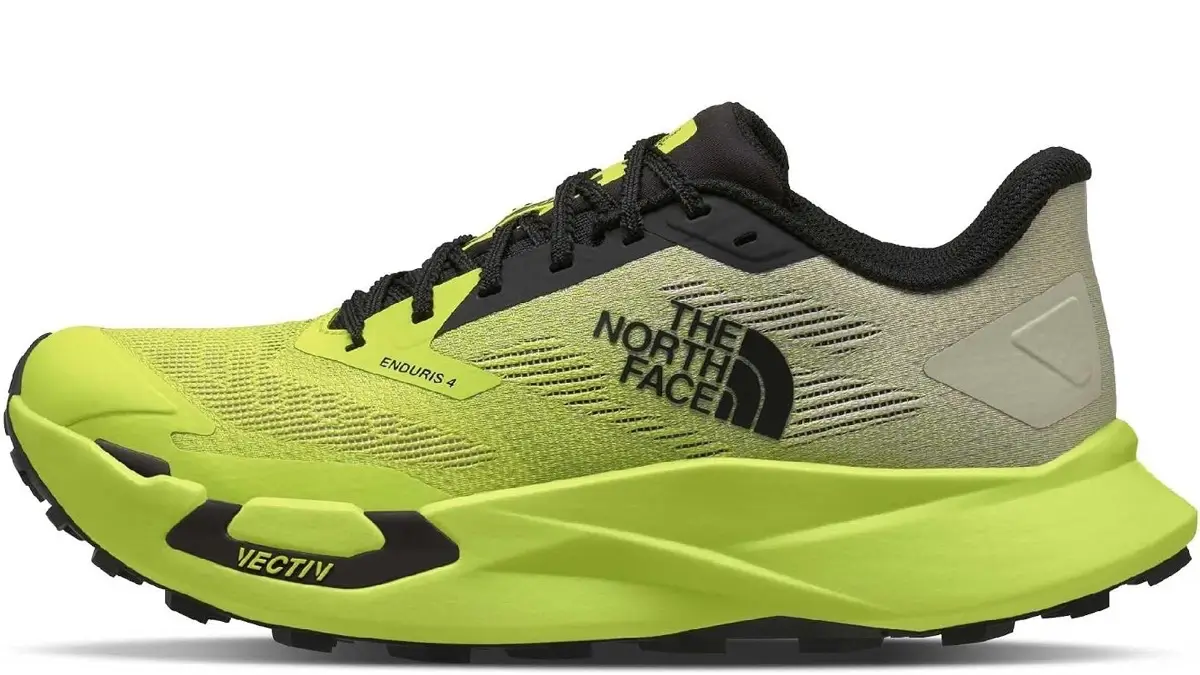
Quick Answer: The North Face Vectiv Enduris 4 Review: The North Face Vectiv Enduris 4 is a neutral trail shoe with a stiff plate in the sole that helps roll you forward, which makes it feel quicker and more stable than its cushioning alone would suggest. It suits runners on hard-packed dirt, gravel and rock who want a bit of snap without paying flagship prices. The trade-offs are a firm, unyielding ride that some feet dislike and an outsole that is dependable on dry ground but unremarkable on wet rock. Check latest price.
The North Face Vectiv Enduris 4 is the brand’s everyday trail workhorse, and the shoe most people encounter first when they look at The North Face for running rather than for jackets. It sits below the racing models in the range and above the entry-level options, and it is built around the technology the whole Vectiv line is named for.
That technology is a plate: a stiff sheet of plastic sandwiched inside the midsole, the foam layer between your foot and the ground. Its job is to stop the shoe from bending too much and to help tip you forward through each step, which on a trail also means it spreads the load when you land on something pointy. It is a neutral shoe, meaning there is no wedge or frame to slow the inward roll of the foot.
What makes the Enduris 4 interesting is the price. Plated trail shoes are usually expensive, and this one is not. That combination has made it one of the better-value trail shoes on the market, provided its firm character suits you.
Specs
Here are the specifications for The North Face Vectiv Enduris 4:
| Type | Trail running shoe, cushioned all-rounder with a plate |
| Gait type | Neutral |
| Midsole | DREAM foam, a nitrogen-infused TPU, over a VECTIV 3.0 TPU plate |
| Stack height | 32 mm at the heel, 26 mm at the forefoot |
| Heel-to-toe drop | 6 mm, a small step down from heel to toe that most people find natural |
| Weight | About 10.3 oz (291 g) in a men’s US 9; some published figures put it closer to 9.9 oz, so treat this as approximate |
| Upper | Breathable engineered mesh with welded overlays and a reinforced toe |
| Outsole | The North Face rubber with 4 mm lugs |
| Widths | Standard only |
| Best for | Hard-packed trails, gravel, rock, long training runs and trail racing |
| Price | Launched at $160 in early 2025 (the exact launch month is not confirmed). Check latest price |
Pros
These are the reasons it keeps turning up in trail shoe recommendations:
- The plate gives it a forward roll that most trail shoes at this price simply do not have
- Excellent underfoot protection, so sharp rock does not reach your feet even on a thin section of sole
- Very stable for a trail shoe, because the plate resists twisting as well as bending
- Priced well below other plated trail shoes, which makes it a genuine bargain in the category
- The upper breathes well and dries quickly, which helps on hot and wet days alike
Cons
These are the things to weigh against that:
- Firm and stiff, so it is unforgiving if you want a soft, plush ride
- Grip is fine on dry rock and dirt but ordinary on wet rock compared with Vibram-soled rivals
- The stiffness reduces how much the shoe adapts to uneven ground, which takes getting used to
- Heavier than the numbers suggest once you are moving quickly
- No wide fitting, and the midfoot is fairly snug
What is new in The North Face Vectiv Enduris 4
The fourth version is a real update rather than a colour change. The North Face increased the amount of foam underfoot, which was the most common complaint about the Enduris 3: it protected your feet but left your legs tired on longer outings.
The plate was updated too, from VECTIV 2.0 to VECTIV 3.0. The current version is shaped to work with the extra foam, which in practice means the forward tip through the step feels smoother and less abrupt than it did. The two changes work together: more cushioning would have made an older, stiffer plate feel disconnected, and the revised plate keeps the shoe feeling purposeful.
The upper is the third change, with a more breathable mesh that handles heat better and dries faster after a stream crossing. None of this alters the shoe’s fundamental character: it was firm and efficient before and it is firm and efficient now, just with more to fall back on late in a run. We rate this as the version where the Enduris finally makes sense as a long-distance shoe rather than a shorter-run specialist.
Who should buy The North Face Vectiv Enduris 4
Buy this if your trails are firm underfoot. Hard-packed dirt, fire roads, gravel and rock are where a plated shoe shines, because the plate can do its job of levering you forward instead of sinking into soft ground. If that describes your usual routes, few shoes at this price feel as efficient.
It suits neutral runners with average-width feet who like a firm ride and want a shoe that works for both training and trail racing. People who run long on rocky ground get particular value from it: the plate spreads the impact of sharp stones so well that you can cover technical rock without the bruised-sole feeling that thinner shoes leave behind.
It is also the obvious pick if you have been curious about plated trail shoes and unwilling to spend the money. This is the cheapest credible way into that category, and it is not a stripped-down version of the idea.
Who should probably skip it
If you want a soft, cushioned trail shoe, this is not it. The plate and the firm foam together create a ride that is efficient but hard, and no amount of running in it will soften it. People with sensitive feet, or anyone coming from a plush max-cushion shoe, often find it too much.
It is also the wrong shoe for genuinely wet, muddy or technical mountain ground, where you want grip and adaptability more than forward drive. If that is your terrain, consider these:
- Saucony Peregrine 16: lighter, more flexible and much grippier in the wet, which makes it far better on muddy or technical ground (check price | read review)
- Hoka Challenger 8: soft, flexible and forgiving, and the better choice if the Enduris feels too firm underfoot (check price | read review)
How does The North Face Vectiv Enduris 4 fit?
The Enduris 4 fits like a standard running shoe rather than a technical mountain shoe: secure without being tight, with reasonable room at the front. It is not roomy, but it is not narrow either, which puts it in easier territory than a lot of trail shoes. Most people take their usual size.
Fit and sizing
Order your normal running size. Length is accurate and the toe box has enough depth that toes are not pressed down, though width across the ball of the foot is average at best. The midfoot is the snuggest part, held by the lacing and a semi-gusseted tongue. Narrow feet get a good hold, average feet are comfortable and wide feet will find it tight. There is no wide fitting available, so a genuinely wide foot should look at another model.
Upper and step-in comfort
The engineered mesh is light and open, with welded strips for structure and a firm bumper across the toes to take the impact of a kicked rock. It breathes noticeably better than the mesh on the previous version, and it drains rather than soaks. There is moderate collar padding and a firm heel counter, the stiffened cup at the back that holds your heel in place, and lockdown is good. Step-in comfort is decent rather than luxurious. You can feel the plate under your foot as soon as you stand in the shoe, and that is a preview of how it rides.
How does The North Face Vectiv Enduris 4 perform?
Almost everything about how this shoe behaves comes back to the plate. It makes the shoe faster, steadier and more protective, and it also makes it stiffer and less adaptable. Here is what that means in practice.
Cushioning and ride
DREAM foam is a nitrogen-infused TPU, which means gas is blown into a hard-wearing plastic to make it lighter and springier. It is firmer than the PEBA foams used in premium trail shoes and it holds its shape well over time, so the shoe rides the same at 300 miles as it did on day one. The overall feel is firm and controlled rather than soft. On hard ground that is pleasant. On long rocky descents, where you want the shoe to absorb the hit, it asks more of your legs.
Ride and running performance
The plate curves upward at the toe, so once you get your weight over the front of the shoe it tips you into the next step rather than making you lift yourself out of it. That is what people mean when they call a shoe propulsive: it is doing part of the work of rolling forward. On smooth, firm trail it is genuinely quick. Where it struggles is slow, technical ground, because a stiff shoe cannot mould itself to an awkward rock, and you end up making small corrections that a flexible shoe would absorb for you.
Stability and support
This is a neutral shoe with no medial post or guidance frame, and it does not attempt to change how your foot moves. What the plate does is resist twisting, and the effect is a shoe that feels planted and predictable, especially for something with this much foam. The base is wide at the heel and forefoot, which helps further. Runners who overpronate noticeably, meaning the foot rolls inward more than usual on landing, will not find correction here, though the plate’s resistance to twisting does make the shoe feel steadier than a comparable unplated model.
Outsole, grip and durability
The North Face uses its own rubber compound here rather than buying in Vibram, and that is where the price saving shows. The 4 mm lugs are a sensible middle depth, good on dry dirt, gravel and rock, adequate in light mud and beaten by the best compounds on wet rock and wet wood. If your running is mostly dry, you will never notice. If you spend winters on greasy stone, you will. Durability is a strength: the rubber is hard, the plate keeps the sole from flexing repeatedly in the same place and the shoe wears slowly. The familiar 300 to 500 mile guideline for replacing shoes is a broad guide rather than a promise.
Is The North Face Vectiv Enduris 4 good for walking?
For hiking on firm ground it works well, and the plate turns out to be a real advantage: it keeps sharp stones from pressing into the sole of your foot, which is exactly what tires walkers out on a rocky path. The stable base and the firm midsole also mean the shoe does not squirm under a pack, and it is far lighter than a boot.
It is less good for slow walking on soft or uneven ground, where the stiffness stops the shoe from bending with your foot and makes each step feel a little wooden. It is also a poor choice for standing all day or for town walking: the firm ride offers nothing to a foot that is not moving, and the lugs are wasted on pavement. Think of it as a hiking shoe for dry, rocky trails rather than a general-purpose walker.
Vectiv Enduris 4 vs. Vectiv Enduris 3
The two versions share a purpose, and the newer one is better in the places the older one was criticised.
| Feature | Enduris 4 | Enduris 3 |
| Plate | VECTIV 3.0 TPU | VECTIV 2.0 TPU |
| Cushioning | More foam underfoot | Thinner, firmer feel |
| Upper | More breathable mesh | Warmer, slower to dry |
| Best distance | Comfortable on long runs | Better suited to shorter efforts |
| Character | Firm and propulsive | Firm and more abrupt |
Buy the Enduris 4 if you run longer than an hour or run in heat, because the extra foam and the better upper both matter. Buy a discounted Enduris 3 if your runs are short, your ground is firm and you liked the more direct feel of the older shoe.
The North Face Vectiv Enduris 4 Alternatives
If this shoe is close but not quite right, these are worth comparing.
- Hoka Speedgoat 7: the pick when grip is the priority, because its Vibram outsole and deeper lugs handle wet rock and mud far better on similar cushioning (check price | read review)
- Brooks Cascadia 20: an unplated, more flexible all-rounder that adapts to uneven ground better and costs less, for people who dislike the stiff feel (check price | read review)
- Asics Trabuco Max 4: a much softer, taller trail shoe that uses a rocker shape rather than a plate to roll you forward, which suits people who want the efficiency without the stiffness (check price | read review)
- Saucony Xodus Ultra 4: a plusher and grippier option for very long days, at a higher price and a higher weight (check price)
Price and value
At its $160 launch price the Enduris 4 undercuts every other plated trail shoe we would recommend, most of which sit well above it. That is the strongest argument for the shoe: you are getting a technology usually reserved for racing models in something you can train in every day, without paying a racing price.
The saving shows up in the outsole compound rather than in the parts that do the hard work, which is the right corner to cut for most people. If your trails are dry and firm, this is excellent value. If you run in a wet climate, spending more on a Vibram-soled rival is money well spent.
Final verdict
Best for: neutral runners on hard-packed, gravelly or rocky trails who want a firm, efficient ride and good underfoot protection without a flagship price.
Avoid if: you want a soft ride, you run on wet rock or deep mud, or you need a wide fitting.
Fit: true to size, average width, snug through the midfoot, no wide option.
Verdict: The North Face Vectiv Enduris 4 is the value pick in plated trail shoes, and this version fixed the thing that held the model back by adding enough cushioning to make it usable over long distances. It is firm, it is stiff and its grip is merely good rather than exceptional, but for dry, firm trails it delivers a genuinely fast ride for the money. Check the latest price.
Frequently Asked Questions for The North Face Vectiv Enduris 4
It is a stiff sheet of plastic inside the sole with an upward curve at the toe. It stops the shoe bending much, which means less effort is lost flexing the shoe and more goes into moving you forward. On a trail it also spreads the pressure from sharp rocks across the whole sole instead of letting it press into one spot under your foot.
The standard model is not waterproof and uses a breathable mesh that drains quickly. The North Face has offered waterproof Futurelight versions of several Vectiv models, so check the exact product name if a membrane matters to you. Bear in mind a waterproof upper breathes less and stays wet longer once water gets in over the collar.
They share a name and a plate but not a purpose. The standard Enduris 4 is the training shoe, built with more material and more durability. The Race Edition is stripped back for competition, which usually means a lighter upper and a higher price. For everyday running and hiking, the standard model is the sensible buy.
No wide fitting is listed for this model. The standard shoe is average in width with a reasonably deep toe box, so mildly wide feet often manage, but anyone who normally buys a 2E should choose a shoe that offers the width. Sizing up adds length without adding much room across the ball of the foot.
Yes. The insole lifts out and there is enough depth for a standard orthotic. Because the plate sits low in the sole, adding an orthotic does not change how the shoe rolls forward. A thick orthotic will raise your foot and loosen the heel hold slightly, so try the combination on an easy run before a long one.
It can feel that way at first. A stiff shoe changes where the work happens: your foot and calf flex less, so other muscles do more. Most people adapt within a few runs, but if you are coming from a very flexible shoe, build up gradually rather than doing your longest run in a new pair. Persistent pain is a reason to see a professional.