Light trail agility with less protection
Quick Answer: Asics Fuji Lite 7 Review: The Asics Fuji Lite 7 is a light, flexible neutral trail shoe for runners and hikers who spend most of their time on gravel paths, forest tracks and rolling singletrack. This version keeps the springy foam of the last model and adds a tougher woven upper with a wrap that holds the midfoot, so it should feel secure and quick on mixed ground. It is a sensible, good-value pick for friendly trails. Long rocky descents are where its modest cushioning and shallow lugs run out of answers..
The Asics Fuji Lite 7 is the seventh version of the brand’s lightweight trail shoe, sitting well below the tall, heavily cushioned Trabuco models and aimed at people who want to run off road without buying a mountain boot. It has long been the sensible, unshowy option in that part of the market.
What is interesting about this version is the upper. Asics has swapped the old engineered mesh for a woven construction and added a wrap that holds the midfoot, while keeping the platform that made the shoe popular: a modest 32 mm heel, a 4 mm drop and a weight of about 8.5 oz. It still feels like a Fuji Lite, just a better finished one.

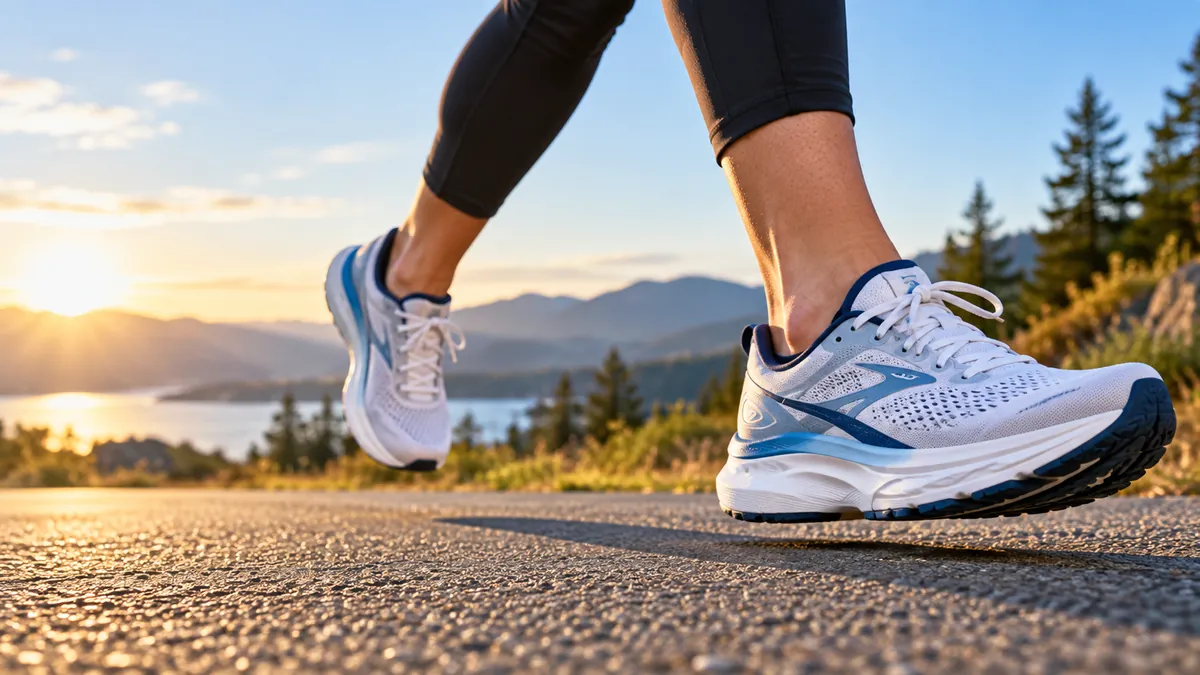
Asics Fuji Lite 7 trail running shoe in Ocean Haze and Foggy Teal, side view. Image: Amazon
Specs
Here are the specifications for the Asics Fuji Lite 7:
| Type | Lightweight trail running shoe for smooth to moderately technical ground |
| Best for | Gravel paths, forest tracks, rolling singletrack and fast hiking |
| Gait type | Neutral |
| Midsole | FF Blast Plus, Asics’ light, springy cushioning foam |
| Stack height | 32 mm at the heel and 28 mm at the forefoot, a moderate amount of foam for a trail shoe |
| Heel-to-toe drop | 4 mm, so the heel sits only slightly higher than the forefoot and the shoe feels flat and close to the ground |
| Weight | 8.5 oz (241 g) |
| Upper | Woven construction with overlays, plus a tongue wing that wraps the midfoot |
| Outsole | AsicsGrip rubber with 4 mm lugs |
| Width | Standard only on current US listings |
| Price | $140 at launch, June 2026. Check latest price |
Pros
- Very light for a trail shoe, so climbs and long days feel less like hard labor.
- It bends easily, which helps your foot work with uneven ground rather than fight it.
- The woven upper and tongue wing are designed to hold the midfoot and resist scuffs from rocks and roots.
- The low, flat platform stays close to the ground, which feels steady on rolling trails.
- It is priced like a mid-range shoe while using a modern Asics foam.
Cons
- Modest foam means sharp rocks and long descents can feel harsh on tired feet.
- The 4 mm lugs are too shallow for deep mud or wet grass.
- It has no rock plate, so it is the wrong shoe for genuinely stony mountain trails.
- It comes in one width, and the fit is on the snug side.
What changed from the Fuji Lite 6
The Fuji Lite 7 is more of a refinement than a reinvention. The midsole carries over, with FF Blast Plus foam, the same 32 mm and 28 mm stack and the same 4 mm drop. The outsole is largely unchanged, with the same AsicsGrip rubber and 4 mm lugs.
The changes are up top and on the scale. The Fuji Lite 6 used an engineered mesh, and the 7 moves to a woven upper that looks more premium and should be more durable. It also adds Asics’ Tongue Wing design, a piece that connects the tongue to the sides of the shoe and wraps the midfoot as you tighten the laces, which should keep your foot from moving around on sidehills. The shoe is also a little lighter, at a claimed 241 g, about 11 g less than the Fuji Lite 6.
Who the Fuji Lite 7 suits best
Buy it if your trails are friendly. Gravel paths, canal towpaths, packed dirt, forest fire roads and rolling singletrack are exactly what this shoe was built for, and that describes the ground most people really run on. It is quick, it is light and it lets you feel what you are running on.
It also suits road runners trying trails for the first time. Many trail shoes feel like a different sport: stiff, heavy and armored. This one feels closer to a road trainer with grip added, so the transition should be easy, and the price tier makes it a low-risk way to find out whether you enjoy running off road.
And it suits people who also hike or fast-pack on mixed ground. The low weight and flexible sole make walking in it pleasant, the lugs bite on dirt and loose gravel, and the tougher upper should survive being dragged through undergrowth.
Who should probably skip it
Skip it if your running involves real mountains. There is no rock plate, which is the thin stiff layer that stops sharp stones bruising the bottom of your foot, and 32 mm of foam is not enough cushioning to make up for its absence. An hour of rocky descending is where you will regret it. Skip it if you run in mud or on wet grass, because 4 mm lugs do not dig in deeply. And heel strikers who like a plush landing will find the low, flat platform firmer than they want.
These handle that ground better:
- Hoka Speedgoat 7: far more foam underfoot and a Vibram outsole with aggressive lugs, built for long rocky mountain days (check price | read review)
- Brooks Cascadia 20: a broad, stable, well-protected platform for runners who want to stop thinking about where their feet land (check price | read review)
- The North Face Vectiv Enduris 4: a plated trail shoe that stays firm and protective over long rocky miles (check price | read review)
Not sure which direction is right for you? Try our Free Shoe Finder, which suggests shoes based on your feet and how you run or walk.
A snug midfoot, an average toe box and one width
The Fuji Lite 7 fits like a performance shoe rather than a roomy hiker. It is designed to be snug through the middle, with a woven upper that holds the top of the foot and a tongue wing that cinches the midfoot. Start with your usual Asics size: length is accurate and the heel is held without a lot of padding.
The midfoot hold is the point of the update. Asics says the tongue wing gives a more secure fit, which should mean less sliding when you traverse a slope or corner hard. The toe box is average, which suits a trail shoe because too much room lets the foot move on descents. Broad feet will find it tight, and with no wide fitting on current US listings the only fix is sizing up, which adds length without adding the width you need and can loosen the midfoot hold. Our guide to the best wide toe box shoes lists roomier options.
A woven upper feels denser than ordinary mesh and may be a little stiff on the first run before it settles. Because it is a tighter weave, it should resist scuffs from rocks and brambles better than a light mesh, which is usually the first thing to fail on an affordable trail shoe. It is not waterproof, so it should drain and dry reasonably quickly after a stream crossing.

Asics Fuji Lite 7 trail running shoes, pair view. Image: Amazon
Quick, flexible and close to the ground: how it runs
This is a shoe that trades protection for feel, and that trade is the whole point of it. Stack height means the depth of foam between your foot and the ground, and 32 mm at the heel is moderate for a trail shoe. What you get in return is feedback: you can tell what you are standing on, which matters when the surface changes every few strides. FF Blast Plus is a light, springy foam, so the ride should feel lively on dirt and gravel. On stone it will feel sharper.
It weighs about 8.5 oz, it bends readily and there is no plate or rocker shape fighting you, so it should change direction quickly and climb without feeling like a weight on the end of your leg. Short and middle-distance trail runs are its natural home. Past a couple of hours on hard ground, the modest foam starts to tell, and your feet will likely tire before your legs do. That is the honest ceiling on this shoe, not a flaw in it.
This is a neutral shoe with no support features, so it does nothing to guide a foot that rolls inward. On the trail, stability comes mostly from height rather than structure, and this shoe is low. Sitting close to the ground on a shoe that flexes means fewer awkward moments when you land on the edge of a rock. Runners who need genuine support for overpronation should still look at a stability model.
Asics uses its own AsicsGrip rubber with 4 mm lugs, a middling depth chosen for versatility. Shallow lugs roll better on hard ground and should not feel like studs when you hit a section of pavement, and they still bite on dry dirt, loose gravel and pine needles. On wet rock the grip should be acceptable rather than confident, and in mud it will lose to anything with deeper lugs. The 300 to 500 mile figure often quoted for running shoes is a broad guideline, and a light trail shoe often sits at the lower end of it.

Asics Fuji Lite 7 outsole with 4 mm lugs. Image: Amazon
Is the Asics Fuji Lite 7 good for walking?
It is a good walking shoe on the ground it was designed for. The sole bends easily, which matters more at walking speed than running speed because you roll through the whole foot with every step, and the low weight means your legs are not lifting much. On a day hike over dirt and gravel it should feel natural in a way stiff, armored trail shoes do not.
The limits are the same ones that apply to running. There is not a lot of foam under the heel, so a full day on rocky paths or a long stretch of pavement will leave your feet feeling it, and there is no meaningful arch support, so anyone who relies on structure will want an insole. For travel it is a good choice, since it packs flat and looks unremarkable enough to wear around town. For standing still on a hard floor for hours, a cushioned shoe is the better tool, and our best trail walking shoes guide has more options.
Asics Fuji Lite 7 vs Fuji Lite 6
Here is how the two compare:
Feature | Fuji Lite 7 | Fuji Lite 6 |
Midsole | FF Blast Plus | FF Blast Plus |
Stack height | 32 mm heel, 28 mm forefoot | 32 mm heel, 28 mm forefoot |
Upper | Woven construction with Tongue Wing midfoot wrap | Engineered mesh |
Weight | 241 g | About 252 g |
Heel-to-toe drop | 4 mm | 4 mm |
Buy the Fuji Lite 7 if you want the more secure midfoot and the tougher-looking upper. Buy the Fuji Lite 6 if you find it discounted and mostly run gentle trails, because the platform underfoot is the same.
Asics Fuji Lite 7 Alternatives
Three shoes cover the most likely reasons to keep looking.
Saucony Peregrine 16 is the closest rival and the fairer comparison. It shares the nimble, low-slung character but carries a Vibram Megagrip outsole, so it should grip better on wet rock. Runners who like what the Fuji Lite does but want more bite should start there (check price | read review).
When the ground turns soft, Salomon Thundercross is the answer. Its deep lugs dig into mud and wet grass in a way 4 mm lugs never will, which makes it a winter companion to a shoe like this rather than a replacement for it (check price | read review).
For anyone whose objection is simply that the Fuji Lite feels thin, the Asics Trabuco Max 5 goes the other way entirely. It is tall and heavily cushioned, which suits long slow days on your feet, at the cost of the agility that makes this shoe fun (check price | read review).
Price and value
The Fuji Lite 7 launched at $140 in June 2026, which is a fair price for what it offers: a modern Asics foam, a woven upper and a weight many pricier shoes cannot match. What you give up is protection, and that is a real omission rather than a bargain-bin compromise. For runners on smooth and rolling trails it is good value. For anyone heading into the mountains it is the wrong shoe at any price.

Asics Fuji Lite 7 trail shoe, rear three-quarter view. Image: Amazon
Final verdict
Best for: gravel paths, forest tracks and rolling singletrack, road runners trying trails for the first time and fast hikers who like to feel the ground.
Avoid if: you run rocky mountain trails, you need grip in mud or you want a plush landing under the heel.
Fit: true to your usual Asics size, snug midfoot, average toe box, standard width only.
Verdict: The Fuji Lite 7 is a modest update that makes a good shoe more secure. The woven upper and tongue wing improve the fit, the weight is still its best feature and the springy foam carries over. Know what you are buying: this is a shoe for smooth and moderate ground, and it does not pretend otherwise. On that ground it is very hard to argue with.
Check the latest price on the Asics Fuji Lite 7.
Frequently Asked Questions for Asics Fuji Lite 7
Yes, more comfortably than most trail shoes. The 4 mm lugs are shallow enough that they should not feel like studs on asphalt, so a mile or two of pavement on the way to the trailhead is fine. It is not a road shoe, though, and the rubber will wear faster if you use it that way often.
No. A rock plate is a thin stiff layer built into the midsole to spread the force of sharp stones, and this shoe goes without one to stay light and flexible. On dirt and gravel that is fine. On genuinely stony ground it is the main reason to choose something else.
No. It has a woven upper without a membrane, which lets water in and lets it drain out. That suits stream crossings and wet grass, but if you want a waterproof shoe for cold, wet days, look for a Gore-Tex version of a different model.
Current US listings show a standard width only. The fit is snug through the midfoot, so if your feet are broad it is worth trying a pair on before buying. Going up half a size adds length but can loosen the midfoot hold that makes the shoe secure on slopes.
It can be if you are coming from a shoe with a 10 mm or 12 mm drop, because a lower heel asks a little more of the calf and Achilles. Build up over a few weeks rather than doing your longest run in them straight away. If you have pain that does not settle, see a qualified professional.
The Fuji Lite is the light, flexible, close-to-the-ground option built for speed and feel. The Trabuco line is taller, more cushioned and more protective, built for long days and rough ground. If your trails are smooth and your runs are short, take the Fuji Lite. If they are rocky and long, take a Trabuco.