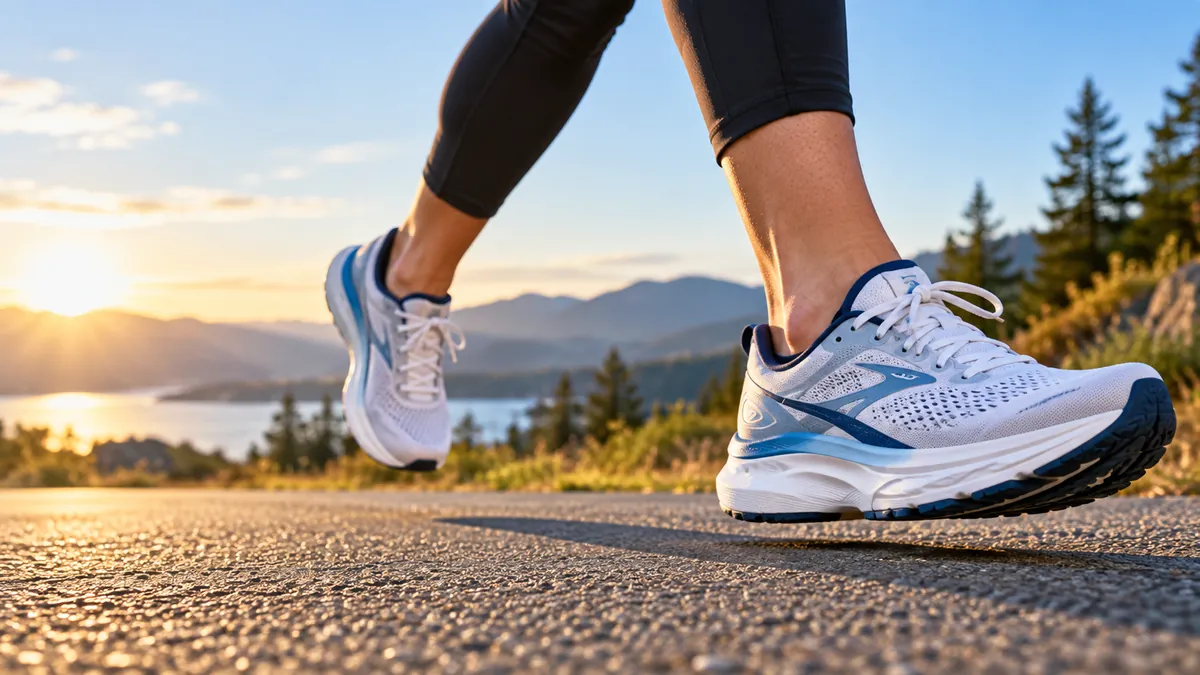
Built for fast trails, not technical terrain
Quick Answer: Nike ACG Ultrafly Trail Review: The Nike ACG Ultrafly Trail is a carbon-plated trail racing shoe built for long races on runnable ground such as gravel, fire roads and smooth singletrack. Nike split the plate into two halves so the shoe can flex with uneven terrain, and two layers of springy ZoomX foam keep it soft over long distances. It gives you speed and cushioning, not mud grip or technical-trail confidence, and the shallow lugs are the clearest limit. It also costs a lot for a shoe you save for race days..
The Nike ACG Ultrafly Trail is Nike’s trail racing shoe and the second take on an idea that did not land the first time. The original Ultrafly arrived in 2023 with a stiff carbon plate borrowed from road racing, and trail runners found it rigid on uneven ground. Nike rebuilt it with a split plate, a new last with a wider toe box and a reworked upper. The ACG version launched on January 29, 2026, in the Hyper Crimson colorway at $270.
The naming is worth a note. Some retailers and preview articles call it the Ultrafly 2, while Nike lists it as the ACG Ultrafly Trail with no version number. They are the same shoe. The move to ACG, Nike’s All Conditions Gear line, puts it in a proper outdoor range rather than treating it as a road shoe with lugs.

Nike ACG Ultrafly Trail racing shoe in Hyper Crimson, side view. Image: Amazon
Specs
Here are the specifications for the Nike ACG Ultrafly Trail:
| Type | Carbon-plated trail racing shoe |
| Best for | Long trail and ultra races on gravel, fire roads and smooth singletrack |
| Midsole | Two layers of ZoomX, Nike’s lightweight, springy racing foam |
| Plate | Full-length carbon Flyplate, split into independent inner and outer halves and about 30 percent more flexible than before |
| Stack height | About 38 mm heel and 29.5 mm forefoot (retailer-listed) |
| Heel-to-toe drop | About 8.5 mm (retailer-listed), so the heel sits a little higher than the forefoot |
| Weight | About 9.5 oz (269 g) men’s size 9 (retailer-listed) |
| Upper | Vapor mesh with a midfoot band, on a new last with a wider toe box |
| Outsole | Vibram Megagrip rubber with Traction Lug technology, 3 mm lugs, on a lightweight Litebase backing |
| Width | One width listed |
| Price | $270 at launch, January 2026. Check latest price |
Pros
- The split plate lets the shoe twist with the ground, which the first Ultrafly could not do.
- Two layers of ZoomX give a soft, springy ride for long distances.
- Light for a plated trail shoe, at roughly 9.5 oz.
- Vibram Megagrip rubber grips well on hard ground, packed dirt and dry rock.
- Shallow lugs and soft foam make it comfortable on pavement between trail sections.
Cons
- It costs $270 at launch, which is at the top of the trail shoe market.
- The 3 mm lugs are shallow, so deep mud and soft ground are not its territory.
- The thin Litebase outsole saves weight but is not built for high mileage.
- It is one width only, so broad feet are best served elsewhere.
- Its tall, soft platform is less steady than a firm, low-to-the-ground trail shoe on technical rock.
What Nike changed from the original Ultrafly
The plate is the whole story. The first Ultrafly used one stiff carbon plate that made the shoe feel unwilling to follow uneven ground. Nike replaced it with two independent plates, one on the inner side and one on the outer, and made the whole assembly about 30 percent more flexible. Nike says the thinner plate suits lighter runners in particular. The outsole carries a spine down the middle to match, so the shoe can twist along its length instead of tipping as a rigid block.
The other changes support that. Nike gave the shoe a new last, which is the foot-shaped mold a shoe is built around, with a wider toe box so feet have room to swell over long races. It also reworked the upper for better breathability and drainage than the 2023 shoe, which matters for ultrarunners who cross water. Nike says it tested the redesign through 13 rounds covering more than 30,000 miles. Together those changes turn a rigid first attempt into a shoe worth racing in.
Who should buy the ACG Ultrafly Trail
Buy it if you race long distances on runnable ground. Most ultras are not scrambles. They are hours of gravel, fire road, dirt track and smooth singletrack with the occasional technical section, and that is where a split plate and soft foam keep your stride efficient in a way an ordinary trail shoe cannot.
Buy it if your runs mix surfaces. The shallow 3 mm lugs and soft midsole make it comfortable on pavement, which is unusual for a trail shoe. If your long run starts with two miles of road, climbs a hill and comes home on a bike path, this handles all of it without the clatter of a mountain shoe on tarmac.
Buy it if you liked the idea of the original Ultrafly but found it too stiff. The split plate changes how the shoe behaves on uneven ground, and it is worth a second look.
Who should probably skip it
Skip it if your races are muddy or technical. Three-millimeter lugs will not hold in soft ground, and a tall, soft platform gives you less feel on rocky terrain than a lower shoe does. Skip it if you want one trail shoe to wear every day, because a thin lightweight outsole is built for race days and key workouts rather than mileage. And skip it if $270 is more than you want to spend on a shoe you will only use for a handful of events.
These shoes suit those runners better:
- Salomon Thundercross: deep, aggressive lugs that hold in mud and on wet rock, for a lot less money (check price | read review)
- Saucony Peregrine 16: a lower, more precise trail shoe with a Vibram outsole, for technical ground (check price | read review)
- Hoka Challenger 8: a sensible everyday shoe for mixed road and trail routes at a much lower price (check price | read review)
Not sure whether a trail racer suits how you run? Our Free Shoe Finder can help you narrow the choices.
Fit: a wider toe box on a snug racing last
Start with your usual Nike size. The new last gives the toes more space than the first Ultrafly offered, which is what you want when your feet swell late in an ultra. The midfoot is snug and secure, as in most racing shoes, and the heel is held firmly.
Nike lists one width, so if you normally need a wide shoe, expect the midfoot to feel close even though the toe box is roomier. Sizing up adds length rather than width and can leave your heel loose on climbs. If you use orthotics or a thick insole, try the shoe with them in, because racing uppers have little give.
Step-in feel should be soft because of the ZoomX under your foot, with a smooth, structured upper. Nike says it reworked the upper for better breathability and drainage, so it should handle warm days and the odd stream better than the 2023 shoe did. Still, choose a shoe with a thinner, more open mesh if your routes involve long wet sections.
How the ride feels: soft, quick and best at pace
ZoomX is Nike’s lightest and springiest foam, the material behind its marathon racing shoes, and the Ultrafly carries two layers of it. In plain terms it springs back rather than swallowing your effort, which should keep your legs fresher late in a race. Retailer listings put the stack at about 38 mm at the heel and 29.5 mm at the forefoot, so there is real protection under your foot without the shoe feeling like a stilt. The 8.5 mm drop is close to a normal road shoe, so it should feel familiar if you come from the road.
The split plate is what makes this shoe work. Because the inner and outer halves move separately, one side can give way when the ground tilts while the other keeps pushing, so you get forward drive without a plank-like feel. On gravel and smooth trail that makes it fast. It needs pace to come alive, as all plated shoes do, so it is happiest when you are running rather than hiking a steep climb.
This is a neutral shoe with no pronation control. Its steadiness on uneven ground comes from the split plate and the matching groove in the outsole. It is still a tall, soft shoe, so genuinely technical rock stays outside its comfort zone.

Nike ACG Ultrafly Trail racing shoe, top view. Image: Amazon
Grip and durability: Vibram rubber on a thin base
The outsole uses Vibram Megagrip with Nike’s Traction Lug pattern, which is built to bite on dry hardpack, roots and rock. At 3 mm the lugs are shallow, which is what makes the shoe comfortable on pavement and what limits it in deep mud. Underneath sits Litebase, a thinner, lighter backing layer that saves weight and does not suit high mileage. Treat this as a race and key-session shoe. The 300 to 500 mile figure often quoted for running shoes is a broad guideline, and a racing shoe like this one should be expected to sit at the lower end.

Nike ACG Ultrafly Trail outsole with Vibram Megagrip lugs. Image: Amazon
Is the ACG Ultrafly Trail good for walking?
For everyday walking it is a poor choice and an expensive one. The plates do something useful only at running speed, so on a walk you carry the stiffness without the benefit, and the tall, soft platform feels less steady at a stroll. The racing outsole is also wasted on pavement.
Fast hiking in a race is different, and anyone spending this much on the shoe will do plenty of it. The stiff platform gives you something to push against on a climb and the Vibram rubber grips when you are stepping rather than striding. For ordinary walks, see our guide to the best walking shoes.
Nike ACG Ultrafly Trail Alternatives
If you like the Ultrafly’s plated approach but want a different balance, these three are worth a look.
Hoka Tecton X 4 is the direct competitor. It uses two parallel carbon plates and a deeper lug pattern, and it is the better choice for rougher mountain racing (check price | read review).
The North Face Vectiv Enduris 4 offers a plated, propulsive trail feel for much less money. It is firmer and less forgiving, but it is the obvious place to start if you want to try a plated trail shoe without the Ultrafly’s price (check price | read review).
Runners who decide they do not need a plate at all are usually better served by the Hoka Speedgoat 7, which gives comparable cushioning, deeper lugs and a shoe you can wear every day rather than saving for races (check price | read review).
Price and value
Nike launched the ACG Ultrafly Trail at $270 in January 2026, among the most expensive trail shoes on the market. The engineering explains some of it: two carbon plates, twin-layer ZoomX and a Vibram outsole in a roughly 9.5 ounce shoe is hard to build. What limits the value is how narrow its best use is. A thin Litebase outsole and shallow lugs mean it shines on dry, runnable courses and not much elsewhere. For a racer whose calendar fits that, it is a defensible purchase. For everyone else, the money goes further on a shoe built for more kinds of ground.
Final verdict
Best for: long trail and ultra races on gravel, fire roads and smooth singletrack, and mixed road and trail routes run at speed.
Avoid if: your races are muddy or technical, you need a wide fit or you want one trail shoe for everything.
Fit: true to size, snug midfoot, a roomier toe box than the first Ultrafly. One width listed.
Verdict: Splitting the plate in two turned the Ultrafly from a curiosity into a real trail racer. On dry, runnable ground it is fast, soft and easy to spend hours in. It is still a very expensive, narrow-purpose shoe, so buy it for the courses it was built for.
Check the latest price on the Nike ACG Ultrafly Trail.
Frequently Asked Questions for Nike ACG Ultrafly Trail
Yes. Nike lists the shoe as the ACG Ultrafly Trail with no version number, while several retailers and previews call it the Ultrafly 2. It is the current model and it follows the original Ultrafly from 2023.
A single stiff plate cannot twist, which is fine on a road and awkward on a trail, where the shoe fights the ground instead of following it. Two independent plates let the inner and outer sides move separately, so the shoe flexes over uneven ground and still pushes you forward.
They are listed at 3 mm, which is shallow for a trail shoe. That makes it comfortable on gravel, hardpack and pavement, and it gives the shoe little to hold on deep mud or soft ground.
Yes, more comfortably than in most trail shoes, because of the shallow lugs and the soft ZoomX midsole. Using it only on roads would wear down an expensive outsole for no reason.
Order your normal Nike size. The new last gives the toes more room than the original, the midfoot is snug and only one width is listed, so broad feet should try it on or look at another model.
Usually not. It is built for racing long distances at speed, and a thin outsole means it is not meant for everyday miles. A durable all-round trail shoe costs far less and suits most weekend runners better.