Last Updated on September 30, 2026
“Orthopedic shoes” can mean purpose-built depth shoes, walking shoes that accommodate prescribed inserts, or simply supportive shoes that fit a particular foot well. The label alone cannot tell you which pair will feel right. A shoe for a bunion may need stretch across the toe joint; one for a bulky orthotic may need extra depth; one for an unsteady gait may need a firmer base. This guide compares those jobs instead of promising one shoe will solve every kind of foot pain.
We checked current manufacturer pages for identifiable fit features and availability. Our “best for” labels are editorial judgments based on those features; we have not personally wear-tested every model. If you use prescription orthotics, bring them when trying on shoes, as the American Podiatric Medical Association advises. Older adults who want simpler everyday options can also compare our best walking shoes for seniors. If bending down, tying laces, or getting a shoe on is the main difficulty, see our Best Easy-Entry Walking Shoes roundup.
Compare orthopedic-friendly shoes by what you need
Choose the problem to solve first, then check fit in person or through a retailer with a suitable return policy. The shoe names link to the detailed notes below. The table uses two columns to remain readable on a phone. Width and stock can vary by color and seller, so confirm the exact version before ordering.
Some shopping links below are affiliate links. As an Amazon Associate, we earn from qualifying purchases. Compare the fit notes before choosing a retailer or size.
| Your main need | Start with |
|---|---|
| Flexible men’s upper; adjustable fit | Orthofeet Edgewater Check men’s price |
| Flexible women’s upper; sensitive forefoot | Orthofeet Coral Check women’s price |
| Firm walking support; broad widths | New Balance 928v3 Men’s price | Women’s price |
| Leather shoe with room for an orthotic | Propét Stability Walker Men’s price | Women’s price |
| Structured leather walking shoe | Brooks Addiction Walker 2 Men’s price | Women’s price |
| Slip-resistant work clog; removable footbed | Dansko XP 2.0 Women’s price | Men’s price |
Ready to compare current listings? Start with the flexible men’s and women’s options, then check the fit notes below before choosing a width.
Before you shop, decide which feature you will check first. If a removable footbed matters, carry your insert and see whether the heel still sits inside the shoe. If width matters, compare the footbed and outsole as well as the printed width label. If you stand at work, confirm your workplace’s footwear rules before choosing a clog.
A flexible upper and a stable base solve different problems. A stretch shoe may feel better at the toes but too loose at the heel; a structured shoe may feel secure but rub a prominent joint. Read each “skip it” note as carefully as the reason to consider the model. If the six choices still leave you unsure, our free Shoe Finder can narrow options by width, activity and support preference.
Six orthopedic-friendly shoes worth comparing
These are starting points for different feet and uses, not a ranking from first to sixth. All six have a current manufacturer listing. We favor fit features a shopper can check, such as a removable footbed, size and width choices, a secure heel, a pressure-accommodating upper or a stable sole. Try the pair with your usual socks and inserts. A longer size is rarely a good substitute for the right width and depth, because it can let your heel move while the forefoot remains uncomfortable.
Orthofeet Edgewater: Flexible fit for men
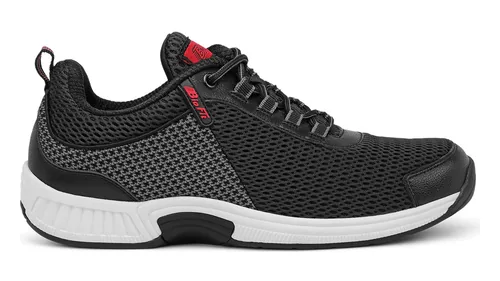
The Edgewater is an easy first comparison if a regular walking shoe presses on a bunion or another sensitive part of the forefoot. Orthofeet describes a stretch-knit upper, extra depth, four width choices and adjustable arch support. The included spacers help tune the amount of room inside. That gives you more ways to adjust fit than in a standard sneaker, but the most important check is whether your heel stays secure while your toes have space.
It is intended for walking and everyday use, not trail grip. Skip it if you need a firm leather upper or a workplace slip-resistant outsole. A soft upper may feel forgiving, but it cannot replace a properly fitted custom device. See the manufacturer’s Edgewater specifications.
Check latest price on Amazon: Men’s version.
Orthofeet Coral: Flexible fit for women
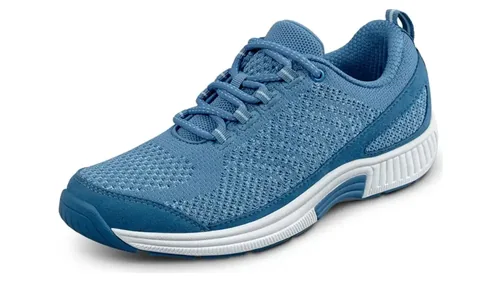
The Coral is a useful counterpart to Edgewater for women who need an upper that gives at the forefoot. Orthofeet lists stretch-knit construction, a soft interior and adjustable support. That may matter more than buying a longer shoe when your heel already fits but the toe joint feels squeezed. Try it with your usual socks, then walk enough to check whether the heel slips or the tongue shifts.
Skip the Coral if your main goal is a rigid, motion-control feel; the New Balance 928v3 is the firmer comparison here. Stretch does not mean every width will fit the same, so check the precise width in the cart. See the manufacturer’s Coral model page and our bunion-friendly shoe guide.
Check latest price on Amazon: Women’s version.
New Balance 928v3: Firm support and broad widths
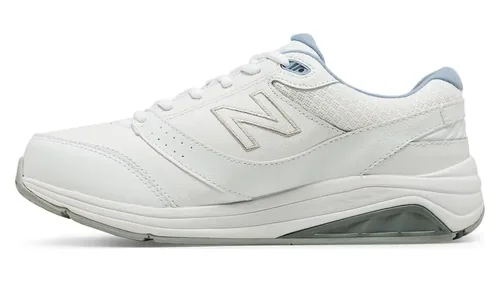
If you want a more planted walking feel, put the 928v3 next to the two Orthofeet shoes. New Balance uses its ROLLBAR system for motion control and ABZORB cushioning. The model remains in both men’s and women’s lines and comes in wider options than many everyday walking shoes. Verify the exact width in your size, because availability differs between versions and sellers.
The trade-off is a heavier, firmer feel than a soft knit sneaker. Skip it if your priority is a light shoe that bends freely with your foot. If you wear a prescribed insert, check depth and heel hold with it in place; width alone does not guarantee enough volume. New Balance lists the current men’s and women’s versions. See our 4E to 6E comparison.
Check latest price on Amazon: Men’s version | Women’s version.
Propét Stability Walker: Room for an orthotic
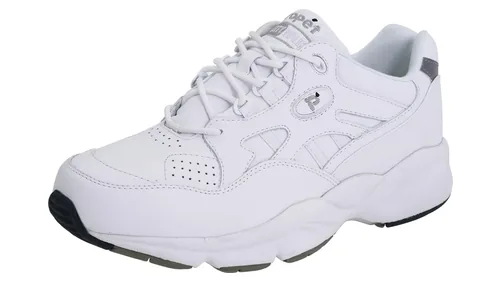
The Stability Walker is a traditional leather option with a removable footbed. Propét lists a wide toe box, supportive heel and rubber outsole. It makes sense to compare when a custom orthotic takes up space and you prefer a firmer upper to knit. Both men’s and women’s models are sold, though you still need to verify the exact size and width in your chosen style.
Bring the insert to a fitting and check that removing the supplied footbed leaves enough depth without lifting your heel out. Skip this model if you want the softer feel of Edgewater or Coral. Propét’s U.S. therapeutic-shoe eligibility labeling does not establish that any individual purchase will be covered. Check men’s and women’s specifications, then read our full review.
Check latest price on Amazon: Men’s version | Women’s version.
Brooks Addiction Walker 2: Structured daily walking
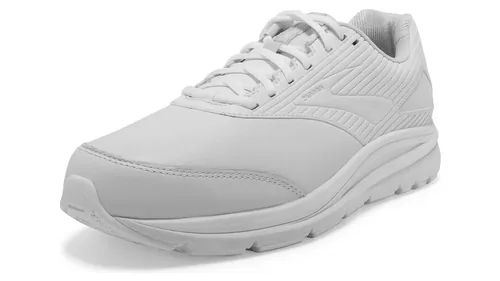
The Addiction Walker 2 suits someone who likes a conventional leather walking shoe with a guided, stable feel. Brooks lists its Extended Progressive Diagonal Rollbar, balanced cushioning and structured support. It offers men’s and women’s versions with several width choices, subject to stock. This is more purposeful underfoot than a soft lifestyle sneaker, though more support is not automatically better for every foot.
The leather upper can feel warmer and less forgiving across a prominent bunion than stretch knit. Skip it if pressure is mainly on top of or beside your toes, or if you want a light athletic look. Try both shoes late in the day if swelling changes your fit and walk on a firm floor to check heel movement. The Brooks product page describes its support.
Check latest price on Amazon: Men’s version | Women’s version.
Dansko XP 2.0: Removable-footbed work clog

For a long shift, the XP 2.0 offers a different shape. Dansko specifies a roomy reinforced toe box, a removable footbed and a slip-resistant outsole for dry, wet and oily-wet surfaces. The footbed comes out when assessing room for an orthotic. A clog’s raised heel and firm shape feel quite different from a sneaker, so trying it on matters more than reading the size chart.
Skip it if your workplace requires a fully enclosed heel or you dislike movement at the back of clogs. Dansko says the heel counter permits some up-and-down movement while providing lateral stability; that feel may not suit everyone. Check your workplace footwear policy before ordering. See Dansko’s specifications and our work-shoe guide.
Check latest price on Amazon: Women’s version | Men’s version.
How to choose an orthopedic-friendly shoe
Begin with the part of your foot that needs accommodation. For pressure across a bunion, look for a toe box with space at the joint and an upper without a hard seam there. For a prescribed orthotic, remove the stock footbed when appropriate and check depth over the instep, not just width at the ball of the foot. For a foot that moves around inside the shoe, focus on heel hold and the stability of the platform. More cushioning alone cannot fix a poor fit.
Measure both feet while standing and fit the larger one. Fasten the shoe as you normally would, then walk for several minutes. Your heel should not lift excessively, your toes should not press against the front, and you should not have to hope that pain disappears after “breaking in” the shoe. Our shoe tools and calculators can help with sizing, and the Shoe Finder can suggest other starting points. If you have diabetes with reduced sensation, an active wound, new numbness or persistent pain, ask your podiatrist or clinician to check the fit and any insert; a buying guide cannot assess your individual risk.
Frequently asked questions
There is no single feature that makes a retail shoe right for every foot. In this guide, orthopedic-friendly means it offers a useful mix of fit options, depth, a removable footbed, structured support or a pressure-accommodating upper. Ask your clinician what your foot needs.
No. A shoe is footwear; an orthotic is a device worn inside it. The APMA distinguishes over-the-counter inserts from prescription custom orthotics made following a professional evaluation. Check that a shoe has enough depth for the device you actually use.
No. A better-fitting shoe may reduce a source of pressure or make walking more comfortable, but it does not reverse a bunion or guarantee relief from heel pain. Discuss persistent symptoms with a qualified clinician.
Sometimes, but extra depth may matter more than extra width. Try the orthotic inside the shoe and check heel grip, toe room and pressure on top of your foot. Buying a wider shoe that lets the heel slide can create a new problem.
Edgewater’s stretch upper may be more forgiving over a sensitive joint. The 928v3 gives a firmer platform and broader width choices. Start with the feature that addresses your main problem and try both if you need flexibility and support.
Some manufacturers market certain models for those needs, but suitability depends on your sensation, skin, foot shape and any prescribed footwear requirements. Ask a foot-care clinician to check the fit, especially if you have reduced sensation or a history of sores.
Each shoe section has model-specific Amazon search links, with separate men’s and women’s links where both exist. Confirm the version, width and seller in the results before buying. Stock and return terms can change.
For deeper comparisons, see our guides to shoes for bunions, walking shoes for plantar fasciitis, shoes for plantar fasciitis, very wide shoes and footwear for neuropathy. Product features were checked against the linked manufacturer pages; confirm availability at purchase.