Last Updated on October 14, 2026
| Quick Answer: Best Shoes for Men With Flat Feet in 2026. Flat feet do not automatically mean you need a stability shoe, and many people with low arches have no symptoms at all. If you do have pain, fatigue or excessive inward motion, look for a shoe that feels stable, fits your foot shape and leaves room for an orthotic if you use one. Our current picks are the Brooks Beast GTS 26, Asics Gel-Kayano 33, Brooks Adrenaline GTS 25, Saucony Guide 19, New Balance 847v4, Brooks Addiction Walker 2 and Propet Stability Walker. |
Flat feet, also called pes planus, describe a low or absent arch when you stand. That does not automatically mean something is wrong. Cleveland Clinic notes that many people with flat feet do not need treatment if they have no symptoms.
The bigger question is how your feet behave when you walk or run and whether you have pain, fatigue or instability. A 2026 study published in Foot & Ankle Orthopaedics found that structural flatfoot and pronation do not always overlap, which is an important correction to older shoe advice that treated the two as the same condition. The study found limited concordance between flatfoot structure and pronated foot posture.
Best Shoes for Men With Flat Feet at a Glance
The best shoe depends on what your flat feet actually need. Some men want strong guidance for overpronation. Others simply need a broader base, more room through the midfoot or a removable insole for an orthotic. The list below deliberately includes both athletic and walking shoes because flat feet do not occur only in runners. If you spend long days standing, the right walking shoe may be more useful than a performance trainer.
We also favor models with multiple width options. Men with low arches often load more of the midfoot, so a shoe that is too narrow through the center can feel uncomfortable even when the toe box is wide enough. A secure heel and stable platform matter, but they should not come at the cost of pressure along the arch or inside edge of the foot.
Shoe | Best for | Key feature | Price |
|---|---|---|---|
Maximum support | GuideRails, broad base, orthotic-friendly upper | ||
Plush stability running | FLUIDSUPPORT, maximum cushioning, wide sizes | ||
Everyday running and walking | GuideRails, balanced cushioning, multiple widths | ||
Lighter guided ride | CenterPath, 6mm drop, wide and extra-wide options | ||
Walking and orthotics | ROLLBAR, removable insole, extended widths | ||
Standing and work | Motion control, leather upper, slip-resistant outsole | ||
Extra-wide feet and orthotics | Five widths, broad base, extra depth |
Flat Feet Do Not Always Mean Overpronation
This distinction is important because it changes how you shop. Flat feet describe structure: the arch is low or absent when weight-bearing. Pronation describes movement. Some men with flat feet pronate significantly when they walk or run, while others do not. The 2026 study linked above found that only a minority of pronated feet in its sample also met the study’s structural flatfoot criteria.
That means the old advice to buy the firmest motion-control shoe simply because your arches look flat is too simplistic. If you are comfortable, pain-free and stable in a neutral shoe, there is no reason to force yourself into a highly corrective model. Cleveland Clinic similarly notes that flat feet without symptoms generally do not require treatment. When symptoms do occur, conservative options can include supportive shoes, stretching, physical therapy and orthotics.
If you are unsure whether you overpronate, look at more than a wet footprint. A podiatrist or physical therapist can assess how your foot moves under load. Our Shoe Fit & Gait Calculator can also help you organize the fit and gait factors worth considering before you shop.
Best Shoes for Men With Flat Feet in 2026
These seven shoes cover different levels of guidance, cushioning and fit. We prioritize models with broad platforms, predictable support and width options rather than assuming every flat-footed man needs the same shoe. The running shoes work best for exercise and faster walking, while the walking models are better for work, errands and orthotic use.
If your flat feet are painless, use this list as a fit guide rather than a prescription. If your arches hurt, your ankles feel unstable or your feet roll inward enough to bother you, start with the more structured options. If you use a custom orthotic, bring it when trying shoes because it can change both fit and heel volume.
Brooks Beast GTS 26
Best for: Maximum support, walking, running and orthotic use.
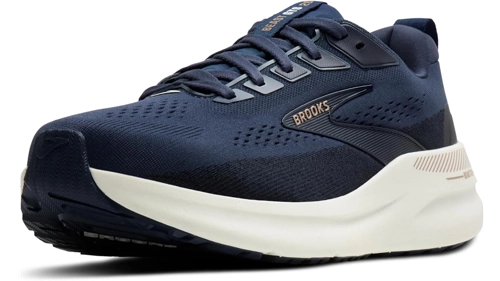
The Beast GTS 26 is the most supportive athletic shoe in this group. Brooks uses its GuideRails system, a broad base and a roomy upper to control excess motion without the hard medial posts used in older motion-control shoes. Brooks specifically lists it for runners who need maximum support, walking and orthotic use.
The men’s model weighs about 12.5 ounces, uses a 12mm drop and comes in medium, wide and extra-wide widths. The launch price is $170. That makes it heavy compared with a typical running shoe, but the weight is part of the trade-off for the broad, planted feel.
Read our Brooks Beast GTS 26 review.
Asics Gel-Kayano 33
Best for: Plush stability for running and long-distance walking.
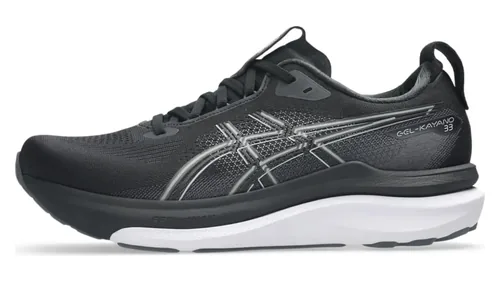
The Gel-Kayano 33 is Asics’ current premium stability trainer. Its new FLUIDSUPPORT system combines two foam densities with supportive geometry instead of the previous 4D Guidance System. The result is a softer, less intrusive stability feel than older posted shoes.
The men’s model weighs about 10.5 ounces, uses an 8mm drop and is available in standard, wide and extra-wide versions. Asics launched it at $170. The broad range of widths is especially useful for men whose low arches make the midfoot feel crowded in standard shoes.
Read our Asics Gel-Kayano 33 review.
Brooks Adrenaline GTS 25
Best for: Everyday stability without the bulk of the Beast.

The Adrenaline GTS 25 uses the same GuideRails concept as the Beast but packages it in a lighter, more traditional daily trainer. It is easier to wear for routine runs, brisk walks and gym sessions when the Beast feels like too much shoe.
The 10mm drop and DNA LOFT v3 cushioning give it a familiar heel-to-toe transition. Multiple widths make it easier to fit men whose feet spread through the midfoot. Launch price was $155.
Read our Brooks Adrenaline GTS 25 review.
Saucony Guide 19
Best for: Men who want guidance with a smoother, less corrective feel.
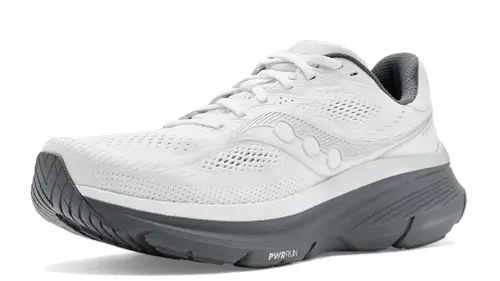
The Guide 19 relies on CenterPath geometry, a broad platform and raised sidewalls instead of a firm medial post. That makes it a strong middle ground for flat-footed men who dislike the feeling of an aggressive stability device under the arch.
Saucony lists a 6mm offset and offers the men’s model in regular, wide and extra-wide versions. The launch price is $150. The PWRRUN midsole is cushioned but not excessively soft, which helps the shoe feel controlled during everyday runs and walking.
New Balance 847v4
Best for: Walking, orthotics and extended-width needs.
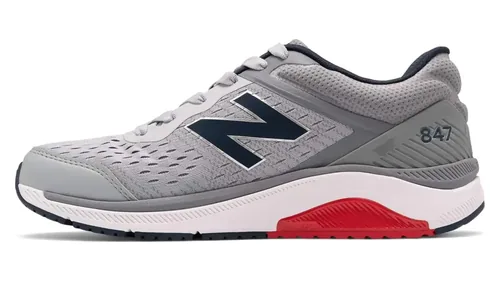
The 847v4 is a traditional motion-control walking shoe rather than a modern running trainer. Its ROLLBAR system, structured heel and firm platform make it useful for men who want the shoe to feel planted underfoot.
The removable Ortholite sockliner makes room for many custom orthotics, and New Balance sells the model in a wide range of widths. The listed drop is 12mm and the current price is about $149.99.
Read our New Balance 847v4 review.
Brooks Addiction Walker 2
Best for: Standing, work and men who want structured leather footwear.
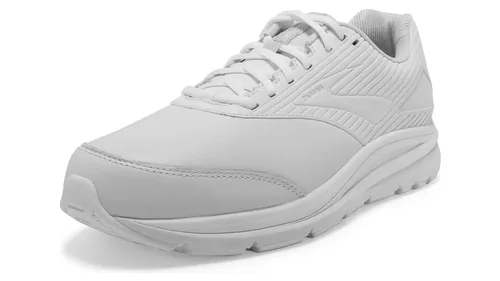
The Addiction Walker 2 is heavier and firmer than the athletic shoes above, but that is exactly why some men prefer it for work. Its Extended Progressive Diagonal Rollbar adds motion control, the leather upper holds the foot securely and the outsole is designed for better traction on workplace floors.
Brooks offers widths through extra-wide, and the supportive platform suits men who spend long hours standing. The downside is stiffness: this is a workhorse, not a soft running shoe. Typical list price is about $150.
Read our Brooks Addiction Walker 2 review.
Propet Stability Walker
Best for: Very wide feet, orthotics and men who need extra depth.
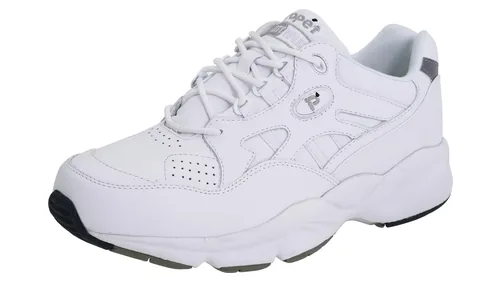
The Propet Stability Walker earns its place because fit can matter more than foam for flat feet. It comes in five widths, including 4E, and uses a broad unitsole base with internal and external heel counters. The removable insole and extra depth also make it one of the easiest shoes here to fit around an orthotic.
The ride is firm and the styling is traditional, so this is not a performance shoe. It is a practical walking option for men whose main problem is finding enough width and internal volume. Typical pricing runs about $103 to $125.
Read our Propet Stability Walker review.
How to Choose Shoes for Flat Feet
Start with symptoms, not appearance. If your feet are flat but comfortable, you may not need special footwear at all. If you have arch fatigue, ankle instability or pain, a broader and more supportive platform may feel better. Cleveland Clinic lists orthotics, stretching and physical therapy among conservative treatments when flat feet are symptomatic.
Support should feel helpful rather than intrusive. Modern stability shoes increasingly use wider bases, sidewalls and guidance rails instead of a hard medial post. That gives you several levels of support to try. The Beast GTS 26 and 847v4 are the most structured choices here. The Adrenaline and Guide are less aggressive. The Kayano sits between those approaches with a highly cushioned stability platform.
Width is especially important. Your midfoot should sit on the platform rather than spilling over the inside edge. Check both feet because one may be wider or longer. If you wear an orthotic, look for a removable factory insole and enough heel depth to prevent the insert from pushing your foot out of the shoe. Our free Shoe Finder can help narrow options by support, width and activity.
When Flat Feet Need Medical Attention
Flat feet that have always been present and do not hurt usually do not need treatment. New or worsening flattening of the arch is different. Cleveland Clinic notes that arches can collapse later in life, and a clinician can evaluate whether tendon problems, injury, arthritis or another condition is involved.
See a podiatrist or orthopedic specialist if you develop persistent pain, swelling along the inside of the ankle, increasing difficulty standing on tiptoe, worsening instability or a noticeable change in the shape of one foot. Those signs are more important than simply noticing that your footprint looks flat.
Orthotics can help some symptomatic flat feet, but they should not be treated as a universal cure. Cleveland Clinic notes that over-the-counter inserts may help mild symptoms, while persistent or severe pain may warrant evaluation for a custom device.
Frequently Asked Questions About Shoes for Men With Flat Feet
The biggest misconception is that low arches automatically require maximum motion control. Shoe choice should match your symptoms, gait, activity and fit. A man who has flat feet but walks comfortably in a neutral shoe does not necessarily need the same footwear as someone with painful overpronation, ankle instability or a custom orthotic. These FAQs address the decisions that matter most when comparing shoes.
No. Flat feet describe arch shape, while pronation describes movement. Some men with flat feet are comfortable in neutral shoes. Choose stability when it feels better, when you clearly overpronate or when a clinician recommends more guidance.
The Beast GTS 26 offers the most support and room for orthotics. The Adrenaline GTS 25 is lighter and better for men who want everyday stability without as much bulk. For current sizes and availability, check Brooks Beast GTS 26 sizes on Amazon.
They can be a strong option if you prefer a cushioned stability shoe. The Gel-Kayano 33 uses FLUIDSUPPORT, an 8mm drop and is available in wide and extra-wide men’s versions.
Not automatically. Arch supports or orthotics may help when flat feet are painful or unstable, but support should feel comfortable and match the condition. Severe or persistent pain should be evaluated by a podiatrist.
They are better only when your foot actually needs the extra width. Many men with flat feet spread through the midfoot, so a wider platform can improve comfort, but an overly loose shoe can cause sliding.
Many can. Flat feet alone do not prevent running. Increase training gradually, use a shoe that feels stable and comfortable, and get evaluated if you develop persistent pain or recurrent injuries.
Seek an evaluation if flat feet become painful, one arch suddenly changes, swelling develops along the inside of the ankle, balance worsens or symptoms keep limiting walking or running.