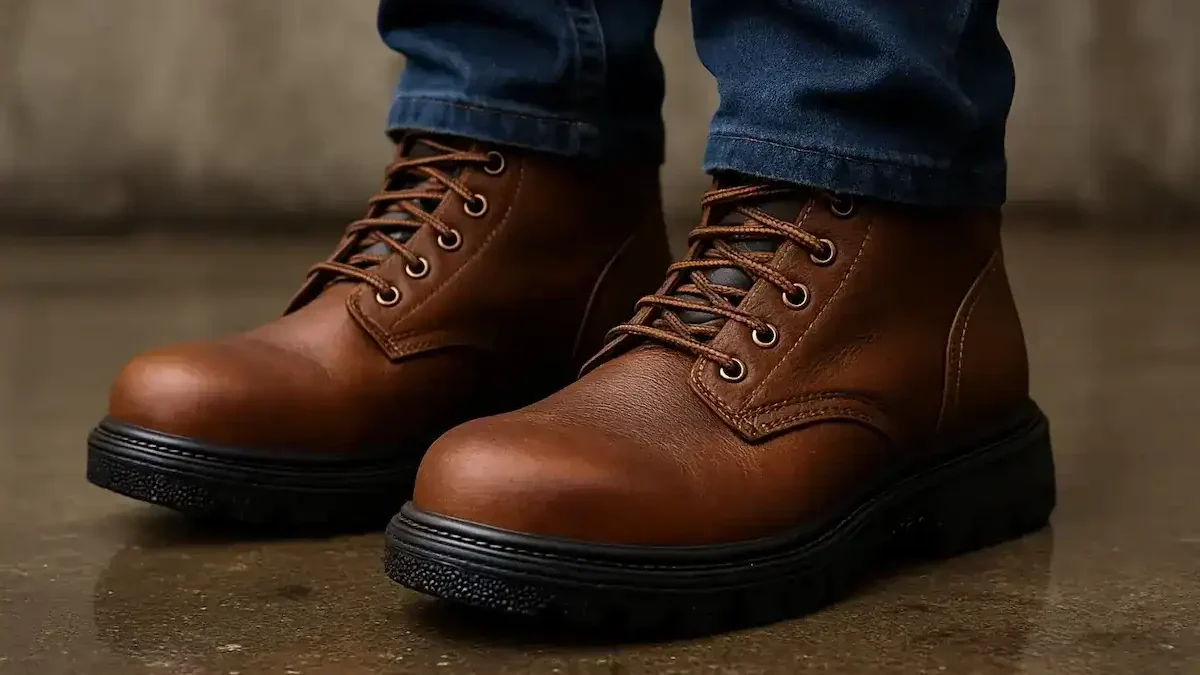
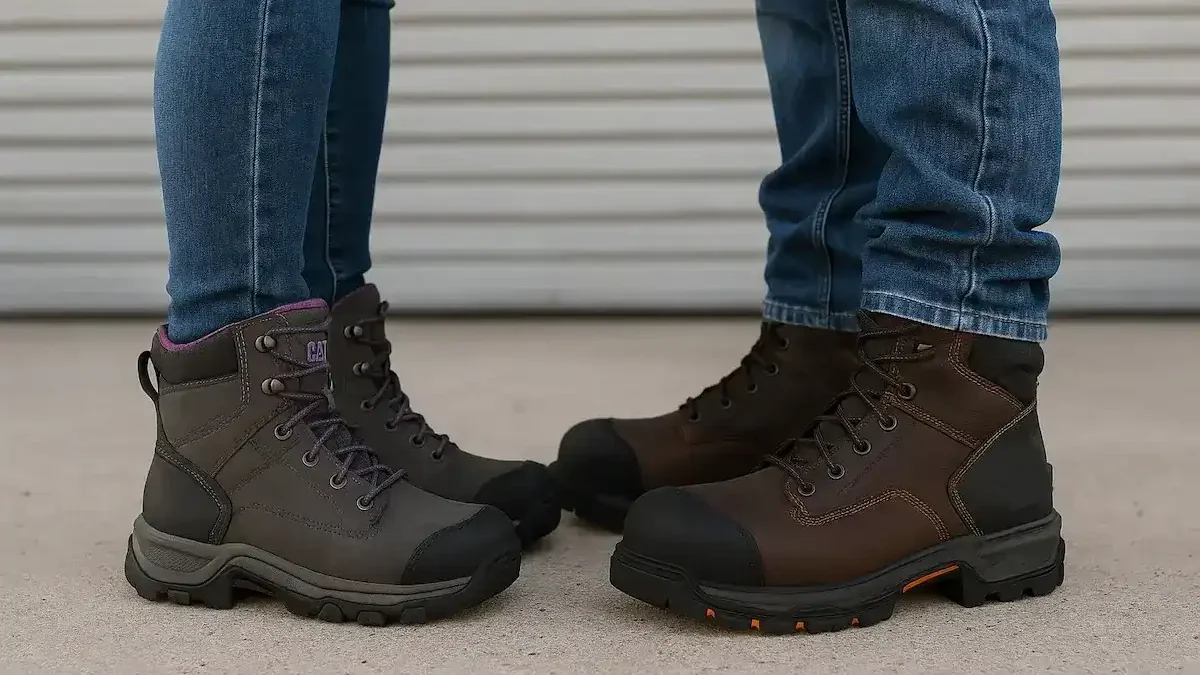
Quick Answer: The North Face Chilkat V 400 Waterproof is our top snow boot for most winter walkers. It pairs 400g of synthetic insulation with seam-sealed waterproof leather and weighs less than a classic pac boot. Women should start with the Sorel Caribou, our pick for deep snow and long cold standing. For wide feet, the Columbia Bugaboot Celsius comes in a men's Wide version. The Kamik Nation Plus suits shoveling, the Merrell Thermo Chill 2 Mid Waterproof suits cleared sidewalks, and the Ugg Adirondack Boot XXV suits icy town walks. The catch is that true snow boots weigh more than winter walking shoes.
Snowy sidewalks are hard on tired feet, and the wrong boot can turn a short dog walk into a cold, wet slog. This list is for everyday walkers who head out in snow, slush and packed ice, sorted by walking need from deep snow to icy town streets. If your feet are sore, wide or swell during the day, we point out which boots give you room. Every pick is a true snow boot, built taller or warmer than a winter sneaker. For every style we cover, see our boots hub.
Our picks at a glance
| Shoe | Best for | Key feature for snow walking | Price & availability |
|---|---|---|---|
| The North Face Chilkat V 400 Waterproof | Best overall for winter walking | 400g insulation in seam-sealed waterproof leather | Check latest price |
| Sorel Caribou | Deep snow and long cold standing | Removable felt inner boot and felt frost plug | Check latest price |
| Columbia Bugaboot Celsius | Wide or swollen feet | Sold in a men's Wide version | Check latest price |
| Kamik Nation Plus | Shoveling and snowy errands | 11-inch pac boot with a removable liner | Check latest price |
| Merrell Thermo Chill 2 Mid Waterproof | Light walks on cleared sidewalks | About 480 g per boot with 5mm lugs | Check latest price |
| Ugg Adirondack Boot XXV | Icy town walks in a dressier boot | Vibram Icetrek outsole and cuffable shaft | Check latest price |
How we chose
We chose these boots on shaft height, waterproofing, insulation or liner type, published warmth rating, weight and width options. Details come from the makers' product pages, retailer listings such as REI, our published boot reviews and, for the Merrell, an independent review we name in the text. We did not test these boots hands-on for this roundup.
Notes about this roundup
- Temperature ratings here are maker or retailer claims, not independent tests.
- Weights are given per boot, worked out from the source's pair weight where only that is listed.
The North Face Chilkat V 400 Waterproof: best overall for winter walking

The North Face Chilkat V 400: best overall for winter walking
Best for: walkers who want real warmth without a heavy pac boot
The North Face Chilkat V 400 Waterproof is the boot we would hand most people who walk through a snowy winter. The North Face lists 400g Heatseeker insulation, a synthetic fill and twice the amount in the 200g boots here. That makes it the most heavily insulated boot on this list on paper, though fill weight is only one part of how warm a boot feels.
The seam-sealed upper of full-grain waterproof leather and suede leaves slush fewer stitched gaps to creep through. Underneath sits a Surface Control rubber outsole, and REI lists an EVA midsole, the light foam used in many sneakers. Based on that build, expect it to feel closer to a hiker than a rubber-shelled pac boot.
REI puts the men's pair at 3 lbs 2 oz, about 25 oz per boot and roughly 4 oz lighter per boot than the Kamik Nation Plus. That matters little on a trip to the mailbox but more on longer walks.
We have not reviewed the 400 itself, but our review of its lighter sibling, the Chilkat V Lace, found it comes in one width and can feel snug across the front of wide feet. If your feet are wide or swell during the day, start with the Columbia Bugaboot Celsius in Wide instead.
This suits walkers who log real miles in the cold and want warmth without pac-boot bulk; the trade-off is a fit that may be tight for wide feet.
Pros
- 400g of insulation, the most published fill on this list
- Seam-sealed leather and suede help keep slush out at the stitching
- About 25 oz per boot, lighter than the pac boots here
- EVA foam midsole for a lighter, more sneaker-like step
Cons
- Linked in men's sizing only, so women need a different pick
- Its Chilkat V Lace sibling runs snug, so wide feet may find it tight
- Insulation: 400g Heatseeker synthetic
- Upper: full-grain waterproof leather and suede, seam-sealed
- Midsole: EVA foam (REI)
- Outsole: Surface Control rubber
- Weight: about 25 oz per boot (REI lists 3 lbs 2 oz per pair, men's)
Sorel Caribou: best for deep snow and long cold standing

Sorel Caribou: best for deep snow and long cold standing
Best for: unplowed snow, shoveling and long waits in the cold
If your walks begin by wading through unplowed snow, the Sorel Caribou is the classic answer. It is a pac boot, the traditional snow-boot style built around a thick inner boot that slips out.
On its Caribou product page for the women's boot, Sorel lists a removable, washable 9 mm felt inner boot with a soft Sherpa pile snow cuff, plus a 2.5 mm felt frost plug between your foot and the frozen ground. Pull the liner out at night and it dries faster, so you start the next walk in a dry boot.
Retailers including REI list the men's Caribou as rated to -40°F, tied with the Kamik Nation Plus for the warmest rating here. That suits people who stand still in the cold, such as parents at the bus stop or anyone clearing a long driveway.
That warmth comes with weight. Our review lists roughly 2 lb 4 oz to 2 lb 8 oz per boot in men's 9 (published weights vary), the heaviest on this list, so expect it to feel clunky on a brisk walk. Skip it if your winter mostly means cleared sidewalks.
Choose the Caribou for deep snow and standing in serious cold; the trade-off is a heavy boot for longer brisk walks.
Pros
- Removable, washable felt inner boot you can dry overnight (women's boot, per Sorel)
- Felt frost plug adds a layer between your sole and frozen ground
- Rated to -40°F in retailer listings
- Sold in men's and women's versions
Cons
- Roughly 2 lb 4 oz to 2 lb 8 oz per boot, tiring on long walks
- Likely to feel stiff and clunky on brisk walks
- Type: pac boot with removable inner boot
- Liner: removable 9 mm washable recycled felt inner boot (Sorel, women's)
- Midsole: 2.5 mm bonded felt frost plug (Sorel, women's)
- Waterproofing: seam-sealed (Sorel, women's)
- Temperature rating: -40°F (retailer listings, men's)
- Weight: about 2 lb 4 oz to 2 lb 8 oz per boot, men's 9 (our review; published figures vary)
Read our full Sorel Caribou review.
Men's version | Women's version
Columbia Bugaboot Celsius: best for wide feet

Columbia Bugaboot Celsius: best for wide or swollen feet
Best for: wide or swollen feet that need more room
Wide snow boots are hard to find, which is why the Columbia Bugaboot Celsius earns its place. Columbia sells a Bugaboot Celsius in Wide, so you get extra room without sizing up and losing your heel hold. A Wide width is not the same as a wide toe box, so if your toes need space to spread, look at the toe shape when you try it on.
Columbia pairs 200g insulation with an Omni-Heat Infinity lining, shiny gold dots it describes as thermal-reflective. Omni-Tech, Columbia's waterproof-breathable build, is meant to keep slush out while letting some sweat escape. At 23.8 oz per boot in men's 9, Columbia's figure, it lands between the light Merrell and the heavy Sorel.
Columbia itself says the laces are not waterproof, so expect them to get wet in deep, slushy snow. With 200g of insulation, it suits active walks better than long standing in hard cold. The Bugaboot Celsius Plus is a separate, warmer model with 400g insulation and an OutDry membrane; our Columbia winter boots guide compares the line.
This is the pick when width is your main problem; you give up some warmth compared with the 400g boots.
Pros
- Men's Wide version for wide or swollen feet
- Reflective lining adds warmth to 200g insulation
- Omni-Tech waterproof-breathable build for slush and wet snow
- 23.8 oz per boot, lighter than the pac boots
Cons
- Laces are not waterproof, so they soak in deep slush
- Less warm for long standing in deep cold
- Linked in men's sizing only
- Insulation: 200g with Omni-Heat Infinity reflective lining
- Waterproofing: Omni-Tech waterproof-breathable
- Outsole: Adapt Trax rubber
- Weight: 23.8 oz (673 g) per boot, men's 9
- Widths: Medium and Wide (men's)
Men's version | Men's Wide version
Kamik Nation Plus: best for shoveling and snowy errands

Kamik Nation Plus: best for shoveling and snowy errands
Best for: clearing the driveway and short trips through deep snow
The Kamik Nation Plus is a no-fuss pac boot for the morning after a storm. Kamik lists it at 11 inches tall, so you can step into a drift without snow spilling in. Inside is a removable 145g HeatMX liner, Kamik's own insulated inner boot, which you can pull out and dry overnight.
Kamik rates the Nation Plus to -40°F, the warmth you want when shoveling, chipping ice off the car or standing at a sledding hill with the kids.
The trade-off is weight and bulk. Kamik gives 3.6 lbs per pair in men's 9, about 29 oz per boot, so it is better for chores and short errands than a daily 2-mile loop. If you walk for exercise in winter, the Chilkat V 400 or Merrell makes more sense.
Pick the Nation Plus if your winter is about shoveling and short trips through deep snow; long walks are not its strength.
Pros
- 11-inch shaft for deep drifts
- Removable 145g HeatMX liner you can dry overnight
- Rated to -40°F by Kamik for long standing in the cold
Cons
- About 29 oz per boot, heavy for walking any distance
- Bulky pac shape is likely to feel clumsy on brisk walks
- Linked in men's sizing only
- Type: pac boot with removable liner
- Liner: removable 145g HeatMX (Kamik)
- Height: 11 inches (Kamik)
- Temperature rating: -40°F (Kamik)
- Weight: about 29 oz per boot (Kamik lists 3.6 lbs per pair, men's 9)
Merrell Thermo Chill 2 Mid Waterproof: best for light walks on cleared sidewalks

Merrell Thermo Chill 2 Mid: best for cleared sidewalks
Best for: daily walks on plowed sidewalks and packed paths
The Merrell Thermo Chill 2 Mid Waterproof is the boot for people who walk most days on cleared or packed snow. Merrell lists it at 480 g per boot, about 1 lb 1 oz, the lightest on this list. On paper it is closer to a winter hiking shoe than a snow boot, and that low weight should be easier on tired legs over a long loop.
Merrell uses 200g insulation and calls it its Warmer tier, meant for active days in the cold. A waterproof membrane, a thin inner layer that blocks water but lets sweat vapor out, sits under a mesh and PU-coated suede upper, and the sticky rubber outsole has 5mm lugs that bite into packed snow. In an independent review, OutdoorGearLab found it surprisingly warm for its light weight, short height and modest insulation.
Merrell gives a 10mm drop (30mm heel, 20mm forefoot), so your heel sits higher than your toes, much like many cushioned walking shoes. Learn more about shoe drop.
The men's boot comes in Medium width only, in sizes 7 to 15. The mid-height shaft is too low for deep snow, and Merrell publishes no temperature rating, so it is not the boot for long standing in hard cold.
This is the light, walkable choice for cleared paths; you trade away deep-snow height and a published warmth rating.
Pros
- About 480 g per boot, the lightest on this list
- 5mm sticky rubber lugs grip packed snow
- Waterproof membrane under a mesh and suede upper
- Familiar, sneaker-like 10mm drop
- Sold in men's and women's versions
Cons
- Men's version comes in Medium width only
- Deep snow comes in over the mid-height shaft
- No published temperature rating, so not for long cold standing
- Insulation: 200g (Merrell's Warmer tier)
- Upper: breathable mesh and PU-coated suede with waterproof membrane
- Outsole: Merrell sticky rubber, 5mm lugs
- Drop: 10mm (30mm heel, 20mm forefoot)
- Weight: 480 g (1 lb 0.92 oz) per boot, men's
- Width: Medium only, men's sizes 7 to 15
Read our full Merrell Thermo Chill 2 Mid review.
Men's version | Women's version
Ugg Adirondack Boot XXV: best for icy town walks

Ugg Adirondack Boot XXV: best for icy town walks
Best for: women who walk icy town streets and want a dressier boot
The Ugg Adirondack Boot XXV is for women who want a boot that looks at home in a coffee shop but still suits a slick sidewalk. Ugg lists a Vibram outsole with Vibram's Icetrek rubber compound, which the brands pitch for grip on cold, icy ground; that is their claim, and we know of no independent test showing it grips ice better than the other boots here. Ugg also lists 3M Xerogel insulation, which it says holds warmth without a puffy look.
Ugg rates it to -32°C, about -26°F, and a waterproof membrane bootie, a sock-like layer that keeps slush out, sits inside the leather and suede upper. Our Ugg Adirondack XXV review lists a 7.5-inch shaft you can cuff down for town or roll up when the snow is deeper.
Sizing is the main limit. Our review lists one width, in women's sizes 5 to 10 in half sizes plus 11 and 12, so there is no 10.5, no 11.5 and no wide option. The shaft is also shorter than the 11-inch Kamik, so it is not the boot for unplowed drifts.
This suits women who want a warm, smarter-looking boot with an ice-focused outsole; it is less suited to deep snow or wide feet.
Pros
- Vibram outsole with the Icetrek compound, which Ugg and Vibram pitch for icy sidewalks
- Rated to -32°C (about -26°F) by Ugg
- Waterproof membrane bootie under leather and suede
- Cuffable 7.5-inch shaft adjusts for town or snow
Cons
- One width only, so wide feet may feel squeezed
- Too short for deep drifts
- Women's version only, with no 10.5 or 11.5 size
- Insulation: 3M Xerogel (Ugg)
- Upper: waterproof leather and suede with waterproof membrane bootie
- Outsole: Vibram with Icetrek compound
- Temperature rating: -32°C, about -26°F (Ugg)
- Shaft: 7.5 inches, cuffable (our review)
- Sizes: women's 5 to 10 in half sizes, plus 11 and 12; one width (our review)
Read our full Ugg Adirondack XXV review.
What to look for in a snow boot
Four choices separate one snow boot from another. Match them to the walks you actually take.
- Shaft height: a mid-height boot is fine for plowed paths, while deep snow calls for a tall boot.
- Liner: a removable liner dries overnight, while built-in insulation makes a lighter, more flexible boot.
- Warmth: more insulation suits standing still in the cold, while active walkers often do fine with 200g.
- Ice grip: rubber and tread matter most on ice, and our icy sidewalks guide goes deeper.
More boot guides
For more styles, see our winter boots for women guide. Men can compare our winter boots for men. Still unsure? Our free Shoe Finder gives a custom recommendation.
Frequently Asked Questions About Buying Snow Boots
Snow boots are built for walking through snow, with taller shafts, waterproof lowers and more insulation. Winter boots also include lighter, lower boots for cold, dry days. If you mostly walk on cleared sidewalks, our best winter boots roundup has lighter picks.
Not by default. A boot that is too big lets your heel lift, which can rub and feel unsteady on snow. Try boots on with the socks you plan to wear and choose the size that holds your heel. Switching brands? Our shoe size converter can help.
Snow boots help, but no boot grips every icy surface, so take short steps on glare ice. Soft rubber and deeper lugs often help on packed snow. For ice-focused picks, see our icy sidewalks guide.
Many people with heel pain wear snow boots, and a cushioned, supportive fit may feel more comfortable on hard, frozen ground. Whether your insert fits depends on the boot's volume, so try it with your orthotic in place. If heel pain lasts or gets worse, see a podiatrist.
Treat the rating as a guide, not a promise. The Kamik Nation Plus rating comes from Kamik, while the Sorel Caribou figure comes from retailer listings. You stay warmer walking than standing still, so a boot that feels fine on a brisk walk may feel cold at a long outdoor wait.
On this list, the Columbia Bugaboot Celsius Wide is the only pick sold in a men's Wide version. The Merrell Thermo Chill 2 Mid and the Ugg Adirondack Boot XXV come in one width, so they suit average to slim feet better.
Pull out the liner if your boot has one, as the Sorel Caribou and Kamik Nation Plus do, and let the liner and shell dry separately at room temperature. Newspaper in the toes helps soak up moisture. Keep boots away from radiators and open flames, which can damage leather and rubber.