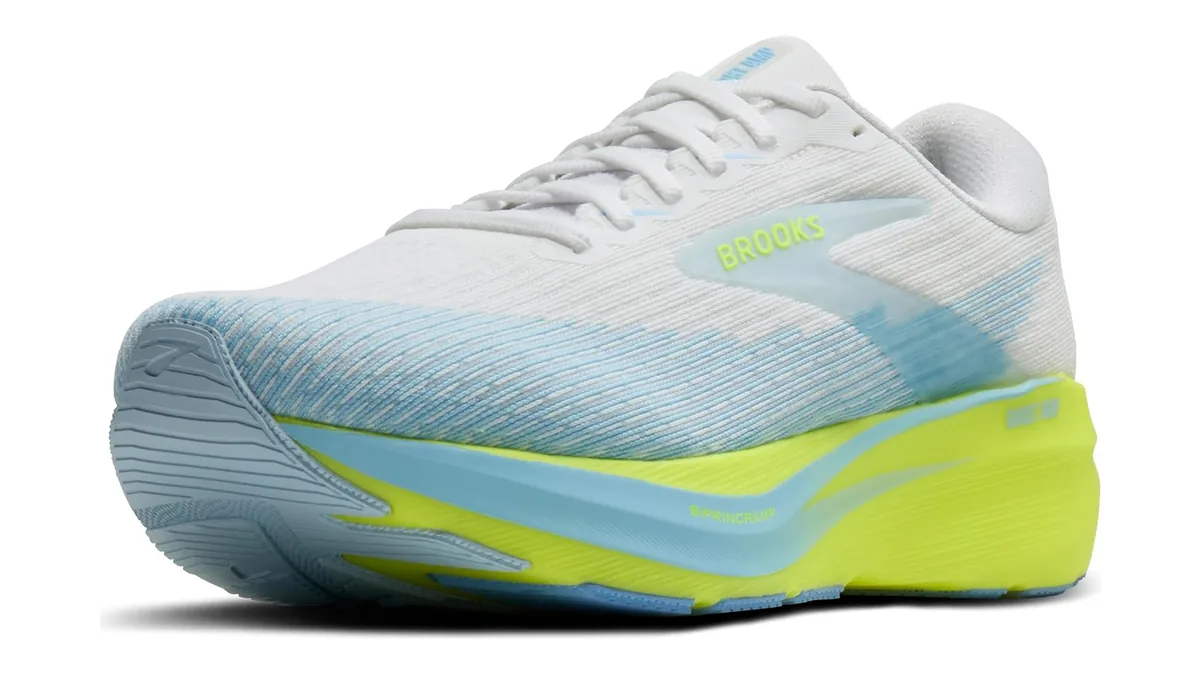
Lighter, quicker Ghost with foam that promises more than it delivers
Quick Answer: Brooks Ghost AMP Review: The Brooks Ghost AMP is a light, versatile neutral trainer for runners who want one shoe to cover easy miles and faster days. Brooks blends a modern racing foam into its familiar Ghost cushioning, which cuts real weight and sharpens the push-off without changing what made the shoe comfortable. It is the most capable Ghost yet and it costs less than most rivals. The new foam is good rather than transformative. Check latest price.
The Brooks Ghost AMP is a new branch on the oldest tree in the Brooks range. The Ghost has been the brand’s dependable everyday trainer for close to twenty years, and its reputation has always rested on being comfortable, predictable and slightly dull. The AMP keeps the first two and sets out to fix the third.
It does that by changing the foam. Rather than the EVA-based cushioning the Ghost has always used, this version blends in PEBA, the light and springy material behind almost every fast shoe of the last five years. The result is meaningfully lighter and noticeably quicker while still fitting and feeling like a Ghost. It went on sale at $150 in July 2026, which in a market where daily trainers routinely ask $160 or more is part of the appeal.

Specs
Here are the specifications for the Brooks Ghost AMP:
| Type | Versatile neutral road daily trainer |
| Gait type | Neutral |
| Midsole | DNA Hype, a nitrogen-infused blend of PEBA and EVA foam |
| Stack height | 37 mm heel, 31 mm forefoot, which is a solid everyday amount of foam. One independent measurement comes in nearer 36 mm and 30 mm |
| Heel-to-toe drop | 6 mm, meaning the heel sits only slightly higher than the toes, lower than the Ghost has traditionally sat |
| Weight | About 8.9 oz (252 g) men’s size 9; about 7.7 oz (218 g) women’s size 8. An independent weighing came in at 8.8 oz (249 g), roughly 14 percent lighter than the Ghost 18 |
| Upper | Engineered mesh with a padded tongue and collar |
| Outsole | Rubber across the main wear areas, with foam exposed elsewhere to keep the weight down |
| Widths | Not confirmed for this model. Brooks offers wide fittings across much of the Ghost family |
| Price | $150 at launch, July 2026. Check latest price |
Pros
Here is where the Ghost AMP earns its keep:
- Roughly 14 percent lighter than the Ghost 18, which you feel from the first stride
- Handles easy runs and faster efforts in one pair, which the Ghost has never quite managed
- $150 undercuts most trainers using a PEBA blend
- Keeps the easy, familiar Ghost fit and comfort rather than reinventing it
- The lower 6 mm drop makes the ride feel level and smooth through the step
Cons
And where it falls short of the hype in the name:
- The foam is livelier than the old Ghost but not as springy as a full PEBA midsole
- Less cushioning than the Ghost 18 for anyone who bought that shoe specifically for softness
- Width availability is unconfirmed, which is a problem for a shoe with such a broad audience
- The daily trainer market is crowded, and nothing here stands out as a headline feature
- Blended foams generally lose their bounce sooner than plain EVA does
What is new compared with the Ghost 18
The midsole is the whole story. The Ghost 18 uses a single EVA-based foam, which is the traditional running shoe material: reliable, durable, reasonably soft and not especially springy. The AMP replaces it with DNA Hype, which mixes PEBA into that EVA and blows nitrogen through the result. PEBA is the light, bouncy plastic that took over racing shoes, and nitrogen infusion means gas is forced into the foam during manufacture to leave tiny bubbles that make it lighter still.
The effect is measurable rather than vague. The AMP comes out about 14 percent lighter than the Ghost 18, which is a large saving in a shoe that was never heavy to begin with, and the push-off feels sharper because the foam returns more of what you put into it. The drop has also come down to 6 mm, so the ride sits flatter than the Ghost has historically. What you lose is a little of the cushioned, sink-in softness that made the Ghost 18 such an easy shoe to love. This is a Ghost that wants to go faster, and that is a real change in character rather than a marketing line.
Who should buy the Brooks Ghost AMP
Buy it if you want one running shoe and your week has variety in it. Easy miles, a steady long run, a few strides, the occasional parkrun: this shoe handles all of that without complaint, which is more than most $150 trainers manage. For a runner who is not building a rotation, that versatility is worth more than any single quality.
Buy it if you have always liked the Ghost but found it a little lifeless. This is the same shape, the same easy fit and the same no-surprises character, with the dullness taken out. Anyone who has worn several Ghosts and quietly wondered whether there was something more interesting out there can stay in the family and find out.
Buy it if you want a modern foam without paying modern prices. PEBA blends normally show up in shoes costing $170 and upward. Getting one at $150, in a shoe that is also comfortable enough for everyday use, is a genuinely good deal rather than a technicality.
Who should probably skip it
Skip it if you loved the Ghost 18 specifically for how soft it was, because this one is firmer and sits a little lower, and the change is easy to feel. Skip it if you run long and slow and want maximum protection, since there are shoes with considerably more foam for similar money. And skip it if your feet roll inward and you have been advised to use support, because this is a plain neutral shoe with nothing to guide you.
These suit that runner better:
- Brooks Ghost Max 4: much more foam underfoot, a rocker shape that eases long days and a genuinely roomy fit (check price | read review)
- Asics GT-2000 15: an affordable support shoe that keeps the foot steady without feeling heavy or corrective (check price | read review)
- Hoka Rincon 5: a cheaper lightweight daily trainer with a taller heel, for runners who want easy miles and a lower bill (check price | read review)
How does the Brooks Ghost AMP fit?
The Ghost AMP fits the way Ghosts have always fitted, which is one of the quiet reasons this line sells so well. It is accurate, secure and unfussy, with nothing that needs breaking in and no odd shapes anywhere. Most people can order online without thinking about it.
Fit and sizing
Take your usual Brooks size. Length is true, the heel is held by a moderately padded collar and the midfoot wraps closely without pinching. The toe box is average: there is room to move but it is not generous, so anyone who likes plenty of space at the front will notice. The one open question is width. Brooks sells wide fittings across much of the Ghost family, but we could not confirm one for the AMP, so broad-footed runners should check the listing before ordering rather than assuming.
Upper and step-in comfort
The upper is a straightforward engineered mesh with a padded tongue and collar. It is the least interesting part of the shoe and that is fine, because it does everything asked of it: no rubbing, no pressure points, no fuss. Step-in comfort is pleasant and slightly firmer than the Ghost 18, which tells you about the foam change before you have taken a step. Breathability is good enough for summer running without being airy, and the overall impression is of something solidly made to a sensible budget rather than anything clever.
How does the Brooks Ghost AMP perform?
This is the most capable shoe the Ghost line has produced, and the reason is simple: it is lighter, so everything you ask of it costs less effort. It is not a thrilling shoe, but it is a usefully broad one.
Cushioning and ride
Stack height means the depth of foam between your foot and the road, and 37 mm at the heel is a solid everyday amount rather than a deep one. DNA Hype is the interesting part. Blending PEBA into EVA gives you a foam that lands softer than a plain EVA midsole and springs back faster, without the price or the fragility of a pure racing foam. The ride that results is moderately soft with a definite bounce, and it holds its shape rather than bottoming out. It is not as lively as a full PEBA midsole, and if you have run in a racing shoe you will feel that gap. As an everyday compromise it is a good one.
Ride and running performance
Weight is what makes this shoe work. At roughly 8.9 oz it is light enough that picking up the pace feels natural rather than laborious, and that alone changes what the Ghost can be asked to do. There is no plate and no rocker, so all the forward drive comes from the foam and from how readily the shoe bends, which is plenty at this weight. Steady runs, easy days, strides and a tempo effort all sit comfortably within its range. Marathon-paced long runs are fine too. What it will not do is feel fast the way a plated shoe does, because nothing here is levering you forward.
Stability and support
This is a neutral shoe with no support features, so it does nothing to guide a foot that rolls inward. It is naturally steady all the same. The platform is not tall, the foam is firm enough to hold its shape under load and the low 6 mm drop keeps your foot closer to level, all of which make the shoe harder to tip over than a tall soft trainer. Runners with mild pronation who already get on with neutral shoes should be comfortable here. Anyone who genuinely needs guidance should choose a stability model rather than hoping a steady neutral shoe will do the job.
Outsole, grip and durability
Brooks lays rubber across the areas that take the wear and leaves foam exposed elsewhere, which keeps the weight down and is standard practice for a shoe of this type. Grip on dry and damp pavement is dependable, which is what a road trainer needs and no more. Durability deserves a note of caution. Foams that blend in PEBA generally lose their bounce sooner than plain EVA, so the AMP is likely to feel flat before the Ghost 18 would, even if the rubber holds up just as well. The 300 to 500 mile figure people quote for running shoes is only a broad guideline, and with a foam like this the ride will tell you before the outsole does.
Is the Brooks Ghost AMP good for walking?
It is a capable walking shoe without being a specialist one. The low weight is the main benefit: on a long day of sightseeing or a brisk fitness walk, a shoe you barely notice on the foot is a shoe you can keep going in. It bends readily through the middle, which matters more when walking than running because you roll through the whole foot on every step, and the flat 6 mm drop keeps you level.
Where it gives ground is on hard floors over long stretches. There is a moderate rather than deep layer of foam underfoot, so eight hours standing on concrete will leave your feet feeling it in a way a max-cushion shoe would not. There is also no arch support to speak of, so anyone who relies on structure will want an insole. For a walker who also runs, or someone who wants one pair that can do a morning run and an afternoon of walking, it is an easy recommendation. For standing all day at work, buy a shoe made for that.
Brooks Ghost AMP vs Ghost 18
Here is how the two compare:
Feature | Ghost AMP | Ghost 18 |
Midsole | DNA Hype, a nitrogen-infused PEBA and EVA blend | A single EVA-based foam |
Weight | About 8.9 oz (252 g) men’s 9 | About 14 percent heavier |
Heel-to-toe drop | 6 mm | Higher, in the traditional Ghost range |
Ride | Firmer, springier, quicker | Softer and more cushioned |
Best use | Easy miles plus faster days | Easy miles and comfort |
Price at launch | $150, July 2026 | Not confirmed |
Buy the AMP if you want one shoe that covers more of your week, or if the Ghost has ever felt sluggish to you. Buy the Ghost 18 if softness is the reason you wear this shoe, because the AMP trades some of it away and there is no getting it back.
Brooks Ghost AMP Alternatives
Three shoes cover the most likely reasons to keep looking.
Brooks Ghost 18 remains the right choice for a lot of people, and it is worth comparing directly rather than assuming the newer shoe wins. It is softer, more heavily cushioned and every bit as easy to wear, giving up the weight saving and the sharper push-off in exchange (check price | read review).
Runners who find the AMP tame should try Asics Novablast 6. It is noticeably bouncier and more fun at every pace, which makes easy days more enjoyable and quicker days easier, at the cost of a less planted feel underfoot (check price | read review).
If what draws you here is the promise of a faster daily shoe, Adidas Adizero Boston 13 delivers more of it. Carbon rods and a firm racing foam make it genuinely quick for workouts, though it is much less comfortable on a slow Sunday and costs more (check price | read review).

Price and value
At $150 the Ghost AMP is priced below most trainers that use a PEBA blend, and that is the clearest argument for it. You are getting a modern foam, a real weight saving over the standard Ghost and enough range to cover most of a training week, all for less than a good number of shoes that do only one of those things. What you are not getting is the deep cushioning some people buy a Ghost for, or a foam as lively as the ones in $200 shoes. For a runner who wants one sensible pair and does not want to spend $180, the value here is strong.

Final verdict
Best for: runners who want one shoe for the whole week, Ghost owners looking for more life underfoot, faster easy runs, and anyone after a modern foam at a sensible price.
Avoid if: softness is why you buy a Ghost, you run long and slow, or you need support for feet that roll inward.
Fit: true to size, secure heel, average toe box. Width availability not confirmed.
Verdict: The Ghost AMP is the shoe people have been asking Brooks for: the Ghost they already trust, with enough life in it to be worth putting on for a faster run. The weight saving is the real win and it makes the shoe better at almost everything. The foam does not quite live up to its name, and the extra pep costs you a little of the softness that built the Ghost’s reputation. At $150 that is an easy trade to accept.
Frequently Asked Questions for Brooks Ghost AMP
No. The two are sold alongside each other and they do different jobs. The Ghost 18 is the softer, more cushioned everyday shoe, and the AMP is the lighter, quicker one built around a newer foam. Think of the AMP as a second option in the family rather than the next version of the same shoe.
It is Brooks’ name for a midsole that mixes PEBA into EVA and then has nitrogen blown through it. PEBA is the light, springy material used in racing shoes, EVA is the durable traditional foam, and the nitrogen leaves tiny bubbles that cut weight further. The blend is meant to give you some of the racing bounce without the cost or the short life of a pure racing foam.
Comfortably, at any distance from 5K upward, and plenty of people will. It is light enough not to hold you back and cushioned enough to stay pleasant over a half marathon or further. It is not a carbon-plated racer, so if you are chasing a specific time on the road you would be quicker in a dedicated race shoe.
We could not confirm a wide fitting for this model, although Brooks offers one across much of the Ghost family. The standard width is average rather than generous, so broad-footed runners should check the listing carefully before ordering, or look at the Ghost Max, which is the roomier shoe in the range.
Yes. The Ghost has traditionally sat on a higher heel, and this version brings it down, which makes the ride feel flatter and smoother through the step. If you are coming from an older Ghost it asks slightly more of the calf and Achilles, so ease into it over a couple of weeks rather than jumping straight to your longest run.
It is a reasonable one. The fit is easy, there is no rocker or plate to adapt to and it is light enough to make early runs feel manageable. The two caveats are that it offers no support, so if your feet roll inward noticeably you should start elsewhere, and that width availability is unconfirmed, which matters if your feet are broad.