Deep cushioning, but the light feel is gone
Quick Answer: Hoka Rincon 5 Review: The Rincon 5 is Hoka’s most affordable everyday running shoe, and this version feels much more like a normal Hoka than the featherweight Rincons of old. A thick, soft EVA midsole and a taller heel make easy miles and long walks feel gentle, and the wide sizes help if the old Rincon pinched. The trade-off is weight. It is no longer a light shoe and it no longer feels quick, so runners who bought the Rincon for its lightness will be disappointed. Check latest price.
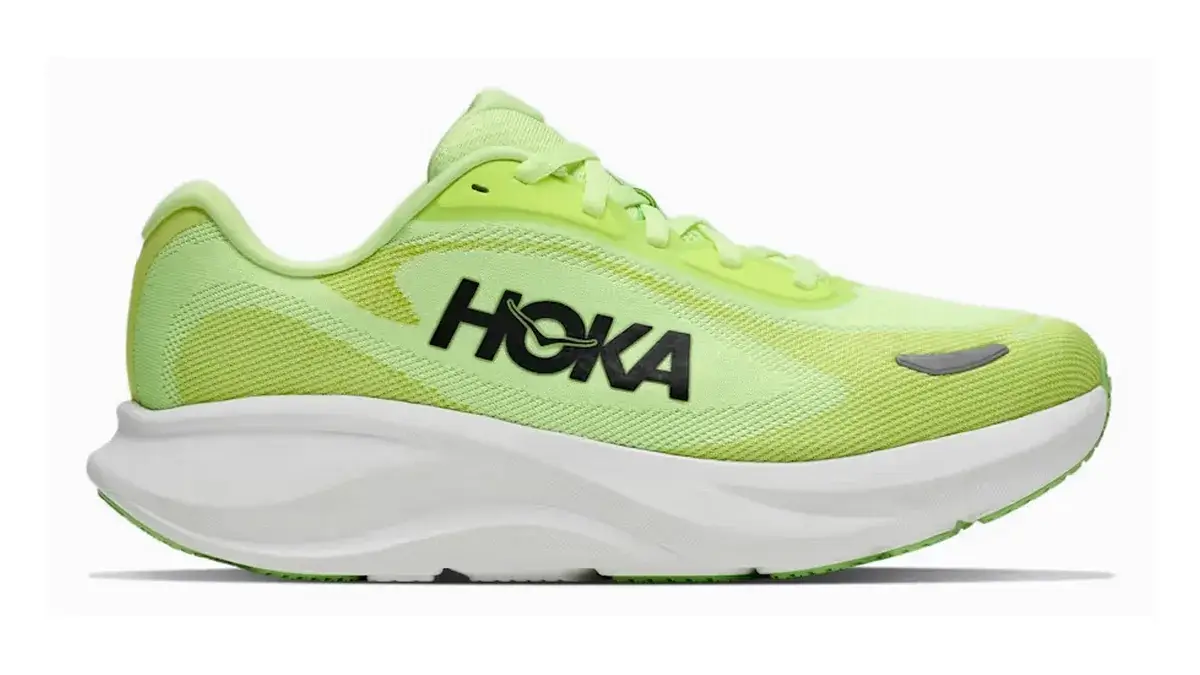
The Hoka Rincon 5 is the fifth version of Hoka’s entry-level road running shoe, and it is the cheapest running shoe the brand makes apart from the Solimar. Hoka began selling it in July 2026. For years the Rincon was the odd one out in the Hoka range: it had the tall, soft look of a Hoka but weighed about as much as a racing shoe. That is no longer true.
Hoka has made two changes that reset what this shoe is. It gained roughly an ounce and a half over the Rincon 4, and the heel is now noticeably higher off the ground than the forefoot. In shoe terms that gap is called the heel-to-toe drop, and the Rincon 5 moves from 5 mm to 8 mm. In plain terms, your heel sits higher than before, which most people find easier on the calves and Achilles and which suits you if you land on your heel when you run.
So this is now a straightforward cushioned daily trainer that happens to cost less than the rest of the range. If you are a weekend runner who wants a comfortable Hoka without paying Clifton or Bondi money, the Rincon 5 is aimed squarely at you. If you bought the earlier Rincons because they felt fast and light, this is a different shoe wearing the same name.
Specs
Here are the specifications for the Hoka Rincon 5:
| Type | Road running shoe, everyday training |
| Gait type | Neutral |
| Midsole | Compression-molded EVA foam |
| Stability features | None beyond the shape of the sole itself |
| Weight | About 9.7 oz, as listed by Hoka |
| Heel-to-toe drop | 8 mm, up from 5 mm on the Rincon 4 |
| Stack height | Not published by Hoka at the time of writing; independent figures disagree, so we have left it out rather than guess |
| Upper | Minimal engineered mesh |
| Outsole | Durabrasion rubber in patches over exposed foam |
| Widths | Regular and wide, men’s and women’s |
| Price | Launched at $125 in July 2026. Check latest price |
Pros
- One of the cheapest ways into Hoka cushioning at $125, when the Clifton is $155 and the Bondi is $175
- The higher heel takes strain off tight calves and an aching Achilles, which is welcome if you are coming back to running
- Soft enough for easy runs, dog walks and standing about, so one pair covers several jobs
- Comes in wide as well as regular, which the old Rincon badly needed
- Looks far more expensive than it is, so you will happily wear it to the shops
Cons
- At about 9.7 ounces it is no longer a light shoe, and the Rincon name used to promise exactly that
- Plain EVA foam does not spring back the way the pricier foams in the range do, so quick running feels like hard work
- Hoka has not published a stack height, which makes it harder to compare against rivals on paper
- The rubber only covers part of the sole, so the exposed foam will scuff if you walk on rough ground
What is new versus the Hoka Rincon 4
This is the biggest change the Rincon has had in years, and it is mostly about shape and weight. The Rincon 4 weighed about 8 ounces with a 5 mm drop. The Rincon 5 weighs about 9.7 ounces with an 8 mm drop. Hoka has added material rather than taken it away, which is the opposite of what the line used to stand for.
The upper is new too. Hoka describes it as a sleeker, more streamlined build in minimal mesh, and it does away with the busier look of the Rincon 4. Underneath, the midsole is still compression-molded EVA, which is the same familiar foam family, so the softness is similar even though the geometry is not.
One thing carried over is worth knowing about. The Rincon 3 and earlier had a reputation for flattening out early, sometimes within 100 to 150 miles. The Rincon 4 fixed that with more material underfoot, and the Rincon 5 keeps that heavier, more durable approach. You are trading the old lightness for a shoe that should hold its shape longer.
Who should buy the Hoka Rincon 5
Buy it if you want a comfortable, cushioned shoe for easy running and everyday walking and you do not want to spend $155 or more. This is the cheapest seat in the Hoka range, and at $125 it now gives you a ride that is much closer to the brand’s flagship shoes than the old Rincon did.
It suits you particularly well if you land heel first. The taller heel gives you more foam exactly where you make contact, and it shortens the stretch through the calf and Achilles at the back of each step. Runners returning after a break, or anyone whose calves complain about low shoes, will notice the difference.
It is also a sensible pick if you are new to running and want one pair to do everything: a couple of easy runs a week, the walk to work and a weekend on your feet. Wide sizes are available in both men’s and women’s, so it is worth a look even if Hoka has felt narrow on you before.
Who should probably skip it
If you bought a Rincon before because it felt light and nimble, this is not that shoe any more and you will feel the extra weight in the first mile. Skip it too if you want a trainer that can pick up the pace. Plain EVA foam absorbs impact well but does not give much back, so tempo runs and intervals feel heavier than they should.
The other group to steer clear is anyone whose feet roll inward noticeably. The Rincon 5 is a neutral shoe with no support features, and while the wide sole helps a little, it is not built to keep your foot upright. If you have been told you need support, or if the inside edge of your shoes wears down first, look elsewhere.
Two or three alternatives suit those readers better:
- Hoka Gaviota 6: a max-cushion Hoka with a built-in support frame, so you get the same soft landing with your foot held steady (check price | read review)
- Saucony Triumph 24: softer and livelier underfoot than the Rincon, which makes long easy runs more comfortable without feeling dead (check price | read review)
- Hoka Transport 2: if the running was never really the point, this is the same cushioning in a shoe built for walking, commuting and standing (check price | read review)
How does the Hoka Rincon 5 fit?
The Rincon 5 fits like a normal running shoe rather than a snug one, which is a change of tone for the line. The upper is thin and holds the foot without a lot of padding, and the wide option means most people should find a shape that works. Hoka has not changed its sizing, so the length should feel familiar if you have worn the brand before.
Fit and sizing
Order your usual size. The Rincon 4 had a tight middle section across the arch, and the reworked upper on this version is a straighter, simpler build, so it should suit more feet. If you have a high instep or you have found Hoka narrow in the past, the wide version is the safer buy. Both men’s and women’s come in regular and wide.
Upper and step-in comfort
Hoka has gone minimal here. The mesh is light and airy, which is good news in summer, and there is not much padding around the collar or tongue. That keeps the weight down but it also means you feel the laces more than you would in a plush shoe, so take a moment to get the tension right. Step-in feel is soft underfoot and unremarkable everywhere else, which is exactly what you want from a shoe you will forget you are wearing.
How does the Hoka Rincon 5 perform?
The honest summary is that this shoe does easy things very well and fast things poorly. It is comfortable, predictable and forgiving at conversational pace, and it gets in the way as soon as you try to push. For most weekend runners, easy pace is where nearly all the miles happen, so that is a reasonable trade.
Cushioning and ride
The midsole is compression-molded EVA, the same broad type of foam used in most everyday running shoes. It is soft on impact and quiet, and with the extra material Hoka has added it takes the sting out of pavement well. What it does not do is bounce. Newer foams squash and spring back like a rubber ball; EVA squashes and stays squashed for a beat. That is why the Rincon 5 feels cosseting on a jog and flat when you speed up.
Ride and running performance
Hoka shoes roll you forward using a curved sole, called a rocker, rather than by flexing at the toes. The Rincon 5 keeps that, and combined with the higher heel it makes each step feel like a smooth tip forward. Easy runs and long slow miles feel effortless. Anything quicker asks you to move the extra weight yourself, and after a few minutes of that you will want a different shoe on your feet.
Stability and support
This is a neutral shoe. There are no firmer wedges, plastic frames or raised walls to steer your foot, so we would classify it as neutral rather than stable-neutral. What steadiness it has comes from the width of the sole and the way the foam is shaped around the heel, which stops the shoe feeling tippy on a soft landing. That is enough for most people with a normal stride. It is not enough to substitute for a support shoe, and no shoe corrects the way you run.
Outsole, grip and durability
Hoka uses Durabrasion rubber, a hard-wearing compound, but only in patches where you land and push off. The rest is exposed foam. On dry and damp pavement grip is fine. On gravel, grit and rough paths the bare foam will chew up faster than a fully rubbered sole. Every running shoe is usually good for somewhere between 300 and 500 miles as a rough guide, and the heavier, more substantial build here should land in that range rather than the disappointing 100 to 150 miles some early Rincons managed.
Is the Hoka Rincon 5 good for walking?
Yes, and for many buyers this will be the main use. The soft foam and the rolling sole make walking on hard floors and pavement noticeably easier on the feet, and the higher heel suits walking, where almost everyone lands heel first. It handles a day of sightseeing or a long shift on your feet better than the old Rincon did, simply because there is more material between you and the ground. Two caveats. The exposed foam on the sole wears quickly if your walking involves gravel driveways or building sites, and there is no arch support to speak of, so if you use orthotics you will want to take the flat insole out and drop yours in. For pure walking duty, a shoe with full rubber coverage will last longer.
See also: More walking shoe options.
Hoka Rincon 5 vs Hoka Rincon 4
| Rincon 5 | Rincon 4 | |
|---|---|---|
| Weight | About 9.7 oz | About 8.0 oz |
| Heel-to-toe drop | 8 mm | 5 mm |
| Midsole | Compression-molded EVA | Reformulated EVA |
| Upper | New minimal mesh, simpler shape | Busier build, narrower through the midfoot |
| Launch price | $125, July 2026, Check current price | $125, 2024, Check availablity and discounts |
Buy the new model when you want more cushioning under the heel, when low-drop shoes have bothered your calves, or when the Rincon 4 felt tight through the middle of your foot.
Buy the previous model when you can still find your size on sale and lightness is what you wanted from a Rincon in the first place. At about an ounce and a half lighter, the Rincon 4 is the better choice for faster running.
Hoka Rincon 5 Alternatives
The Rincon 5 wins on price and loses on liveliness, so the useful alternatives are the ones that fix the second problem or push further in the direction the Rincon has moved.
Hoka Clifton Pro: pay the extra and you get a springier foam that gives energy back instead of swallowing it, which makes the same easy runs feel less like work (check price | read review).
Brooks Ghost Max 4 is the pick if the Rincon’s neutral platform leaves you wobbling. It sits on a much wider base with a roomier toe box, so it feels planted on tired legs and suits people who walk as much as they run (check price | read review).
Another option worth weighing is the Asics Gel-Cumulus 28, which costs more but adds a plusher, deeper feel underfoot and a more generous toe box, so long runs stay comfortable further into the distance (check price | read review).
Where the Rincon’s thin outsole coverage is the sticking point, the Hoka Challenger 8 solves it. It carries a light grip pattern that copes with towpaths and packed dirt as well as pavement, so it is the better single shoe if your runs and walks leave the road (check price | read review).
Price and value
At $125 at launch in July 2026, the Rincon 5 is the cheapest running shoe Hoka makes apart from the Solimar, and it holds that price against a $155 Clifton and a $175 Bondi. What the money buys is a lot of comfortable foam, a durable build and wide sizing, all in a shoe that no longer looks like the budget option. What it does not buy is a modern, energetic foam, and that is the gap you feel when you run quickly. As a comfortable daily shoe for easy running and walking, it is good value. As a shoe to make you faster, it is not. Remember that the older Rincon 4 will be available at a better price now that the 5 is released, while supplies last.
Final verdict
Best for: weekend runners and walkers who want Hoka cushioning at the lowest price in the range, especially heel strikers and anyone with cranky calves.
Avoid if: you loved the old lightweight Rincon, you want a shoe that can run fast, or your feet roll inward and you need support.
Fit: true to size, with a simpler upper than the Rincon 4 and a wide option in both men’s and women’s.
Verdict: the Hoka Rincon 5 has stopped pretending to be a light shoe and become an honest, comfortable, affordable daily trainer. That is a better shoe for more people, even though it will disappoint the ones who bought the name.
Frequently Asked Questions for Hoka Rincon 5
Yes. Hoka offers the Rincon 5 in regular and wide in both men’s and women’s sizes.
You can. There is plenty of cushioning for the distance, so the limit is pace rather than mileage. If you plan to race hard rather than finish comfortably, a lighter shoe will serve you better.
The insole lifts out, which leaves room for a custom or over-the-counter orthotic. Try the shoe on with your own insole in place, because swapping it changes how snug the shoe feels over the top of the foot.
Hoka advises against machine washing its running shoes. Clean the mesh with warm water, mild soap and a soft brush, then let the shoes dry away from direct heat.
It is a sensible first pair. It is forgiving underfoot, it costs less than most cushioned trainers, and the neutral build suits people who have not been told they need anything specific.
Hoka released it on its own US site first, initially to members of its free loyalty program, with wider retail availability following. It is also stocked by the usual running retailers and online marketplaces.